
Lecture I
The Cradle of Civilization
Writing, gods, and the rise of the first city. Cuneiform, temples, and the divine order that organized life in Sumer and Akkad long before Israel existed as a people.
Mesopotamia and the myths that shaped scripture.
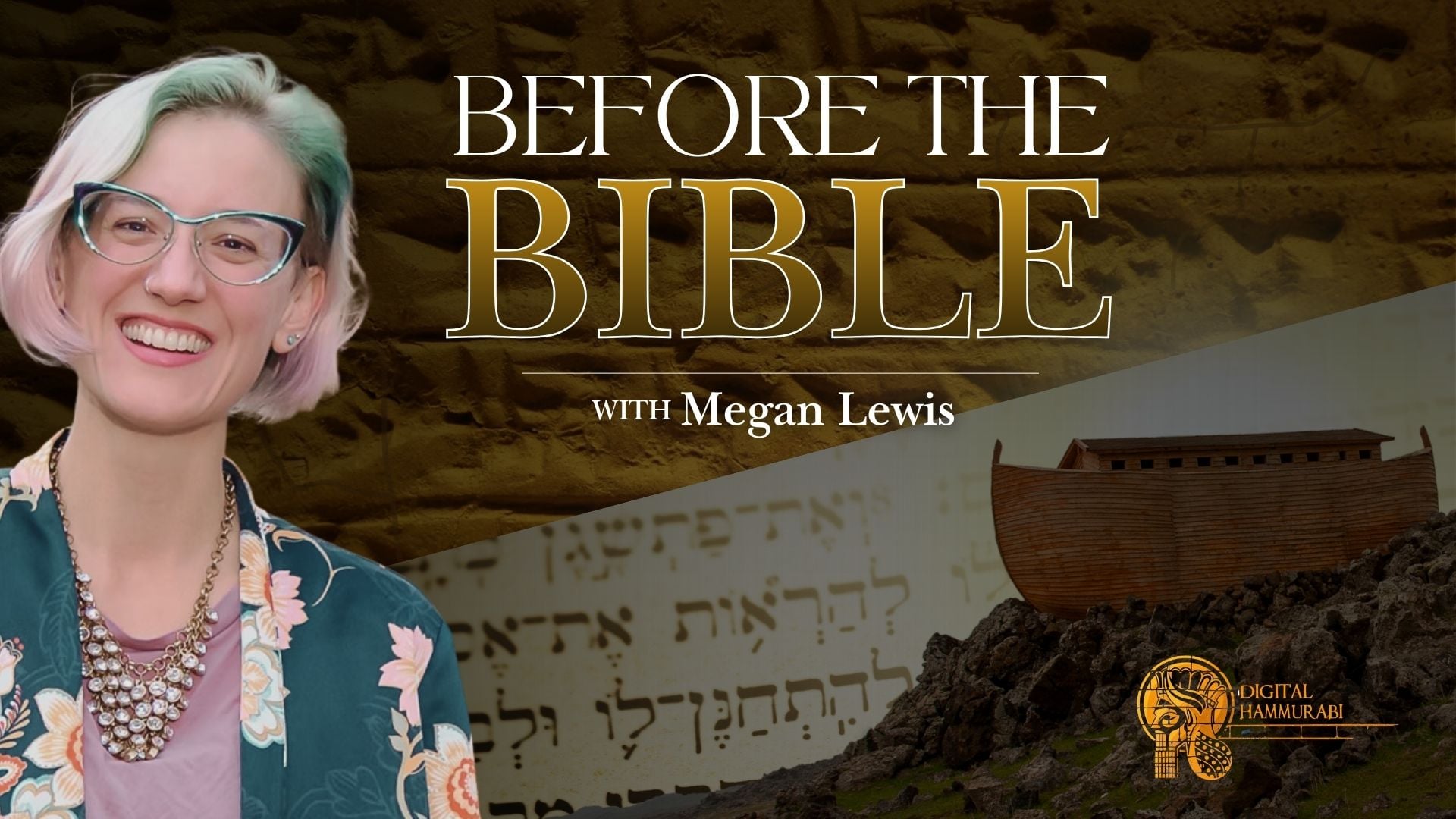
Where the Bible Came From

Everyone knows about Noah’s Flood, the creation accounts in Genesis, and the law codes in Deuteronomy. But what about the mythology and the laws they were based on? Who originally saved humanity from a flood sent by a wrathful god? Where did the concept of “an eye for an eye” come from?
The Hebrew Bible wasn’t written in isolation, and its writers didn’t live cut off from the rest of the ancient Near East. Many of the ideas preserved in scripture weren’t original to the Israelites — but neither were they mindlessly copied. To fully appreciate the creativity of the biblical scribes, we have to read the Hebrew Bible as a product of the wider ancient world.
This course introduces the civilizations of ancient Mesopotamia — their myths, their laws, their kings — and explores how those traditions influenced and shaped scripture. We’ll unpack what the Israelites adopted, what they adapted, and what they rejected outright.
Format
On‑demand video
Lectures
4 sessions
Access
Lifetime, watch anytime
Instructor
Megan Lewis
Specialty
Assyriology & ANE
The Lectures
From the first cities of Sumer to the rubble of Jerusalem, these are the conversations the Hebrew Bible was born into.
Writing, gods, and the rise of the first city. Cuneiform, temples, and the divine order that organized life in Sumer and Akkad long before Israel existed as a people.
From Gilgamesh to Genesis. Flood narratives, creation myths, and afterlife views — the older traditions that biblical writers knew, wrestled with, and reimagined.
Divine kingship, royal propaganda, and the law as counterweight. How the prophets’ “Thus says the Lord” answered the king’s “Thus says the throne.”
Divine abandonment, lament, and the search for meaning after defeat. How the prophets borrowed an old Mesopotamian theology to make sense of exile.
 Megan Lewis · 2026
 Assyriologist & Public Educator · Digital Hammurabi · Misquoting Jesus Podcast
Megan Lewis is best known to the biblically‑curious audience as the host of the Misquoting Jesus Podcast, but the history, literature, and cultures of Mesopotamia are her academic passion. She is the driving force behind the Digital Hammurabi YouTube channel and podcast, where she breaks down ancient history, texts, and languages with clarity, warmth, and the occasional metaphorical eye‑roll at academic snobbery.
Megan holds a B.A. and M.Phil. in Ancient History and Assyriology from Birmingham University (UK), and an M.A. in Near Eastern Studies from Johns Hopkins University. She completed all but the dissertation in a Ph.D. program at Johns Hopkins before deciding her time (and sanity) might be better spent making ancient knowledge available to more people. She might finish the doctorate someday — but in the meantime, she’s got a camera, a microphone, and a mission. Sometimes she even remembers to turn the microphone on.
What This Course Offers
Megan Lewis brings the world of cuneiform, temples, and god‑kings into conversation with the Hebrew Bible — for anyone who’s ever wondered where these stories really came from.
Read alongside Enuma Elish, Gilgamesh, and the Laws of Hammurabi — the ancient texts the biblical writers were responding to.
Megan Lewis has spent years inside the world of Sumerian and Akkadian texts. You get a specialist’s view of Mesopotamia, not a Bible scholar’s guess.
Compare flood with flood, code with code, lament with lament.
All four lectures available on demand from day one. Lifetime access means you can absorb, revisit, and rewatch.
From Sumer to Babylon to Assyria — the empires that stamped their fingerprints on scripture.
No prior knowledge of Mesopotamian languages or biblical scholarship required. If you love the Bible — or just love a good origin story — this course is for you.
Common Assumption
The Bible’s stories were invented from scratch by the Israelites.
In fact
Many of the Bible’s most iconic motifs — the flood, the creation of humanity, the great law code — have older Mesopotamian roots that predate Israel by centuries. The biblical writers were participants in a much wider literary world.
Common Assumption
Ancient Near Eastern myths are interesting trivia, but irrelevant to scripture.
In fact
Far from being background noise, these myths and laws were the conversation partners the biblical writers were responding to. You cannot understand Genesis 1 without knowing what its first readers were already used to hearing.
Common Assumption
Genesis 1 is the oldest creation account.
In fact
The Babylonian Enuma Elish and earlier Sumerian creation traditions predate the biblical account by centuries. Genesis is brilliant, but it is not the first attempt by a people in the ancient Near East to explain how the cosmos got here.
Common Assumption
Biblical law was a uniquely divine gift, with no precedent.
In fact
The Laws of Hammurabi (and other Mesopotamian codes) circulated for centuries before the Torah was compiled. “An eye for an eye” was already an ancient legal principle — biblical law engages it, modifies it, and sometimes rejects it.
All four lectures are available to watch the moment you enroll. Click any lecture to read its description.
Writing, Gods, and the Rise of the First City. The geography and timeline of Mesopotamia, the invention of cuneiform, the first cities, and the temple‑king cosmology that ordered the ancient Near East — why Genesis may have roots in Sumerian clay tablets.
From Gilgamesh to Genesis. Divine personalities, the flood story of Utnapishtim and Noah, creation in Enuma Elish versus Genesis, and afterlife views in Mesopotamia and Israel. When “In the beginning” wasn’t the first beginning.
Who Rules and Why? The brotherhood of kings, the yoke of Assur and Deuteronomy 20:10–14, divine kingship and royal propaganda, and the king’s justice set against YHWH’s justice. “Thus says the Lord” as a counter to “Thus says the King.”
Why Did God Abandon Us? Ancient Near Eastern concepts of divine abandonment, Ezekiel and Jeremiah read in light of those traditions, and Mesopotamian laments alongside Israelite texts. How do you keep the gods happy — and what do you do when they leave?
Download Megan’s full slide decks for all four lectures — perfect for review, note‑taking, or sharing with a study group.
Searchable transcripts of every lecture — ideal for quoting, deeper study, or following along if English is not your first language.
MP3 downloads of every lecture. Listen on your commute, during a walk, or whenever you’re away from a screen.
Join Megan on June 28, 2026 for a live AMA inside Biblical Studies Academy. Bring your questions about the course or her areas of expertise.
"How to Read the Book of Genesis" by Dr. Ron Hendel, taken from New Insights into the Hebrew Bible 2026.
$1 from every registration is donated to charity: water, bringing clean water to people in need.
Enjoy the course at a fraction of the cost
$99.80 Value Each single-lecture course retails for $24.95. Four of them = $99.80.
$59.95
Included in Your Purchase: Lifetime Access to This University-Level Course With:

Access this Course PLUS Every Course in Our Vault
(250+ Hours of Biblical Learning!)
then special rate $49.95/month
Megan Lewis presents four lectures, each focused on a different facet of the ancient Near Eastern world that shaped the Hebrew Bible. All four are available on demand — watch at your own pace.
Once you have purchased the course, you will receive instructions by email to log in to our online course platform, ThriveCart Learn. Once logged in, you will find all four lectures available to watch on demand. If you are a member of Biblical Studies Academy (BSA), your access will also be available inside the community.
Yes. All four lectures are yours with lifetime access. You can watch them on any device, on your own schedule, and return to them as often as you like.
No prior knowledge required. Megan introduces the texts, the geography, and the cast of gods and kings as the course unfolds. Whether you’re coming in fresh or already have a background in biblical or ancient history, you’ll find the course genuinely rewarding.
Yes. All lectures include closed captions, and full transcripts are included with the course, so you can follow along in text or search for specific passages.
We accept PayPal and all major credit cards.
Absolutely. If you don’t love the course, send us an email at support@bartehrman.com within 30 days of purchase and we will refund every penny.
Comparable university courses on the ancient Near East routinely run into the thousands of dollars. We don’t offer college credit, but you get the same depth and rigor at a fraction of the cost — world‑class scholarship made accessible.