
Image Credits
Decoding the Gospel of John
Every image on the course page, with its source, license, and the reason it was chosen. The artwork is public-domain and freely-licensed material from Wikimedia Commons: Old Master paintings of the signs and scenes of John’s Gospel, early-Christian and Byzantine images of Christ, and the ancient manuscript that first carried the text. Creative Commons works are noted below.
| Image | Work & Attribution | License | Where it appears | Why it’s included |
|---|---|---|---|---|
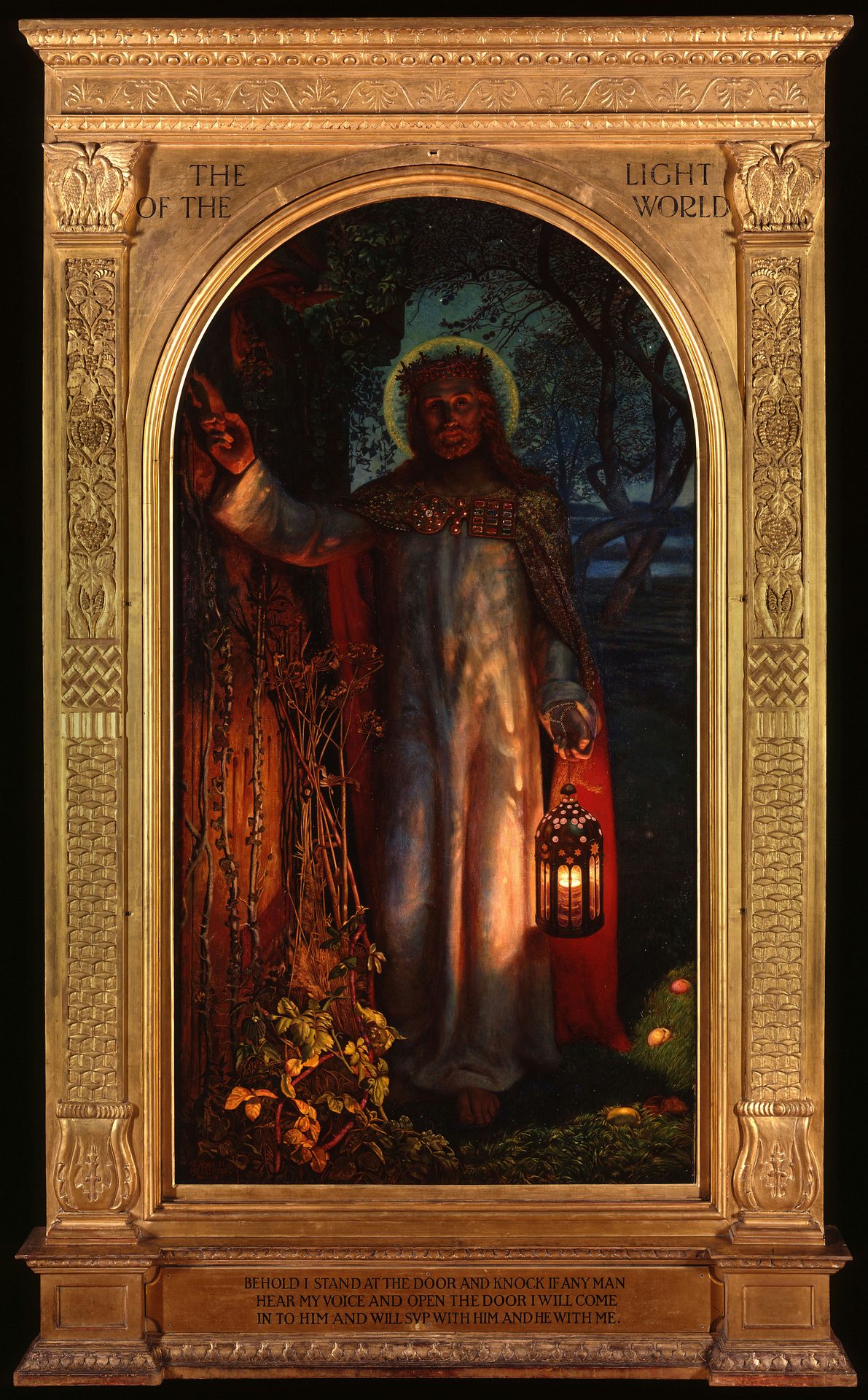 light-of-the-world.jpg | The Light of the World William Holman Hunt c. 1900–1904 (after his 1851–1853 original) Source ↗ | Public domain | Hero background · “Light and Darkness” movement | Christ standing in the dark with a lantern, knocking at a long-shut door: the perfect emblem for John’s “the light shines in the darkness,” and for a gospel that hides its meaning until you learn to see it. |
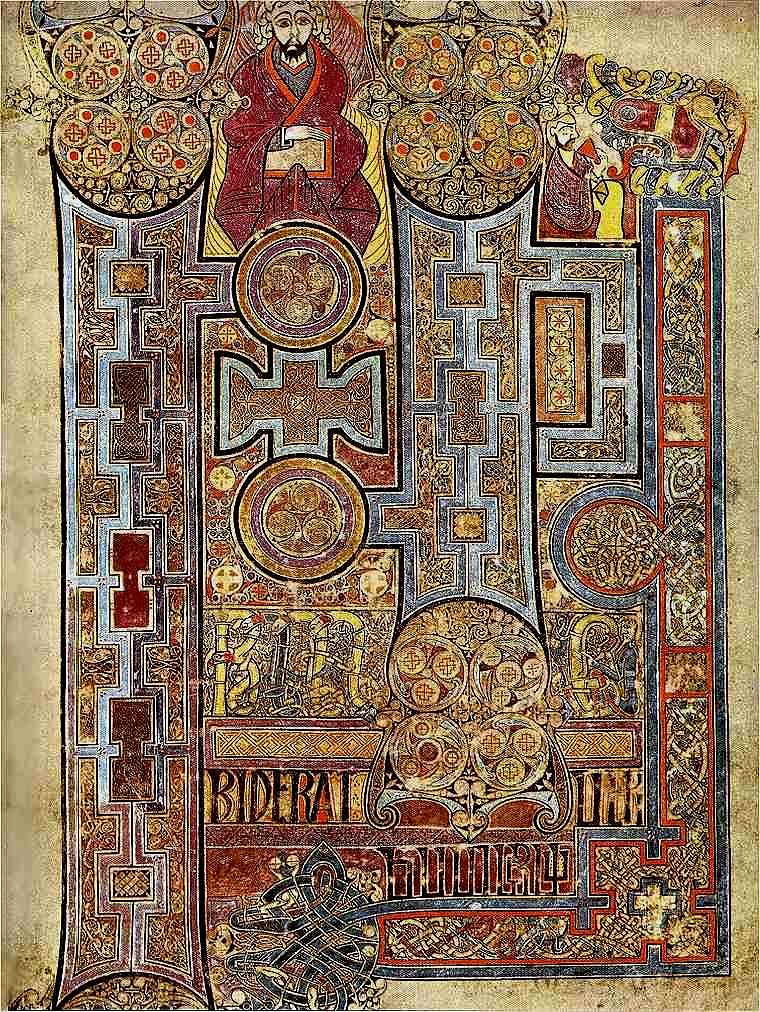 logos-initial.jpg | Book of Kells, folio 292r — incipit to the Gospel of John (“In principio erat verbum”) Insular monastic scriptorium (the Book of Kells master) c. 800 Source ↗ | Public domain | Hero ornament · Instructor backdrop | The illuminated opening words of John’s Gospel, “In the beginning was the Word,” turned into an object of beauty. The words revealing the Word, quite literally. |
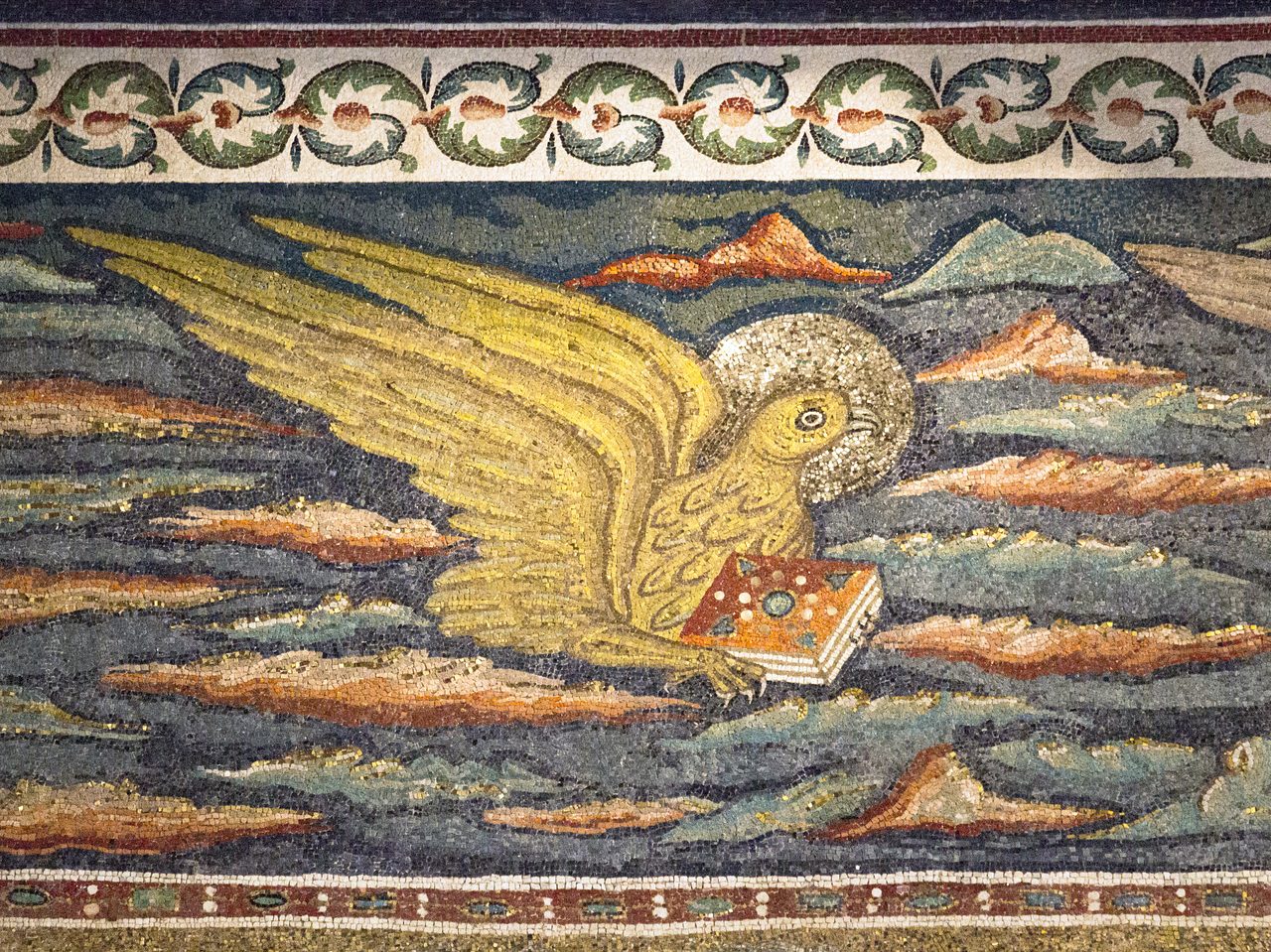 eagle.jpg | Eagle of Saint John the Evangelist, mosaic, Basilica of Sant’Apollinare in Classe, Ravenna Photo: Roger Culos (6th-century mosaic) Mosaic 6th century (photographed 2015) Source ↗ | CC BY-SA 3.0 | Hero ornament · Assumptions backdrop · FAQ backdrop | The eagle is John’s traditional symbol among the four evangelists, said to gaze straight into the sun: the emblem of the gospel that soars highest in its vision of Christ. |
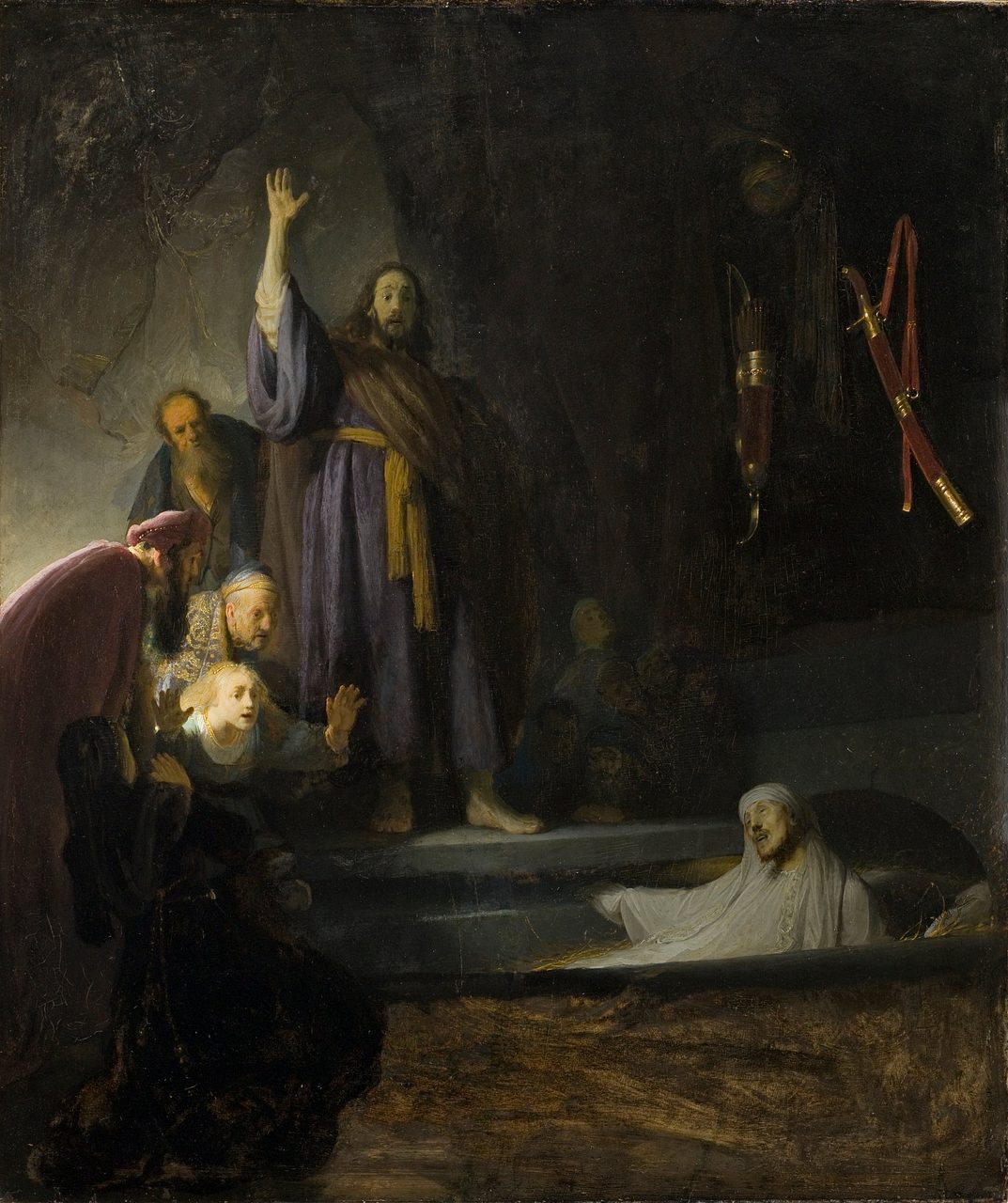 raising-lazarus.jpg | The Raising of Lazarus Rembrandt van Rijn c. 1630–1632 Source ↗ | Public domain | Origin section figure · Highlights image card | The last and greatest of John’s seven signs (John 11): a dead man called from the tomb, the sign that sets the “hour” of Jesus’ own death in motion. |
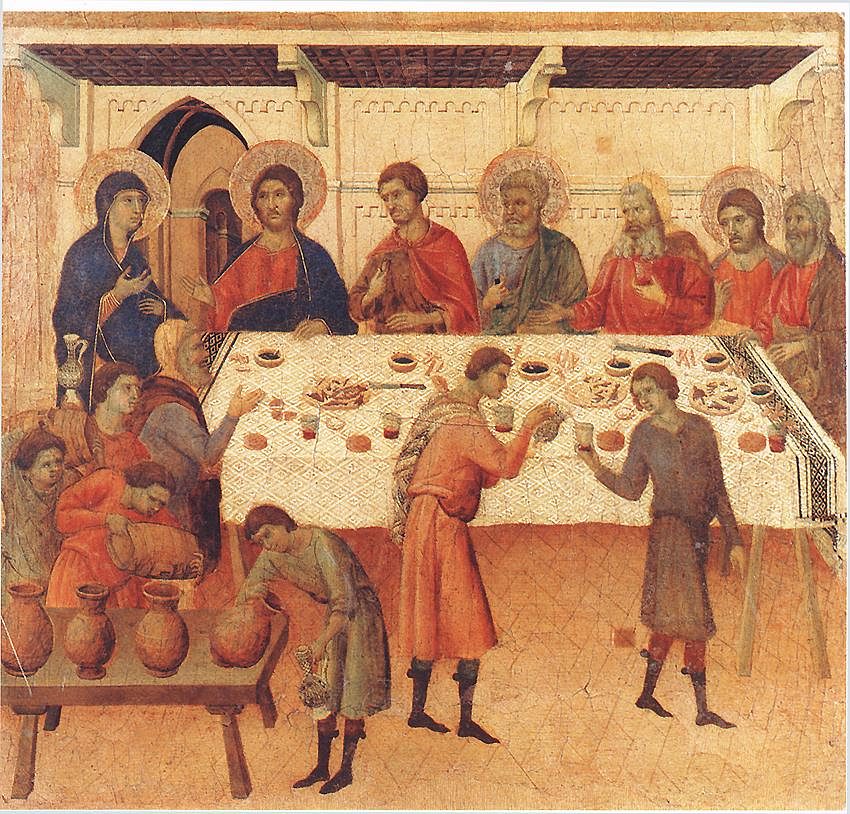 wedding-cana.jpg | The Wedding at Cana (from the Maestà) Duccio di Buoninsegna 1308–1311 Source ↗ | Public domain | “The Book of Signs” movement | Water into wine at Cana, which John calls “the first of his signs”: the opening of the Book of Signs the course works through. |
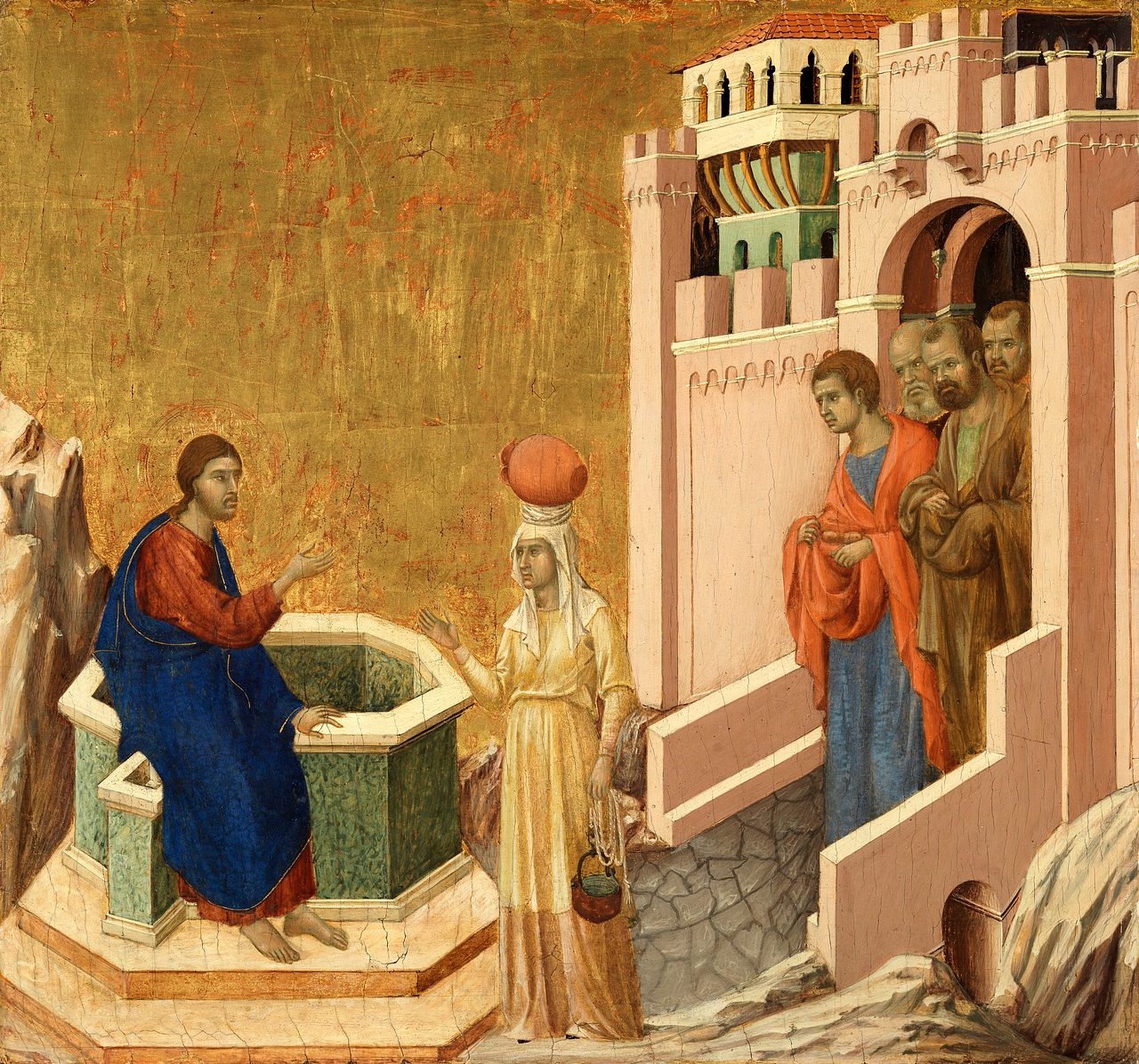 samaritan-well.jpg | Christ and the Samaritan Woman at the Well Duccio di Buoninsegna 1310–1311 Source ↗ | Public domain | Stats backdrop · Schedule backdrop | The “living water” of John 4: a conversation at a well that turns, in typical Johannine fashion, from ordinary thirst to something far larger. |
 good-shepherd.jpg | The Good Shepherd, mosaic, Mausoleum of Galla Placidia, Ravenna Unknown (early-Christian mosaicist) c. 425–450 Source ↗ | Public domain | “The Seven ‘I Am’ Sayings” movement · Bonuses backdrop | “I am the good shepherd” (John 10) in gold-ground mosaic: the face of the lecture on John’s seven “I am” sayings. |
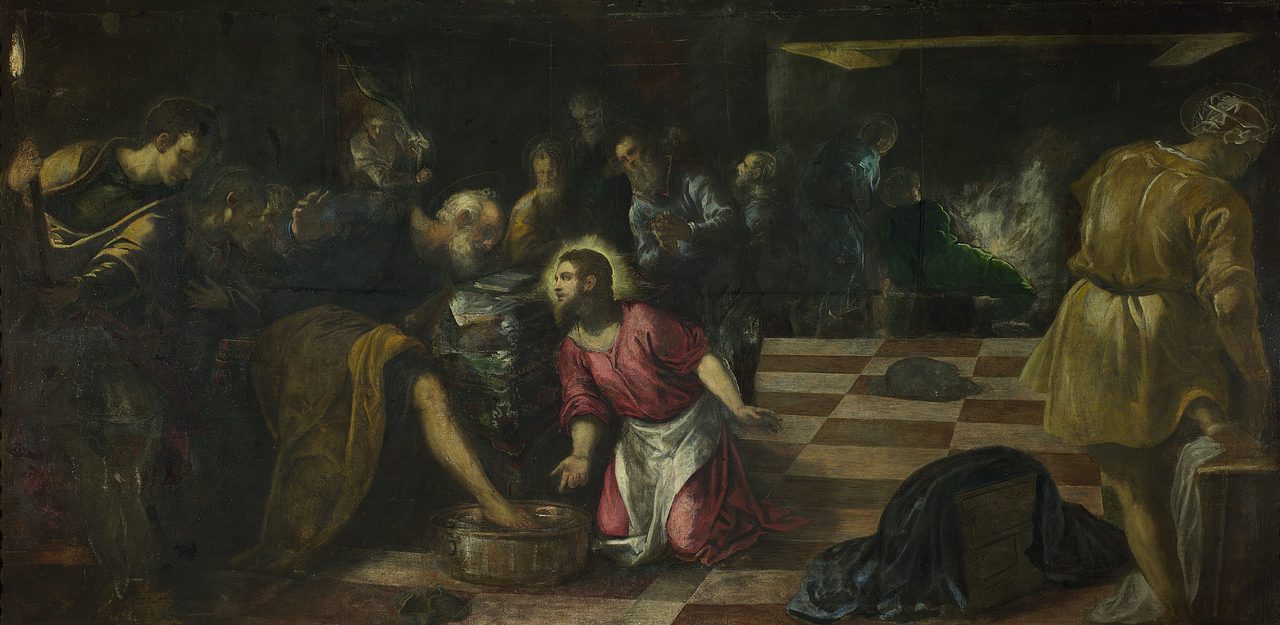 washing-feet.jpg | Christ Washing the Feet of the Disciples Jacopo Tintoretto c. 1575–1580 Source ↗ | Public domain | Highlights image card (“The hour of glory”) | The footwashing that opens John’s Book of Glory (John 13): the divine Word kneeling before his own disciples on the eve of the “hour.” |
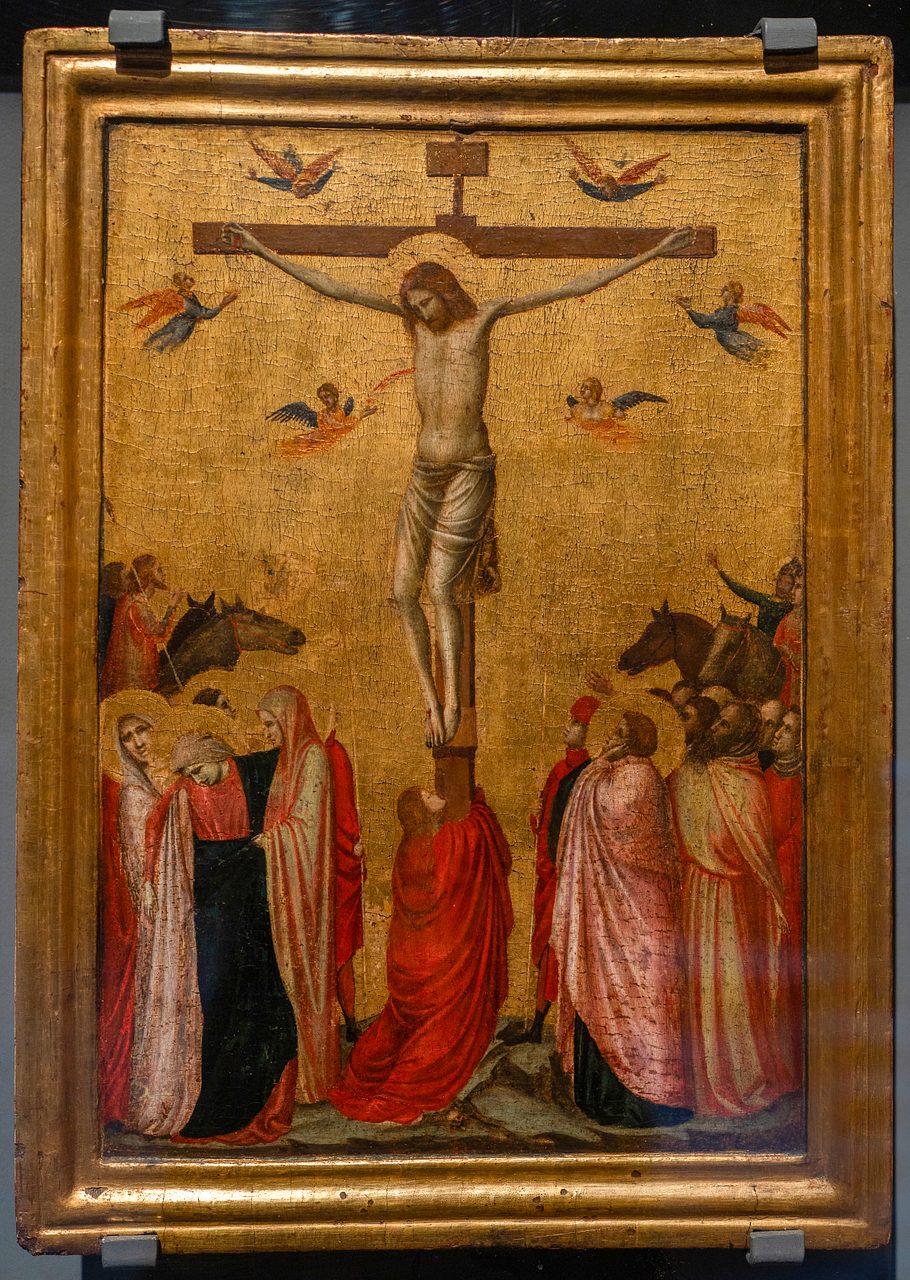 crucifixion.jpg | Crucifixion (Strasbourg) Giotto (workshop/circle) early 14th century Source ↗ | Public domain | “The Hour of Glory” movement | In John, the cross is not defeat but exaltation, the moment Jesus is “lifted up” and glorified. The central image of the course’s turn from signs to glory. |
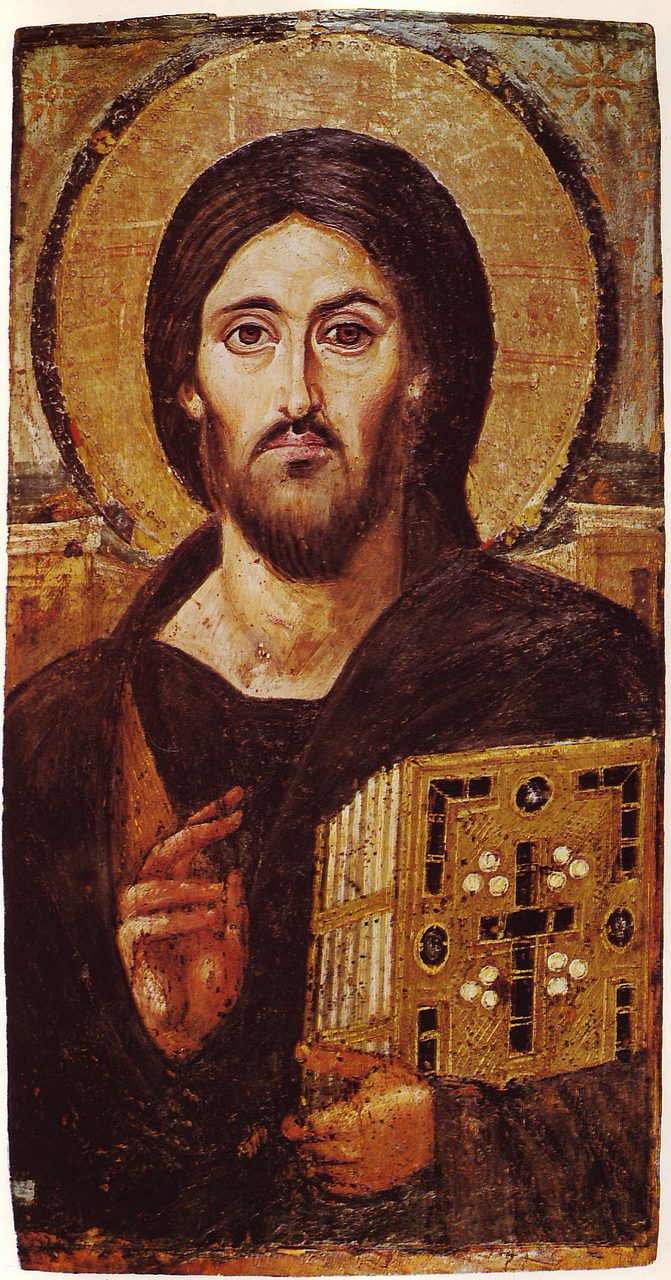 pantocrator.jpg | Christ Pantocrator (Sinai icon), Saint Catherine’s Monastery Unknown (Byzantine encaustic icon) 6th century Source ↗ | Public domain | Hero ornament · “Sharing the Glory” movement · Highlights backdrop | The oldest surviving icon of Christ Pantocrator, its two differing halves already hinting at a Jesus both human and divine: John’s high Christology in a single face. |
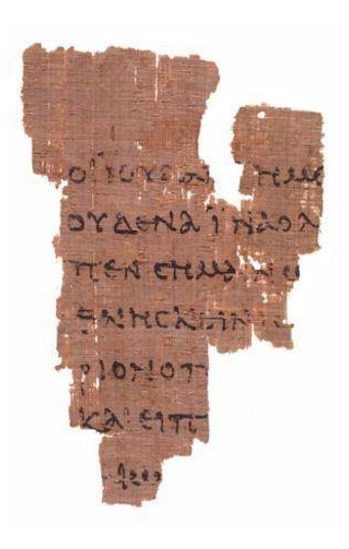 p52.jpg | Rylands Library Papyrus 𝔓52 (recto), the earliest fragment of the Gospel of John Unknown scribe (John Rylands Library) papyrus, 2nd century CE Source ↗ | Public domain | At-a-Glance backdrop · Highlights image card | A scrap of John 18 and the earliest surviving fragment of any gospel: the physical text at the root of everything the course reads. |
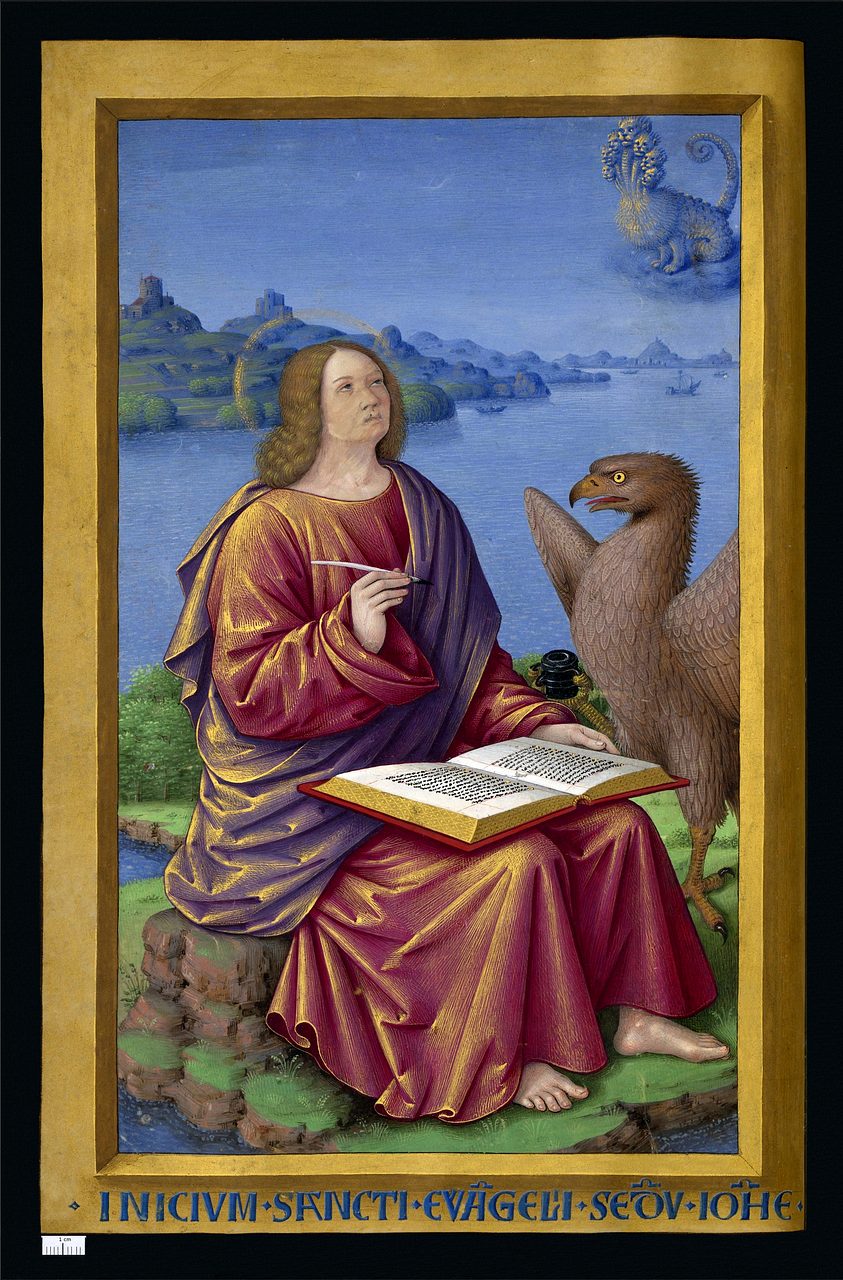 st-john-writing.jpg | Saint John the Evangelist, Grandes Heures d’Anne de Bretagne Jean Bourdichon 1503–1508 Source ↗ | Public domain | “The Word Made Flesh” movement | The evangelist at work on his gospel: the face of the opening movement on John’s prologue, where the Word is “in the beginning.” |
Public-domain works are reproduced freely. CC BY / CC BY-SA images are credited to their photographers as required; follow each Source link for the full license text.