
A New On-Demand Course

Digging Up Eden

You haven’t learned the story of Adam and Eve. You’ve learned 2,500 years of edits to it.

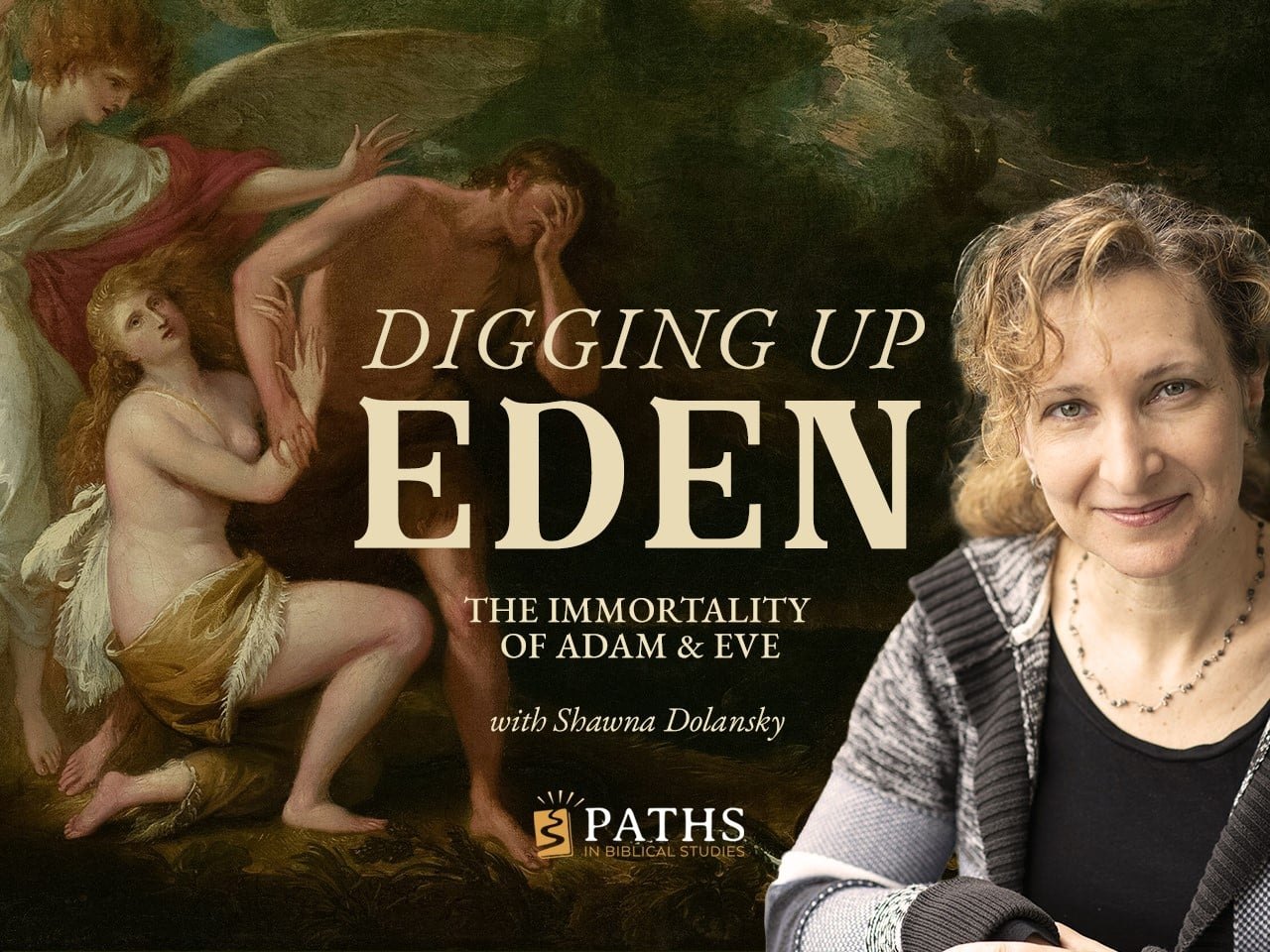
Digging Up Eden course art
Watch Anytime 10 Lectures Shawna Dolansky · Carleton

The Most Familiar Story in the World

Everything you
“know” was added later.

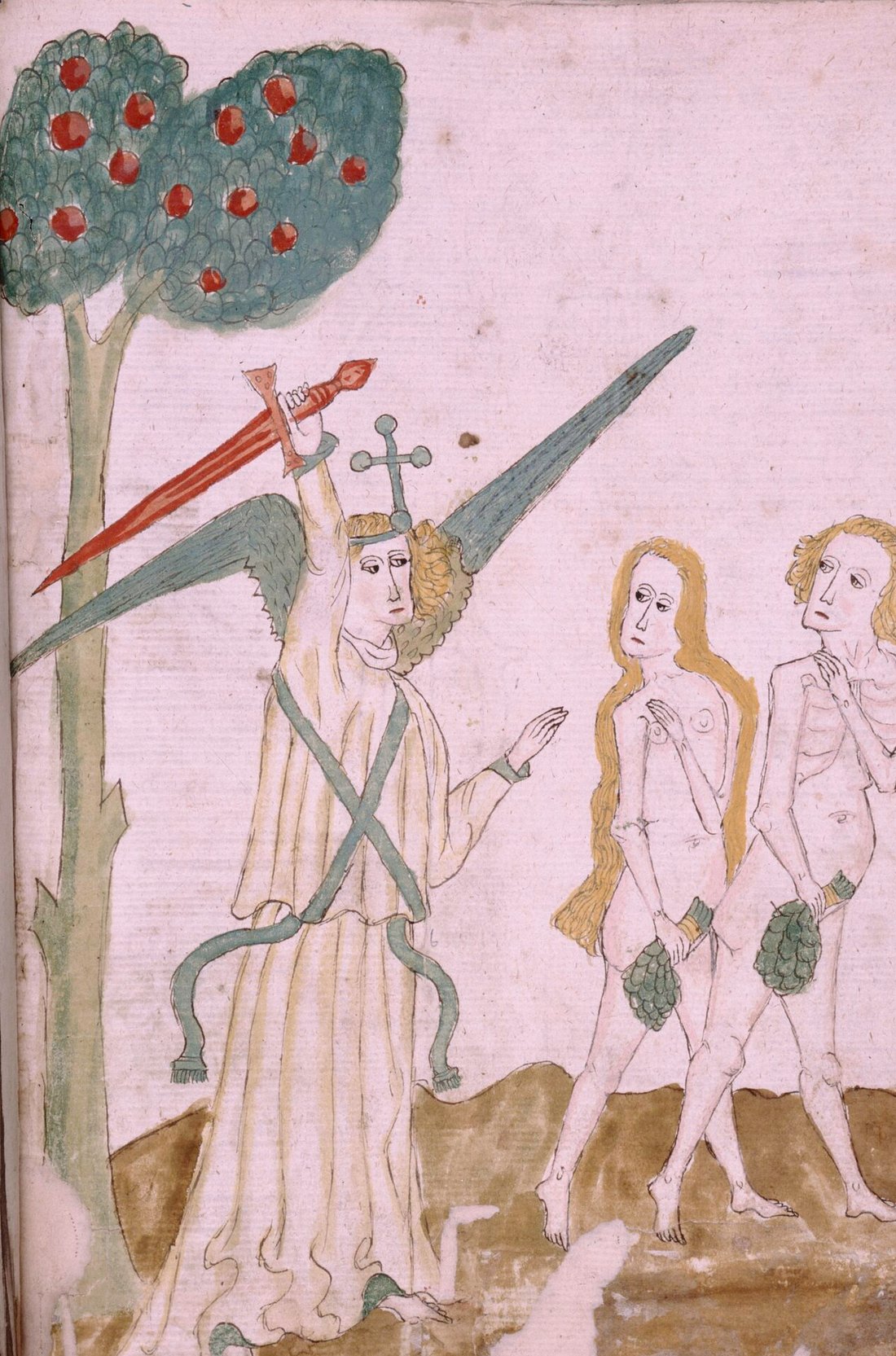
Illuminated manuscript miniature of the Expulsion from Eden
The Expulsion from Eden Illuminated manuscript · c. 1445

Almost everyone knows the story of Adam and Eve. Garden, serpent, apple, a mistake, an expulsion: that is the version we inherit. But most of what that version is said to mean was never in the text.

Original sin was added by Augustine. The serpent became Satan centuries after Genesis was written. Lilith, Adam’s supposed first wife, was invented by medieval interpreters. Every generation has painted its own layer on top: Paul, Tertullian, Aquinas, Luther, Calvin, right down to the influencers of today, each reading its own culture’s assumptions into the same few verses.

Digging Up Eden is an excavation of exactly that. Starting in the present and working backward through the centuries, it strips away each layer of interpretation to ask a historian’s question: who built this reading, and what were they answering? What waits at the bottom, once 2,500 years are cleared away, is older, stranger, and more interesting than the story you know. You come away able to hear any telling of Adam and Eve, ancient or modern, and know where it came from and why.

Course at a Glance

Ten layers down.

/ 01

Format

On-demand video

/ 02

Lectures

10 45-minute lectures

/ 03

Access

Lifetime, watch anytime

/ 04

Instructor

Shawna Dolansky

/ 05

Specialty

Hebrew Bible & the Ancient Near East

Ten lectures,
dug in reverse.

The Lectures

The course digs backward, from the present day to the ancient Near East. Each lecture peels away another layer of interpretation until you reach the earliest layer, and see what its own author was doing with it.

Lecture 01

Bodies on the Surface

Adam and Eve are everywhere in contemporary culture, in courtrooms, on social media, in museum dioramas with animatronic dinosaurs. This lecture surveys three flashpoints where Genesis 2-3 has become part of pop culture: evangelical purity ideology and its tradwife successor, Young Earth Creationism and the Creation Museum in Kentucky, and the theological arguments over same-sex marriage. In each case, the same short text is producing opposite conclusions for communities equally committed to it. We establish the series’ central method: rather than asking who is reading “correctly,” we ask what each reading reveals about the world of its readers.


The Present
Lecture 02

Adam & Steve: Defining Marriage

How does the same short story generate such radically different readings? This lecture takes a look at 20th century wars over the meaning of marriage, and then steps back from the contemporary examples to introduce the historian’s approach to interpretation. We examine the word ezer, “helper” in Genesis 2:18, as a case study in how translation choices carry interpretive freight, and trace one thread of that freight back to the Septuagint. We close with a preview of the full excavation: multiple layers of accumulated interpretive choices, each one built on something older, each one understanding itself as simply reading what is in the text.

The Present
Lecture 03

The Politics of Paradise: Eden in America

The nineteenth century fought its most urgent political battles, over slavery and women’s rights, with Genesis 2-3 as a main weapon on both sides. This lecture examines the proslavery theological argument that rooted female subordination and racial hierarchy in the post-Fall order of Genesis 3:16, and then traces the counter-readings: from the Woman’s Bible and the suffragettes back through Sojourner Truth’s “Ain’t I a woman?” all the way back to Quakers Sarah and Angelina Grimké’s systematic dismantling of the tradition that underlay racist and misogynist social hierarchies.

The 1800s
Lecture 04

Paradise Lost: Eden Reformed

Where did such racist and misogynist hierarchies come from? This lecture searches for the answer in seventeenth-century England and sixteenth-century Europe. John Milton’s Paradise Lost gave the theology of female subordination its most powerful cultural form, an Eve who celebrates her own subjection, while Mary Wollstonecraft identified that celebration as ideological construction rather than female nature. Behind Milton stands the Protestant Reformation and the writings of Luther and Calvin. We close by noting that the Reformation also carried within it the egalitarian resources its own tradition would later use against it.

The Reformation
Lecture 05

The Medieval Jewish Garden

The medieval period gives us three traditions reading Genesis 2-3 in close conversation, and arriving at surprisingly different conclusions. This lecture works backward through medieval Jewish interpretation: the Kabbalah’s Shekhinah and Lilith as salvific and demonic feminine principles; Nahmanides versus Rashi on whether female subordination precedes the Fall or follows it; Maimonides’ allegorical reading, in which Eve represents the human imagination. We end where the tradition’s chronology begins: with an exploration of the first full biography of Lilith, generated by a close reading of a single word in Genesis 2:23.

The Middle Ages
Lecture 06

The Christian and Islamic Gardens

This lecture covers the Christian and Islamic medieval layers. On the Christian side: the Malleus Maleficarum (1486) and the world it represents; Christine de Pizan’s largely unheeded counter-argument; and Thomas Aquinas’s Aristotelian synthesis, which made female deficiency a biological rather than merely theological claim. Hildegard of Bingen challenges Aquinas’s inheritance from the inside, using the Incarnation and the imago Dei to argue that female embodiment is the site of salvation’s entry, not sin’s. On the Islamic side: the Qur’an’s notably blame-free account of the first humans, and the commentary tradition’s importation of the blame-Eve framework from neighboring traditions.

The Middle Ages
Lecture 07

The Archaeology of Sin

We reach the late antique layer, the world where the Church Fathers and the classical Rabbis are contemporaries, reading and responding to each other across the same Roman cities. This lecture examines the three “women’s commandments” and their Rabbinic etiologies, alongside the counter-readings preserved in the same tradition. We then turn to Augustine: his construction of original sin as corruption transmitted through sexual reproduction, his argument that woman alone does not bear the full image of God, and his portrait of the heroically loyal Adam, moves that weld the interpretive asymmetry between Adam and Eve into Western theology permanently.

Late Antiquity
Lecture 08

Serpents, Satan, and More Sin

Gnostic texts recovered at Nag Hammadi in 1945 show that the reading tradition we have inherited had serious competition: in these texts, Eve is a divine emissary, the serpent a liberator, and the eating of the fruit an act of enlightenment. The tradition that became orthodoxy had to be argued for and enforced. We then distinguish between Paul’s authentic letters, which locate the problem in Adam, not Eve, and declare “neither male nor female,” and pseudo-Paul’s 1 Timothy, which silences women on the basis of Eve’s primordial guilt and becomes the warrant the Church Fathers cite as Scripture. We close with Philo of Alexandria and Ben Sira, Jewish philosophers whose works heavily influenced the Church Fathers.

Late Antiquity
Lecture 09

Hitting Bedrock: Genesis 2-3 On Its Own Terms

Finally, we read the text itself, Genesis 2-3 in its own literary and historical context, without the accumulated weight of interpretation. This lecture introduces the Documentary Hypothesis and distinguishes the Priestly writer (Genesis 1) from the Yahwist (Genesis 2-3): different authors, different centuries, different theological purposes. We then read the Yahwist’s story closely: ha-adam as the earthling rather than a man, the concept of knowledge of good and bad, the curses as etiological description rather than divine prescription. Was “he will rule over you” a diagnosis of the author’s present condition, rather than a divine command for all time?

The Text Itself
Lecture 10

Below the Bedrock: The Ancient Near Eastern Context

The story we found at the bedrock is not the bottom layer. This lecture excavates the ancient Near Eastern world that produced Genesis 2-3: the Mesopotamian texts (Atrahasis, the Epic of Gilgamesh, the Adapa myth) that share motifs, vocabulary, and narrative problems with the Eden story. We examine the evidence for Asherah as YHWH’s consort in pre-exilic Israel, and the argument that J’s Eden narrative functions as polemic against live goddess religion: taking the symbolic complex of tree, serpent, and woman as wisdom-mediator and retelling it as catastrophe. We close with Eve’s double etymology: her Hebrew name means both “life” and, in Northwest Semitic cognates, “serpent,” a woman whose very appellation carries the goddess tradition the story is working to displace.

The Ancient Near East
SD
Shawna Dolansky Shawna Dolansky · Carleton University
Your Instructor

Shawna Dolansky.

Professor, College of the Humanities · Carleton University

Professor Shawna Dolansky is an ancient historian who specializes in the emergence of the Hebrew Bible within its ancient Near Eastern context. Curious about the real lives of religious and literary figures and their authors, her work cuts across disciplinary boundaries of religious studies, literature, history, anthropology, and archaeology, and spans several subfields, including goddesses, magic, figurines, gender and social structure, the history of biblical interpretation, and the integration of text, archaeology, politics, and imagination in the writing of history. Current research interests include a study of the history of Adam and Eve in popular culture, and re-thinking the figure of Jezebel in the Hebrew Bible in light of historical and archaeological considerations; both are part of a larger digital humanities graphic history project, "Women of the Ancient World" (coming soon at woawhistory.com).

Professor, Carleton UniversityAncient historian of the Hebrew BibleCo-author, The Bible NowCreator, Women of the Ancient World

0

Lectures

0

Years of Interpretation

Lifetime Access

Why this course
reads differently.

What This Course Offers

Shawna Dolansky reads Genesis the way historians actually read it: layer by layer, in context, and across the centuries, for anyone who wants to see the text in its historical context.

Prepare to Rethink

Layers you didn’t know were there.

Common Assumption

Original sin is the point of the story.

In fact

Genesis never mentions it. Original sin was constructed by Augustine, four centuries into Christianity, and read back onto a text that says nothing of the kind.

Common Assumption

The serpent is Satan.

In fact

In Genesis the serpent is simply the most clever of the wild animals. Its promotion to the Devil came centuries after the story was written.

Common Assumption

Eve was made from a rib to serve Adam.

In fact

The Hebrew word behind “helper” does not mean subordinate, and the being God first shapes is not obviously a man at all. The hierarchy was added by readers, not authors.

Common Assumption

The story is about sin, sex, and the Fall.

In fact

Its first audience was not asking about any of those. They were asking why we die, what makes us human, and what wisdom costs, questions with very different, very ancient answers.

Included with Enrollment

Included with
your course.

Lecture Slides

Download Dr. Dolansky’s full slide decks for all ten lectures, ideal for review, note-taking, or a study group.

Quizzes

A short quiz for the material, to check your understanding and help the ideas stick.

Reading Recommendations

Curated suggestions for going deeper, so you can keep reading well past the last lecture.

Questions for Reflection

Prompts to think through and talk over what each lecture uncovers.

Audio Downloads

MP3 downloads of every lecture. Listen on your commute, on a walk, or whenever you’re away from a screen.

Lifetime Access

Every lecture is yours to revisit, on any device, on your own schedule, for as long as you like.

$1 from every registration is donated to charity: water, bringing clean water to people in need.

From New Insights into the Hebrew Bible

The highest-rated talk of the conference.

Shawna Dolansky’s lecture “A Goddess in the Garden?” drew the top marks of the entire New Insights into the Hebrew Bible conference on Genesis. Here is what attendees said about the weekend it came from.

9.15 / 10 Average score for Shawna’s talk, the highest of the conference
I’m grateful for the opportunity to be introduced to genuinely new and transformative readings of the book of Genesis.
Jesse Rego-Martin
The presentations were very helpful for understanding the context and nuances in the stories. I now feel much more comfortable reading Genesis!
Craig
As a non-scholar, I learned so many revelations that enriched my appreciation of the Hebrew Bible. Every single speaker presented new insights that even regular people like me can absorb.
Raver De Guzman
I really liked the focus on one book. The variation of history, mythology, language and storytelling gave me exactly the insight I was expecting.
Laura Stilwell
I learned so much in such a short time. The presentations were top-notch and the speakers illuminating.
Sophie Lagacé
So glad to explore verses that seemed familiar, seeing them in a new light.
Rick Hamlin

2 ways to purchase this course

Stand-Alone Purchase

Enjoy the course at a fraction of the cost

Regular Price $119.95 Special Launch $89.95 Ends August 31


Included in Your Purchase: Lifetime Access to This University-Level Course With:

  • Ten 45-minute lectures by Shawna Dolansky
  • Lifetime, watch-anytime access
  • Slides, quizzes, audio downloads & more
  • Biblical Studies Academy members save 30%

Access this Course PLUS Every Course in Our Vault

(250+ Hours of Biblical Learning!)

  • 50+ existing courses plus all new releases (we're aiming for 20+ new courses in 2026)
  • All "Face to Face on the Bible" events and debates
  • Bart Ehrman's monthly "Spotlight" lectures
  • Join 1,700+ members for discussion, member mixers, trivia, book club, & more!
Start FREE Trial

then special rate $49.95/month

Frequently Asked

Everything you
need to know.

How many lectures are included?

Ten 45-minute lectures, just over eight hours in all. Every lecture is available on demand, so you can watch at your own pace.

Is this a live course?

No. Digging Up Eden is a pre-recorded, on-demand course with no live session. All ten lectures are ready to watch the moment you enroll.

How will I access the course?

Once you have enrolled, you will receive instructions by email to log in to our online course platform, ThriveCart Learn, where all ten lectures are available to watch on demand. If you are a member of Biblical Studies Academy (BSA), your access will also be available inside the community.

Do I have lifetime access?

Yes. All ten lectures are yours with lifetime access. You can watch them on any device, on your own schedule, and return to them as often as you like.

Do I need any prior knowledge of the Bible?

No prior knowledge is required, and no Hebrew. Dolansky introduces every text, the historical background, and the scholarly debates as the course unfolds. Whether you are coming in fresh or already have a background in biblical studies, you will find it genuinely rewarding.

Will subtitles or captions be available?

Yes. All video lessons include closed captioning, so you can turn captions on or off and follow along in text as you like.

Is there a discount for Biblical Studies Academy members?

Yes. Members of Biblical Studies Academy (BSA) receive 30% off. If you would like to join first and use the member rate, you can learn more about BSA on our membership page.

What payment types are accepted?

We accept PayPal and all major credit cards.

Do you offer a money-back guarantee?

Absolutely. If you don’t love the course, send us an email at support@bartehrman.com within 30 days of purchase and we will refund 100% of your investment.

Is this budget-friendly?

University-level courses of this caliber typically run $2,000 to $4,000. We don’t offer college credit, but this course delivers the same depth and rigor at a small fraction of the cost, making world-class biblical scholarship accessible to everyone.