 All episodes →
 Misquoting Jesus Podcast
The Bible Before the New Testament: A Conversation with Joel Baden
Show notes
Episode Outline:
— Why Christians often overlook the Hebrew Bible
— What scholars mean by “Hebrew Bible”
— Why the Hebrew Bible should be read as literature
— How these ancient texts may have been used
— Was there performative reading in ancient Israel?
— How different texts became part of the Hebrew Bible
— How collections like Psalms and Isaiah developed
— How the Pentateuch was stitched together from multiple sources
— Why the flood story is more complicated than people remember
Episode Description
In this episode, Megan Lewis sits down with Dr. Joel Baden, Professor of Hebrew Bible and Director of the Center for Continuing Education at Yale Divinity School, for a sweeping conversation about the text often called the "Old Testament." Dr. Baden, known for his extensive research and engaging teaching style, is the creator of the upcoming 28-lecture course, "The Hebrew Bible: Exploring the Literature of Ancient Israel," and here he offers listeners both a compelling primer and some advanced insights.
Essential Topics Explored:
- Defining the Hebrew Bible: Dr. Baden explains why scholars use the term “Hebrew Bible” instead of “Old Testament,” exploring both the religious and academic implications. While “Old Testament” is rooted in Christian tradition, “Hebrew Bible” serves as a neutral, academic term that accommodates Jewish, Christian, and scholarly perspectives.
- Literature, Not Just Scripture: The discussion pivots to the nature of these texts: were they written as “Scripture” or as literature for entertainment, instruction, and documentation? Dr. Baden highlights that what we now see as religious texts—stories, poems, laws, prophecies—were originally written for diverse purposes, and often intended for a very small, literate elite.
- How Were the Texts Used? Were these ancient writings meant to be read privately, performed, or used as ritual texts? Listeners get an inside look at ancient Israelite society’s limited literacy and reliance on oral performance, as well as the genres within the Bible—Psalms as liturgy, genealogies, laws for priests, and more.
- Compiling the Bible: How did these independent texts—from stories and poems to prophetic books and laws—get collected, edited, and combined into the unified document we know today? Dr. Baden describes the organic, evolving process of canonization and textual compilation, including community decisions, editorial redaction, and how disagreements over content shaped various “canons.”
- What Happens When You “Smush” Texts Together? Dr. Baden delves into the Pentateuch (the first five books), showing how repeated stories, contradictions, and literary “seams” reveal multiple sources combined over centuries—sometimes awkwardly! Examples like the Noah’s Ark story are used to illustrate these complexities.
- Performance and Reception: Was there a culture of performance or dramatic reading? The episode compares ancient Israel to neighboring civilizations and investigates whether texts such as the Psalms or Proverbs were meant for public recitation or personal use.
Three Key Takeaways:
- The Hebrew Bible is more than a religious artifact; it is a complex, multi-layered library of ancient literature, reflecting the history, values, and creative output of ancient Israelite society.
- Its formation was gradual and shaped by community needs, historical circumstances, and pragmatic decisions—not all at once or by a single group. Many texts show evidence of multiple sources, editorial layers, and sometimes contradictory traditions.
- To truly understand the Hebrew Bible, we must appreciate both its literary artistry and its practical uses in ancient culture, from law codes to liturgies, stories to poems, all crafted by and for a tiny literate minority, then shared more widely through performance and communal decision-making.
Also watch these episodes:
Does Genesis 1 Contradict Genesis 2?
Does Genesis 1 Contradict Genesis 2?
Creation Myths in the Ancient World
Creation Myths in the Ancient World
The Bible Says So: What We Get Right and Wrong About the Bible
The Bible Says So: What We Get Right and Wrong About the Bible
— Why Christians often overlook the Hebrew Bible
— What scholars mean by “Hebrew Bible”
— Why the Hebrew Bible should be read as literature
— How these ancient texts may have been used
— Was there performative reading in ancient Israel?
— How different texts became part of the Hebrew Bible
— How collections like Psalms and Isaiah developed
— How the Pentateuch was stitched together from multiple sources
— Why the flood story is more complicated than people remember
Episode Description
In this episode, Megan Lewis sits down with Dr. Joel Baden, Professor of Hebrew Bible and Director of the Center for Continuing Education at Yale Divinity School, for a sweeping conversation about the text often called the "Old Testament." Dr. Baden, known for his extensive research and engaging teaching style, is the creator of the upcoming 28-lecture course, "The Hebrew Bible: Exploring the Literature of Ancient Israel," and here he offers listeners both a compelling primer and some advanced insights.
Essential Topics Explored:
- Defining the Hebrew Bible: Dr. Baden explains why scholars use the term “Hebrew Bible” instead of “Old Testament,” exploring both the religious and academic implications. While “Old Testament” is rooted in Christian tradition, “Hebrew Bible” serves as a neutral, academic term that accommodates Jewish, Christian, and scholarly perspectives.
- Literature, Not Just Scripture: The discussion pivots to the nature of these texts: were they written as “Scripture” or as literature for entertainment, instruction, and documentation? Dr. Baden highlights that what we now see as religious texts—stories, poems, laws, prophecies—were originally written for diverse purposes, and often intended for a very small, literate elite.
- How Were the Texts Used? Were these ancient writings meant to be read privately, performed, or used as ritual texts? Listeners get an inside look at ancient Israelite society’s limited literacy and reliance on oral performance, as well as the genres within the Bible—Psalms as liturgy, genealogies, laws for priests, and more.
- Compiling the Bible: How did these independent texts—from stories and poems to prophetic books and laws—get collected, edited, and combined into the unified document we know today? Dr. Baden describes the organic, evolving process of canonization and textual compilation, including community decisions, editorial redaction, and how disagreements over content shaped various “canons.”
- What Happens When You “Smush” Texts Together? Dr. Baden delves into the Pentateuch (the first five books), showing how repeated stories, contradictions, and literary “seams” reveal multiple sources combined over centuries—sometimes awkwardly! Examples like the Noah’s Ark story are used to illustrate these complexities.
- Performance and Reception: Was there a culture of performance or dramatic reading? The episode compares ancient Israel to neighboring civilizations and investigates whether texts such as the Psalms or Proverbs were meant for public recitation or personal use.
Three Key Takeaways:
- The Hebrew Bible is more than a religious artifact; it is a complex, multi-layered library of ancient literature, reflecting the history, values, and creative output of ancient Israelite society.
- Its formation was gradual and shaped by community needs, historical circumstances, and pragmatic decisions—not all at once or by a single group. Many texts show evidence of multiple sources, editorial layers, and sometimes contradictory traditions.
- To truly understand the Hebrew Bible, we must appreciate both its literary artistry and its practical uses in ancient culture, from law codes to liturgies, stories to poems, all crafted by and for a tiny literate minority, then shared more widely through performance and communal decision-making.
Also watch these episodes:
Does Genesis 1 Contradict Genesis 2?
Does Genesis 1 Contradict Genesis 2?
Creation Myths in the Ancient World
Creation Myths in the Ancient World
The Bible Says So: What We Get Right and Wrong About the Bible
The Bible Says So: What We Get Right and Wrong About the Bible
Go deeper on this topic
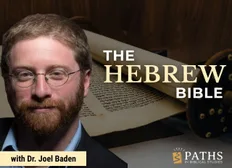 Online course
Hebrew Bible
Reading and understanding the Hebrew Bible is no small task. In this course, we rethink what these stories are, and what they might have meant in their original…
Online course
Hebrew Bible
Reading and understanding the Hebrew Bible is no small task. In this course, we rethink what these stories are, and what they might have meant in their original…
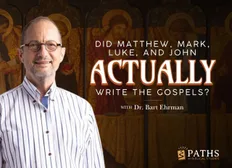 Free courseFree
Did Matthew, Mark, Luke, and John Really Write the Gospels?
A free lecture on who actually wrote the Gospels, and how scholars can tell.
Free courseFree
Did Matthew, Mark, Luke, and John Really Write the Gospels?
A free lecture on who actually wrote the Gospels, and how scholars can tell.
Related episodes
 Podcast
Why Early Christians Kept the Old Testament
Podcast
Why Early Christians Kept the Old Testament
 Podcast
Was Jesus a Violent Rebel? (Or a Zealot?)
Podcast
Was Jesus a Violent Rebel? (Or a Zealot?)
 Podcast
Mary Before Jesus
Podcast
Mary Before Jesus
Read next
 Article
What Are the Books of the Maccabees?
Article
What Are the Books of the Maccabees?
 Article
History of the Bible: Timeline and Key Versions
Find your path New to old testament origins?
Article
History of the Bible: Timeline and Key Versions
Find your path New to old testament origins? Two quick questions build you a personal route: free lectures, current articles and episodes, and the right course for your level.
Build my path →