 All episodes →
 Misquoting Jesus Podcast
Why the Doctrine of Inerrancy Contradicts the Gospels
Show notes
Episode Outline:
Is the Bible really inerrant, or is that a much later Christian idea?
Bart and Megan on being wrong, admitting mistakes, and Bart’s trip to Greece
What Christians usually mean when they say the Bible is “inspired”
The key verse: 2 Timothy 3:16 and what “God-breathed” actually means
What “inerrancy” means, and how it differs from broader ideas of inspiration
Why inerrancy is a modern doctrine rather than a timeless Christian belief
Do you need an inerrant Bible—or any Bible at all—to be a Christian?
Free webinar promo: Did Matthew, Mark, Luke, and John Actually Write Matthew, Mark, Luke, and John?
How many Christians believe in inspiration without believing in inerrancy
Church fathers like Origen who openly recognized contradictions in Scripture
Other early Christian methods for handling biblical difficulties
Did biblical authors themselves think they were writing inerrant Scripture?
What the Gospels suggest about their own authority and whether they claim inspiration
Bart’s key argument: Matthew and Luke change Mark, which means they did not treat him as inerrant
Example 1: Jairus’s daughter in Mark versus Matthew
How some modern defenders try to preserve inerrancy despite contradictions
Example 2: John changes the day of Jesus’ death for theological reasons
Does Christianity even need an inspired Bible?
What the Bible is still doing for believers, fundamentalists, and modern culture
Weekly Update: New Insights into the New Testament is returning, now focused on Paul
Listener Q&A: Mark’s circulation, Adam as Son of God, original sin, and the meaning of aionios
Final summary: inerrancy is a late doctrine, not a biblical one, and the Gospels themselves undermine it
Episode Description
Many modern Christians view the Bible as the inspired, inerrant word of God. Is that what its own authors thought? Did the author of Matthew, for example, think the Gospel of Mark was infallible? If so, why did he change it? In this episode we look at the views of the Gospel writers about the inerrancy of other Gospels -- even those also found in the New Testament.
Also watch these episodes:
Did Jesus Have to Suffer? Trying to Make Sense of a Troubling View
Did Jesus Have to Suffer? Trying to Make Sense of a Troubling View
What Happened to Jesus' Body? Was He Buried on the Day of His Crucifixion?
What Happened to Jesus' Body? Was He Buried on the Day of His Crucifixion?
Is the "Good Book" Really So Good?
Is the "Good Book" Really So Good?
Megan asks Bart:
- When someone speaks about the “inspiration” of the bible, what do they mean?
- Are there any verses of the Bible that indicate it is inspired?
- What, exactly, do we mean when we talk about inerrancy?
- Are there ways to think about inspiration apart from inerrancy?
- Does someone have to believe in inerrancy in order to be a Christian?
- How to believe in inspiration without inerrancy?
- Were there church fathers who thought there could be mistakes in the Bible?
- What kinds of methods of interpretations developed to explain difficulties in the biblical texts?
- Is there any way to know whether the biblical authors themselves believed in the inerrancy of their own works?
- Let’s talk about the Gospel writers. How would we go about deciding if they themselves thought the Gospels were inerrant?
- Do we have negative evidence about this?
- Do you have any examples of these changes?
- Are there other ways these stories get explained?
- More examples of gospel writers changing accounts?
- Do we even need an inspired Bible for Christianity?
- What then is the point of the Bible?
Is the Bible really inerrant, or is that a much later Christian idea?
Bart and Megan on being wrong, admitting mistakes, and Bart’s trip to Greece
What Christians usually mean when they say the Bible is “inspired”
The key verse: 2 Timothy 3:16 and what “God-breathed” actually means
What “inerrancy” means, and how it differs from broader ideas of inspiration
Why inerrancy is a modern doctrine rather than a timeless Christian belief
Do you need an inerrant Bible—or any Bible at all—to be a Christian?
Free webinar promo: Did Matthew, Mark, Luke, and John Actually Write Matthew, Mark, Luke, and John?
How many Christians believe in inspiration without believing in inerrancy
Church fathers like Origen who openly recognized contradictions in Scripture
Other early Christian methods for handling biblical difficulties
Did biblical authors themselves think they were writing inerrant Scripture?
What the Gospels suggest about their own authority and whether they claim inspiration
Bart’s key argument: Matthew and Luke change Mark, which means they did not treat him as inerrant
Example 1: Jairus’s daughter in Mark versus Matthew
How some modern defenders try to preserve inerrancy despite contradictions
Example 2: John changes the day of Jesus’ death for theological reasons
Does Christianity even need an inspired Bible?
What the Bible is still doing for believers, fundamentalists, and modern culture
Weekly Update: New Insights into the New Testament is returning, now focused on Paul
Listener Q&A: Mark’s circulation, Adam as Son of God, original sin, and the meaning of aionios
Final summary: inerrancy is a late doctrine, not a biblical one, and the Gospels themselves undermine it
Episode Description
Many modern Christians view the Bible as the inspired, inerrant word of God. Is that what its own authors thought? Did the author of Matthew, for example, think the Gospel of Mark was infallible? If so, why did he change it? In this episode we look at the views of the Gospel writers about the inerrancy of other Gospels -- even those also found in the New Testament.
Also watch these episodes:
Did Jesus Have to Suffer? Trying to Make Sense of a Troubling View
Did Jesus Have to Suffer? Trying to Make Sense of a Troubling View
What Happened to Jesus' Body? Was He Buried on the Day of His Crucifixion?
What Happened to Jesus' Body? Was He Buried on the Day of His Crucifixion?
Is the "Good Book" Really So Good?
Is the "Good Book" Really So Good?
Megan asks Bart:
- When someone speaks about the “inspiration” of the bible, what do they mean?
- Are there any verses of the Bible that indicate it is inspired?
- What, exactly, do we mean when we talk about inerrancy?
- Are there ways to think about inspiration apart from inerrancy?
- Does someone have to believe in inerrancy in order to be a Christian?
- How to believe in inspiration without inerrancy?
- Were there church fathers who thought there could be mistakes in the Bible?
- What kinds of methods of interpretations developed to explain difficulties in the biblical texts?
- Is there any way to know whether the biblical authors themselves believed in the inerrancy of their own works?
- Let’s talk about the Gospel writers. How would we go about deciding if they themselves thought the Gospels were inerrant?
- Do we have negative evidence about this?
- Do you have any examples of these changes?
- Are there other ways these stories get explained?
- More examples of gospel writers changing accounts?
- Do we even need an inspired Bible for Christianity?
- What then is the point of the Bible?
Go deeper on this topic
 Online course
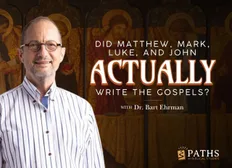
Did Matthew, Mark, Luke, and John Actually Write Matthew, Mark, Luke, and John
Nearly everyone assumes that the Gospels of Matthew, Mark, Luke, and John were written by …. Matthew Mark, Luke, and John. Is that actually likely? Historical scholars…
Online course
Did Matthew, Mark, Luke, and John Actually Write Matthew, Mark, Luke, and John
Nearly everyone assumes that the Gospels of Matthew, Mark, Luke, and John were written by …. Matthew Mark, Luke, and John. Is that actually likely? Historical scholars…
 Free courseFree
Why I Am Not a Christian
Bart’s own story, from fundamentalist to agnostic scholar. Four free lectures.
Free courseFree
Why I Am Not a Christian
Bart’s own story, from fundamentalist to agnostic scholar. Four free lectures.
Related episodes
 Podcast
Without Error? A History of Biblical Inerrancy
Podcast
Without Error? A History of Biblical Inerrancy
 Podcast
Bart and the Bible: What Made Bart Ehrman Change His View on Biblical Inerrancy?
Podcast
Bart and the Bible: What Made Bart Ehrman Change His View on Biblical Inerrancy?
 Podcast
Can Christians Study the New Testament Honestly?
Podcast
Can Christians Study the New Testament Honestly?
Read next
 Article
Biblical Inerrancy: Does the Bible Have Mistakes?
Article
Biblical Inerrancy: Does the Bible Have Mistakes?
 Article
Bible Translations Comparison: Exploring the Versions of the Bible
Find your path New to faith, doubt & deconstruction?
Article
Bible Translations Comparison: Exploring the Versions of the Bible
Find your path New to faith, doubt & deconstruction? Two quick questions build you a personal route: free lectures, current articles and episodes, and the right course for your level.
Build my path →