 All episodes →
 Misquoting Jesus Podcast
Telling God What He Can Do
Show notes
Episode Outline:
— Intro: Why the Ten Commandments are still so famous
— Megan’s Genesis conference update and ancient parallels
— Bart on teaching the Bible in the South
— What the Ten Commandments are and where they appear in the Bible
— Were the Ten Commandments always central to Christianity?
— Joel Baden course announcement and BSA mention
— Can most Christians actually name or keep the Ten Commandments?
— What some commandments originally meant, including adultery and property rights
— Why Christians elevate some Old Testament laws and ignore others
— Outsmart Bart bonus segment
Episode Description
For a religion that claims to view their god as the most powerful, supreme being in the universe, some Christians have an interesting habit of placing restrictions on what he can and can’t do. God can’t make a world without suffering, he has to inspire a collection of written texts (that have no mistakes in them), and he certainly can’t be sympathetic to anyone who practices other religion. But where do these limitations come from, and what purpose do they serve? In short: who says?
Also watch these episodes:
The Omnipresent Fear of Death
The Omnipresent Fear of Death
Does the Book of James Attack the Teachings of Paul?
Does the Book of James Attack the Teachings of Paul?
Why isn't Christianity a Doomsday Cult?
Why isn't Christianity a Doomsday Cult?
Megan asks Bart:
- Was the Christian god always considered to be a supreme, all-powerful being, or is this an idea that developed over time?
- Do we see these kinds of restrictions in early Christianity? OR When do we see these kinds of restrictions being introduced into Christianity?
- If we look at some specific restrictions, are they usually grounded in a Biblical passage, or are they more often apologetic arguments, that is, a defense of the Bible or Christianity against criticisms from outsiders? For example, does the Bible itself say that god requires an inerrant Bible in order for Christianity to be valid?
- When you were an evangelical, how did you view these limitations, and how would you have responded if someone told you that you were telling God what he could or couldn’t do?
- What's the most problematic restriction?
- How are these restrictions related to the problems of evil and suffering?
— Intro: Why the Ten Commandments are still so famous
— Megan’s Genesis conference update and ancient parallels
— Bart on teaching the Bible in the South
— What the Ten Commandments are and where they appear in the Bible
— Were the Ten Commandments always central to Christianity?
— Joel Baden course announcement and BSA mention
— Can most Christians actually name or keep the Ten Commandments?
— What some commandments originally meant, including adultery and property rights
— Why Christians elevate some Old Testament laws and ignore others
— Outsmart Bart bonus segment
Episode Description
For a religion that claims to view their god as the most powerful, supreme being in the universe, some Christians have an interesting habit of placing restrictions on what he can and can’t do. God can’t make a world without suffering, he has to inspire a collection of written texts (that have no mistakes in them), and he certainly can’t be sympathetic to anyone who practices other religion. But where do these limitations come from, and what purpose do they serve? In short: who says?
Also watch these episodes:
The Omnipresent Fear of Death
The Omnipresent Fear of Death
Does the Book of James Attack the Teachings of Paul?
Does the Book of James Attack the Teachings of Paul?
Why isn't Christianity a Doomsday Cult?
Why isn't Christianity a Doomsday Cult?
Megan asks Bart:
- Was the Christian god always considered to be a supreme, all-powerful being, or is this an idea that developed over time?
- Do we see these kinds of restrictions in early Christianity? OR When do we see these kinds of restrictions being introduced into Christianity?
- If we look at some specific restrictions, are they usually grounded in a Biblical passage, or are they more often apologetic arguments, that is, a defense of the Bible or Christianity against criticisms from outsiders? For example, does the Bible itself say that god requires an inerrant Bible in order for Christianity to be valid?
- When you were an evangelical, how did you view these limitations, and how would you have responded if someone told you that you were telling God what he could or couldn’t do?
- What's the most problematic restriction?
- How are these restrictions related to the problems of evil and suffering?
Go deeper on this topic
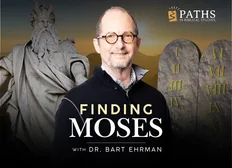 Online course
Finding Moses: What Scholars Know About the Exodus and the Jewish Law
Did Moses really exist? Did he write the Torah? What are the Ten Commandments, anyway? Take a deep dive into the stories of Moses, the exodus, the giving of the law on…
Online course
Finding Moses: What Scholars Know About the Exodus and the Jewish Law
Did Moses really exist? Did he write the Torah? What are the Ten Commandments, anyway? Take a deep dive into the stories of Moses, the exodus, the giving of the law on…
 Free courseFree
Did Peter Hate Paul?
A free two-lecture course on the clash between Christianity’s two giants.
Free courseFree
Did Peter Hate Paul?
A free two-lecture course on the clash between Christianity’s two giants.
Related episodes
 Podcast
Newly Discovered PROOF: Jesus Was an Illusionist
Podcast
Newly Discovered PROOF: Jesus Was an Illusionist
 Podcast
Christianity One Year After Jesus
Podcast
Christianity One Year After Jesus
 Podcast
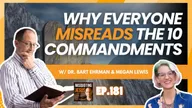
Why Everyone Misreads the 10 Commandments
Podcast
Why Everyone Misreads the 10 Commandments
Read next
 Article
Do Catholics and Protestants Have Different 10 Commandments?
Article
Do Catholics and Protestants Have Different 10 Commandments?
 Article
10 Commandments in Order: List of All Ten in the Bible (Plus Verse)
10 Commandments: List of All Ten Commandments in the Bible (In Order with Verses)
Find your path New to early christian diversity & heresies?
Article
10 Commandments in Order: List of All Ten in the Bible (Plus Verse)
10 Commandments: List of All Ten Commandments in the Bible (In Order with Verses)
Find your path New to early christian diversity & heresies? Two quick questions build you a personal route: free lectures, current articles and episodes, and the right course for your level.
Build my path →