 All episodes →
 Misquoting Jesus Podcast
Are the Gospels Filled with Fiction?
Show notes
Episode Outline:
- Introduction: Can Gospel contradictions reveal the historical Jesus?
- When Bart first noticed contradictions in the Gospels
- Differences vs. true contradictions in Gospel stories
- Major resurrection contradictions between Matthew and Luke
- How contradictions entered the Gospel traditions
- Genealogies, resurrection accounts, and Gospel differences
- Jesus’ baptism and changing theological views
- Why contradictions can help us read the Gospels better
Episode Description
In Episode 147, Megan Lewis and renowned Bible scholar Dr. Bart Ehrman confront a topic often seen as controversial but crucial for understanding Christianity—the contradictions and differences found in the four canonical Gospels.
Kicking off with a lighthearted discussion about favorite movies (with Bart revealing his affection for French cinema and Megan’s love for Monty Python), the episode quickly transitions to weighty questions: If the Gospels disagree on the words and deeds of Jesus, how can we know what the historical Jesus really said and did? Do these contradictions undermine Christian faith, or do they open the door to a richer and more nuanced understanding of the New Testament?
Dr. Ehrman draws from his personal journey, reflecting on his initial struggle to accept Gospel contradictions after believing in their inerrancy. He emphasizes the importance of distinguishing between a difference (details that can be harmonized) and a contradiction (core facts that cannot be reconciled). For instance, while the number of women at the empty tomb may just be a difference, the location of Jesus’ post-resurrection appearances or the day of his death are, according to Bart, outright contradictions.
The episode further explores how these divergent narratives entered the Gospels—sometimes through the oral transmission of stories in different Christian communities, and other times through conscientious theological editing by the Gospel authors themselves. Examples such as the conflicting genealogies of Jesus, the details of his crucifixion, and the scene of his baptism are discussed in detail.
Bart and Megan also challenge the notion that recognizing contradictions must lead to abandoning Christian faith. Instead, Bart argues that acknowledging these discrepancies can actually enrich one’s understanding of each Gospel and of early Christianity as a whole.
Listeners are encouraged not only to accept that the Bible contains contradictions, but to use this as an entry point for deeper exploration, critical thinking, and appreciation of the diversity and complexity within Christian origins.
3 Key Takeaways
1. Contradictions vs. Differences: Not every apparent variation is a contradiction—some are minor differences, but others are irreconcilable and force us to question traditional narratives or assumptions of biblical inerrancy.
2. Intentional Theological Shaping: Gospel authors often modified inherited stories to fit their own theological perspectives, demonstrating that theology often took precedence over strict historical reporting.
3. Opening Up, Not Closing Down, Meaning: Accepting contradictions doesn’t destroy faith or understanding; it can expand and deepen our knowledge of the New Testament, allowing us to appreciate each Gospel on its own terms.
Key Points
- The episode discusses both trivial and significant contradictions in the Gospels, citing specific examples.
- Bart Ehrman’s personal journey from evangelical faith to critical scholarship illustrates how confronting contradictions can be challenging but transformative.
- The differences between “contradiction” and “difference” are carefully defined, emphasizing that not all inconsistencies are equal.
Also watch these episodes:
Bart and the Bible: What Made Bart Ehrman Change His View on Biblical Inerrancy?
Bart and the Bible: What Made Bart Ehrman Change His View on Biblical Inerrancy?
Can the New Testament Possibly Be True?
Can the New Testament Possibly Be True?
How Did Scribes Change the Gospel of Mark?
How Did Scribes Change the Gospel of Mark?
- Introduction: Can Gospel contradictions reveal the historical Jesus?
- When Bart first noticed contradictions in the Gospels
- Differences vs. true contradictions in Gospel stories
- Major resurrection contradictions between Matthew and Luke
- How contradictions entered the Gospel traditions
- Genealogies, resurrection accounts, and Gospel differences
- Jesus’ baptism and changing theological views
- Why contradictions can help us read the Gospels better
Episode Description
In Episode 147, Megan Lewis and renowned Bible scholar Dr. Bart Ehrman confront a topic often seen as controversial but crucial for understanding Christianity—the contradictions and differences found in the four canonical Gospels.
Kicking off with a lighthearted discussion about favorite movies (with Bart revealing his affection for French cinema and Megan’s love for Monty Python), the episode quickly transitions to weighty questions: If the Gospels disagree on the words and deeds of Jesus, how can we know what the historical Jesus really said and did? Do these contradictions undermine Christian faith, or do they open the door to a richer and more nuanced understanding of the New Testament?
Dr. Ehrman draws from his personal journey, reflecting on his initial struggle to accept Gospel contradictions after believing in their inerrancy. He emphasizes the importance of distinguishing between a difference (details that can be harmonized) and a contradiction (core facts that cannot be reconciled). For instance, while the number of women at the empty tomb may just be a difference, the location of Jesus’ post-resurrection appearances or the day of his death are, according to Bart, outright contradictions.
The episode further explores how these divergent narratives entered the Gospels—sometimes through the oral transmission of stories in different Christian communities, and other times through conscientious theological editing by the Gospel authors themselves. Examples such as the conflicting genealogies of Jesus, the details of his crucifixion, and the scene of his baptism are discussed in detail.
Bart and Megan also challenge the notion that recognizing contradictions must lead to abandoning Christian faith. Instead, Bart argues that acknowledging these discrepancies can actually enrich one’s understanding of each Gospel and of early Christianity as a whole.
Listeners are encouraged not only to accept that the Bible contains contradictions, but to use this as an entry point for deeper exploration, critical thinking, and appreciation of the diversity and complexity within Christian origins.
3 Key Takeaways
1. Contradictions vs. Differences: Not every apparent variation is a contradiction—some are minor differences, but others are irreconcilable and force us to question traditional narratives or assumptions of biblical inerrancy.
2. Intentional Theological Shaping: Gospel authors often modified inherited stories to fit their own theological perspectives, demonstrating that theology often took precedence over strict historical reporting.
3. Opening Up, Not Closing Down, Meaning: Accepting contradictions doesn’t destroy faith or understanding; it can expand and deepen our knowledge of the New Testament, allowing us to appreciate each Gospel on its own terms.
Key Points
- The episode discusses both trivial and significant contradictions in the Gospels, citing specific examples.
- Bart Ehrman’s personal journey from evangelical faith to critical scholarship illustrates how confronting contradictions can be challenging but transformative.
- The differences between “contradiction” and “difference” are carefully defined, emphasizing that not all inconsistencies are equal.
Also watch these episodes:
Bart and the Bible: What Made Bart Ehrman Change His View on Biblical Inerrancy?
Bart and the Bible: What Made Bart Ehrman Change His View on Biblical Inerrancy?
Can the New Testament Possibly Be True?
Can the New Testament Possibly Be True?
How Did Scribes Change the Gospel of Mark?
How Did Scribes Change the Gospel of Mark?
Go deeper on this topic
 Online course
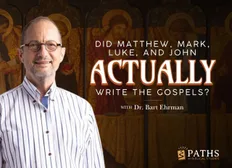
Did Matthew, Mark, Luke, and John Actually Write Matthew, Mark, Luke, and John
Nearly everyone assumes that the Gospels of Matthew, Mark, Luke, and John were written by …. Matthew Mark, Luke, and John. Is that actually likely? Historical scholars…
Free courseFree
Did Matthew, Mark, Luke, and John Really Write the Gospels?
A free lecture on who actually wrote the Gospels, and how scholars can tell.
Online course
Did Matthew, Mark, Luke, and John Actually Write Matthew, Mark, Luke, and John
Nearly everyone assumes that the Gospels of Matthew, Mark, Luke, and John were written by …. Matthew Mark, Luke, and John. Is that actually likely? Historical scholars…
Free courseFree
Did Matthew, Mark, Luke, and John Really Write the Gospels?
A free lecture on who actually wrote the Gospels, and how scholars can tell.
Related episodes
 Podcast
Why are the Gospels so Late?
Podcast
Why are the Gospels so Late?
 Podcast
Gospel Discrepancies: Why Matthew and Luke Tell Different Christmas Stories
Podcast
Gospel Discrepancies: Why Matthew and Luke Tell Different Christmas Stories
 Podcast
How Many Jesuses Are in the New Testament?
Podcast
How Many Jesuses Are in the New Testament?
Read next
 Article
Do the Gospels Contradict Each Other?
Article
Do the Gospels Contradict Each Other?
 Article
Guards, Visitors, & Angels: Does the Story of Jesus’ Tomb Contain Contradictions?
Find your path New to the gospels?
Article
Guards, Visitors, & Angels: Does the Story of Jesus’ Tomb Contain Contradictions?
Find your path New to the gospels? Two quick questions build you a personal route: free lectures, current articles and episodes, and the right course for your level.
Build my path →