 All episodes →
 Misquoting Jesus Podcast
5 Evangelical Truisms that Aren't True
Show notes
Episode Outline:
– Introducing five Christian views Bart used to hold
– Bart’s journey from evangelical Christianity to agnosticism
– Belief #1: The Bible has no errors
– Why textual variants mattered to Bart as a young scholar
– Belief #2: Old Testament prophecies clearly point to Jesus
– How Gospel writers shaped Jesus’ story around Scripture
– Belief #3: Nonbelievers will be eternally punished
– Belief #4: Jesus would return in Bart’s generation
– Belief #5: Paul and Jesus taught the same view of salvation
– Scholar Spotlight: Shaye Cohen and early Judaism
Episode Description
What happens when a leading New Testament scholar, once a fervent evangelical, profoundly changes his mind about the very core tenets of his faith? In Episode 187 of the Misquoting Jesus podcast, Megan Lewis sits down with Bart Ehrman for an honest, sometimes humorous, and always thought-provoking discussion of five Christian ideas he once fiercely defended—but now rejects.
From Evangelical Zeal to Critical Scholarship
The episode opens with Bart Ehrman recounting his faith journey: his upbringing in the Episcopal church, his born-again evangelical conversion as a teenager, and his intense years at Moody Bible Institute. He describes a world where biblical inerrancy, the urgent expectation of Jesus’s return, and the uniqueness of salvation through Christ weren’t just beliefs—they were the backbone of evangelical identity ().
Five Shifting Foundations
Megan Lewis and Bart Ehrman then take listeners through the five pivotal beliefs he once held:
1. Biblical Inerrancy
As a fundamentalist, Bart Ehrman was unwavering: the Bible, in its original autographs, contained no mistakes—not in history, science, geography, or doctrine.
2. Old Testament Prophecies About Jesus
Using examples like Isaiah 53, Bart Ehrman guides listeners through the evangelical insistence that the Hebrew Bible’s prophecies clearly point to Jesus—and asks what happens when you study those passages in their original context (–16:08).
3. Eternal Punishment for Unbelievers
For evangelicals, the stakes are ultimate: only believers in Jesus gain eternal life; all others face damnation ().
4. Imminent Second Coming of Jesus
Many evangelicals believe Jesus will return in their own generation—sometimes even pinpointing the exact year ().
5. Jesus and Paul Taught the Same Gospel
Perhaps most surprisingly, Bart Ehrman explores the significant differences between Jesus’s and Paul’s views of salvation.
3 Key Takeaways
- Certainty Gives Way to Context: Deep study and open questioning can radically transform even the most deeply held beliefs, especially when you confront the complexities and historical contexts of scripture.
- Interpretation Matters: The meanings we see in the Bible often rest on the lenses we use—reading scriptures with the assumptions of one era or tradition can obscure how they were originally intended.
- Belief Has Consequences: Doctrines like eternal punishment can be emotionally and psychologically burdensome, making honest re-examination not just an intellectual task but a personal liberation.
Also watch these episodes:
Bart and the Bible: What Made Bart Ehrman Change His View on Biblical Inerrancy?
Bart and the Bible: What Made Bart Ehrman Change His View on Biblical Inerrancy?
Paul and Jesus at Odds
Paul and Jesus at Odds
Did Jesus Even Care if You Believed in Him?
https://youtu.be/UpKQ-4h0Tvg
– Introducing five Christian views Bart used to hold
– Bart’s journey from evangelical Christianity to agnosticism
– Belief #1: The Bible has no errors
– Why textual variants mattered to Bart as a young scholar
– Belief #2: Old Testament prophecies clearly point to Jesus
– How Gospel writers shaped Jesus’ story around Scripture
– Belief #3: Nonbelievers will be eternally punished
– Belief #4: Jesus would return in Bart’s generation
– Belief #5: Paul and Jesus taught the same view of salvation
– Scholar Spotlight: Shaye Cohen and early Judaism
Episode Description
What happens when a leading New Testament scholar, once a fervent evangelical, profoundly changes his mind about the very core tenets of his faith? In Episode 187 of the Misquoting Jesus podcast, Megan Lewis sits down with Bart Ehrman for an honest, sometimes humorous, and always thought-provoking discussion of five Christian ideas he once fiercely defended—but now rejects.
From Evangelical Zeal to Critical Scholarship
The episode opens with Bart Ehrman recounting his faith journey: his upbringing in the Episcopal church, his born-again evangelical conversion as a teenager, and his intense years at Moody Bible Institute. He describes a world where biblical inerrancy, the urgent expectation of Jesus’s return, and the uniqueness of salvation through Christ weren’t just beliefs—they were the backbone of evangelical identity ().
Five Shifting Foundations
Megan Lewis and Bart Ehrman then take listeners through the five pivotal beliefs he once held:
1. Biblical Inerrancy
As a fundamentalist, Bart Ehrman was unwavering: the Bible, in its original autographs, contained no mistakes—not in history, science, geography, or doctrine.
2. Old Testament Prophecies About Jesus
Using examples like Isaiah 53, Bart Ehrman guides listeners through the evangelical insistence that the Hebrew Bible’s prophecies clearly point to Jesus—and asks what happens when you study those passages in their original context (–16:08).
3. Eternal Punishment for Unbelievers
For evangelicals, the stakes are ultimate: only believers in Jesus gain eternal life; all others face damnation ().
4. Imminent Second Coming of Jesus
Many evangelicals believe Jesus will return in their own generation—sometimes even pinpointing the exact year ().
5. Jesus and Paul Taught the Same Gospel
Perhaps most surprisingly, Bart Ehrman explores the significant differences between Jesus’s and Paul’s views of salvation.
3 Key Takeaways
- Certainty Gives Way to Context: Deep study and open questioning can radically transform even the most deeply held beliefs, especially when you confront the complexities and historical contexts of scripture.
- Interpretation Matters: The meanings we see in the Bible often rest on the lenses we use—reading scriptures with the assumptions of one era or tradition can obscure how they were originally intended.
- Belief Has Consequences: Doctrines like eternal punishment can be emotionally and psychologically burdensome, making honest re-examination not just an intellectual task but a personal liberation.
Also watch these episodes:
Bart and the Bible: What Made Bart Ehrman Change His View on Biblical Inerrancy?
Bart and the Bible: What Made Bart Ehrman Change His View on Biblical Inerrancy?
Paul and Jesus at Odds
Paul and Jesus at Odds
Did Jesus Even Care if You Believed in Him?
https://youtu.be/UpKQ-4h0Tvg
Go deeper on this topic
 Online course
Other Virgin Births in Antiquity - Online Lecture
Was Jesus of Nazareth the ONLY miracle-working Son of God to be born of a virgin? Search the internet and you’ll find a definitive answer: No! But what does an expert…
Online course
Other Virgin Births in Antiquity - Online Lecture
Was Jesus of Nazareth the ONLY miracle-working Son of God to be born of a virgin? Search the internet and you’ll find a definitive answer: No! But what does an expert…
 Free courseFree
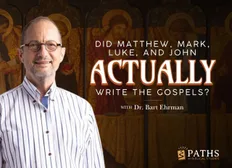
Did Matthew, Mark, Luke, and John Really Write the Gospels?
A free lecture on who actually wrote the Gospels, and how scholars can tell.
Free courseFree
Did Matthew, Mark, Luke, and John Really Write the Gospels?
A free lecture on who actually wrote the Gospels, and how scholars can tell.
Related episodes
 Podcast
Did Jesus Invent Charity?
Podcast
Did Jesus Invent Charity?
 Podcast
8 Bible Myths Many Christians Believe
Podcast
8 Bible Myths Many Christians Believe
 Podcast
Did Christians Invent Jesus' Teachings?
Podcast
Did Christians Invent Jesus' Teachings?
Read next
 Article
What is the Best Study Bible? (Ratings, Features, & Bart’s Favorite)
Article
What is the Best Study Bible? (Ratings, Features, & Bart’s Favorite)
 Article
Historicity of Jesus: 5 Historical Facts About Jesus
5 undeniable Facts that prove jesus was a real person
Find your path New to bible reliability & manuscripts?
Article
Historicity of Jesus: 5 Historical Facts About Jesus
5 undeniable Facts that prove jesus was a real person
Find your path New to bible reliability & manuscripts? Two quick questions build you a personal route: free lectures, current articles and episodes, and the right course for your level.
Build my path →