 All episodes →
 Misquoting Jesus Podcast
Before Genesis: What the Old Testament Borrowed from Mesopotamian Stories
Show notes
Episode Outline:
– Introducing the cultural background of the Old Testament
– How Bart once understood biblical history
– Megan’s background in Assyriology and Mesopotamian studies
– How Mesopotamian history predates ancient Israel
– Uruk, writing, and the world’s first city
– How scholars date ancient tablets and archaeological finds
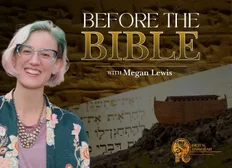
– Megan’s course: Before the Bible
– Mesopotamian flood stories and Genesis
– Legal traditions, Hammurabi, and the Old Testament
– Israel among the “Great Powers” of the ancient world
– Why Israel’s location made it vulnerable to empires
– How ancient cultures interpreted politics through theology
– Israelite religion, Canaanite culture, and Yahweh
– Where biblical history and Mesopotamian records differ
– Bonus segment: Bart quizzes Megan on ancient Mesopotamia
Episode Description
Have you ever wondered how much the Old Testament owes to cultures and civilizations outside ancient Israel? In this fascinating conversation, biblical scholar Bart Ehrman and assyriologist Megan Lewis explore the cultural and historical backdrop of the Hebrew Bible. Connecting the Bible with Mesopotamian myth, legal codes, and political realities, they reveal just how “plugged in” Israelite writers were to the vibrant world around them.
The episode opens with a candid look at childhood perceptions of biblical history versus ancient history “out there.” Bart shares how, growing up, he saw the Bible as the only real history, with little sense of the powerful nations and stories unfolding at the same time — or even centuries before — biblical events. Megan recalls how her upbringing exposed her early to mythology, history, and ancient civilizations before university gave her the framework to situate the Bible chronologically and culturally.
Megan then explains her background in Assyriology, emphasizing that Mesopotamian history — with city-states, empires, and writing systems — stretches back thousands of years before Israel appears in the historical record. Uruk, for example, reached city-size and developed writing by the mid-4th millennium BCE, more than two thousand years before the first historical mentions of Israel.
Together, Bart and Megan explore how myths like the Flood story, legal codes like “an eye for an eye,” and even political and religious worldviews in the Old Testament were shaped by Mesopotamian antecedents. But these borrowings were not mere “copying.” Israelite writers often adapted earlier traditions to reflect their own theological and cultural priorities.
The episode also explores the political landscape of the ancient Near East, including the “Great Powers Club” of Egypt, the Mitanni, the Hittites, Assyria, and Babylonia. Israel was a small player facing immense pressure from all sides, located along trade routes coveted by powerful empires. This helps contextualize biblical narratives of conquest, exile, and divine punishment within a reality of repeated invasion.
Challenging common assumptions, the hosts discuss recent scholarship showing cultural and religious continuity between the Israelites and their Canaanite neighbors.
To round out the discussion, Bart quizzes Megan on cuneiform writing, the Epic of Gilgamesh, and the earliest written records in Mesopotamia, adding historical perspective and some light-hearted moments.
3 Key Takeaways
- The Old Testament was written within a rich and complex cultural matrix: Israel existed alongside (and was deeply influenced by) older, powerful civilizations like Egypt and Mesopotamia.
- Biblical stories, laws, and myths often have clear precursors or analogues: The Flood narrative, legal codes, and city laments in the Bible are rooted in much earlier Mesopotamian texts — but were creatively adapted to new purposes.
- The image of Israel’s distinctiveness is often a later construction: Archaeological and historical evidence shows substantive cultural overlap and continuity between the Israelites and their neighbors.
Also watch these episodes:
Finding Jesus in Genesis
Finding Jesus in Genesis
Does Genesis 1 Contradict Genesis 2?
Does Genesis 1 Contradict Genesis 2?
The Bible Says So: What We Get Right and Wrong About the Bible
The Bible Says So: What We Get Right and Wrong About the Bible
– Introducing the cultural background of the Old Testament
– How Bart once understood biblical history
– Megan’s background in Assyriology and Mesopotamian studies
– How Mesopotamian history predates ancient Israel
– Uruk, writing, and the world’s first city
– How scholars date ancient tablets and archaeological finds
– Megan’s course: Before the Bible
– Mesopotamian flood stories and Genesis
– Legal traditions, Hammurabi, and the Old Testament
– Israel among the “Great Powers” of the ancient world
– Why Israel’s location made it vulnerable to empires
– How ancient cultures interpreted politics through theology
– Israelite religion, Canaanite culture, and Yahweh
– Where biblical history and Mesopotamian records differ
– Bonus segment: Bart quizzes Megan on ancient Mesopotamia
Episode Description
Have you ever wondered how much the Old Testament owes to cultures and civilizations outside ancient Israel? In this fascinating conversation, biblical scholar Bart Ehrman and assyriologist Megan Lewis explore the cultural and historical backdrop of the Hebrew Bible. Connecting the Bible with Mesopotamian myth, legal codes, and political realities, they reveal just how “plugged in” Israelite writers were to the vibrant world around them.
The episode opens with a candid look at childhood perceptions of biblical history versus ancient history “out there.” Bart shares how, growing up, he saw the Bible as the only real history, with little sense of the powerful nations and stories unfolding at the same time — or even centuries before — biblical events. Megan recalls how her upbringing exposed her early to mythology, history, and ancient civilizations before university gave her the framework to situate the Bible chronologically and culturally.
Megan then explains her background in Assyriology, emphasizing that Mesopotamian history — with city-states, empires, and writing systems — stretches back thousands of years before Israel appears in the historical record. Uruk, for example, reached city-size and developed writing by the mid-4th millennium BCE, more than two thousand years before the first historical mentions of Israel.
Together, Bart and Megan explore how myths like the Flood story, legal codes like “an eye for an eye,” and even political and religious worldviews in the Old Testament were shaped by Mesopotamian antecedents. But these borrowings were not mere “copying.” Israelite writers often adapted earlier traditions to reflect their own theological and cultural priorities.
The episode also explores the political landscape of the ancient Near East, including the “Great Powers Club” of Egypt, the Mitanni, the Hittites, Assyria, and Babylonia. Israel was a small player facing immense pressure from all sides, located along trade routes coveted by powerful empires. This helps contextualize biblical narratives of conquest, exile, and divine punishment within a reality of repeated invasion.
Challenging common assumptions, the hosts discuss recent scholarship showing cultural and religious continuity between the Israelites and their Canaanite neighbors.
To round out the discussion, Bart quizzes Megan on cuneiform writing, the Epic of Gilgamesh, and the earliest written records in Mesopotamia, adding historical perspective and some light-hearted moments.
3 Key Takeaways
- The Old Testament was written within a rich and complex cultural matrix: Israel existed alongside (and was deeply influenced by) older, powerful civilizations like Egypt and Mesopotamia.
- Biblical stories, laws, and myths often have clear precursors or analogues: The Flood narrative, legal codes, and city laments in the Bible are rooted in much earlier Mesopotamian texts — but were creatively adapted to new purposes.
- The image of Israel’s distinctiveness is often a later construction: Archaeological and historical evidence shows substantive cultural overlap and continuity between the Israelites and their neighbors.
Also watch these episodes:
Finding Jesus in Genesis
Finding Jesus in Genesis
Does Genesis 1 Contradict Genesis 2?
Does Genesis 1 Contradict Genesis 2?
The Bible Says So: What We Get Right and Wrong About the Bible
The Bible Says So: What We Get Right and Wrong About the Bible
Go deeper on this topic
 Online course
Before the Bible
The Hebrew Bible wasn’t written in a vacuum, and its writers didn’t live in seclusion from the rest of the ancient Near East. This course introduces the world and…
Online course
Before the Bible
The Hebrew Bible wasn’t written in a vacuum, and its writers didn’t live in seclusion from the rest of the ancient Near East. This course introduces the world and…
Related episodes
 Podcast
Featuring Megan Lewis! And all that entails.
Podcast
Featuring Megan Lewis! And all that entails.
 Podcast
Why Everyone Misreads the 10 Commandments
Podcast
Why Everyone Misreads the 10 Commandments
 Podcast
Does Genesis 1 Contradict Genesis 2?
Podcast
Does Genesis 1 Contradict Genesis 2?
Read next
 Article
The Bronze Age Collapse: The Bible’s Invisible Catastrophe?
Featured Contribution from the Biblical Studies Academy Community
Article
The Bronze Age Collapse: The Bible’s Invisible Catastrophe?
Featured Contribution from the Biblical Studies Academy Community
 Article
Melchizedek: New Insights into the Genesis’ King of Salem
Find your path New to biblical scholarship?
Article
Melchizedek: New Insights into the Genesis’ King of Salem
Find your path New to biblical scholarship? Two quick questions build you a personal route: free lectures, current articles and episodes, and the right course for your level.
Build my path →