 All episodes →
 Misquoting Jesus Podcast
Did Jesus Really Go to Hell?
Show notes
Episode Outline:
Why does hell remain a threat if Jesus conquered it?
Bart and Megan on language courses, Digital Hammurabi, and ancient-language teaching online
What a katabasis is and why ancient journeys to the underworld mattered
Homer, Virgil, and how descent-to-the-dead stories teach moral and religious lessons
The earliest Christian example: the Apocalypse of Peter and its graphic vision of hell
Course promo: In the Beginning: History, Legend, and Myth in Genesis
What the “harrowing of hell” means in Christian tradition
The big theological issue: who exactly gets saved when Christ descends to Hades?
The Gospel of Nicodemus and why it became the most famous account of Jesus in hell
In the earliest version, Jesus empties hell completely
Why later Christians found universal salvation hard to accept
Augustine, Origen, and the clash between divine justice and universal salvation
How Christians tried to reconcile Christ’s power with the continued punishment of sinners
Preaching versus power: two major models of Christ’s descent to the dead
Why universal salvation never disappeared and has seen a modern resurgence
Why Bart thinks moving away from eternal torment is a positive development
Weekly Update: Amy-Jill Levine’s upcoming course on the parables of Jesus
Listener Q&A: genealogies, Mary’s status, the structure of the universe, and the Syrophoenician woman
Final summary: Jesus’ descent to the dead became a major arena for debating whether salvation is limited or universal
Episode Description
If Jesus was dead for three days -- where did he go? The standard view for almost all of Christian history was that he went to the realm of the dead to save the lost souls who died before his crucifixion made salvation possible. But did he save only a few or ... everyone? In this episode, Bart and Megan dive into the ancient doctrine called the "Harrowing of Hell," which is still believed by millions today. But what are we to make of the idea that Jesus' salvation was universal? Literally, everyone gets saved?
Also watch these episodes:
Did Jesus Have to Suffer? Trying to Make Sense of a Troubling View
Did Jesus Have to Suffer? Trying to Make Sense of a Troubling View
What Happened to Jesus' Body? Was He Buried on the Day of His Crucifixion?
What Happened to Jesus' Body? Was He Buried on the Day of His Crucifixion?
Were Early Christians Known to Be Moral Reprobates?
Were Early Christians Known to Be Moral Reprobates?
Megan asks Bart:
- Why is it important to consider the teachings of the apostle Paul?
- What role did Paul’s writings play in the formation of Christianity? What role do they play in modern Christianity?
- What are the most important messages in Jesus’ teachings?
- Does Paul teach the same thing in his writings?
- If someone asked Jesus what they had to do to be saved, what would he have answered?
- If the same question was asked of Paul, would he have given the same answer?
- Why do people struggle to see these as different responses?
- What are some of the ways that Christians have tried to make these different messages mean the same thing?
- Would Paul have viewed himself as changing Jesus’ message?
- Do you see any commonalities between what Paul and Jesus said?
- Are any of their instructions contradictory, or is it possible to do what they both say?
- If you had to pick a side between Jesus and Paul, who would you go with?
Why does hell remain a threat if Jesus conquered it?
Bart and Megan on language courses, Digital Hammurabi, and ancient-language teaching online
What a katabasis is and why ancient journeys to the underworld mattered
Homer, Virgil, and how descent-to-the-dead stories teach moral and religious lessons
The earliest Christian example: the Apocalypse of Peter and its graphic vision of hell
Course promo: In the Beginning: History, Legend, and Myth in Genesis
What the “harrowing of hell” means in Christian tradition
The big theological issue: who exactly gets saved when Christ descends to Hades?
The Gospel of Nicodemus and why it became the most famous account of Jesus in hell
In the earliest version, Jesus empties hell completely
Why later Christians found universal salvation hard to accept
Augustine, Origen, and the clash between divine justice and universal salvation
How Christians tried to reconcile Christ’s power with the continued punishment of sinners
Preaching versus power: two major models of Christ’s descent to the dead
Why universal salvation never disappeared and has seen a modern resurgence
Why Bart thinks moving away from eternal torment is a positive development
Weekly Update: Amy-Jill Levine’s upcoming course on the parables of Jesus
Listener Q&A: genealogies, Mary’s status, the structure of the universe, and the Syrophoenician woman
Final summary: Jesus’ descent to the dead became a major arena for debating whether salvation is limited or universal
Episode Description
If Jesus was dead for three days -- where did he go? The standard view for almost all of Christian history was that he went to the realm of the dead to save the lost souls who died before his crucifixion made salvation possible. But did he save only a few or ... everyone? In this episode, Bart and Megan dive into the ancient doctrine called the "Harrowing of Hell," which is still believed by millions today. But what are we to make of the idea that Jesus' salvation was universal? Literally, everyone gets saved?
Also watch these episodes:
Did Jesus Have to Suffer? Trying to Make Sense of a Troubling View
Did Jesus Have to Suffer? Trying to Make Sense of a Troubling View
What Happened to Jesus' Body? Was He Buried on the Day of His Crucifixion?
What Happened to Jesus' Body? Was He Buried on the Day of His Crucifixion?
Were Early Christians Known to Be Moral Reprobates?
Were Early Christians Known to Be Moral Reprobates?
Megan asks Bart:
- Why is it important to consider the teachings of the apostle Paul?
- What role did Paul’s writings play in the formation of Christianity? What role do they play in modern Christianity?
- What are the most important messages in Jesus’ teachings?
- Does Paul teach the same thing in his writings?
- If someone asked Jesus what they had to do to be saved, what would he have answered?
- If the same question was asked of Paul, would he have given the same answer?
- Why do people struggle to see these as different responses?
- What are some of the ways that Christians have tried to make these different messages mean the same thing?
- Would Paul have viewed himself as changing Jesus’ message?
- Do you see any commonalities between what Paul and Jesus said?
- Are any of their instructions contradictory, or is it possible to do what they both say?
- If you had to pick a side between Jesus and Paul, who would you go with?
Go deeper on this topic
 Online course
What the Hell?
Many people have trouble understanding how a good God could send billions of people to eternal torment because they have not believed the right things or behaved the…
Online course
What the Hell?
Many people have trouble understanding how a good God could send billions of people to eternal torment because they have not believed the right things or behaved the…
 Free courseFree
Did Jesus Really Exist?
The evidence that Jesus existed, in two free lectures. The perfect first step.
Free courseFree
Did Jesus Really Exist?
The evidence that Jesus existed, in two free lectures. The perfect first step.
Related episodes
 Podcast
What Happened to Jesus' Body? Was He Buried on the Day of His Crucifixion?
Podcast
What Happened to Jesus' Body? Was He Buried on the Day of His Crucifixion?
 Podcast
Did Jesus Believe in Heaven?
Podcast
Did Jesus Believe in Heaven?
 Podcast
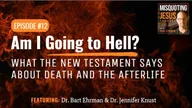
Am I Going to Hell? What the New Testament Says About Death and the Afterlife
Podcast
Am I Going to Hell? What the New Testament Says About Death and the Afterlife
Read next
 Article
Where was Jesus Crucified? (And Can You Still Visit the Location?)
Article
Where was Jesus Crucified? (And Can You Still Visit the Location?)
 Article
Gospel of Peter: Why It Was Banned from the Bible (PDF)
Find your path New to the historical jesus?
Article
Gospel of Peter: Why It Was Banned from the Bible (PDF)
Find your path New to the historical jesus? Two quick questions build you a personal route: free lectures, current articles and episodes, and the right course for your level.
Build my path →