
Image Credits
Against the Jews
Every image on the lecture page, with its source, license, and the reason it was chosen. The material is public-domain and freely-licensed work from Wikimedia Commons: the monuments and manuscripts of the tradition this lecture reconstructs, and photographs of the late-Roman synagogues that show how differently people actually lived. Creative Commons works are attributed below. All images have been resized for the web.
| Image | Work & Attribution | License | Where it appears | Why it’s included |
|---|---|---|---|---|
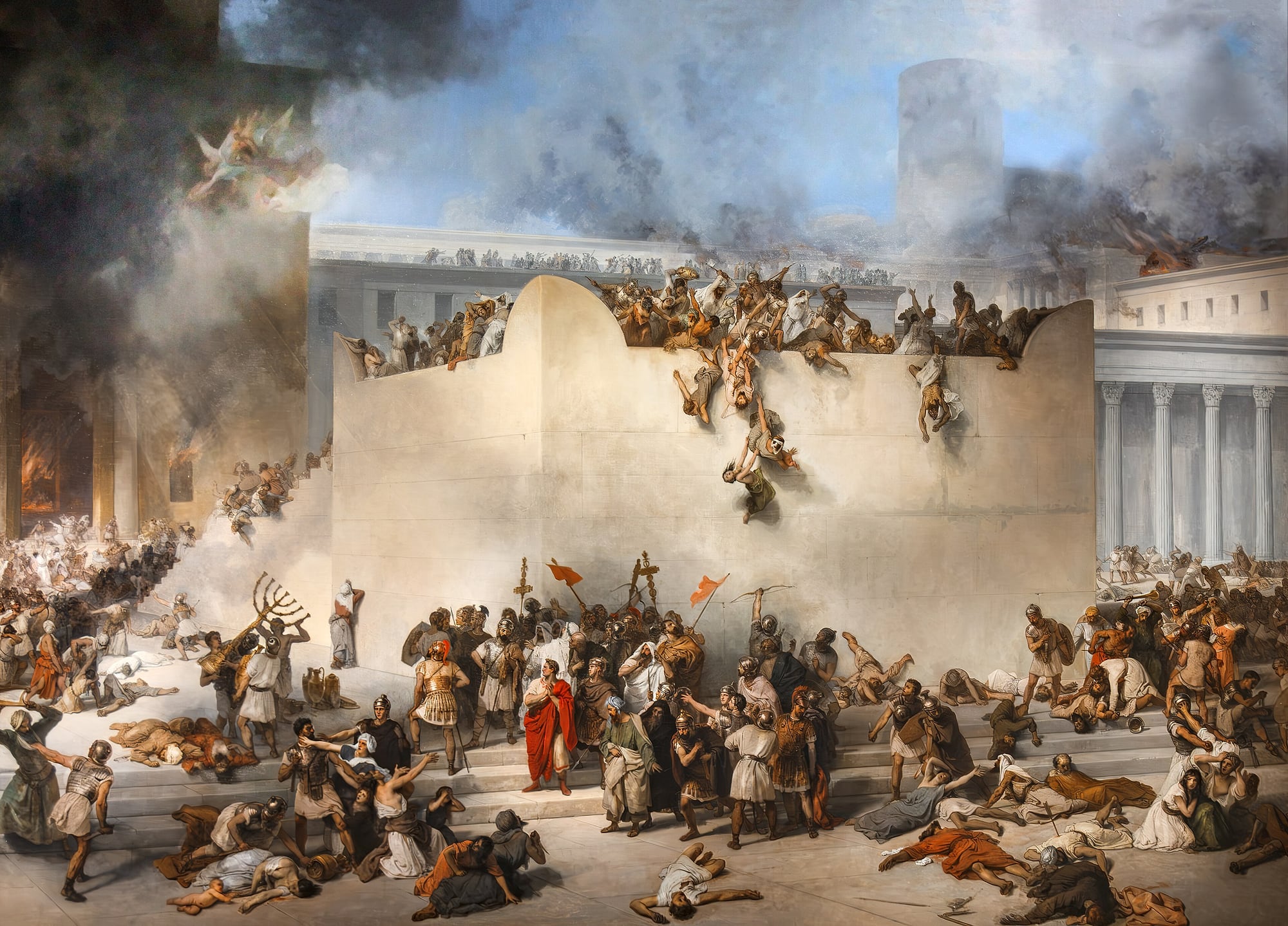 hayez-temple.jpg | The Destruction of the Temple of Jerusalem Francesco Hayez (photo: Didier Descouens) 1867 (photographed 2023) Source ↗ | Public domain | Hero background · Hero artifact caption | The fall of Jerusalem in 70, with the menorah carried out at the left: the event later theologians read back as proof that God had rejected the Jews. |
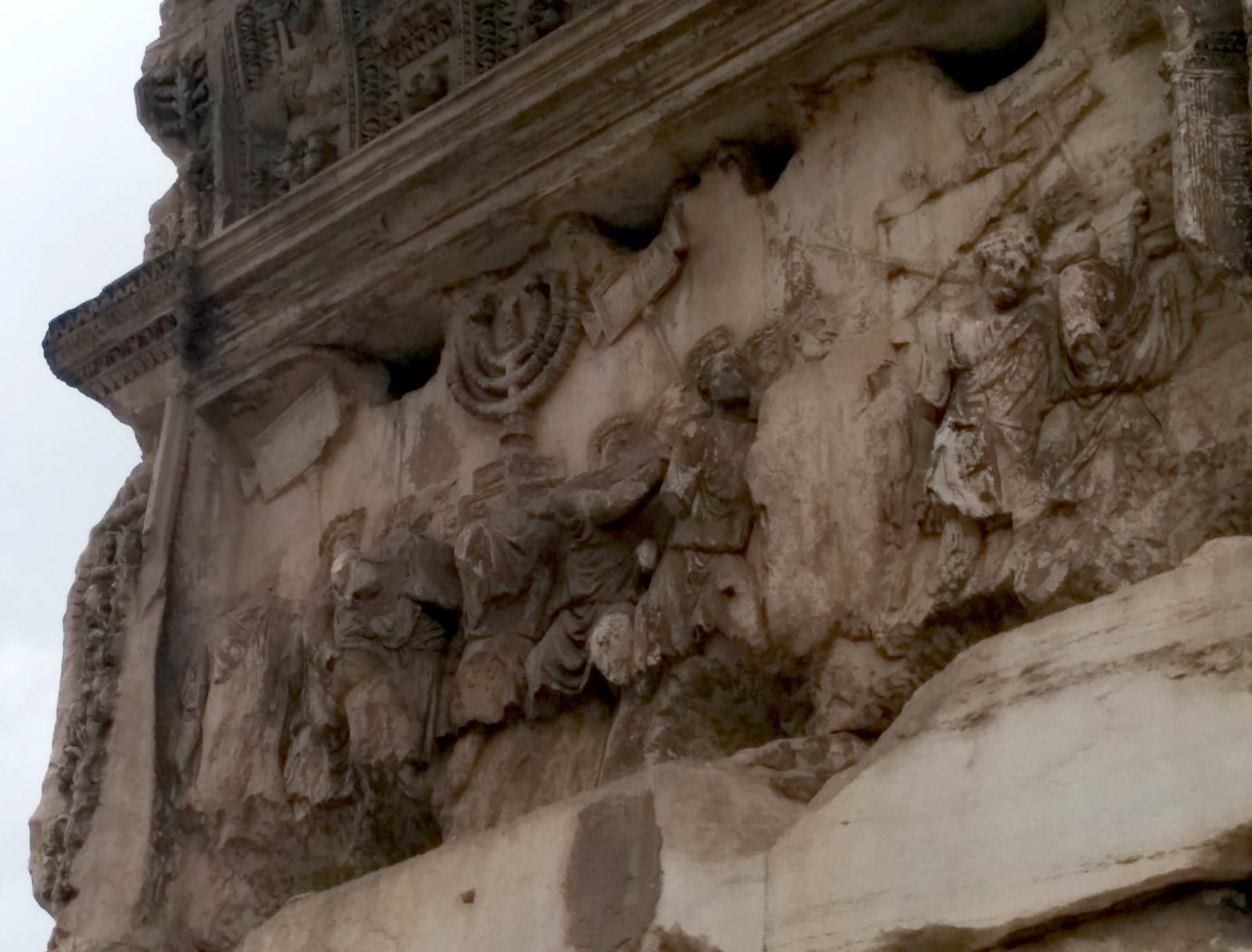 titus-spoils.jpg | Spoils of Jerusalem, relief on the Arch of Titus, Rome Photo: Amphipolis Relief 81 CE (photographed 2014) Source ↗ | CC BY-SA 2.0 | Hero ornament · Part 05 medallion · Cover art backdrop | Rome’s own monument to the sack of the temple, carved within a decade of it: the defeat that the second century would turn into an argument. |
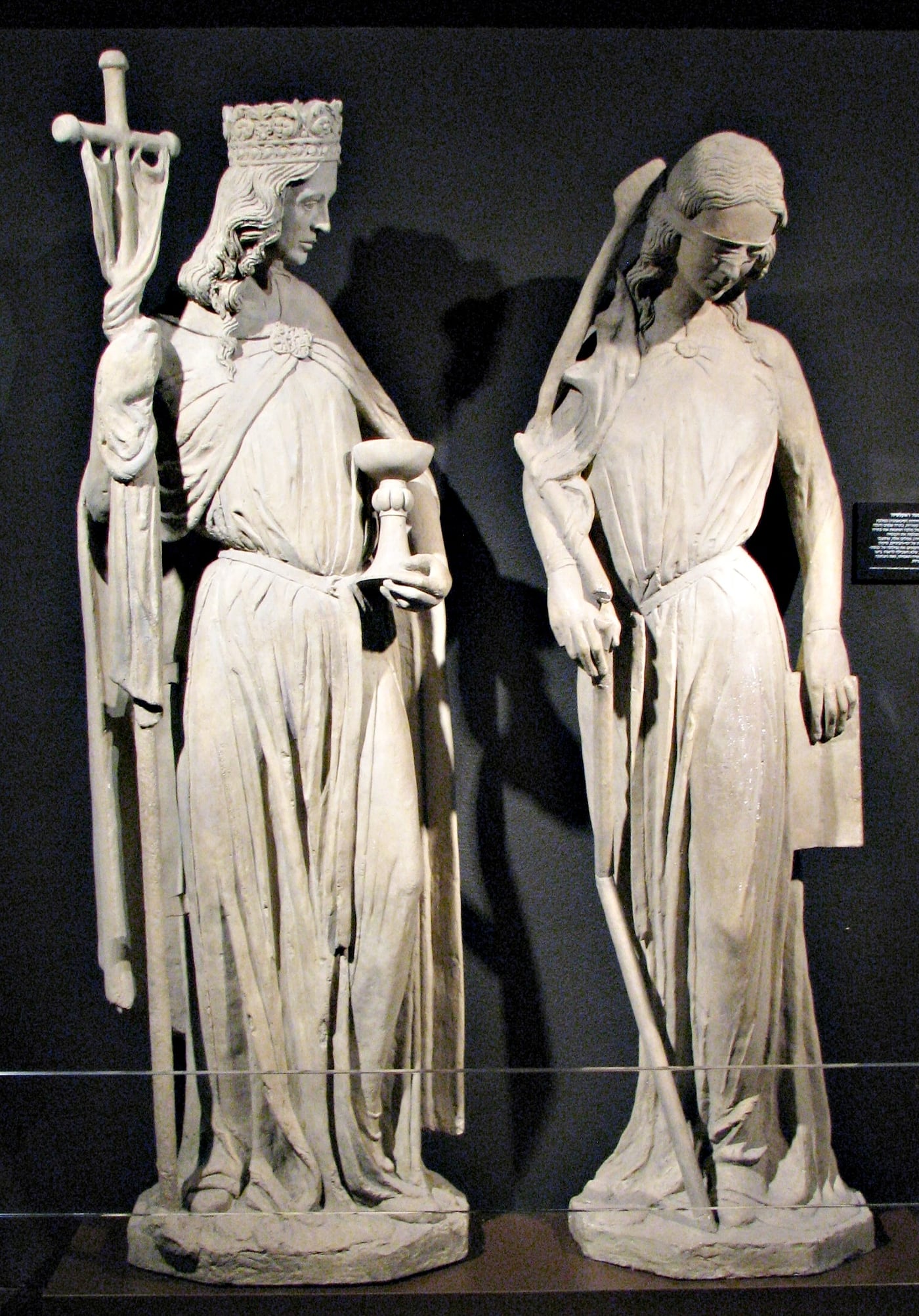 ecclesia-synagoga.jpg | Ecclesia and Synagoga (replica of the Strasbourg Cathedral figures, Beit Hatfutsot, Tel Aviv) Photo: Sodabottle Originals c. 1230 (photographed 2011) Source ↗ | CC BY-SA 3.0 | Origin section figure · Scroll panel | The Church crowned and the Synagogue blindfolded with a broken staff: the finished form of the tradition whose construction this lecture traces. |
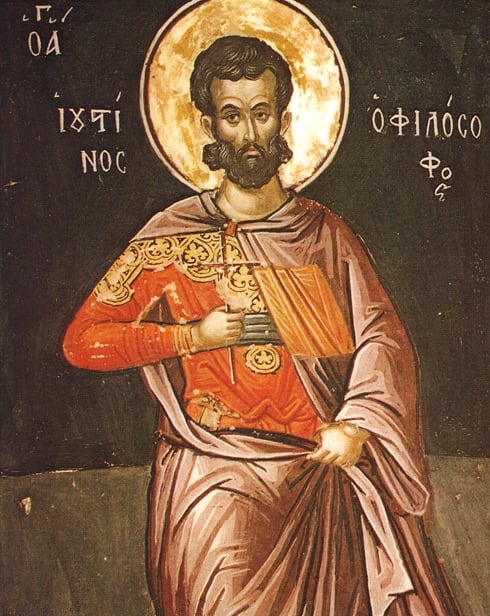 justin-martyr.jpg | Saint Justin the Philosopher Theophanes the Cretan c. 1545 to 1546 Source ↗ | Public domain | Hero ornament · Part 03 medallion | Justin Martyr, whose Dialogue with Trypho gave the tradition many of its central arguments, as later Christian art chose to remember him. |
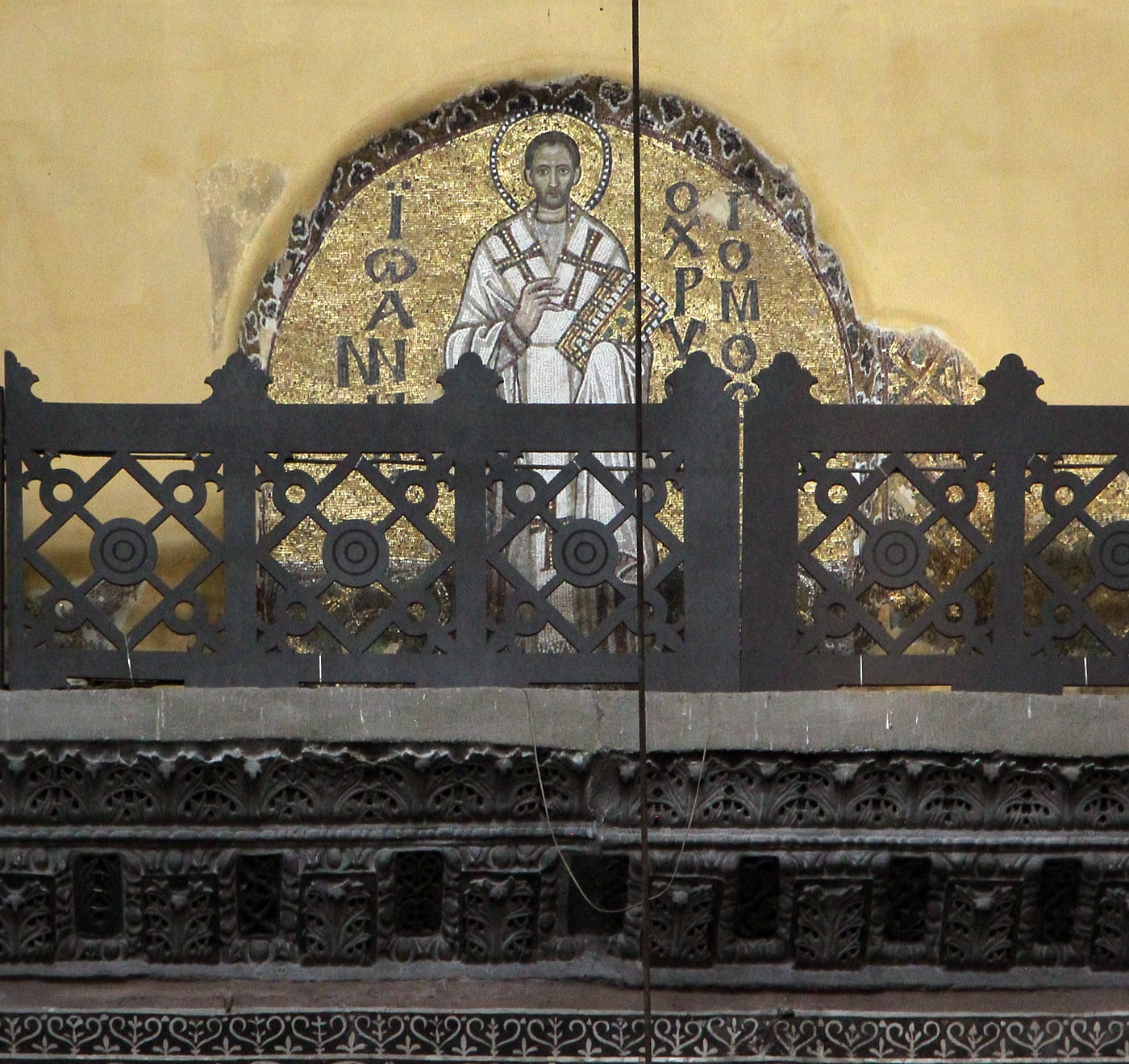 chrysostom.jpg | John Chrysostom, tondo mosaic in the north tympanum, Hagia Sophia Photo: Francesco Bini Mosaic 9th century (photographed 2022) Source ↗ | CC BY-SA 4.0 | Part 01 medallion · FAQ backdrop | The preacher of the Antioch sermons against the Jews, who was in fact arguing with his own congregation for enjoying their neighbors’ festivals. |
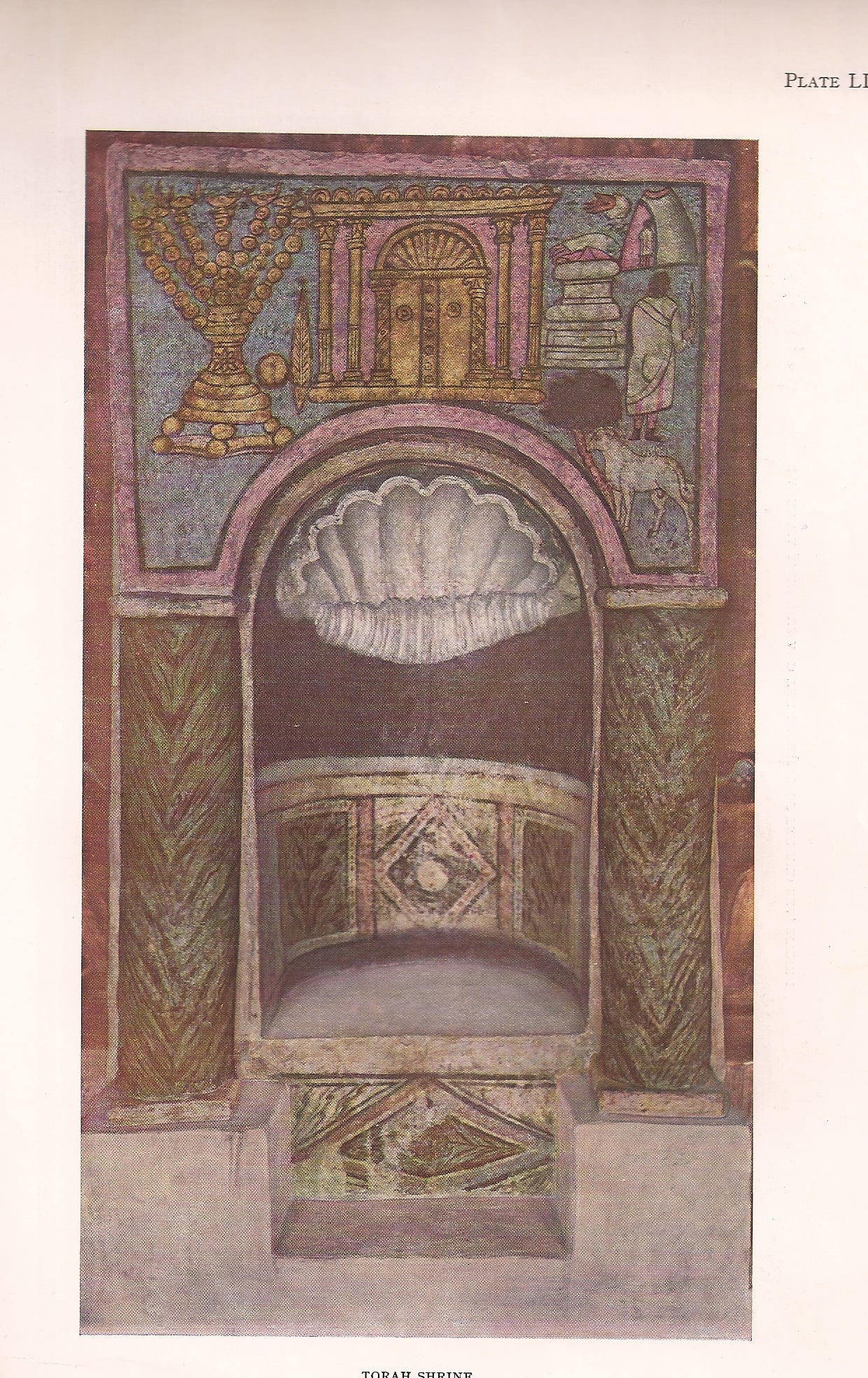 dura-torah-niche.jpg | Torah niche from the synagogue at Dura-Europos Unknown (Dura-Europos synagogue) c. 244 to 256 CE Source ↗ | Public domain | Hero ornament | A painted Torah shrine from a third-century Syrian synagogue: the living Jewish communities the rhetoric was written about, and around. |
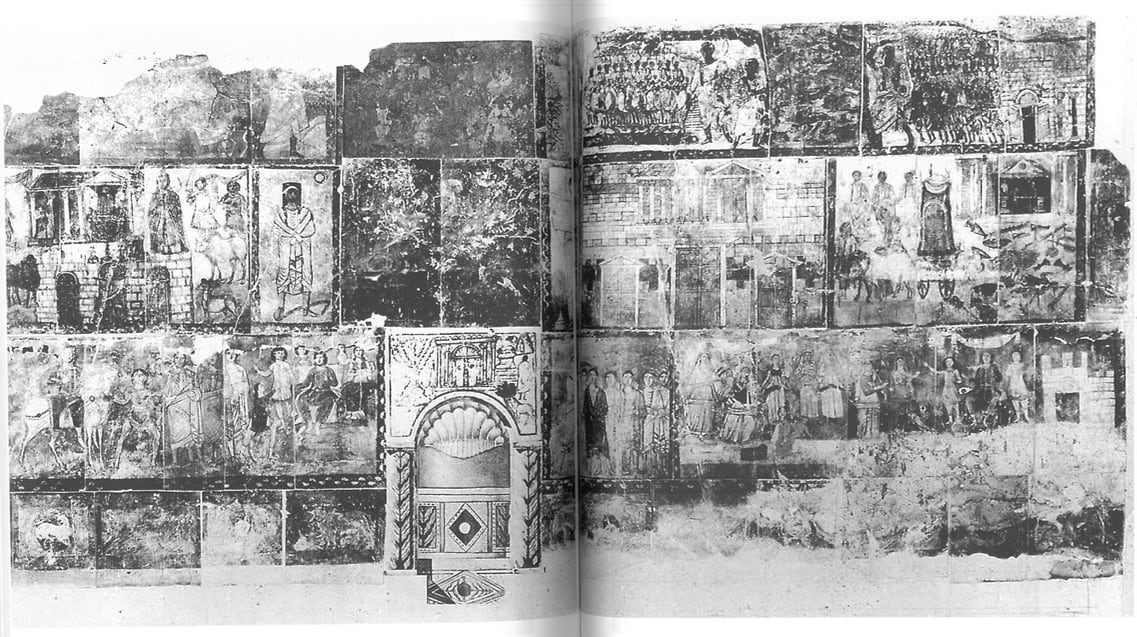 dura-west-wall.jpg | The west wall of the Dura-Europos synagogue, during excavation Yale University Art Gallery Paintings c. 244 to 256 CE Source ↗ | CC0 | Part 04 medallion · Stats backdrop | A whole wall of biblical painting from a diaspora synagogue, a reminder of how much of this world the polemic simply does not describe. |
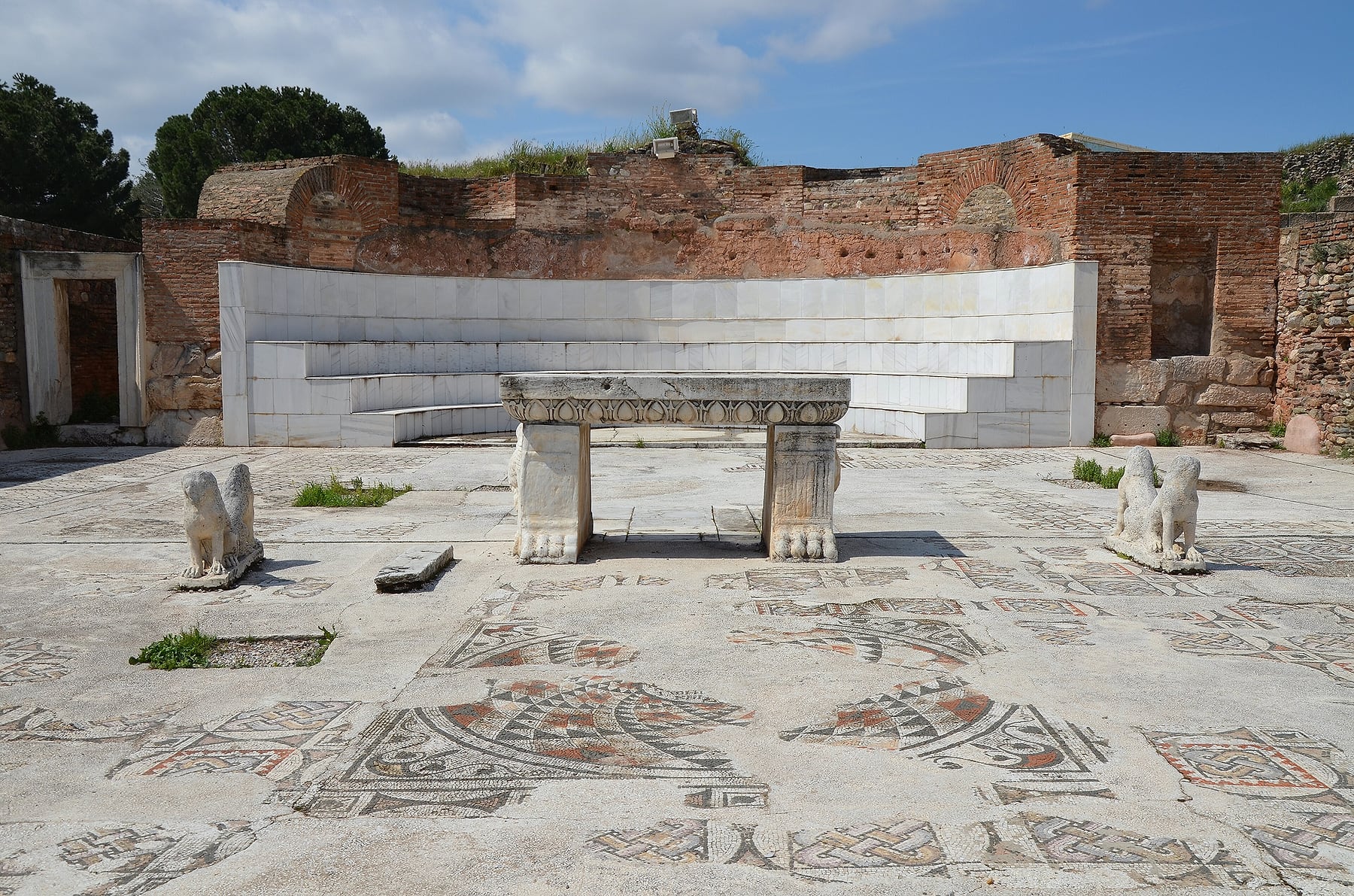 sardis-synagogue.jpg | The synagogue at Sardis, Lydia Photo: Carole Raddato Building late 3rd century CE (photographed 2015) Source ↗ | CC BY-SA 2.0 | Part 07 medallion · Instructor backdrop | A large, confident synagogue on a main civic street, its inscriptions naming gentile donors: the religious fluidity that the law codes never prepare us to see. |
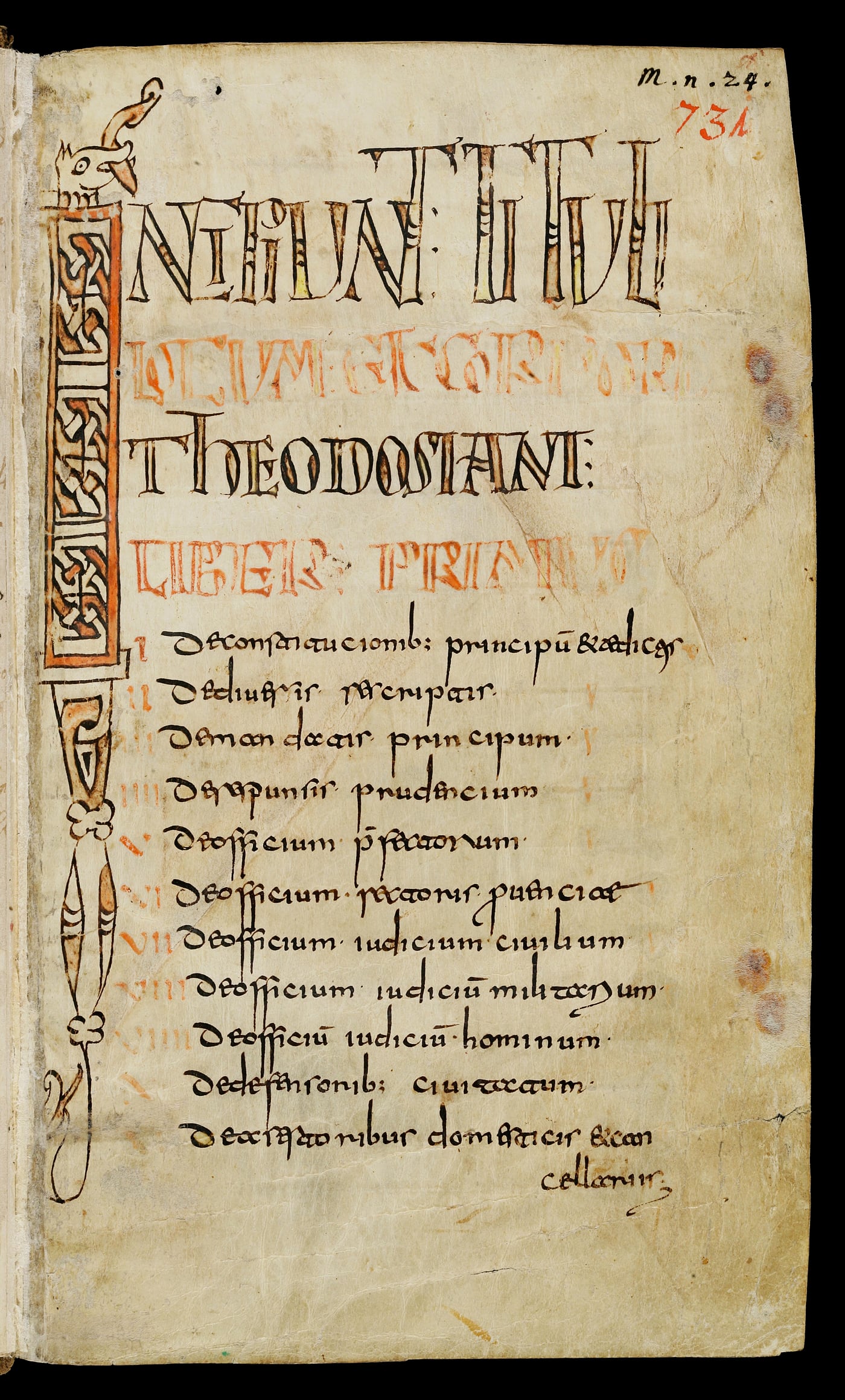 theodosian-code.jpg | Title page for the Codex Theodosianus in a Breviary of Alaric (Cod. Sang. 731, fol. 1r) Unknown scribe (Abbey Library of Saint Gall) 794 Source ↗ | Public domain | “Prepare to Rethink” backdrop · Part 06 medallion | The imperial law code that insulted Judaism as a nefarious sect and, in the same collection, kept ruling that no law prohibits it. |
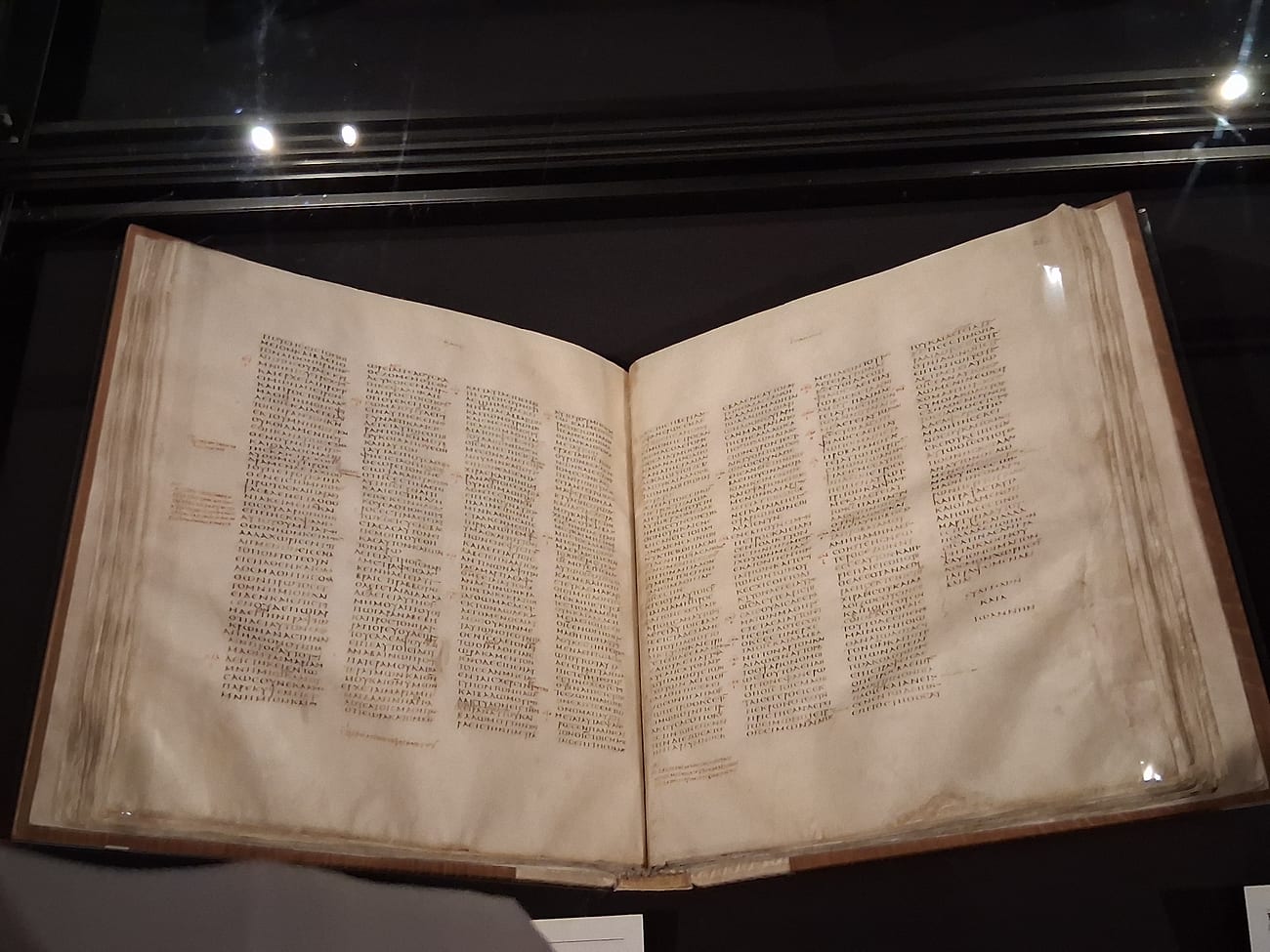 codex-page.jpg | Codex Sinaiticus (the Greek New Testament) Unknown (4th-century scribe) 4th century CE Source ↗ | Public domain | Part 02 medallion | The Greek scriptures themselves: the texts whose interpretation, and whose language, made the whole argument possible. |
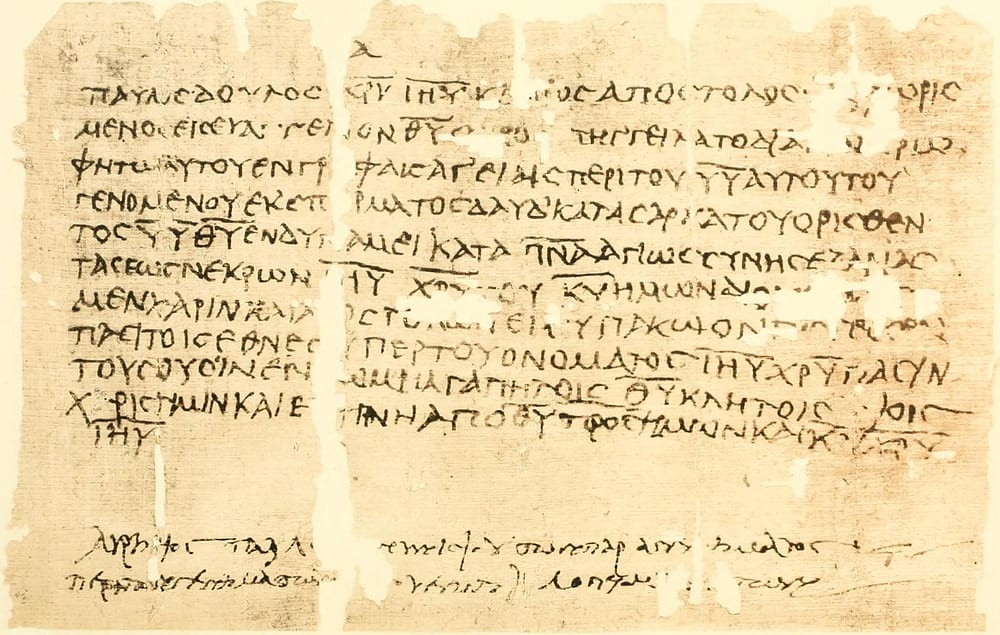 papyrus-fragment.jpg | Papyrus Oxyrhynchus 209 (𝔓10), a leaf of Romans Unknown (ancient scribe) 4th century CE Source ↗ | Public domain | At-a-Glance backdrop · Session backdrop | A scrap of the letter in which Paul insists that all Israel will be saved, and that the gifts and the calling of God are irrevocable. |
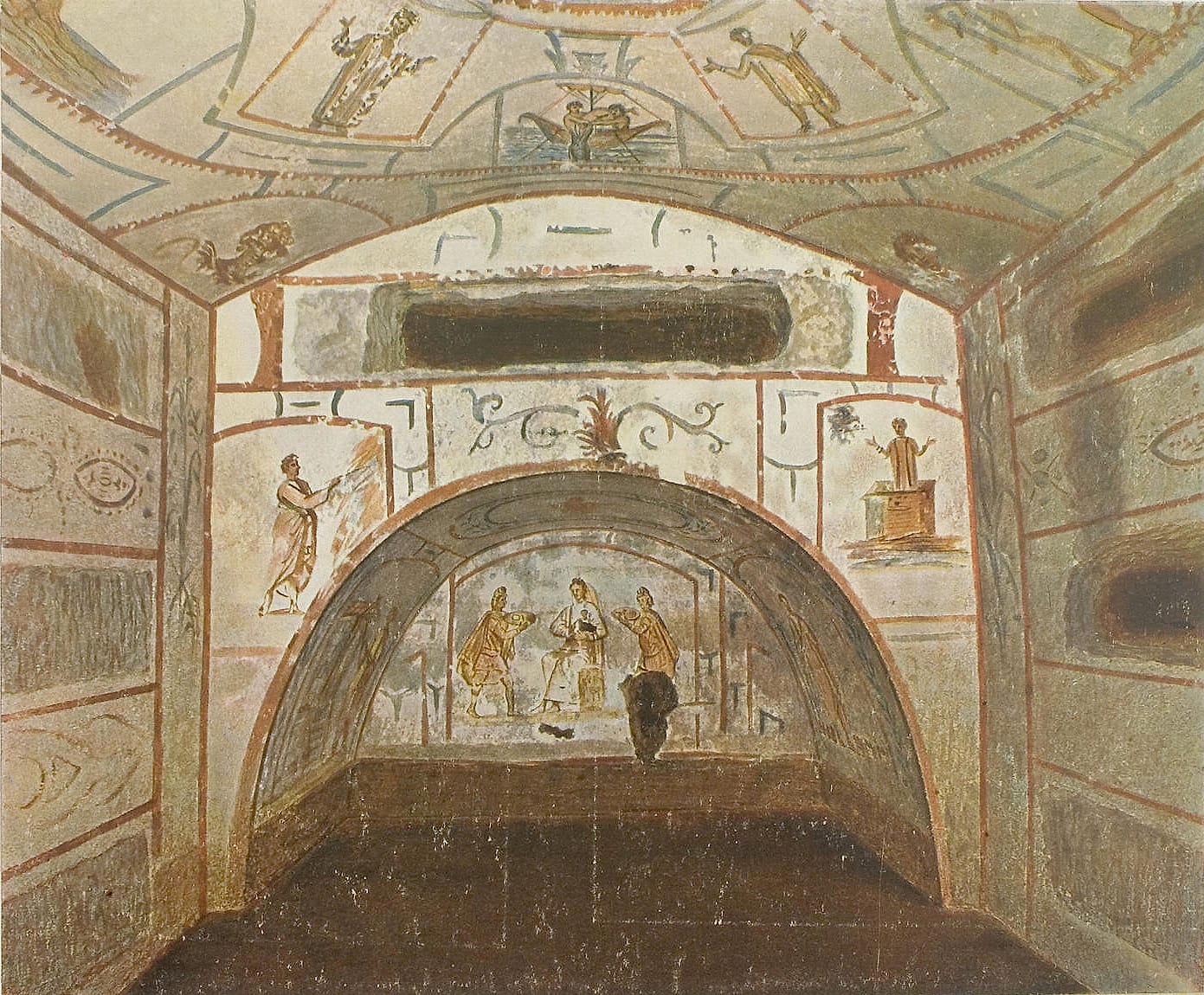 catacomb-fresco.jpg | Fresco from the Catacomb of Marcellinus and Peter, Rome Unknown (plate by Joseph Wilpert) Fresco 3rd century CE Source ↗ | Public domain | “Included with Enrollment” backdrop | How third-century Christians pictured their own faith, in the same decades their theologians were sharpening the arguments this lecture examines. |
Public-domain works are reproduced freely. CC BY / CC BY-SA images are credited to their photographers as required; follow each Source link for the full license text.