
Image Credits
Ancient Christianities
Every image on the course page, with its source, license, and the reason it was chosen. The artwork is public-domain and freely-licensed early-Christian and late-antique material from Wikimedia Commons: Ravenna mosaics, catacomb frescoes, the manuscripts that carried the texts, and a few later paintings. Creative Commons photographs are noted below.
| Image | Work & Attribution | License | Where it appears | Why it’s included |
|---|---|---|---|---|
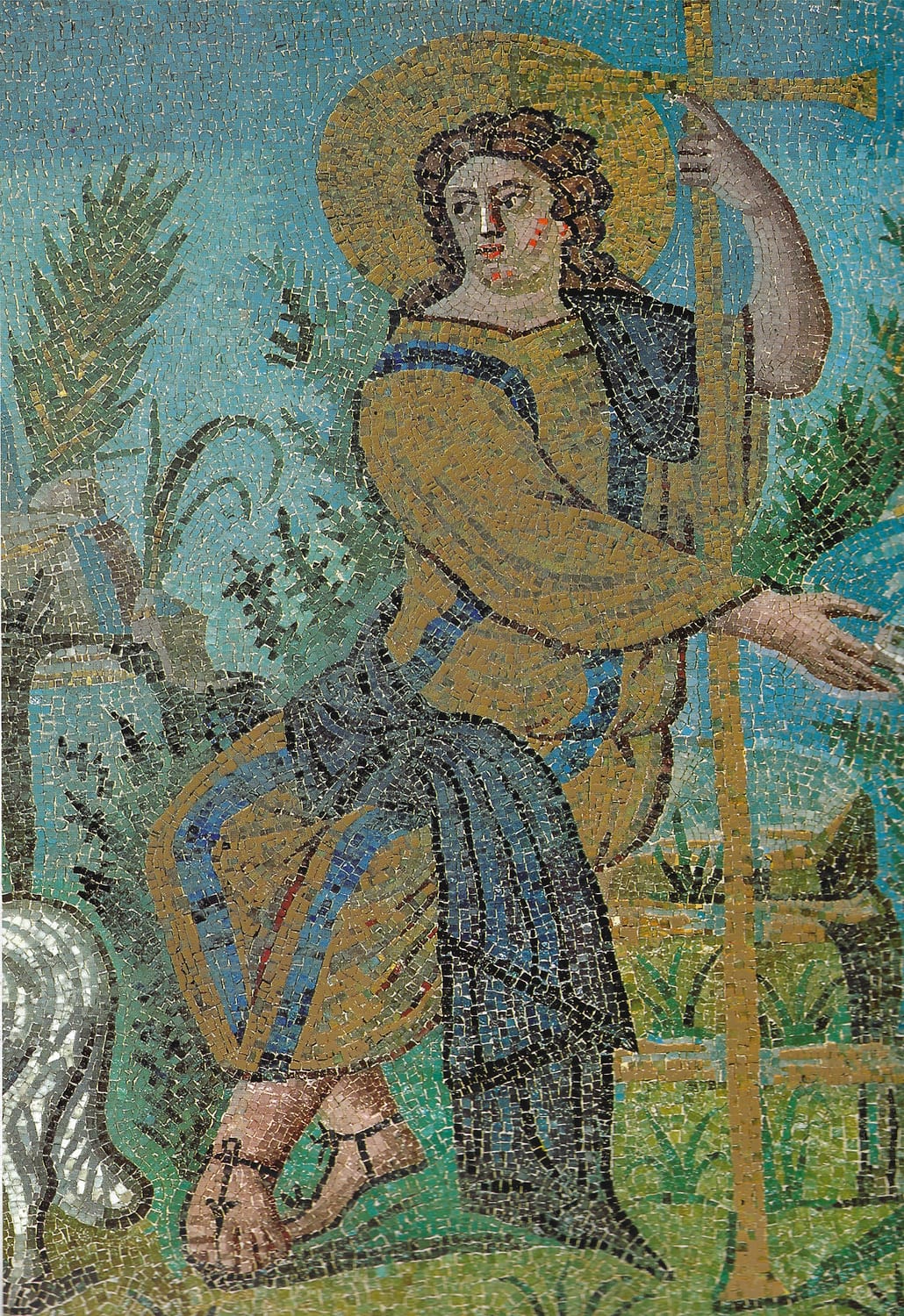 good-shepherd.jpg | The Good Shepherd (Mausoleum of Galla Placidia, Ravenna) Unknown (Ravenna mosaicist) c. 425 CE Source ↗ | Public domain | Hero background | The young Good Shepherd among his flock: an early, gentle image of Christ from imperial Ravenna. |
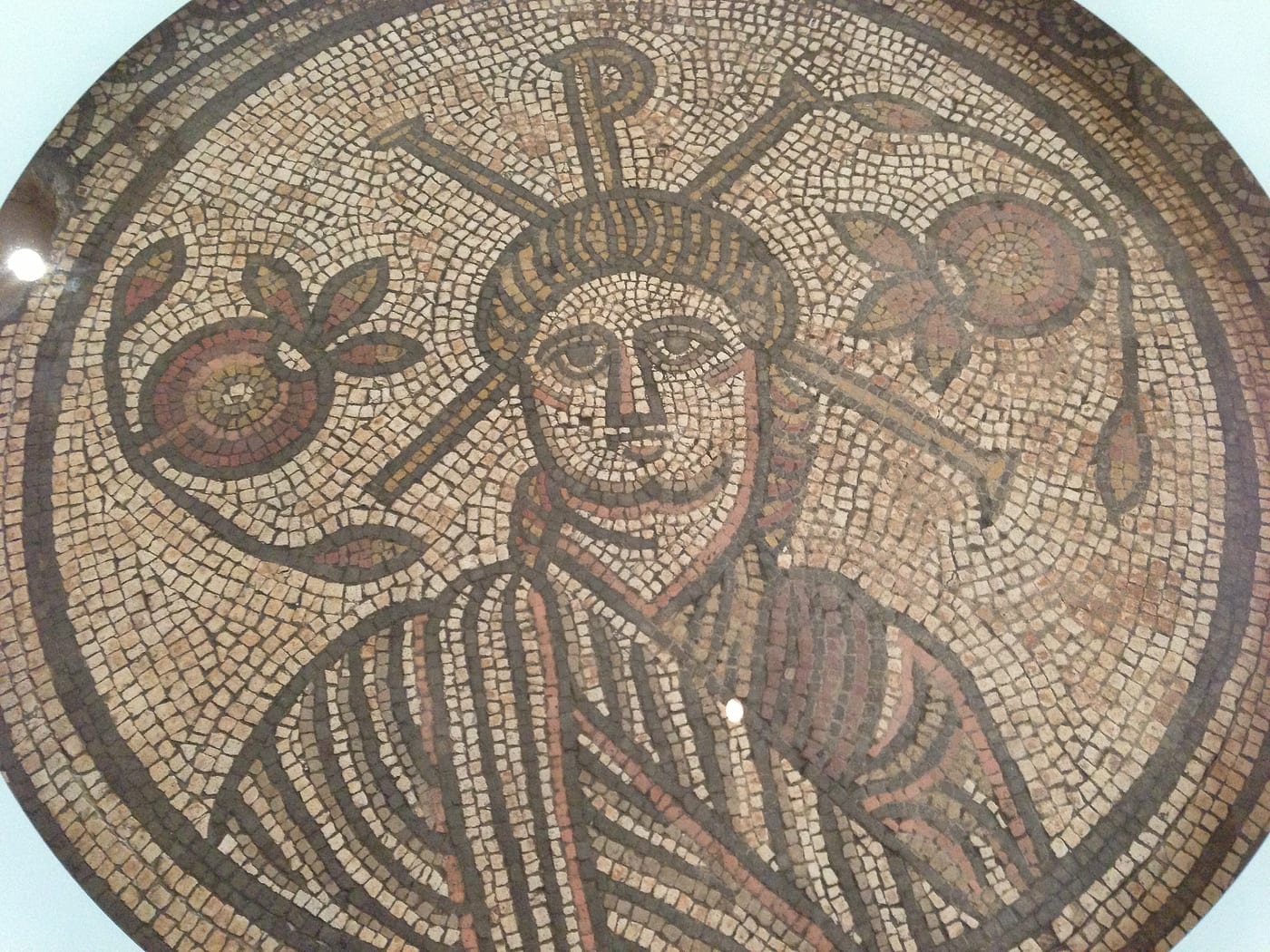 chi-rho.jpg | Early mosaic depiction of Christ Photo: Nate Loper Photographed 2013 Source ↗ | CC BY 2.0 | Hero ornament · Highlights & Bonuses backdrop | One of the earliest mosaic images of Christ, standing for the new faith taking visual form. |
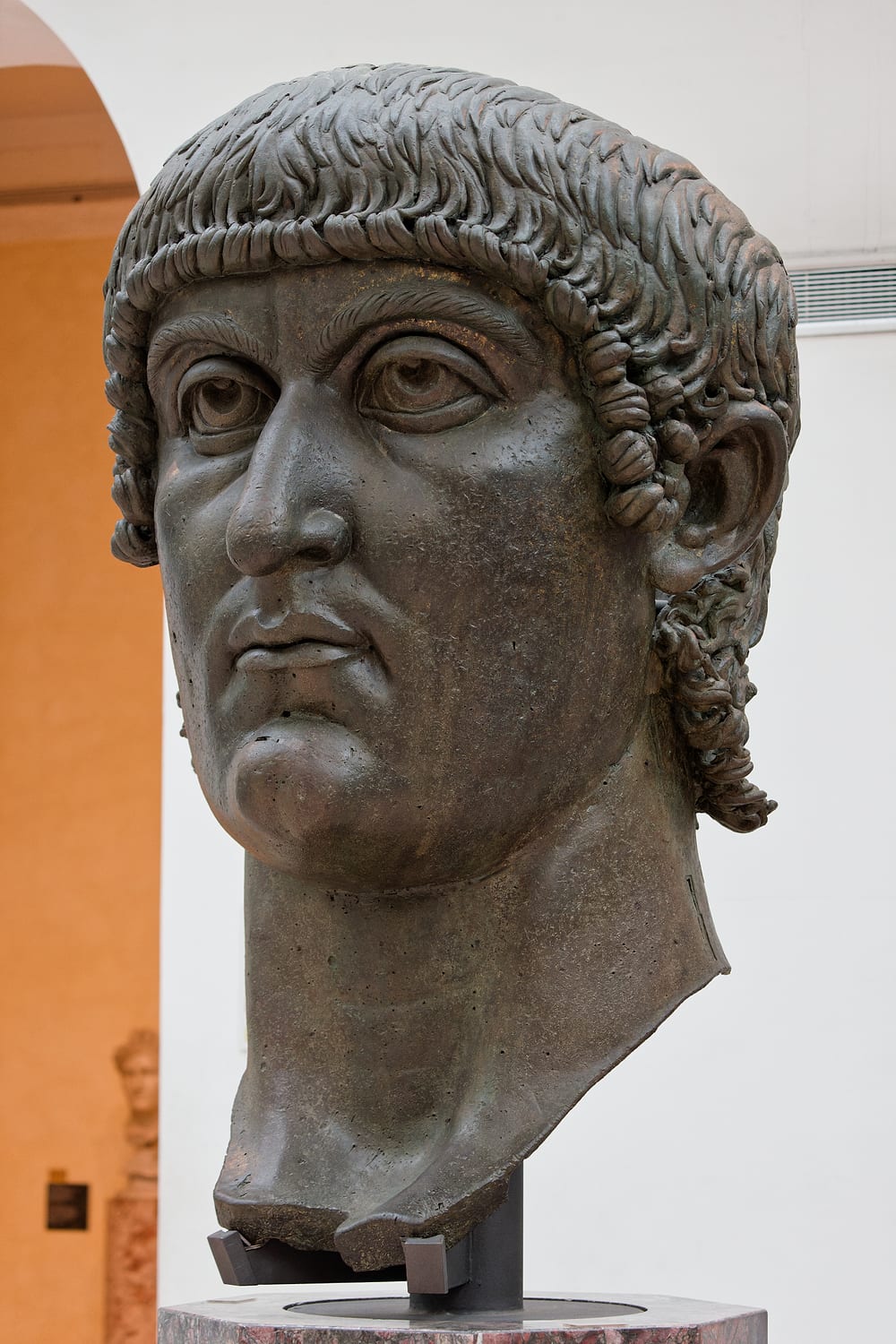 constantine-head.jpg | Colossal head of Constantine (Capitoline Museums) Unknown (4th-century sculptor) 4th century CE Source ↗ | Public domain | Hero ornament | The colossal Constantine: the emperor whose conversion turned a persecuted sect toward power. |
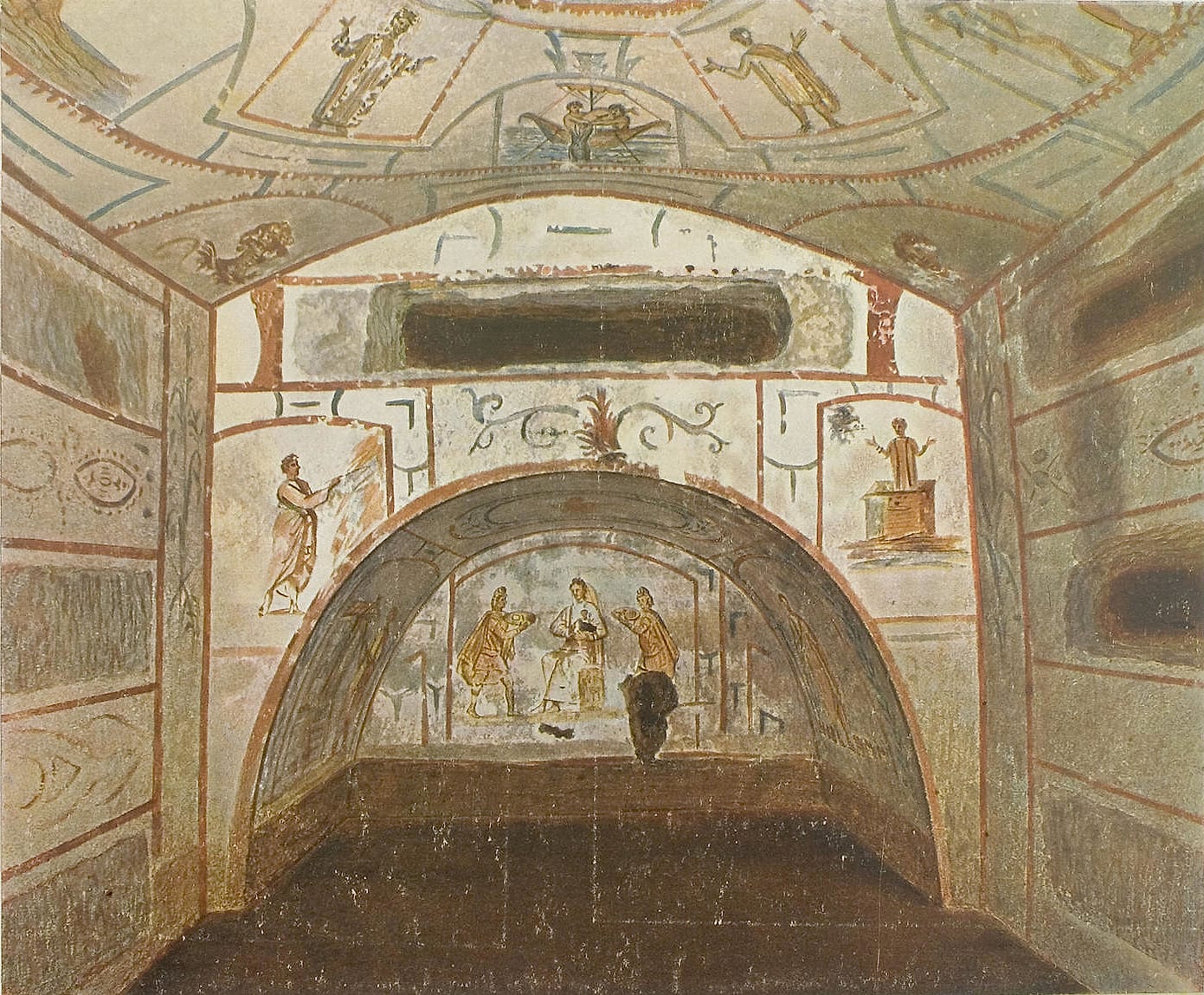 catacomb-fresco.jpg | Fresco from the Catacomb of Marcellinus and Peter, Rome Unknown (plate by Joseph Wilpert) Fresco 3rd century CE Source ↗ | Public domain | Hero ornament · “Prepare to Rethink” backdrop | A painted scene from the Roman catacombs: how the earliest Christians pictured their faith underground. |
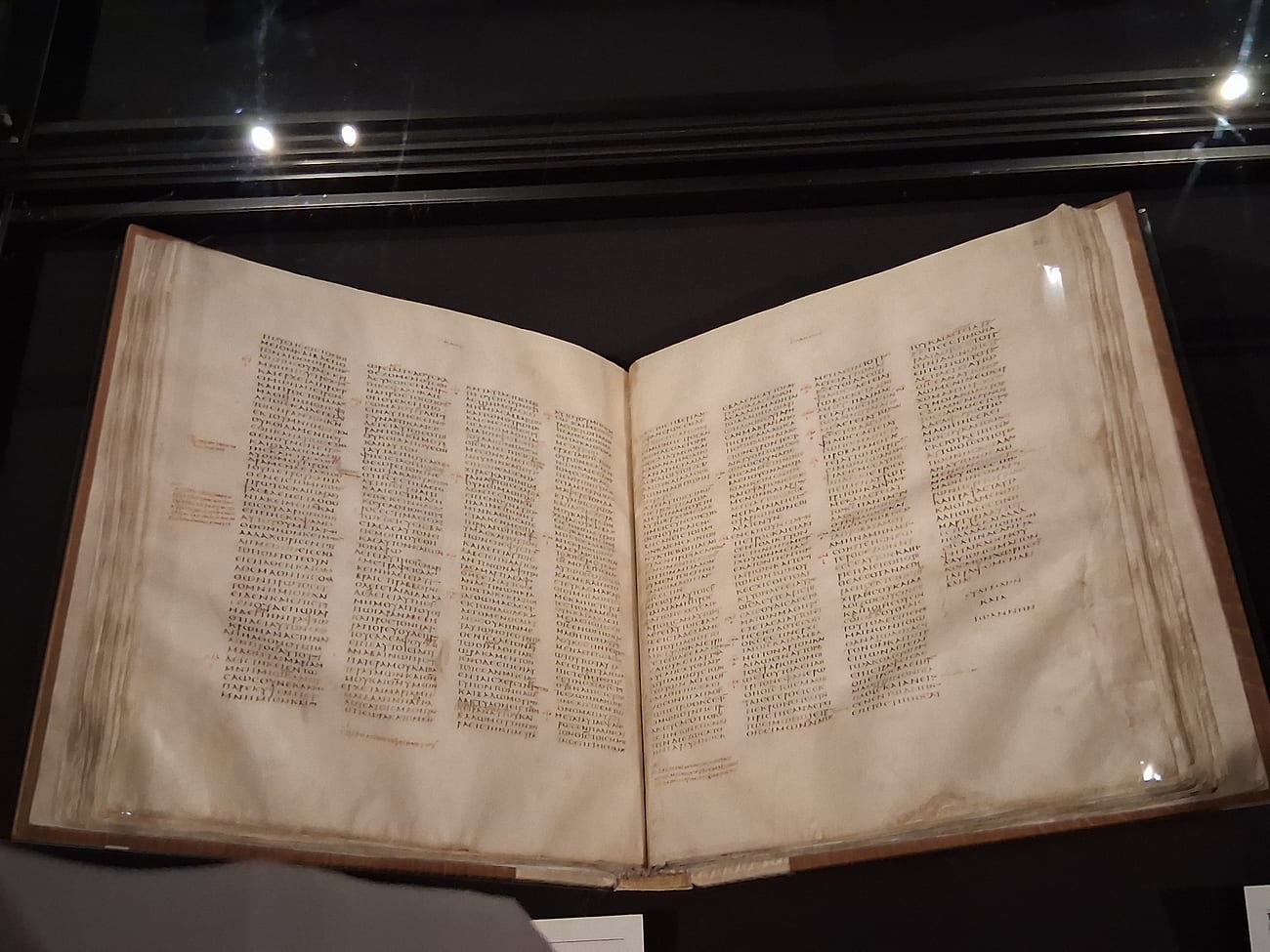 codex-page.jpg | Codex Sinaiticus (the Greek New Testament) Unknown (4th-century scribe) 4th century CE Source ↗ | Public domain | Origin section figure | One of the oldest complete New Testaments: the text the early church was still assembling. |
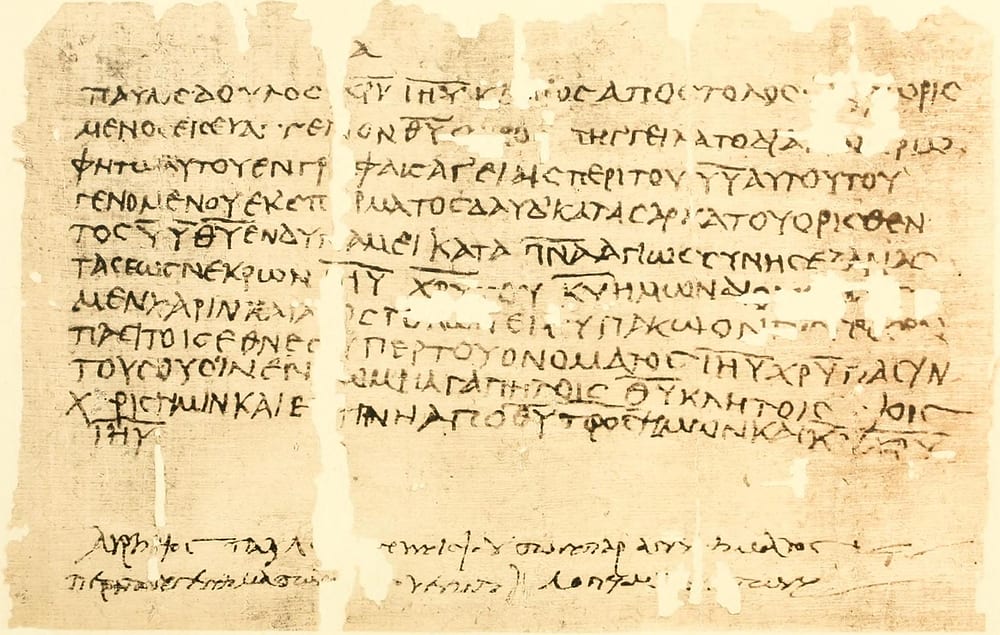 papyrus-fragment.jpg | Papyrus Oxyrhynchus 209 (𝔓10), a leaf of Romans Unknown (ancient scribe) 4th century CE Source ↗ | Public domain | At-a-Glance backdrop · Schedule backdrop | A scrap of Paul’s letter to the Romans on papyrus: the fragile physical basis of the tradition. |
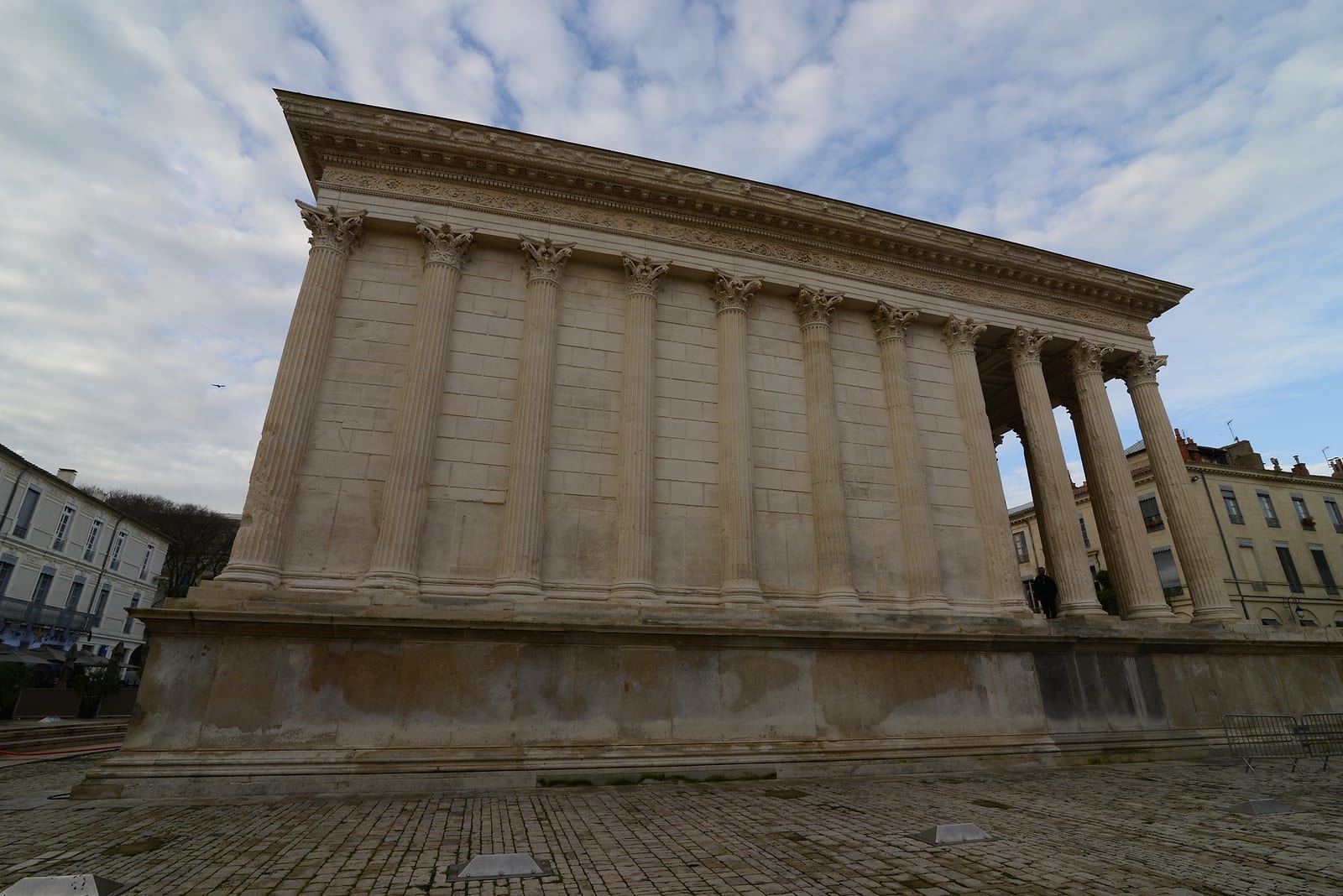 roman-temple.jpg | The Maison Carrée, Nîmes (Roman temple) Photo: Jorge Láscar Temple c. 4 to 7 CE (photographed 2014) Source ↗ | CC BY 2.0 | Theme I medallion (A World Full of Gods) | A near-perfect Roman temple: the crowded world of pagan worship the first Christians lived in. |
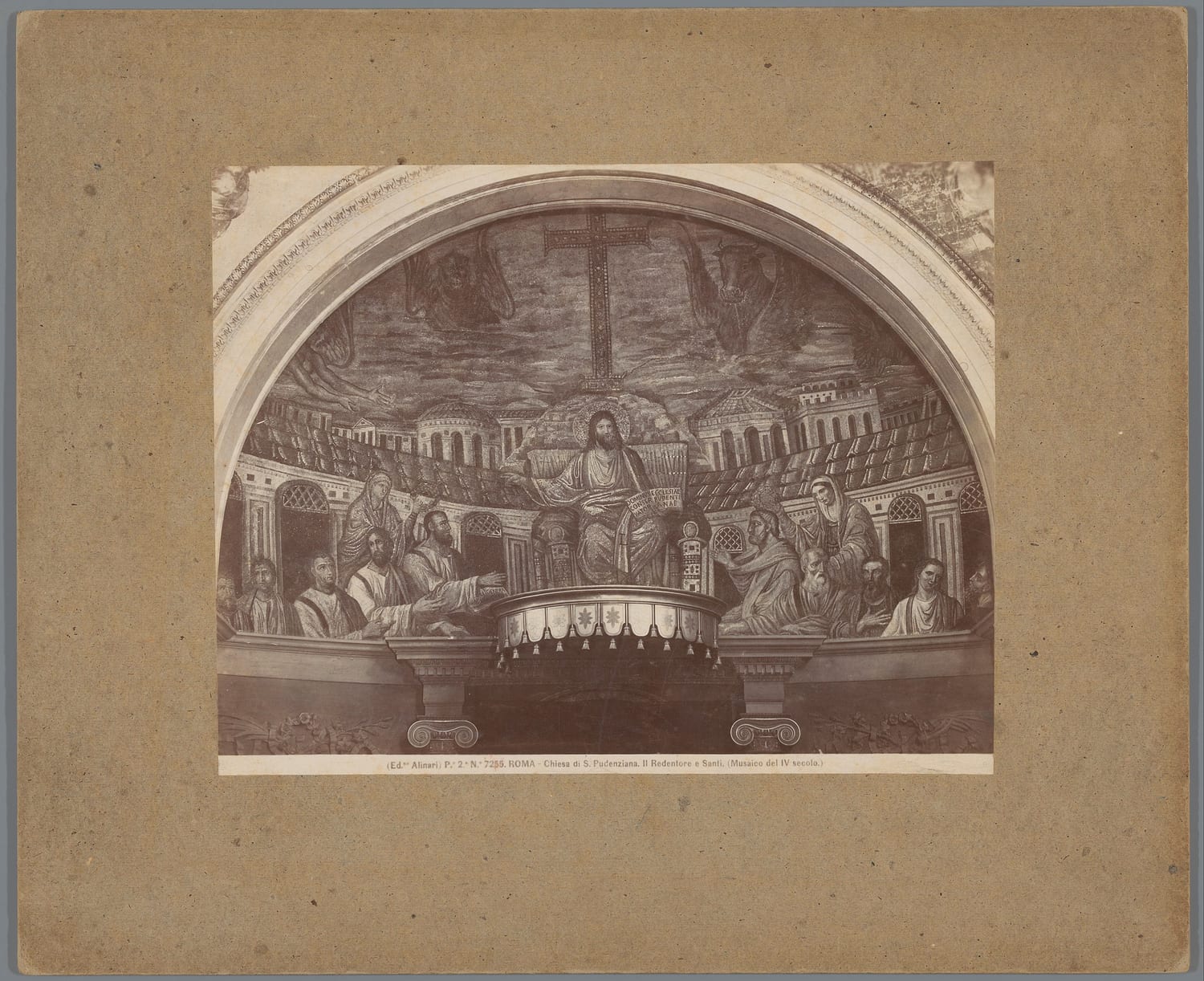 christ-teaching.jpg | Apse mosaic, Santa Pudenziana, Rome (Christ enthroned among the apostles) Photo: Rijksmuseum Mosaic c. 390 CE Source ↗ | CC0 | Theme II medallion (From Jesus to Christ) | Christ enthroned as teacher among the apostles: the movement turning its founder into Lord. |
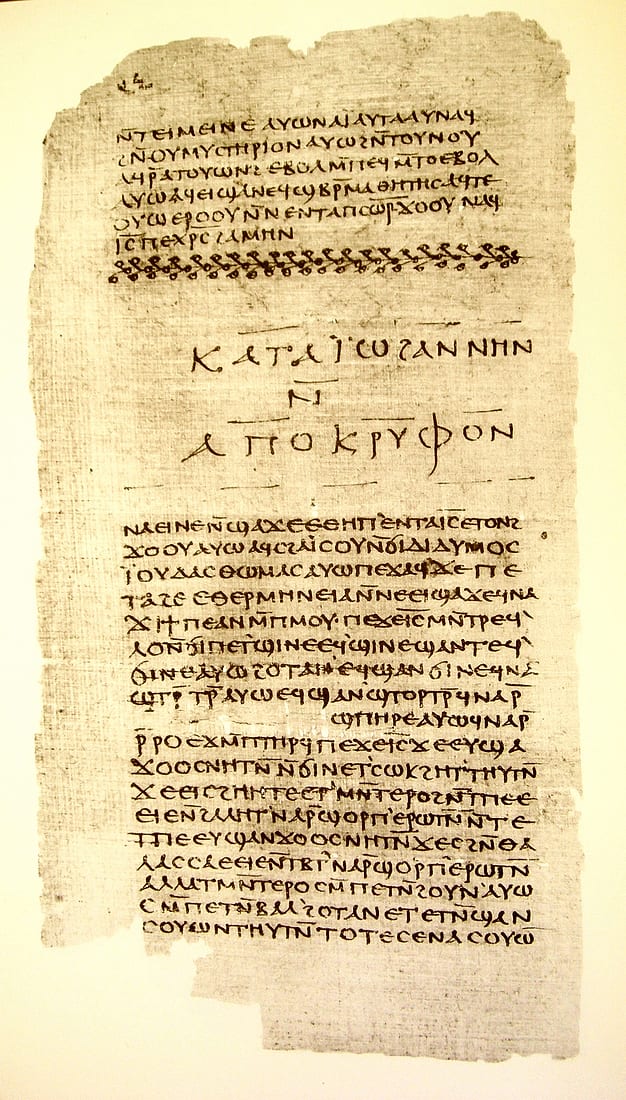 nag-hammadi.jpg | Nag Hammadi Codex II (Gnostic Coptic manuscript) Unknown (Coptic scribe) 4th century CE Source ↗ | Public domain | Theme III medallion (Rival Christianities) | A page from the Gnostic library at Nag Hammadi: the rival Christianities that orthodoxy buried. |
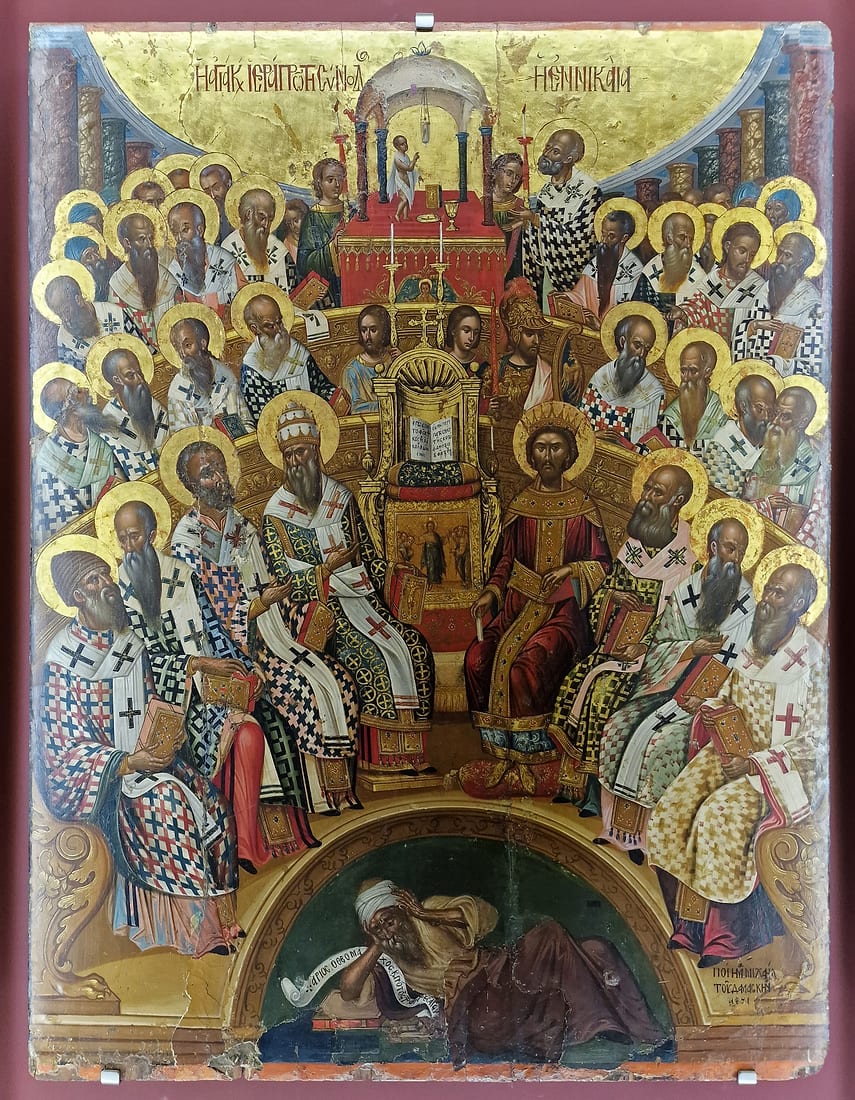 nicaea-council.jpg | The First Council of Nicaea (icon by Michael Damaskenos) Photo: Rigorius (icon by Michael Damaskenos) Icon 16th century (photographed 2023) Source ↗ | CC BY-SA 4.0 | Theme IV medallion (The Empire Converts) | The council of 325, where the imperial church defined the nature of God by decree. |
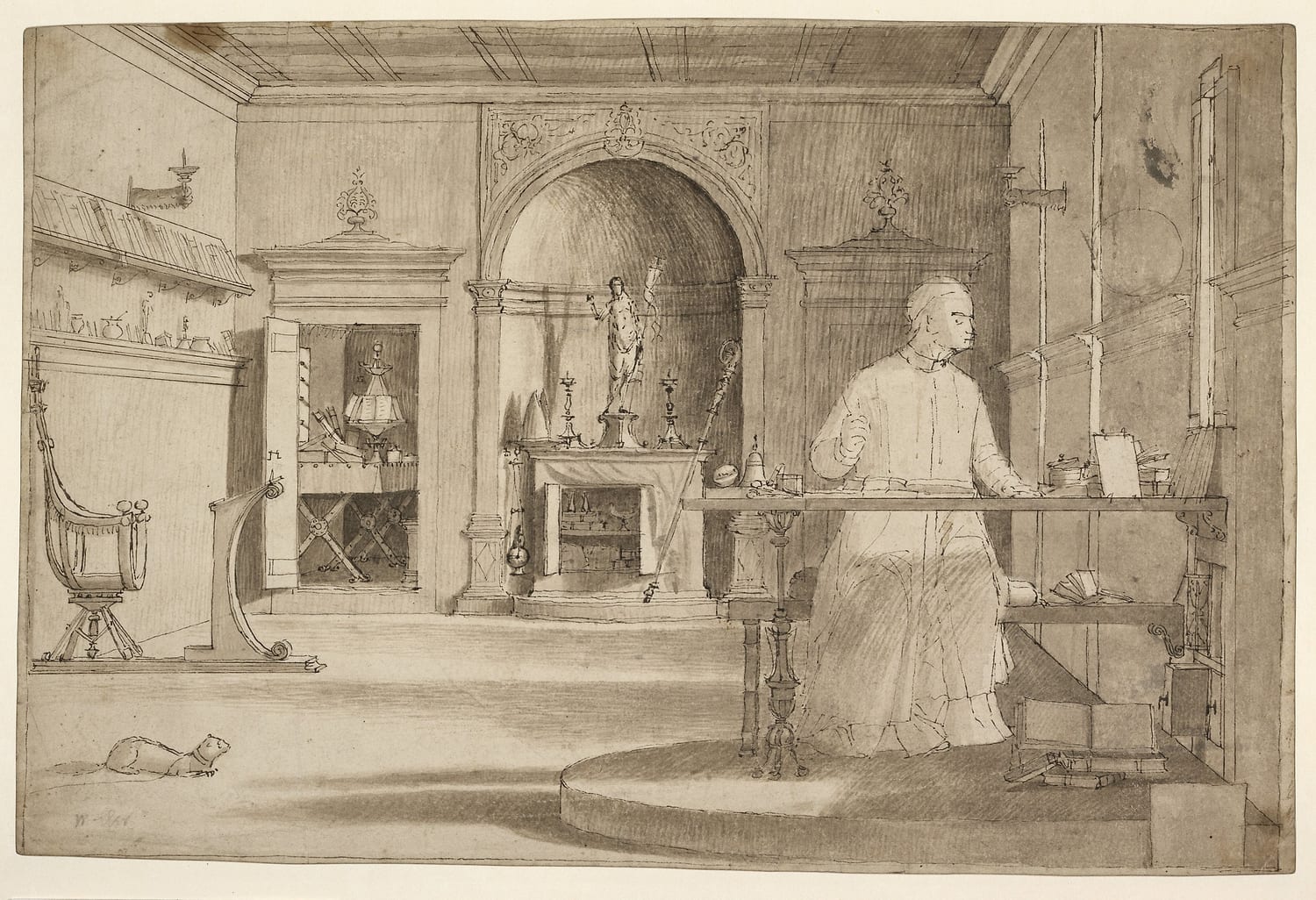 augustine.jpg | Saint Augustine in His Study (preparatory drawing) Vittore Carpaccio c. 1502 Source ↗ | Public domain | Theme V medallion (Augustine & the Fall of Rome) | Augustine at his desk: the theologian whose City of God reframed history as Rome fell. |
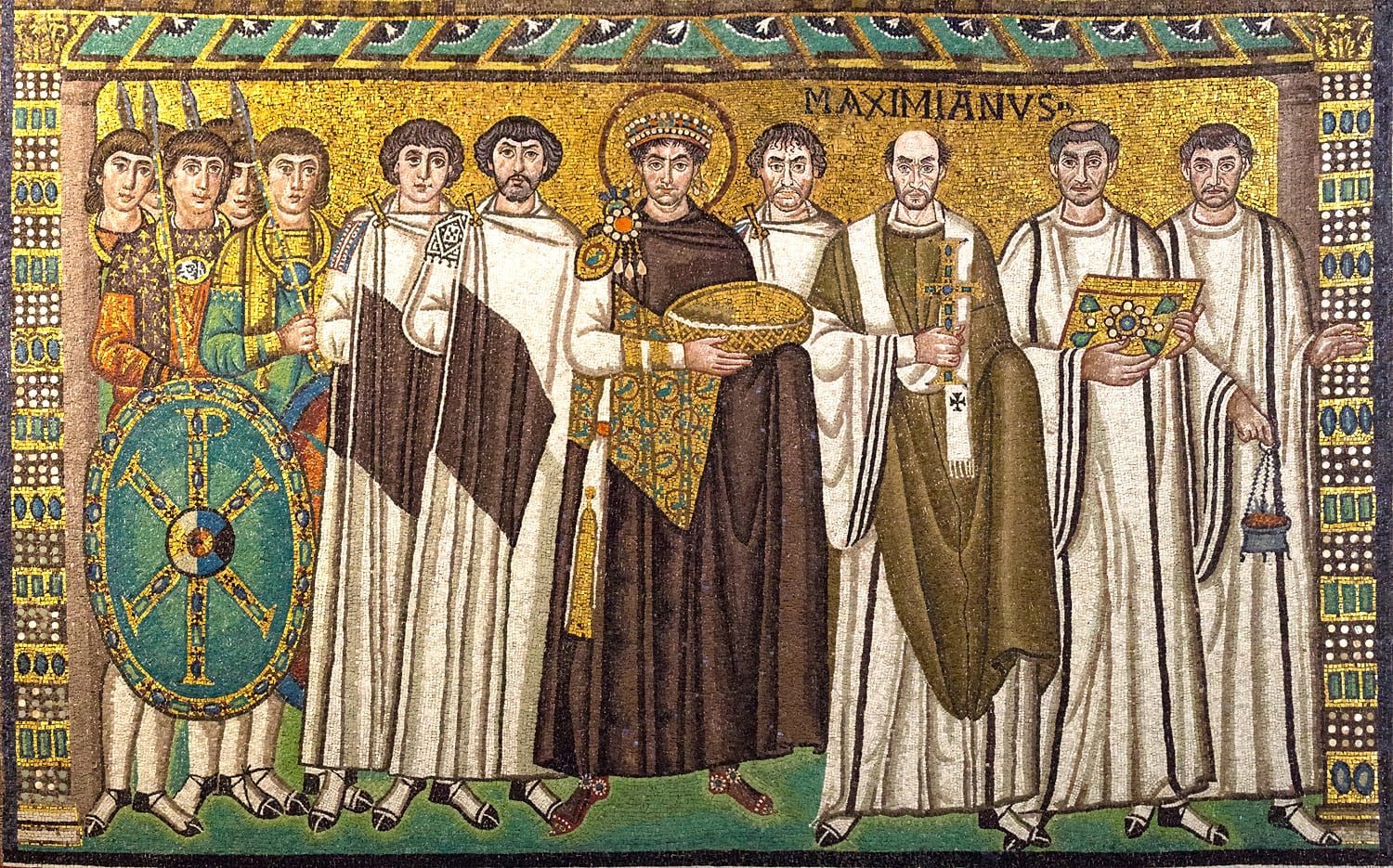 ravenna-mosaic.jpg | Mosaic in the Basilica of San Vitale, Ravenna Photo: Roger Culos Mosaic 6th century (photographed 2015) Source ↗ | CC BY-SA 3.0 | Instructor backdrop · Highlights image card · FAQ backdrop | The shimmering mosaics of San Vitale: the late-antique world at its imperial height. |
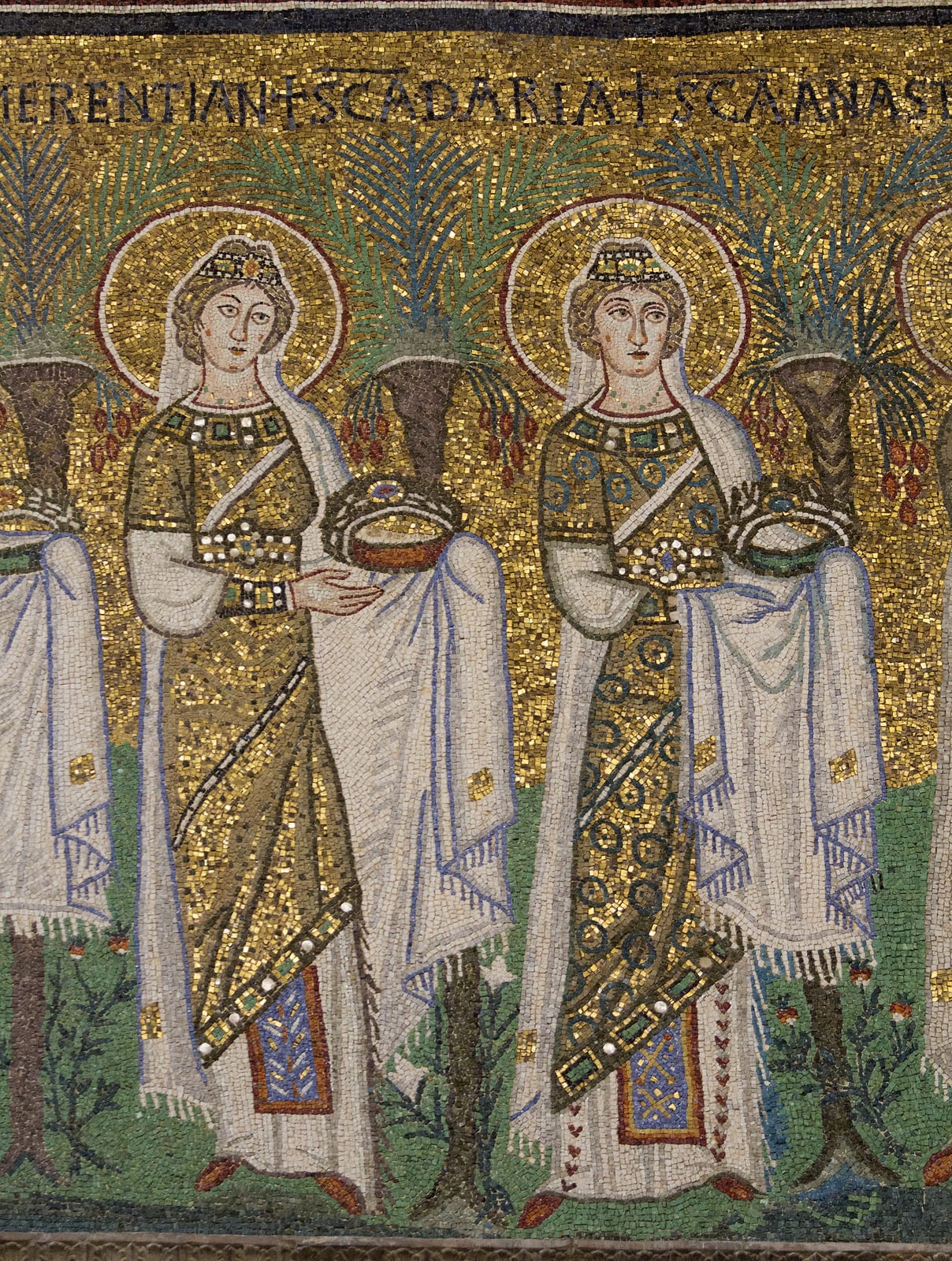 apollinare-procession.jpg | Procession of saints, Sant’Apollinare Nuovo, Ravenna Photo: Roger Culos Mosaic 6th century (photographed 2015) Source ↗ | CC BY-SA 3.0 | Stats backdrop | A long procession of martyrs and saints in mosaic: the church triumphant in the new Christian empire. |
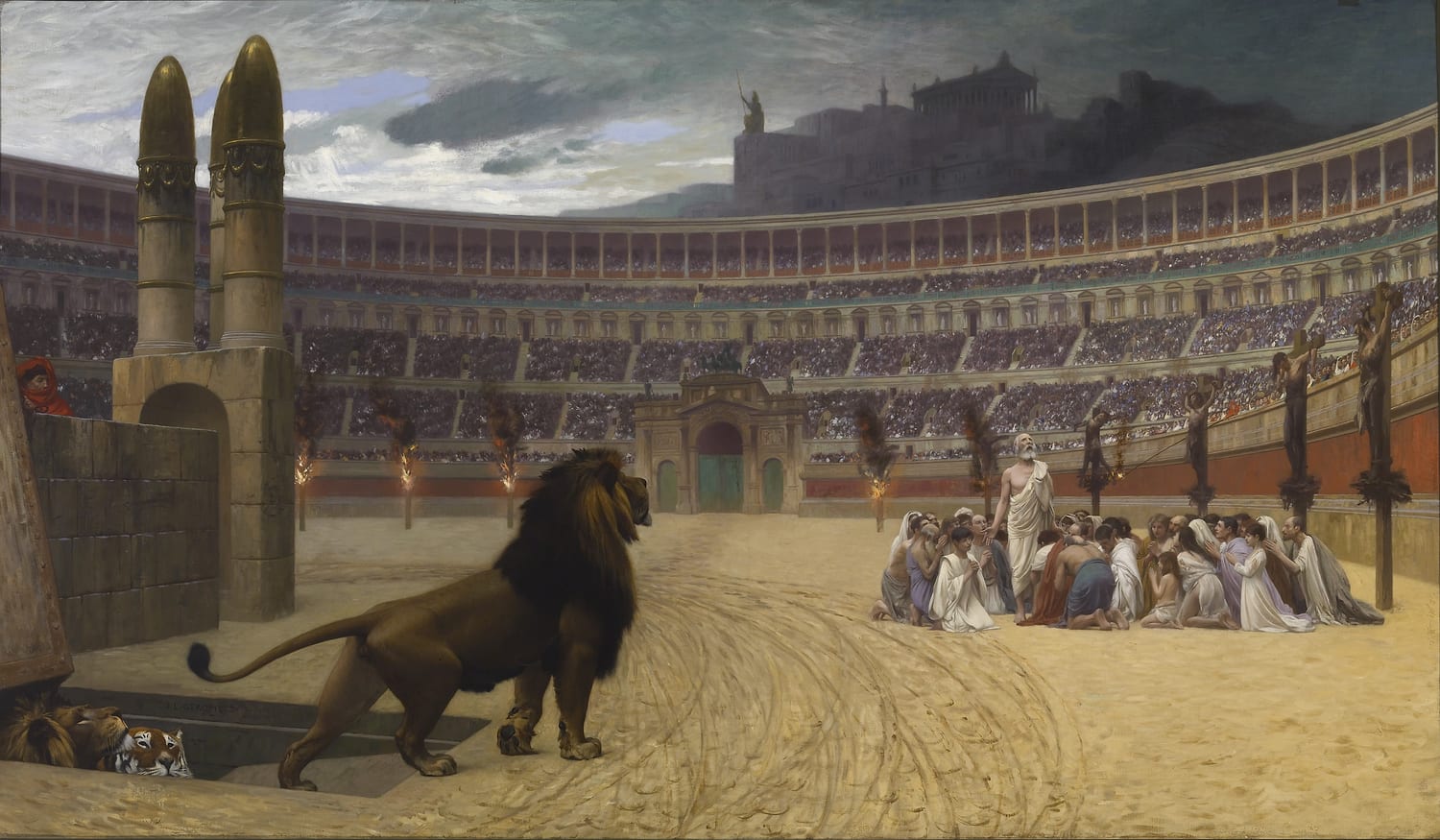 martyr-amphitheatre.jpg | The Christian Martyrs’ Last Prayer Jean-Léon Gérôme 1863 to 1883 Source ↗ | Public domain | Highlights image card | Gérôme’s martyrs awaiting the beasts in the arena: the persecution that forged Christian identity. |
Public-domain works are reproduced freely. CC BY / CC BY-SA images are credited to their photographers as required; follow each Source link for the full license text.