A New Live Course

Christmas Stories Not in the Bible

Everyone knows about Mary on the donkey, the stable, and the three wise men. But are any of them actually in the Bible?

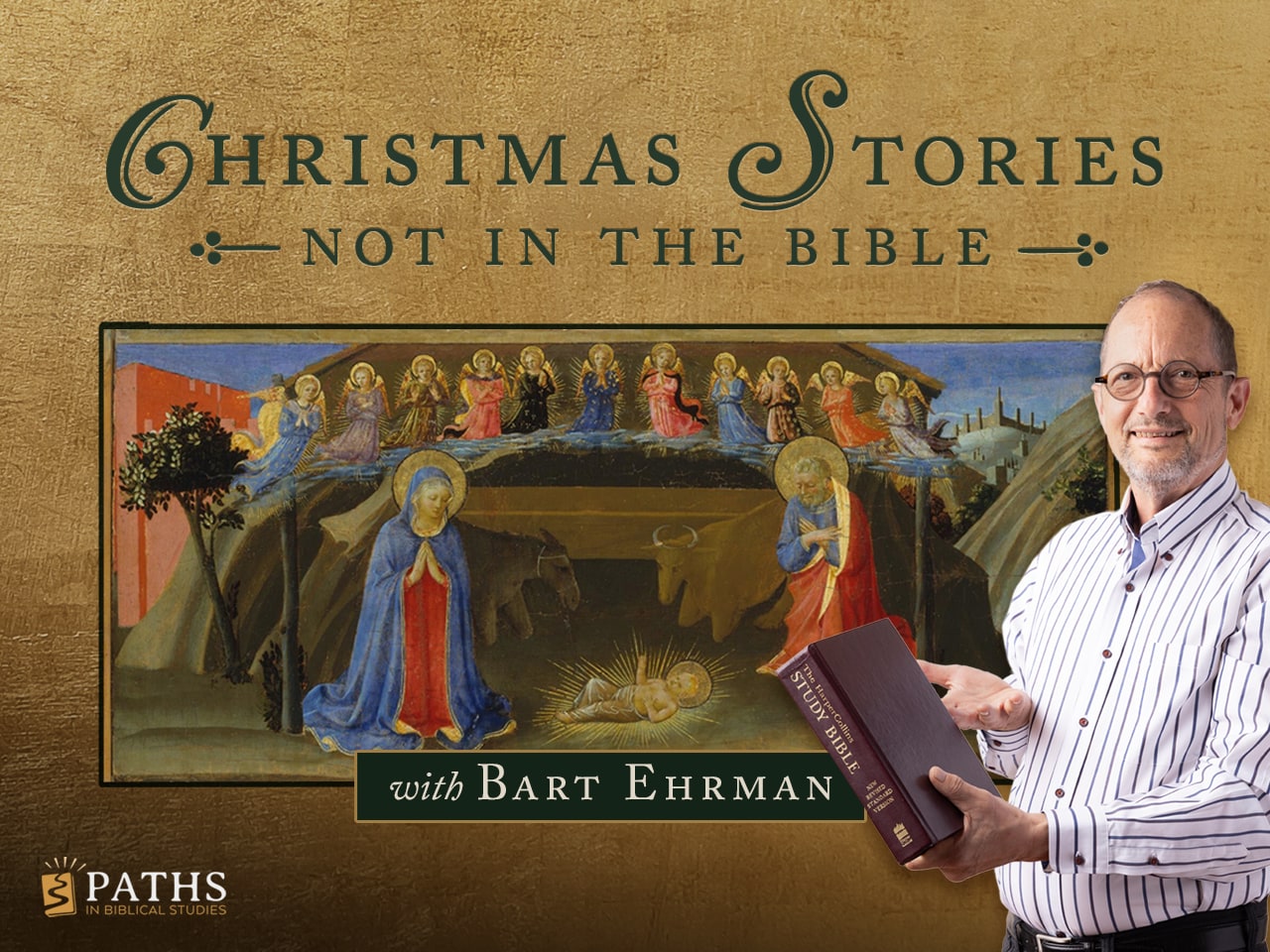
Christmas Stories Not in the Bible course art
Live · Sunday, Dec 20 2 Lectures + Q&A Bart Ehrman · UNC Chapel Hill

The Story Everyone Knows

The details are familiar but many of them are wrong.

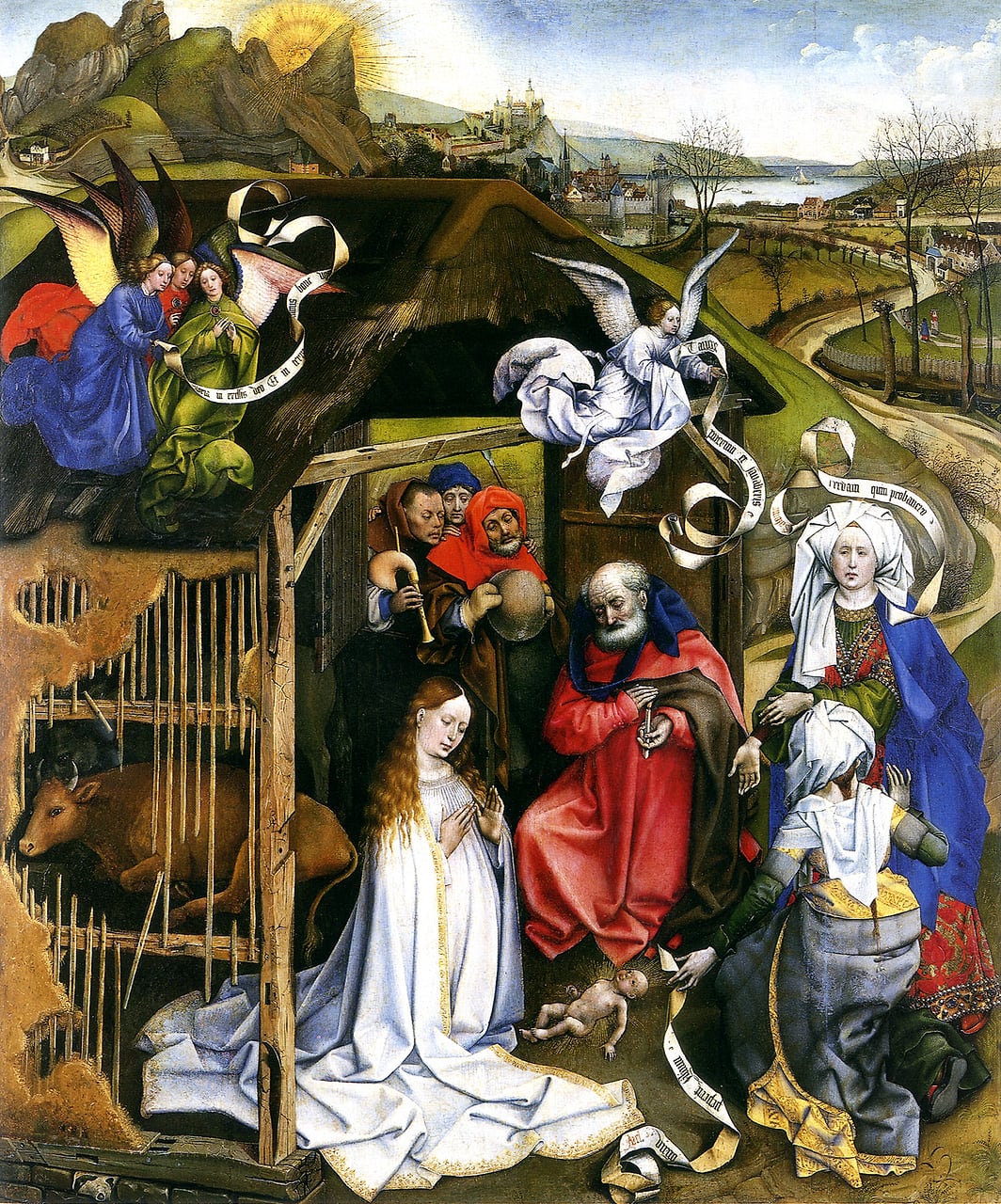
Robert Campin’s Nativity: Mary, an elderly Joseph holding a candle, the child on the ground, the ox and donkey in a broken stable, and two midwives at the right
The Nativity Robert Campin · c. 1420

Most of us learned the Christmas story from movies, pageants, and nativity scenes. And we just assume the story comes from the Bible.

A surprising amount of it doesn’t. Some of the best-loved details are missing from Matthew and Luke, and some are flatly contradicted by them.

Meanwhile, for centuries Christians believed stories about Jesus’ birth that most people today have never heard. They believed Mary was raised in the Jewish Temple and fed by an angel. They believed time stood still at the moment Jesus was born. And they believed a midwife examined Mary after the birth to prove she was still a virgin.

So where did these stories come from?

In this course Bart Ehrman looks closely at the two New Testament accounts, Matthew and Luke, to see what they sometimes surprisingly say and often surprisingly don’t say. Then he turns to the stories from outside the New Testament, which are often not at all what we would expect.

By the end, you will know where the Christmas story really came from and why early Christians kept adding to it.

Course at a Glance

Two lectures, live with Bart Ehrman.

Format

Live online, then recorded

Lectures

2 · 50 minutes each

Live Q&A

30 minutes after Lecture Two

Date

Sunday, December 20, 2026

Time

2:00 to 4:20 pm Eastern

Instructor

Bart D. Ehrman · UNC Chapel Hill

Two lectures,
one afternoon.

The Lectures

Two lectures of about fifty minutes each on Sunday, December 20, with a short break between them and a live Q&A to close. The first stays inside the New Testament. The second leaves it.

Lecture 01

The Christmas Stories: Details Unexpected and Missing

This first lecture looks closely at the two canonical accounts of Jesus’ birth (Matthew 1-2 and Luke 1-2), not so much to see how they differ from each other or contain details that are historically unlikely (although that will come up too), but to see what is in them that many readers would not expect, and what is not in them that they do expect. If some of the most familiar parts of the Christmas story today are not biblical, where did they come from?

2:00 pm Eastern
Lecture 02

Filling Out the Story: Other Early Christian Tales of Jesus’ Birth

Few people are familiar with the birth stories that have come down to us from outside the New Testament. The two most important are the Proto-Gospel of James and the Gospel of Pseudo-Matthew. Both were highly influential over the centuries, and both contain intriguing details and entire stories that will strike some readers as plausible and others as completely bizarre. Here we read about Mary’s own unique birth and upbringing, the difficulties Joseph had in finding a midwife to help at Jesus’ birth, the amazing miracles Jesus performed immediately after he was born, and the supernatural protection provided for the holy family as it traveled down to Egypt. The lecture asks not just what these tales say but also why they originated, and how they helped Christians develop their doctrines about both Jesus and Mary.

3:00 pm Eastern
BE
Bart D. Ehrman Bart D. Ehrman · 2026
Your Instructor

Bart D. Ehrman.

James A. Gray Distinguished Professor of Religious Studies Emeritus · University of North Carolina at Chapel Hill

Bart D. Ehrman is the James A. Gray Distinguished Professor Emeritus of Religious Studies at the University of North Carolina at Chapel Hill, where he taught from 1988 until his retirement in 2025. Recognized internationally for his scholarship on the New Testament and early Christianity, Professor Ehrman has written or edited thirty-five books, including six New York Times bestsellers. His college-level textbook The New Testament: A Historical Introduction to the Early Christian Writings has remained the best-selling text in the field for more than twenty-five years. His scholarly works have been published by Oxford, Harvard, Yale, and other premier academic presses, and his books have been translated into twenty-seven languages, reaching millions of readers worldwide.

He also writes for his charitable blog, The Bart Ehrman Blog, which has raised millions for organizations addressing poverty, homelessness, and hunger.

Distinguished Professor Emeritus, UNCSix-time New York Times bestsellerNine courses for The Great CoursesHost of Misquoting Jesus

0

Lectures · 50 min each

Q&A

Live with Bart · 30 minutes

∞

Lifetime Access

What makes this course different.

What This Course Offers

Bart spends an afternoon with the Christmas story itself. He reads the two accounts in the Bible closely, then turns to the ones that never made it in.

Prepare to Rethink

Common assumptions
this course will challenge.

Common Assumption

The story of Jesus’ birth can be found in all the Gospels.

In fact

Only two of the four tell it at all, Matthew and Luke. And the two do not tell the same story.

Common Assumption

Everything in the annual Christmas pageant comes from the Bible.

In fact

Go looking in Matthew and Luke for the donkey, the stable, or the number of the wise men. What you find, and what you don’t, may surprise you.

Common Assumption

Matthew and Luke are the only early Christian stories about Jesus’ birth.

In fact

Other Gospels told the story too, and for centuries Christians took them to be true. Some of what they say will strike you as plausible, and some as completely bizarre.

Common Assumption

The way we picture the nativity comes from the New Testament itself.

In fact

A good deal of it was first written down somewhere else, and has been painted on church walls across Europe ever since.

Included with Enrollment

Included with
your course.

Live Q&A with Bart

Thirty minutes of live Q&A straight after Lecture Two. Bring your questions about the Christmas story, put them to Bart directly, and keep the recording afterward.

Full Recordings & Lifetime Access

Both lectures and the Q&A session are recorded and yours to keep. Watch on your own schedule, and come back to them every December.

Lecture Slides

Download Bart’s slide decks for both lectures, ideal for review, note-taking, or sharing with a study group.

Full Transcripts

Searchable transcripts of both lectures, perfect for quoting, deeper study, or following along if English is not your first language.

Audio Downloads

MP3 downloads of both lectures. Listen on your commute, on a walk, or while you wrap the presents.

Bart’s Reading List

Bart’s own suggested readings, from the chapters of Matthew and Luke to read first to new translations of the Proto-Gospel of James and the Gospel of Pseudo-Matthew.

$1 from every registration is donated to charity: water, bringing clean water to people in need.

2 ways to purchase this course

Stand-Alone Purchase

Save $10 when you enroll by December 6

Regular Price $39.95 Early-Bird $29.95 Ends December 6


Included in Your Purchase: Lifetime Access to This University-Level Course With:

  • Two 50-minute live lectures by Bart D. Ehrman
  • A 30-minute live Q&A after Lecture Two
  • Full recordings with lifetime access
  • Lecture slides, transcripts & audio downloads
  • Bart’s recommended reading list
  • Biblical Studies Academy members save 30%

Access this Course PLUS Every Course in Our Vault

(250+ Hours of Biblical Learning!)

  • 65+ existing courses plus all new releases (we're aiming for 20+ new courses in 2026)
  • All "Face to Face on the Bible" events and debates
  • Bart Ehrman's monthly "Spotlight" lectures
  • Join 1,800+ members for discussion, member mixers, trivia, book club, & more!
$5 for 5 Week* Trial

*$39.95/mo after trial, limited-time anniversary offer (Exp. 12/31)

Frequently Asked

Everything you
need to know.

When is the course, and what are the times?

Sunday, December 20, 2026, live online. Lecture One runs from 2:00 to 2:50 pm Eastern, followed by a ten-minute break. Lecture Two runs from 3:00 to 3:50 pm Eastern, and a thirty-minute live Q&A with Bart follows straight after, ending at 4:20 pm Eastern.

How many lectures are included?

Two lectures of about 50 minutes each, followed by a 30-minute Q&A with Bart.

Do I need any background in the Bible?

No. Every passage is read in English and every text is introduced as it comes up, including the later Gospels most people have never heard of. If you know the Christmas story from a pageant, a carol, or a nativity scene, you know enough to start.

Is this the same as Bart’s other Christmas courses?

No. This is a new course. Its subject is the gap between the Christmas story everyone knows and what Matthew and Luke actually say, and the birth stories that were told outside the New Testament.

What if I can’t attend live?

You will not miss anything. Both lectures and the Q&A session are recorded, and the recordings are yours with lifetime access. Many students enroll knowing in advance that they will watch on their own schedule.

Can I ask Bart a question?

Yes. A thirty-minute live Q&A follows Lecture Two, and questions from attendees are what fill it. If you cannot make it live, the Q&A recording is included.

How will I access the course?

After you enroll, you will receive login instructions for our online course platform, ThriveCart Learn, where the recordings and course materials are posted (and, before the live date, the Zoom link by email). If you are a member of Biblical Studies Academy (BSA), your access will also be available inside the community.

Do I have lifetime access?

Yes. The lectures, the Q&A recording, and every bonus are yours with lifetime access. Watch them on any device, on your own schedule, as often as you like.

Will subtitles or captions be available?

Yes. The recordings include closed captioning, and full transcripts are included with the course.

Is there a discount for BSA members?

Yes. Members of Biblical Studies Academy (BSA) receive 30% off the course price.

What payment types are accepted?

We accept PayPal and all major credit cards.

Do you offer a money-back guarantee?

Absolutely. If you don’t love the course, send us an email at support@bartehrman.com within 30 days of purchase and we will refund every penny.