
Question I
Soon After His Death
Within a remarkably short time, Jesus’ followers were calling him God. Where did that claim come from, and how fast did it really take hold?
Soon after his death, his followers called him God. Did he ever say it himself?
The Question
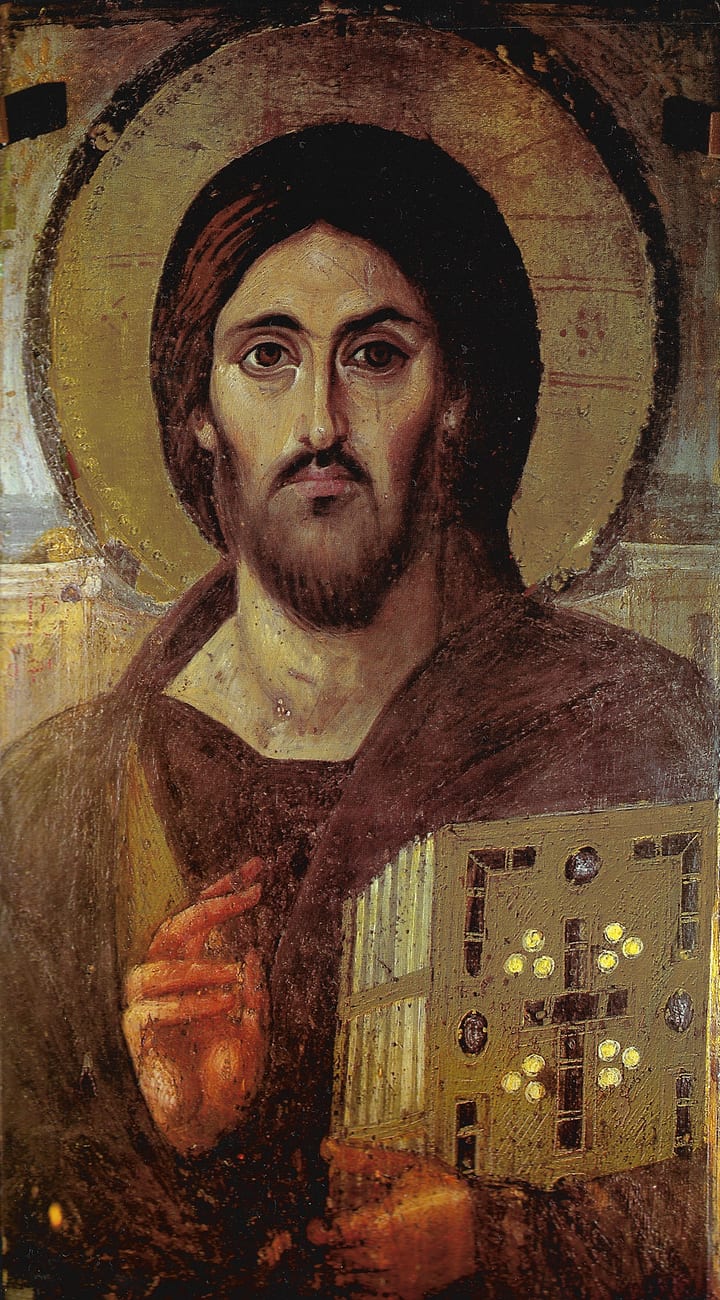
Soon after Jesus’ death, his disciples were claiming that he was God. But what did they mean by that? Did they mean he was the one and only God, Yahweh? Or something else, in a world that recognized many kinds of divine beings?
And how early did the belief begin? Did they think he was God before he died, during his public ministry, while he walked and taught among them? Or did the claim grow only afterward, looking back?
Hardest of all: did Jesus himself think so, and did he ever say so? In this focused lecture, Bart Ehrman sets aside what later tradition assumed and looks at what the evidence actually tells us.
Format
Recorded video lecture
Includes
Q&A, audio & reading
Access
Lifetime, watch anytime
Instructor
Bart Ehrman
Level
No background required
Four Questions
A single claim, “Jesus is God,” unfolds into four sharper questions. The lecture works through each in turn.
Within a remarkably short time, Jesus’ followers were calling him God. Where did that claim come from, and how fast did it really take hold?
Did “God” mean the one and only God, Yahweh, or one of the many lesser divine beings the ancient world already recognized? The word carried more than one meaning.
Did anyone think Jesus was God while he was alive, during his public ministry, or did the belief arise only afterward, in hindsight?
The sharpest question of all: in the earliest evidence, does Jesus himself ever claim to be God? The gospels do not all answer the same way.
 Bart Ehrman · 2026
 James A. Gray Distinguished Professor of Religious Studies Emeritus · University of North Carolina at Chapel Hill
Bart D. Ehrman is the James A. Gray Distinguished Professor Emeritus of Religious Studies at the University of North Carolina at Chapel Hill, where he taught from 1988 until his retirement in 2025. Recognized internationally for his scholarship on the New Testament and early Christianity, Professor Ehrman has written or edited thirty-three books, including six New York Times bestsellers. His college-level textbook The New Testament: A Historical Introduction to the Early Christian Writings has remained the best-selling text in the field for more than twenty-five years. His scholarly works have been published by Oxford, Harvard, Yale, and other premier academic presses, and his books have been translated into twenty-seven languages, reaching millions of readers worldwide.
Beyond the classroom, Professor Ehrman is a widely recognized public scholar. He has produced nine acclaimed courses for The Great Courses, in addition to numerous online courses available through BartEhrman.com. His books and courses have sold more than two million copies.
He also writes for his charitable blog, The Bart Ehrman Blog, which has raised millions for organizations addressing poverty, homelessness, and hunger. In addition, he hosts the weekly podcast Misquoting Jesus with Bart Ehrman, available on YouTube and all major podcast platforms, where he brings cutting-edge biblical scholarship to a global audience.
What This Mini-Course Offers
One focused lecture from the scholar who wrote the book on how Jesus became God, with the recorded Q&A and the reading to go further.
The claim that began among his first followers ends, three centuries later, at the Council of Nicaea. The lecture traces the road back to its start.
No one has done more to explain how a human prophet came to be worshipped as divine. You get the argument straight from the scholar who made the case.
Not a sprawling survey. A single, concentrated talk that goes straight at the question.
The lecture, the Q&A, and the reading, on demand the moment you enroll. Lifetime access to revisit it whenever you like.
The belief in Jesus’ divinity took hold in the wake of his death. The lecture asks why, and how fast.
Built for the curious as much as the well-read. No Greek and no prior study needed to follow the evidence.
Common Assumption
Jesus went around openly calling himself God.
In fact
In the earliest gospels he is strikingly reticent about his own identity. The bold “I am God” sayings are concentrated in the latest gospel, and that pattern is itself a clue.
Common Assumption
The disciples believed Jesus was God from the very start.
In fact
The belief has a history. The evidence suggests it developed in stages, and the New Testament writings preserve different moments in that development.
Common Assumption
When the New Testament calls Jesus “God,” it means Yahweh.
In fact
In the ancient world “God” covered a spectrum of divine beings. Calling someone divine did not automatically mean identifying him with the one Creator, and the distinction changes everything.
Common Assumption
How Jesus became God is obvious from the gospels.
In fact
The four gospels do not agree on when, or how, Jesus is divine. Sorting out those differences is the real work, and the real payoff.
The question-and-answer session from the original webinar, where Bart responds to the questions the lecture raises.
An MP3 of the full lecture. Listen on your commute, during a walk, or whenever you’re away from a screen.
A curated set of further reading to take the question deeper after the lecture and the Q&A.
$1 from every registration is donated to charity: water, bringing clean water to people in need.
Enjoy the course at a fraction of the cost
$24.95
Included in Your Purchase: Lifetime access to this mini-course, with:

Access this Course PLUS Every Course in Our Vault
(250+ Hours of Biblical Learning!)
then special rate $49.95/month
A focused video lecture by Dr. Bart Ehrman, the recorded Q&A session that followed it, an audio download of the lecture, and a set of additional reading. Everything is on demand, with lifetime access.
No. It was recorded for a live webinar, and that recording is now available on demand. You can start watching immediately and return to it whenever you like.
It is a single focused lecture, roughly an hour, plus the recorded Q&A session. It is a mini-course built around one question, not a full multi-lecture series.
Not at all. The lecture is built for a general audience, and no Greek or prior study is needed. Everything is explained as it comes up.
After purchase you will receive an email with instructions to log in to our online platform, ThriveCart Learn, where you’ll find the lecture, the Q&A, the audio, and the reading, on any device, with lifetime access.
We accept PayPal and all major credit cards.
Absolutely. If you don’t love the mini-course, email us at support@bartehrman.com within 30 days of purchase and we will refund every penny.