
Image Credits
Earliest Christian Heresies
Every image on the course page, with its source, license, and the reason it was chosen. The material is public-domain and freely-licensed work from Wikimedia Commons: the manuscripts of the losing side, recovered in the last century, and the art the winning side made once the argument was over. Creative Commons works are attributed below. All images have been resized for the web.
| Image | Work & Attribution | License | Where it appears | Why it’s included |
|---|---|---|---|---|
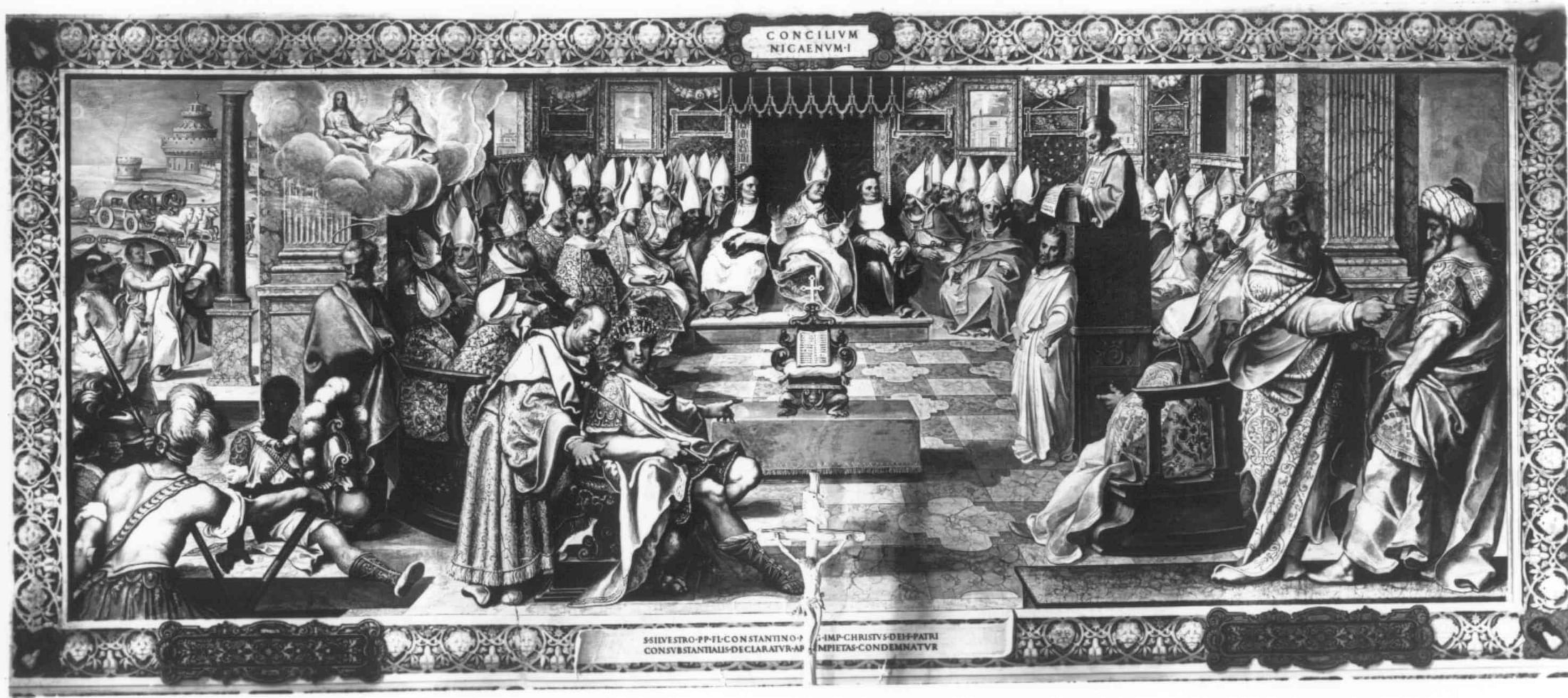 nicaea-fresco.jpg | The Council of Nicaea, fresco in the Sistine Salon, Vatican Giovanni Guerra and Cesare Nebbia (with assistants) 1590 Source ↗ | Public domain | Hero background · Hero artifact caption · Instructor backdrop | The scene the popular imagination reaches for when it pictures orthodoxy being settled, painted twelve centuries after the fact. The course is about everything that had to happen first. |
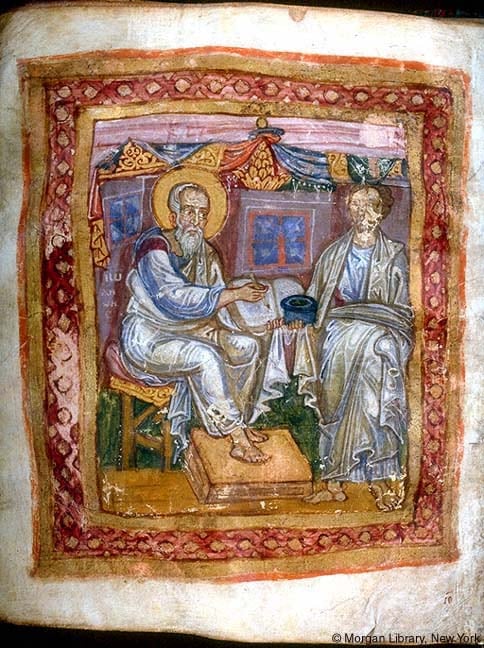 marcion-john.jpg | The apostle John and Marcion of Sinope (Morgan Library MS 748, folio 150v) Unknown scribe, Italy (Morgan Library) 11th century Source ↗ | Public domain | Origin section figure | A medieval painter’s picture of the apostle refusing the arch-heretic: the whole quarrel of the second century compressed into one gesture. |
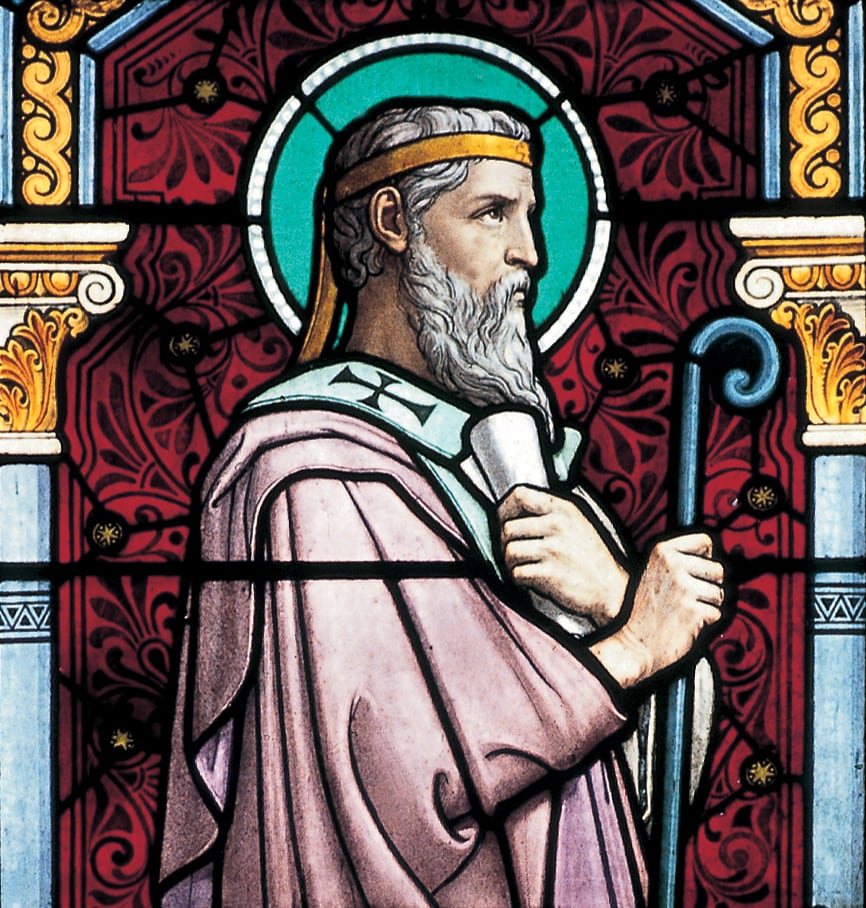 irenaeus.jpg | Saint Irenaeus, stained glass in the Église Saint-Irénée, Lyon Lucien Bégule (photo: Gérald Gambier) 1901 Source ↗ | Public domain | Hero ornament · Movement IV medallion | Irenaeus of Lyon, whose Against Heresies is both the fiercest attack on these groups and, for centuries, our main source about them. |
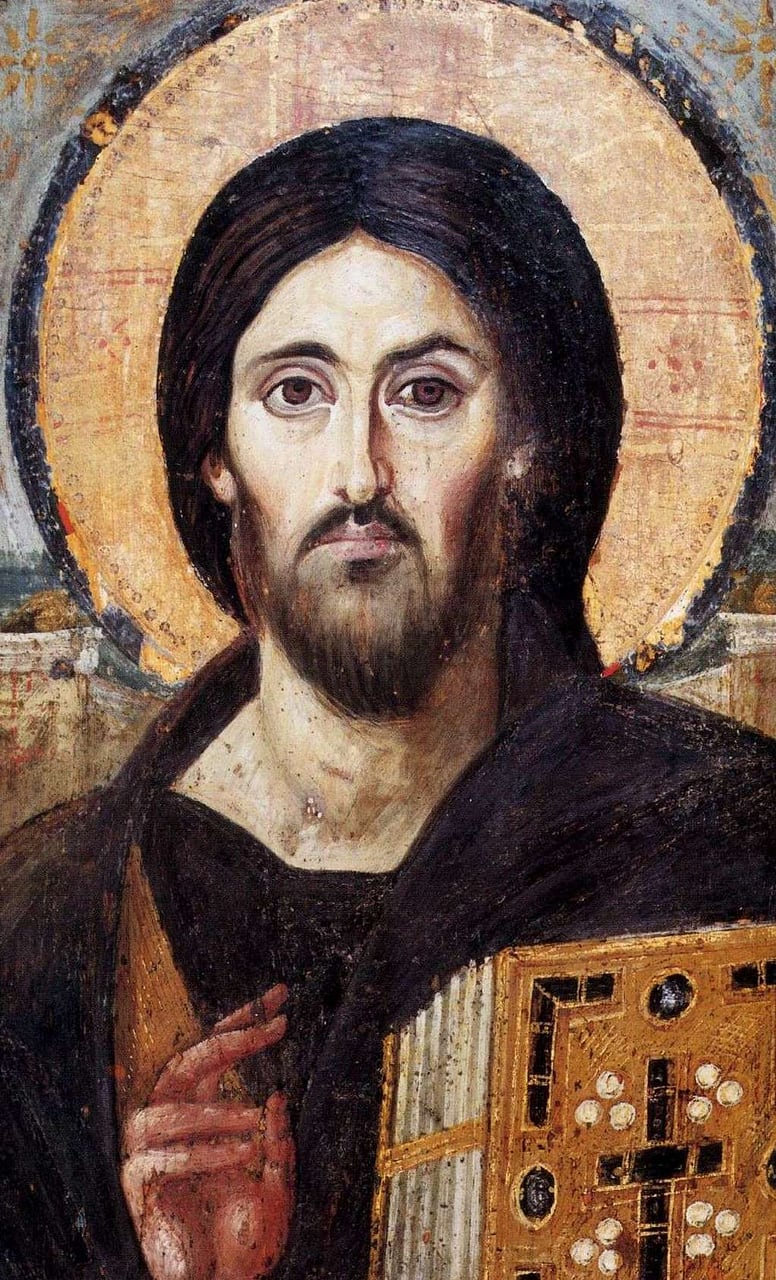 pantocrator.jpg | Christ Pantocrator, encaustic icon from Saint Catherine’s Monastery, Mount Sinai Unknown artist 6th century Source ↗ | Public domain | Stats backdrop | The oldest surviving icon of Christ, and a face that carries the exact tension the course is about: how divine, and how human, is the figure being painted? |
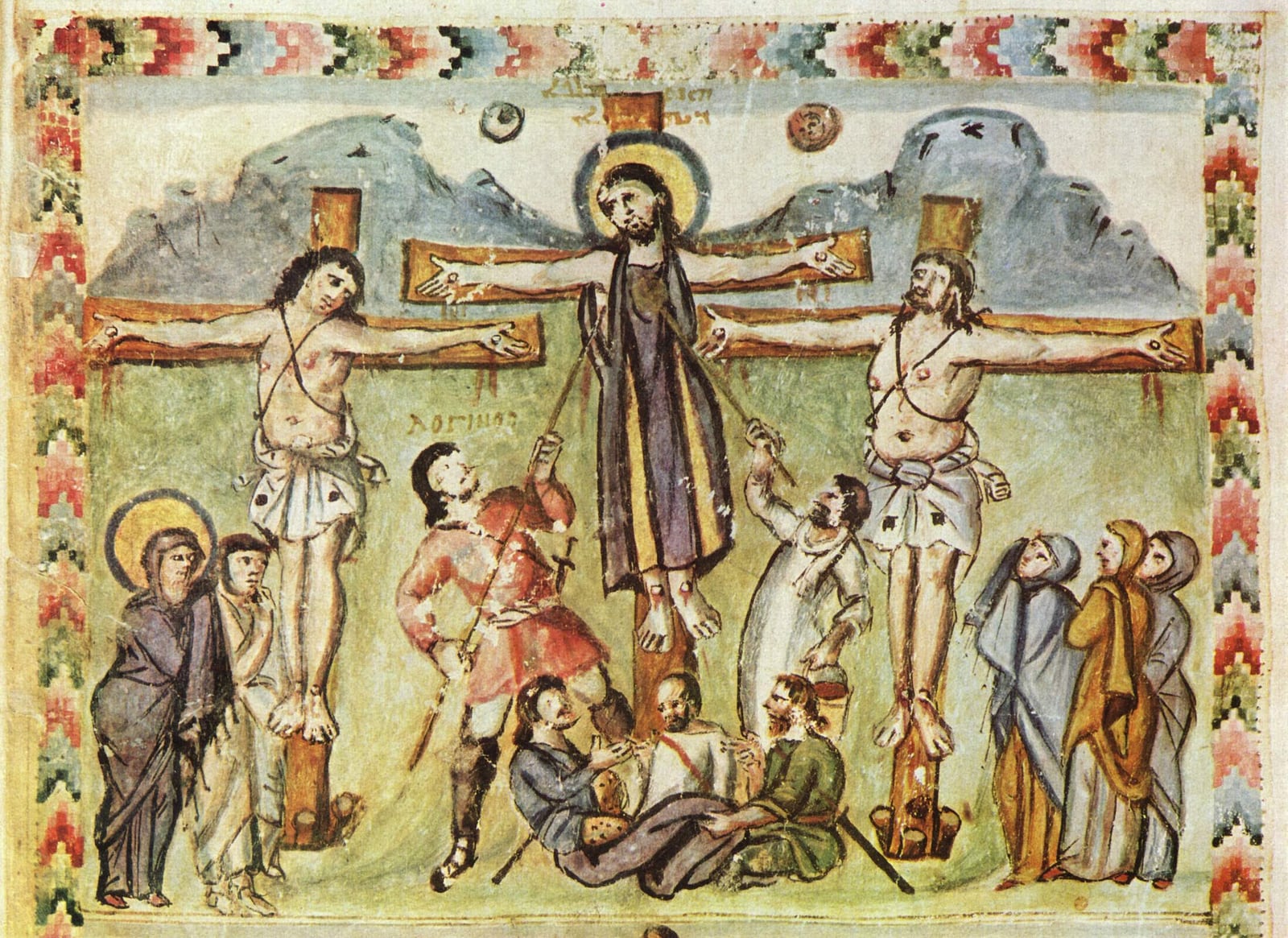 rabbula-crucifixion.jpg | The Crucifixion, miniature from the Rabbula Gospels The Master of the Rabbula Gospels 586 Source ↗ | Public domain | Movement I medallion | One of the earliest full depictions of the crucifixion, an image the docetic writings insisted did not happen the way it looks. |
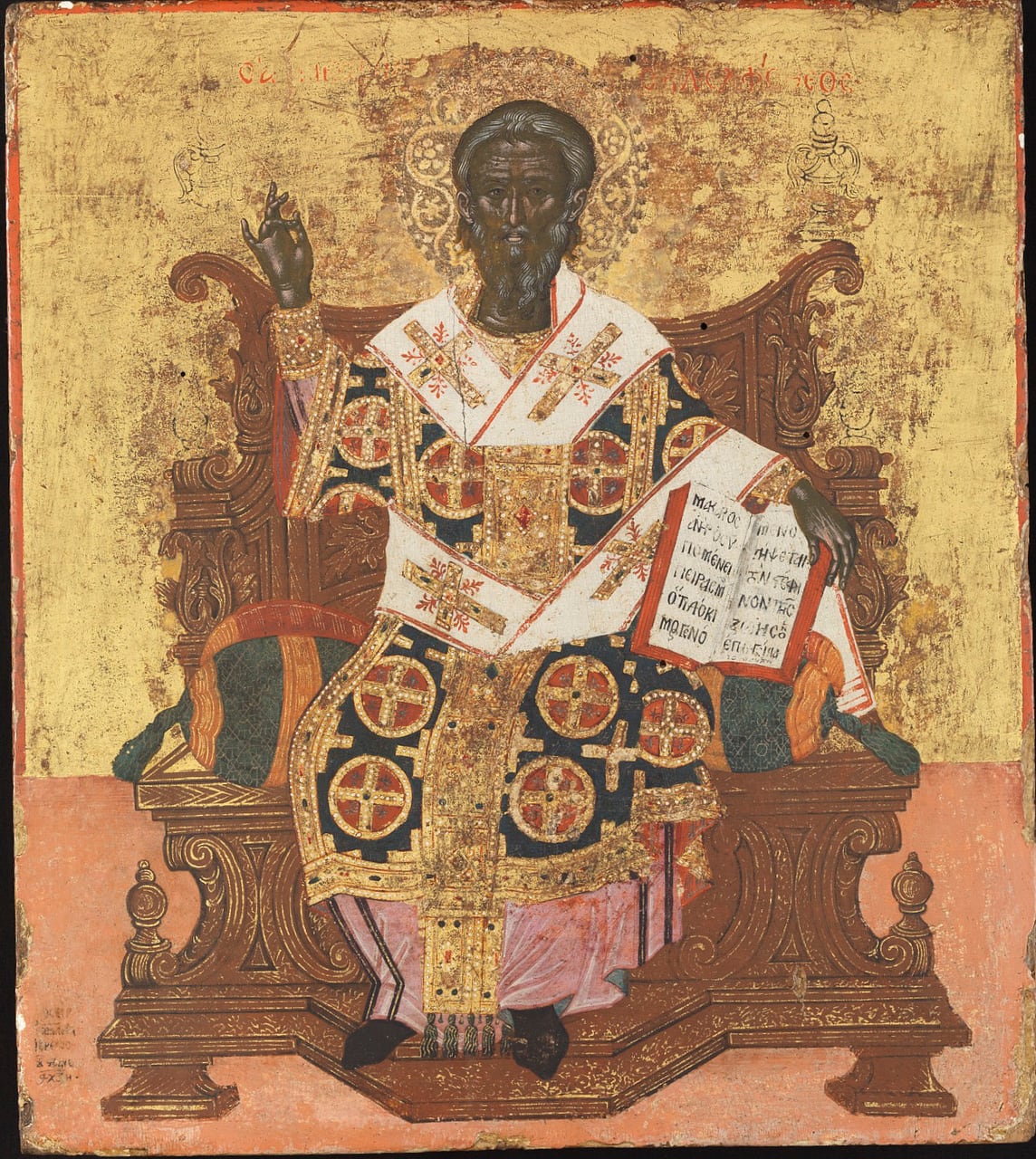 james-the-just.jpg | James, the brother of Jesus Emmanuel Tzanes 1668 Source ↗ | Public domain | Movement II medallion | The head of the Jerusalem church, and the authority the Jewish-Christian writings appeal to against Paul. |
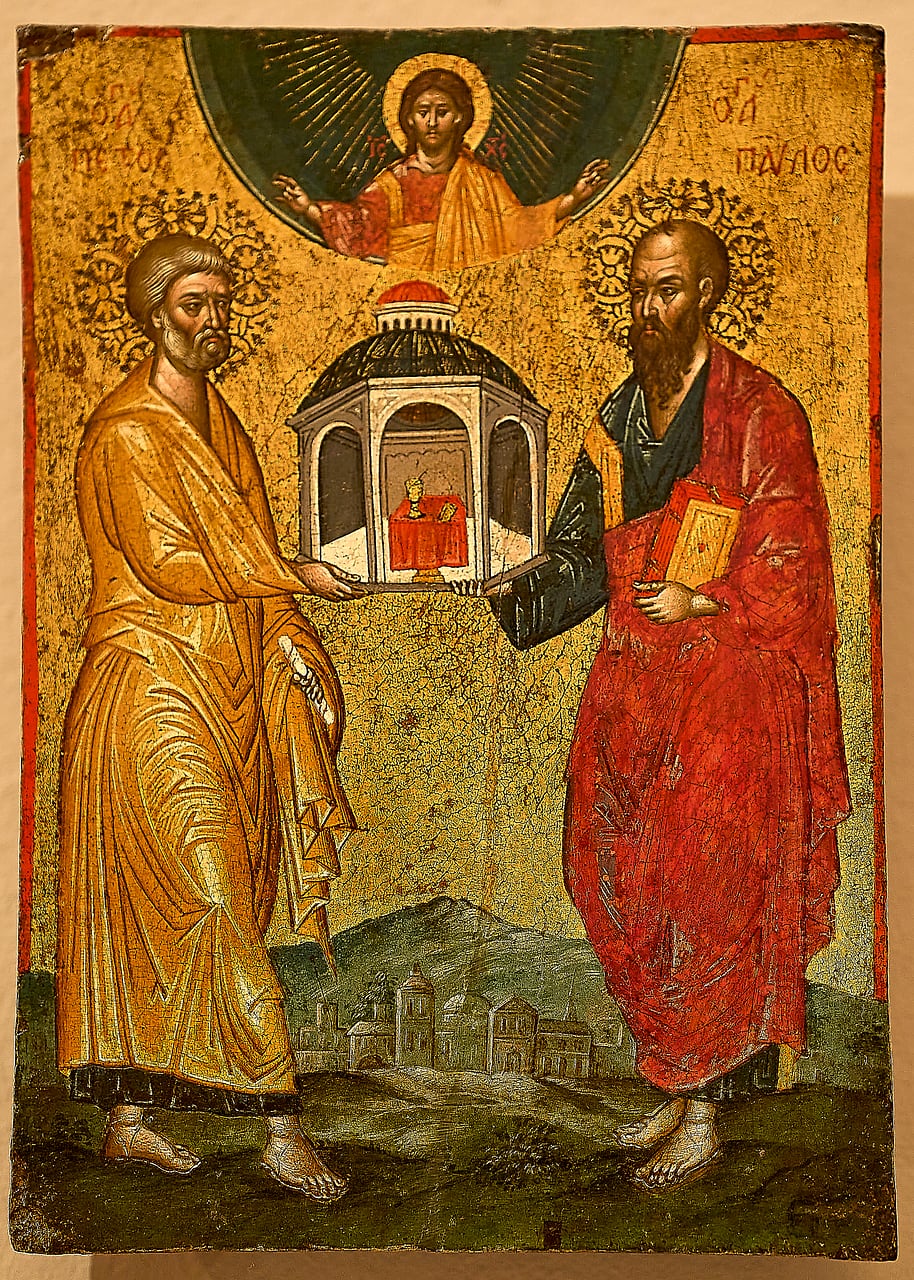 peter-paul.jpg | Icon of the Apostles Peter and Paul, northern Greek workshop (Byzantine and Christian Museum of Athens) Photo: George E. Koronaios Icon c. 1700 (photographed 2023) Source ↗ | CC BY-SA 4.0 | Full-schedule backdrop | The two apostles shown in harmony, which is not how the Letter of Peter to James tells it: there, Paul is “my enemy.” |
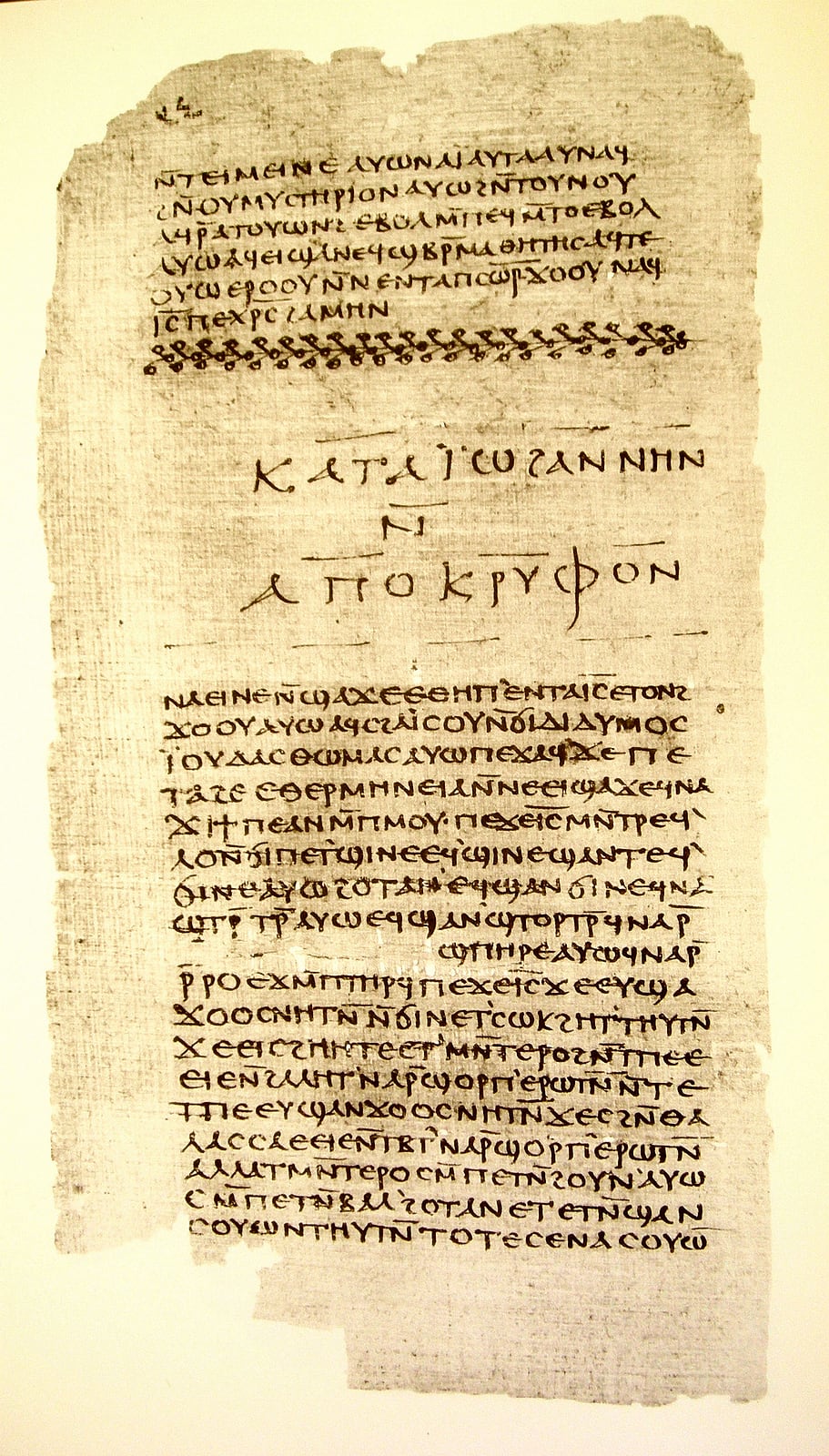 nag-hammadi-codex.jpg | Nag Hammadi Codex II, folio 32 (end of the Apocryphon of John, opening of the Gospel of Thomas) Unknown Coptic scribe 4th century Source ↗ | Public domain | Movement III medallion · Scroll panel | The single page where one recovered Gnostic text ends and another begins: the discovery that let these groups speak in their own words again. |
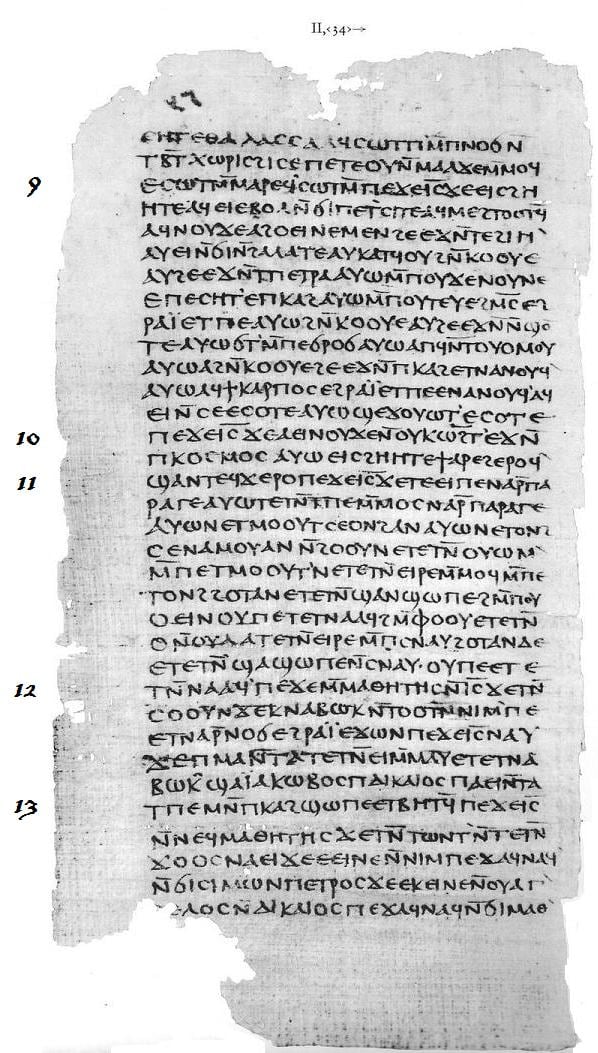 thomas-nag-hammadi.jpg | Page 34 of Nag Hammadi Codex II, containing part of the Gospel of Thomas Unknown Coptic scribe 4th century Source ↗ | Public domain | Hero ornament | The Coptic text of our oldest non-canonical gospel, 114 sayings of Jesus, about half of them absent from the New Testament. |
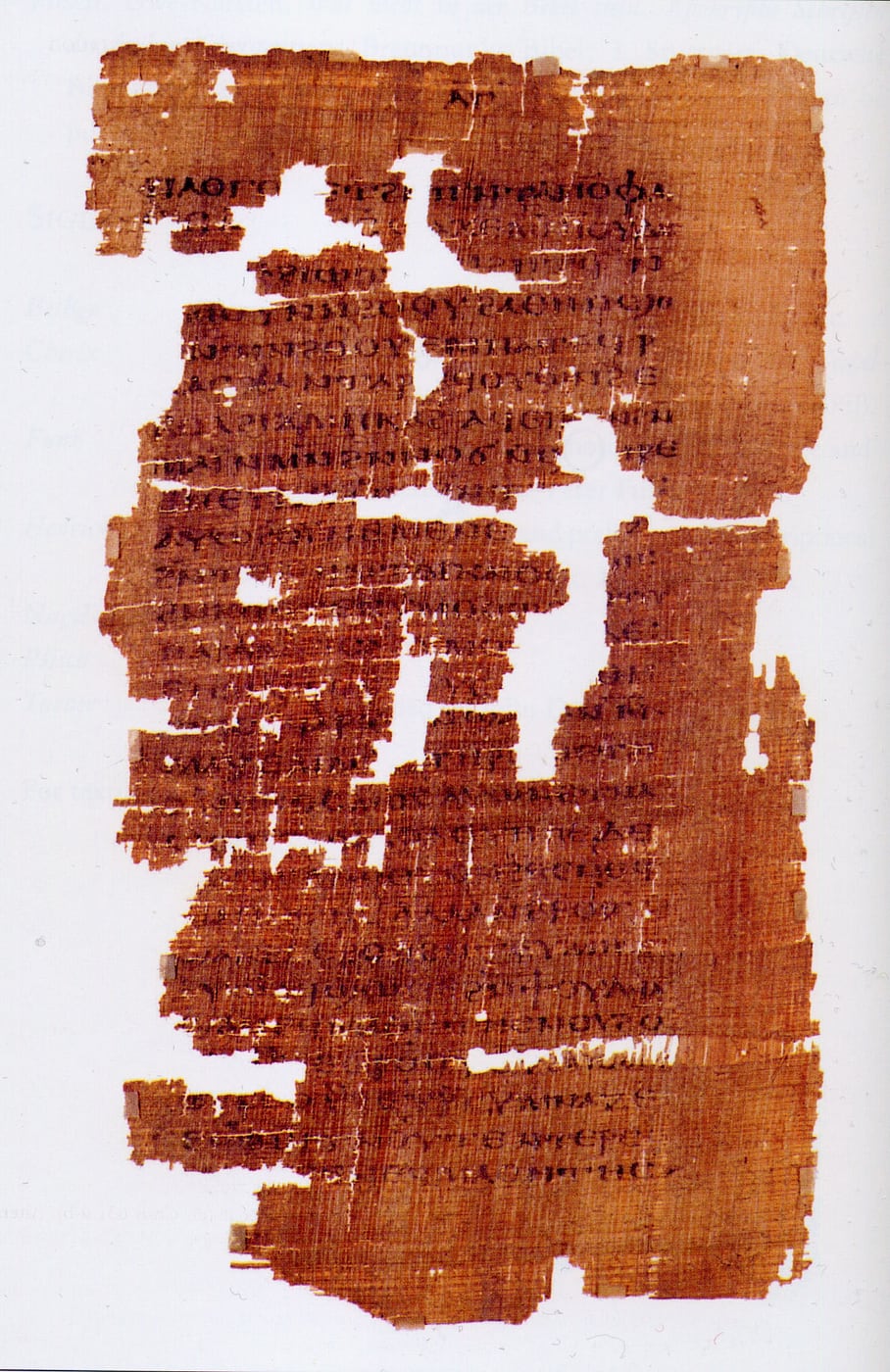 codex-tchacos.jpg | Page 33 of Codex Tchacos, containing the Gospel of Judas Photograph: WolfgangRieger, after the 2007 critical edition Codex 3rd to 4th century Source ↗ | Public domain | Hero ornament · “Included with Enrollment” backdrop | The gospel in which the betrayer is the only disciple who understands, unknown to the modern world until it was published just over twenty years ago. |
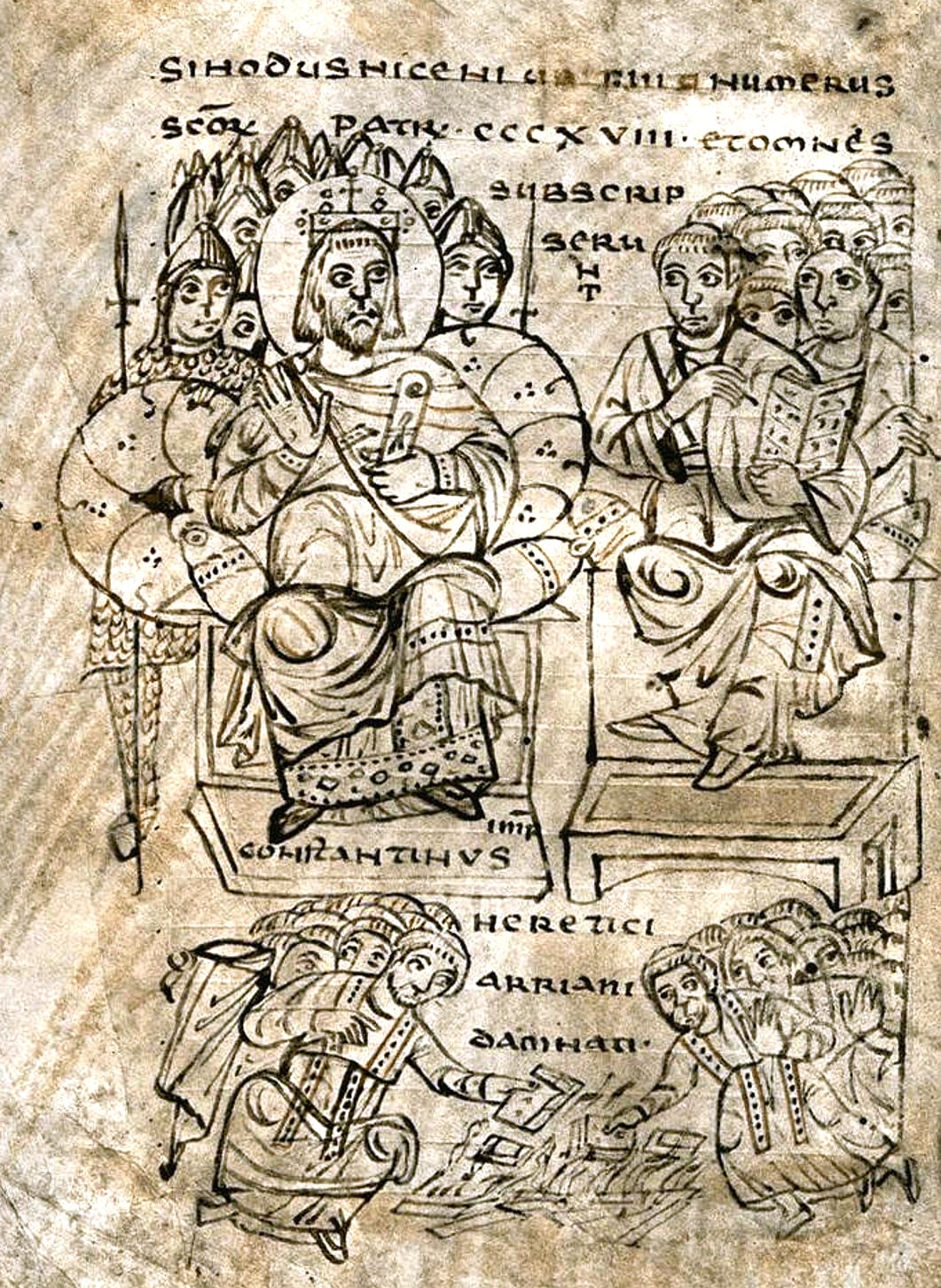 arian-books.jpg | Constantine and the Council of Nicaea, with the burning of Arian books below (Vercelli, Biblioteca Capitolare MS CLXV) Unknown scribe, northern Italy c. 825 Source ↗ | Public domain | “Prepare to Rethink” backdrop | What victory looked like in practice: the losing side’s books on the fire, drawn five centuries later by people who thought it was a good day. |
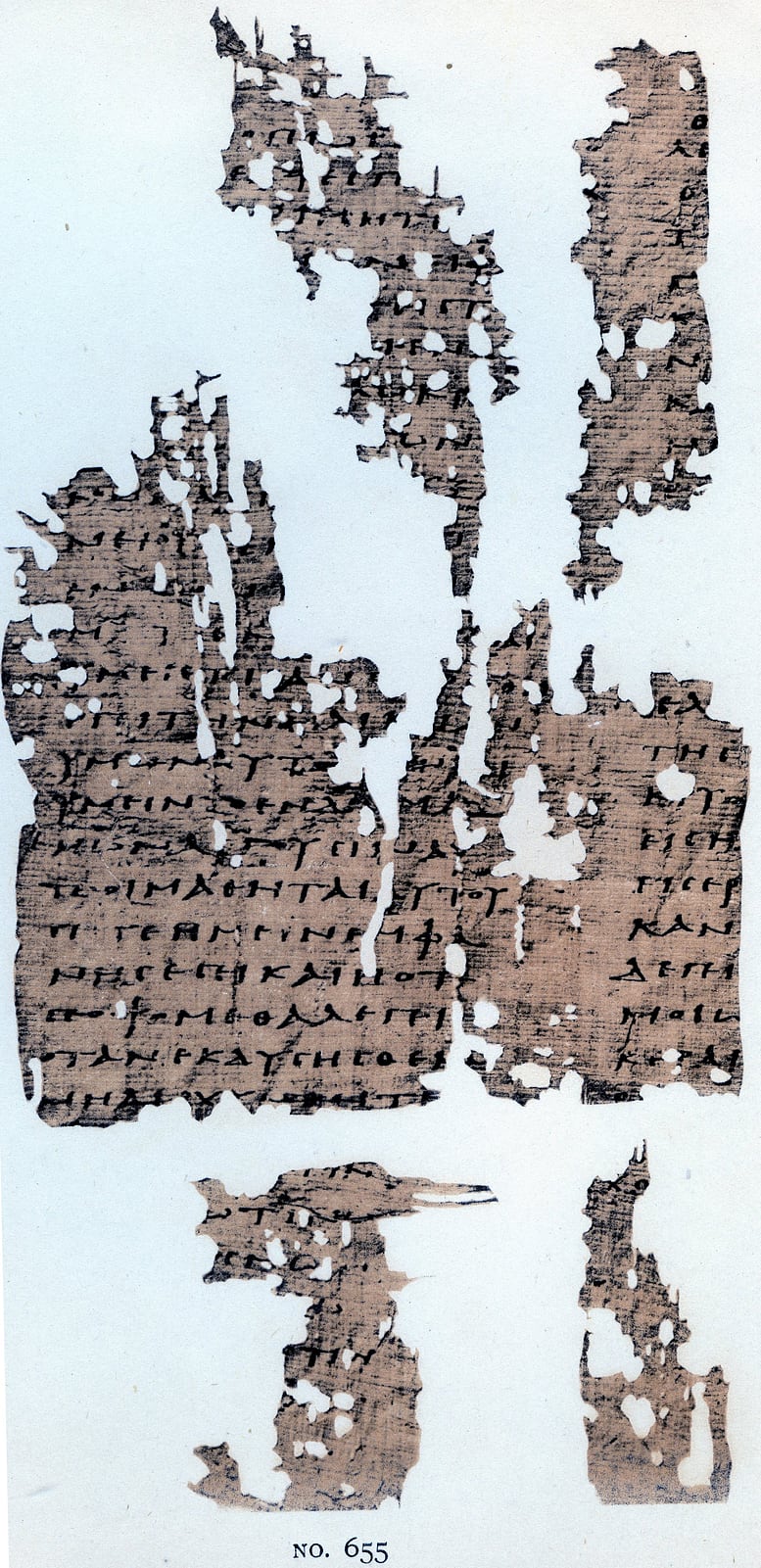 oxyrhynchus-thomas.jpg | Papyrus Oxyrhynchus 655 Unknown ancient scribe 3rd century Source ↗ | Public domain | At-a-Glance backdrop | A Greek scrap of the Gospel of Thomas found at Oxyrhynchus decades before Nag Hammadi, when nobody yet knew what it belonged to. |
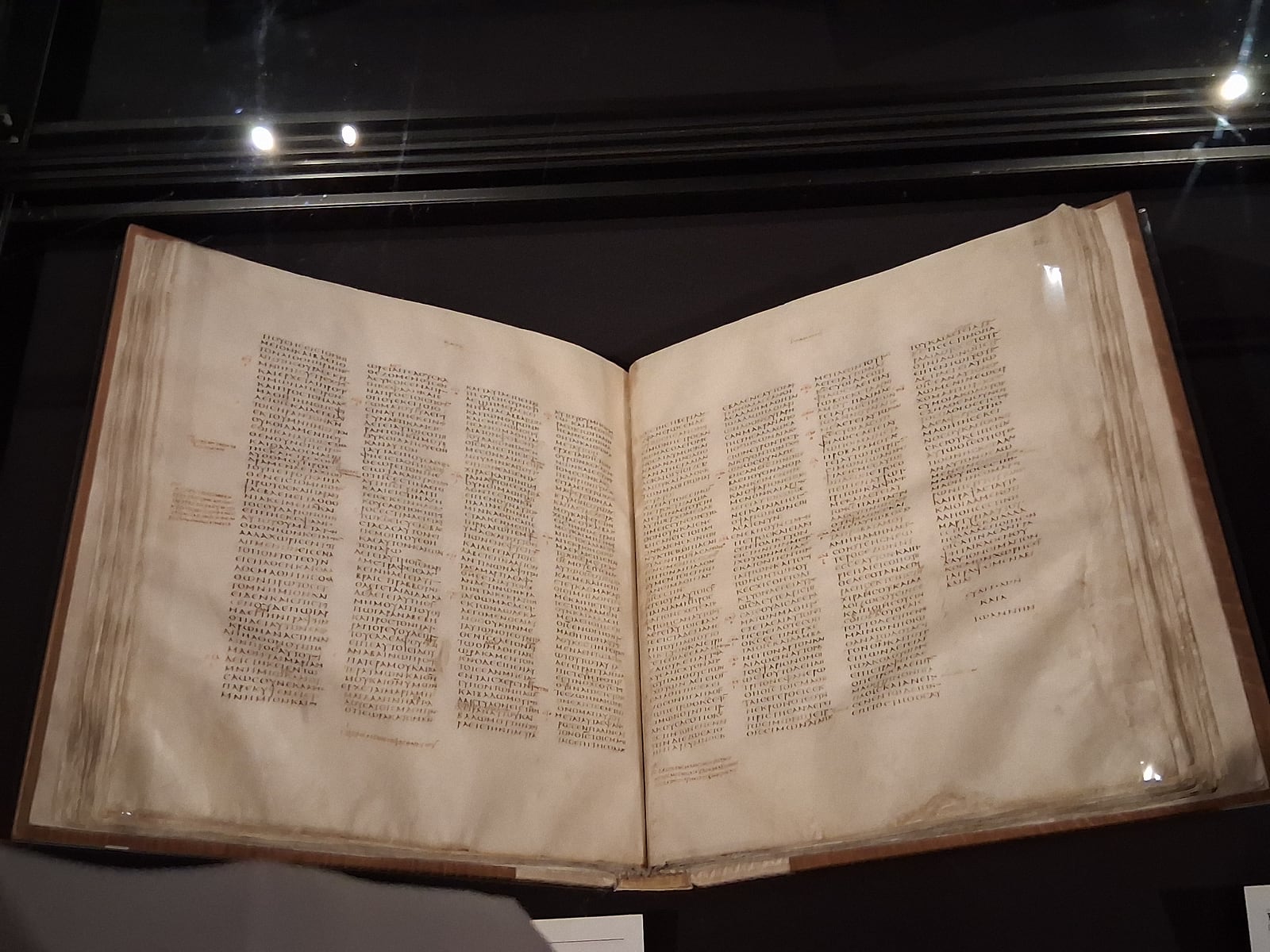 codex-sinaiticus.jpg | Codex Sinaiticus on display at the British Library, London Photo: PotatoCow25 Manuscript 4th century (photographed 2026) Source ↗ | CC0 | FAQ backdrop | The oldest complete New Testament, and so the clearest surviving object of what the argument was finally about: which books get to be in the book. |
Public-domain works are reproduced freely. CC BY / CC BY-SA images are credited to their photographers as required; follow each Source link for the full license text.