 All episodes →
 Misquoting Jesus Podcast
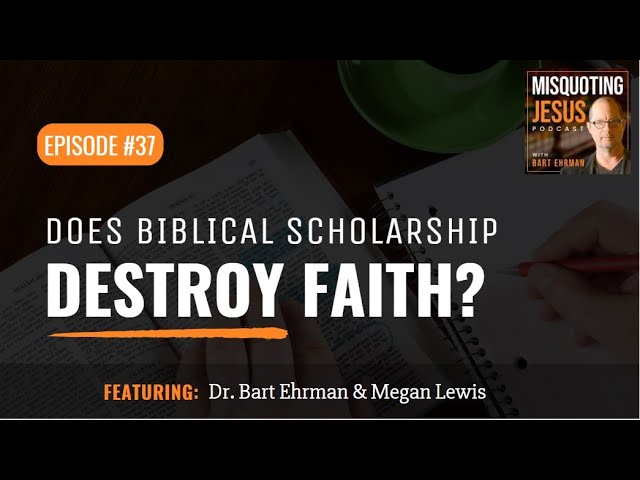
Does Biblical Scholarship Destroy Faith?
 ▶ Watch on YouTube
 Show notes
Episode Outline:
0:00 Does biblical scholarship destroy faith?
1:03 Bart and Megan on academic rhythms, summers, and semesters
3:59 Why some people lose faith when they start studying the Bible seriously
6:20 Are fundamentalists more vulnerable to deconversion?
8:55 Does the sheer volume of graduate-level study intensify the crisis?
12:18 How Bart’s own scholarship changed his faith journey
14:45 The different paths people take after biblical study challenges their beliefs
16:17 Why some believers choose adjacent fields instead of biblical scholarship itself
20:17 Do Bart’s students or readers actually deconvert because of his work?
25:58 Are professors trying to indoctrinate students into atheism?
29:18 How biblical scholarship can deepen faith instead of destroying it
34:20 Final answer: does biblical scholarship destroy faith?
38:06 Bart’s upcoming lecture: Who killed Jesus?
39:25 Outsmart Bart: Genesis genealogy trivia
42:40 Final summary: knowledge, faith, and why scholarship matters
Episode Description
Biblical scholars who approach the Bible from a historical perspective are often accused of working hard to deconvert the faithful. Is that true? Do undergraduates widely abandon their faith once they learn the historical realities behind it? Are professors and authors generally interested in urging their students and readers to abandon their religion? And is there any positive result for faith that can come from understanding historical scholarship? Is it crucial to faith to understand the Bible, or just an unnecessary add-on?
Also watch these episodes:
Why Doesn't Bart Believe in God?
Why Doesn't Bart Believe in God?
Why the Doctrine of Inerrancy Contradicts the Gospels
Why the Doctrine of Inerrancy Contradicts the Gospels
Can the New Testament Possibly Be True?
Can the New Testament Possibly Be True?
This week, Megan asks Bart:
-It's probable that no Christian goes into biblical scholarship expecting to deconvert. They do it to deepen their understanding of their holy text. Why, then, do you think that deconversions do occur, and do you think it happens at a higher rate among biblical scholars than the rest of the population?
-What role do you think that a person’s understanding of the Bible before they embark on academic training has on the longevity of their faith? Do you think that someone with a more literal view of the Bible is more susceptible to deconversion?
-As someone who kind of bridged theological both worlds, an episcopalian who converted to evangelism, what impact, if any, did becoming a Biblical scholar have on Bart's faith?
-Does Bart feel like an outlier, in either your deconversion, or that you didn’t deconvert as a result of your scholarship?
-Do you think that some fundamental Christians are able to maintain their fundamentalism while in academia because they choose to go into adjacent fields - something like Egyptology, or Classics, where they aren’t confronted with the challenges that biblical scholarship can present, so they don’t have to adjust their worldview to account for them?
-Are there ways that biblical scholarship is actually helpful for people who want to understand the bible and maintain their faith?
0:00 Does biblical scholarship destroy faith?
1:03 Bart and Megan on academic rhythms, summers, and semesters
3:59 Why some people lose faith when they start studying the Bible seriously
6:20 Are fundamentalists more vulnerable to deconversion?
8:55 Does the sheer volume of graduate-level study intensify the crisis?
12:18 How Bart’s own scholarship changed his faith journey
14:45 The different paths people take after biblical study challenges their beliefs
16:17 Why some believers choose adjacent fields instead of biblical scholarship itself
20:17 Do Bart’s students or readers actually deconvert because of his work?
25:58 Are professors trying to indoctrinate students into atheism?
29:18 How biblical scholarship can deepen faith instead of destroying it
34:20 Final answer: does biblical scholarship destroy faith?
38:06 Bart’s upcoming lecture: Who killed Jesus?
39:25 Outsmart Bart: Genesis genealogy trivia
42:40 Final summary: knowledge, faith, and why scholarship matters
Episode Description
Biblical scholars who approach the Bible from a historical perspective are often accused of working hard to deconvert the faithful. Is that true? Do undergraduates widely abandon their faith once they learn the historical realities behind it? Are professors and authors generally interested in urging their students and readers to abandon their religion? And is there any positive result for faith that can come from understanding historical scholarship? Is it crucial to faith to understand the Bible, or just an unnecessary add-on?
Also watch these episodes:
Why Doesn't Bart Believe in God?
Why Doesn't Bart Believe in God?
Why the Doctrine of Inerrancy Contradicts the Gospels
Why the Doctrine of Inerrancy Contradicts the Gospels
Can the New Testament Possibly Be True?
Can the New Testament Possibly Be True?
This week, Megan asks Bart:
-It's probable that no Christian goes into biblical scholarship expecting to deconvert. They do it to deepen their understanding of their holy text. Why, then, do you think that deconversions do occur, and do you think it happens at a higher rate among biblical scholars than the rest of the population?
-What role do you think that a person’s understanding of the Bible before they embark on academic training has on the longevity of their faith? Do you think that someone with a more literal view of the Bible is more susceptible to deconversion?
-As someone who kind of bridged theological both worlds, an episcopalian who converted to evangelism, what impact, if any, did becoming a Biblical scholar have on Bart's faith?
-Does Bart feel like an outlier, in either your deconversion, or that you didn’t deconvert as a result of your scholarship?
-Do you think that some fundamental Christians are able to maintain their fundamentalism while in academia because they choose to go into adjacent fields - something like Egyptology, or Classics, where they aren’t confronted with the challenges that biblical scholarship can present, so they don’t have to adjust their worldview to account for them?
-Are there ways that biblical scholarship is actually helpful for people who want to understand the bible and maintain their faith?
Go deeper on this topic
 Online course
Scribal Corruption of Scripture: How the Bible Was Changed and Why Readers May Never Know
Based on a New York Times bestselling book, this course explores questions critically important to anyone interested in the New Testament: Do we have the original…
Online course
Scribal Corruption of Scripture: How the Bible Was Changed and Why Readers May Never Know
Based on a New York Times bestselling book, this course explores questions critically important to anyone interested in the New Testament: Do we have the original…
 Free courseFree
Why I Am Not a Christian
Bart’s own story, from fundamentalist to agnostic scholar. Four free lectures.
Free courseFree
Why I Am Not a Christian
Bart’s own story, from fundamentalist to agnostic scholar. Four free lectures.
Related episodes
 Podcast
Can Christians Study the New Testament Honestly?
Podcast
Can Christians Study the New Testament Honestly?
 Podcast
New Testament Scholarship for Non-Scholars
Podcast
New Testament Scholarship for Non-Scholars
 Podcast
The Scholar and the Savior: Bridging Belief and Critical Study
Podcast
The Scholar and the Savior: Bridging Belief and Critical Study
Read next
 Article
What is the Best Study Bible? (Ratings, Features, & Bart’s Favorite)
Article
What is the Best Study Bible? (Ratings, Features, & Bart’s Favorite)
 Article
How to Study the Bible (The Answer May Surprise You!)
Find your path New to faith, doubt & deconstruction?
Article
How to Study the Bible (The Answer May Surprise You!)
Find your path New to faith, doubt & deconstruction? Two quick questions build you a personal route: free lectures, current articles and episodes, and the right course for your level.
Build my path →