Theme I
The Gospels
Mark, Matthew, Luke, and John, plus the lost gospels that did not make it. Their origins, their literary genius, the Synoptic problem and the riddle of Q, and how four texts out of dozens became the fourfold Gospel.
How twenty-seven ancient texts became the Christian Bible.
Where the New Testament Came From
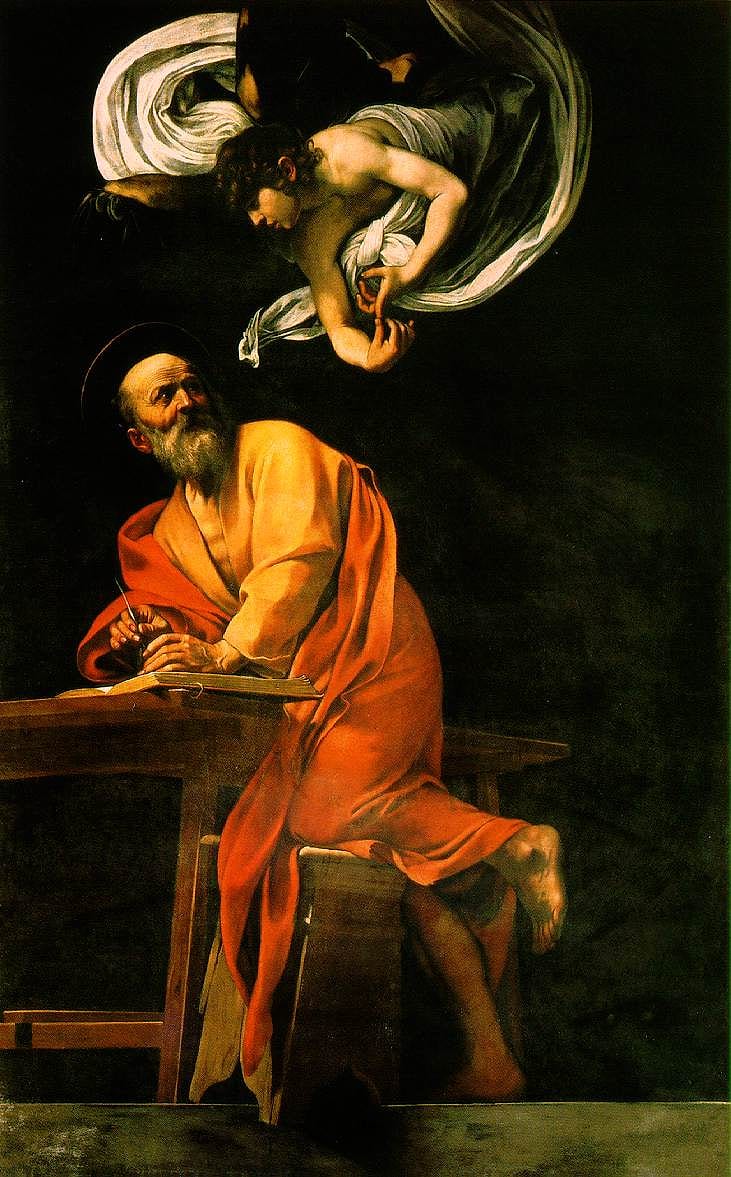
For centuries the New Testament has shaped faith, art, and culture. But its origins stay a mystery for most readers. Who wrote these texts? When, and why? And how reliable are the copies we hold today?
There are twenty-seven of them: gospels and letters, a history, an apocalypse, written in Greek by many hands over roughly a century. They were copied by scribes, gathered into collections, argued over, sometimes forged, and only slowly bound into one book. None of their authors imagined they were writing “the New Testament.”
This course steps into the university classroom to read them the way historians do: each text in its own voice, in its own world. From the Synoptic problem to the lost gospels, from the genuine letters of Paul to the ones written in his name, it follows the evidence to ask how this collection actually came to be.
Format
On-demand video
Lectures
27 · plus Q&A each
Access
Lifetime, watch anytime
Instructor
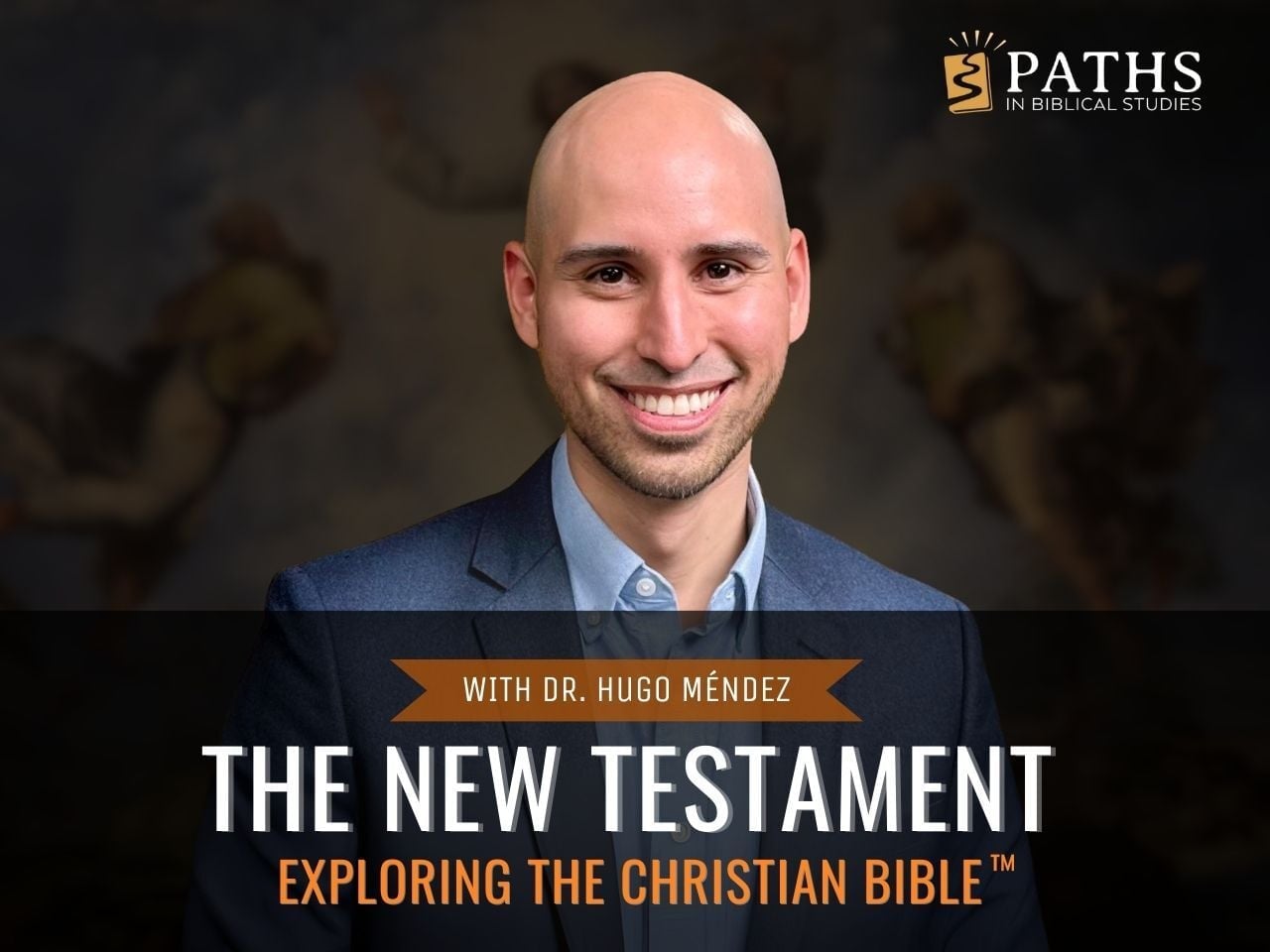
Hugo Méndez
Specialty
New Testament & Early Christianity
Five Themes
From the gospels and the historical Jesus, through the letters of Paul, to Revelation and the making of the canon.
Mark, Matthew, Luke, and John, plus the lost gospels that did not make it. Their origins, their literary genius, the Synoptic problem and the riddle of Q, and how four texts out of dozens became the fourfold Gospel.
How scholars sift fact from invention across so many clashing portraits, and the figure they recover: an apocalyptic prophet of the coming kingdom of God.
Reading other people’s mail: how to interpret ancient letters, what Paul’s churches were like, how his letters were collected and altered, and which of them he did not write at all.
The letters attributed to James and Jude, the brothers of Jesus, and to Peter, his best-known disciple. Who really wrote them, and what they reveal about the conflicts of the early church.
The strange, violent visions of Revelation, and the long, contested process by which twenty-seven independent texts became a single New Testament. Nothing about it was inevitable.
 Hugo Méndez · 2026
 Associate Professor of Religious Studies · University of North Carolina at Chapel Hill
Hugo Méndez is Associate Professor of Religious Studies at the University of North Carolina at Chapel Hill. Inside the classroom, he is an award-winning teacher of the New Testament and Early Christianity. Outside of it, he is an internationally recognized expert on the Gospel of John, whose recent books include The Gospel of John: A New History (Oxford, 2025) and The Epistles of John: Origins, Authorship, Purpose (Cambridge, 2026). Above all, Méndez has a passion for sharing religion and history with the wider public, with regular appearances on documentaries for such outlets as the History and Discovery channels.
What This Course Offers
Hugo Méndez teaches the New Testament the way it is taught in a leading university seminar, text by text, debate by debate, for anyone who wants the scholarship behind the familiar stories.
All twenty-seven texts, gospels, letters, a history, an apocalypse, read closely for what each one is actually doing.
Hugo Méndez co-wrote the textbook that trains most American students in the New Testament. This is that course, straight from the source.
Q, the apocryphal gospels, the disputed letters: the texts that did not make it, and the ones that may not be what they claim.
All twenty-seven lectures and their Q&A sessions on demand, the moment you enroll. Lifetime access to revisit and rewatch.
How anonymous Greek texts were copied, named, contested, and finally bound into one Bible.
A full semester-length survey, built for curious people with no prior background in the Bible or ancient history required.
Common Assumption
The four Gospels are independent eyewitness reports.
In fact
Lay Matthew, Mark, and Luke side by side and the overlaps are too exact to be chance. Who copied whom, and what a lost source called Q has to do with it, is one of the field’s great puzzles.
Common Assumption
Paul wrote every letter that bears his name.
In fact
Several of the “Pauline” letters look, on close reading, like the work of later writers borrowing his authority. Telling the genuine from the forged changes the whole picture of early Christianity.
Common Assumption
The Gospels were always titled Matthew, Mark, Luke, and John.
In fact
They circulated anonymously at first. When and why those four names were attached, and why these four out of dozens, is a detective story in its own right.
Common Assumption
The New Testament was settled from the beginning.
In fact
For generations Christians disagreed about which books counted, and rival collections circulated. Nothing about the twenty-seven we ended up with was inevitable.
All twenty-seven lectures and their Q&A sessions are available to watch the moment you enroll. Click any lecture to read its description.
What it means to study the New Testament in an academic frame, and how that contrasts with a devotional reading of the same texts.
How books were written and published in antiquity, how these texts were handed down, and whether our copies are faithful to the originals. An introduction to textual criticism.
Jesus was Jewish, and so were his family and his followers. The shape of first-century Judaism, and how Jesus fits inside it.
The earliest gospel, and the tools scholars use to ask who wrote it, when, and where, behind its secretive, powerful Jesus.
The Gospels are literary works as much as historical ones. How modern literary methods uncover Mark’s deeper themes and design.
Why one gospel was not enough. Reading Matthew closely to see why ancient writers wanted to tell the story again, differently.
Luke shares much with Matthew and Mark, but also reveals its author’s own aims, a rare glimpse of why these texts were written.
Why Mark, Matthew, and Luke tell so many stories in nearly identical words. We unravel the Synoptic problem and name the first gospel.
Matthew and Luke share sayings, the Lord’s Prayer, the Beatitudes, that are not in Mark. Did they come from a lost gospel? Did it exist?
Why the author of Luke wrote a sequel, how Acts extends his gospel, and what it reveals about his agenda.
Profoundly unlike the other three: a subtle, cryptic gospel full of hidden symbols that has captivated readers for centuries.
The very feature that sets John apart also ties it to three small letters near the end of the New Testament. Who wrote them, and where they come from.
Dozens of other gospels survive from antiquity. What they teach, how they portray Jesus, and why they are not in the Bible.
How four texts out of dozens became Scripture, and how originally anonymous works acquired the names Matthew, Mark, Luke, and John.
Can we separate fact from invention across so many gospels? The criteria scholars use to recover the historical Jesus.
Who Jesus was, what he taught, and why he died: an apocalyptic preacher of the coming kingdom, and what his followers made of the cross.
Most of the New Testament is letters, not narrative. The distinctive challenge of reading mail that was never addressed to us.
Have Christians misunderstood the greatest of the early letter-writers? What Paul’s actual message was, and one of the field’s fiercest debates.
What the letters reveal about early Christian gatherings: their practices, demographics, hopes, and anxieties.
How letters written to individual churches became a single collection, who assembled them, and whether scribes altered them along the way.
Ancient letter collections were vulnerable to forgery. Could falsely authored letters have slipped into Paul’s? How could we tell?
The probably pseudonymous letters of Paul: what sets them apart from the genuine ones, and why later writers used his name.
We finish the disputed letters and turn to Hebrews, the most elusive epistle of all. Who wrote it, and why?
Letters attributed to the brothers of Jesus, who may have clashed with Paul. Are they authentic, and what do they reveal?
The two letters bearing the name of Jesus’ best-known disciple: their authorship, contents, and place in the emerging canon.
Four horsemen, a many-headed beast, a blood-drinking queen. Where Revelation comes from, what its images mean, and its grip on the imagination.
How an eclectic set of independent, sometimes conflicting texts became one collection, who chose these books, and why nothing about it was inevitable.
A 15-minute recorded Q&A paired with each of the twenty-seven lectures, where students put their questions to the instructor.
Short, self-paced quizzes spread roughly every six lectures, to review the key texts, figures, and arguments as you go.
Downloadable lesson guides with recommended readings and reflection questions for going deeper on your own or with a study group.
MP3 downloads of every lecture. Listen on your commute, during a walk, or whenever you’re away from a screen.
A personalized PDF certificate of completion to mark your study once you finish all twenty-seven lectures.
$1 from every registration is donated to charity: water, bringing clean water to people in need.
Enjoy the course at a fraction of the cost
$1,499 Value Twenty-seven university-level lectures from a co-author of the standard New Testament textbook. Comparable semester-length university courses run $2,000 to $4,000.
$395
Start today for $32.92*
Included in Your Purchase: Lifetime Access to This University-Level Course With:
*Paid monthly for 12 months
Enroll Now Single Course
Access this Course PLUS Every Course in Our Vault
(250+ Hours of Biblical Learning!)
then special rate $49.95/month
Dr. Hugo Méndez presents twenty-seven 50-minute lectures, each paired with a 15-minute Q&A session, plus four quizzes, PDF lesson guides, and audio downloads. All are available on demand, so you can watch at your own pace.
It began as a live cohort that ran from January to May 2026. It is now available in full as an on-demand recording, including every Q&A, so you can watch whenever works for you.
Once you have purchased the course, you will receive an email with instructions to log in to our online platform, ThriveCart Learn. From there you have instant access to all twenty-seven lectures, the Q&A sessions, and every handout, on any device, with lifetime access. If you are a member of Biblical Studies Academy (BSA), your access will also be available inside the community.
No prior background is required. The course is designed for motivated learners at any level. Whether you are completely new or have studied religion before, you will find the lectures engaging and accessible.
Yes. The course is yours with lifetime access. Watch the lectures, review the guides, and return to the material as often as you like, on any device.
There are four short, self-paced quizzes spread across the course to help you review, plus recommended readings and reflection questions. There are no assignments to submit or grade.
Yes. All course videos include optional closed captions, which make the lectures easier to follow and help meet accessibility needs.
We accept PayPal and all major credit cards.
Absolutely. If you don’t love the course, send us an email at support@bartehrman.com within 30 days of purchase and we will refund every penny.
The regular price for semester-length university-level courses is typically $2,000 to $4,000. We don’t offer college credit, but this course delivers the same depth and rigor at a fraction of the cost, with lifetime access to all twenty-seven lectures.