
Image Credits
Jesus and the Culture Wars
Every image on the class page, with its source, license, and the reason it was chosen. One picture per topic, each the Gospel scene that topic is argued from: the rich young ruler, Jesus taking the slave’s job at the basin, the Canaanite woman who would not leave, the bleeding woman as the catacomb painters drew her, and the twelve-year-old who went missing in Jerusalem.
| Image | Work & Attribution | License | Where it appears | Why it’s included |
|---|---|---|---|---|
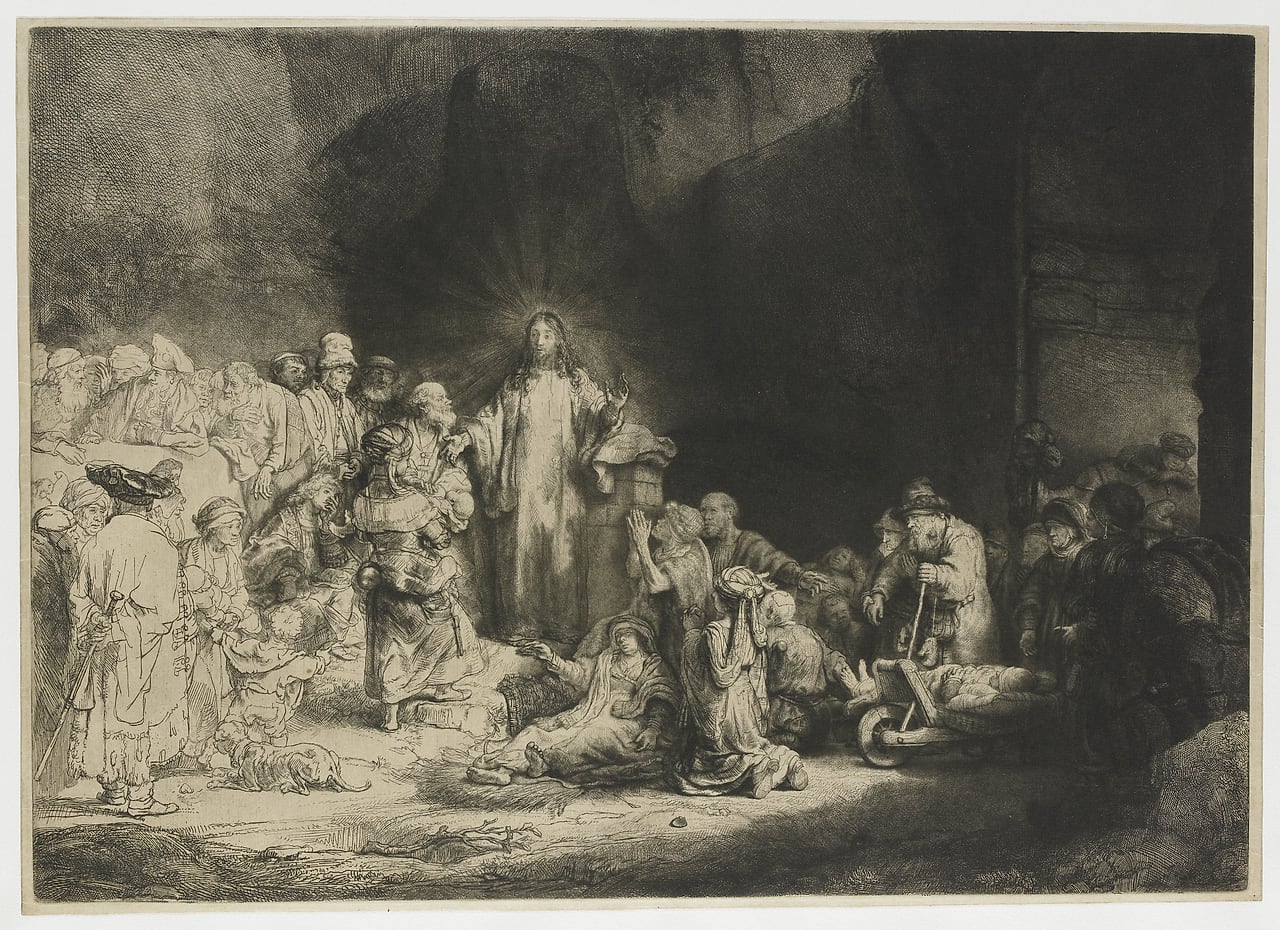 hundred-guilder.jpg | The Hundred Guilder Print (Christ Preaching, Matthew 19) Rembrandt van Rijn c. 1646-1650 Source ↗ | Public domain | Hero background · Stats backdrop | Rembrandt packs a whole chapter of Matthew into one plate: the sick brought to be healed, the children being blessed, the rich young man with his head in his hand, the Pharisees disputing. Three of this class’s five topics, in a single image. |
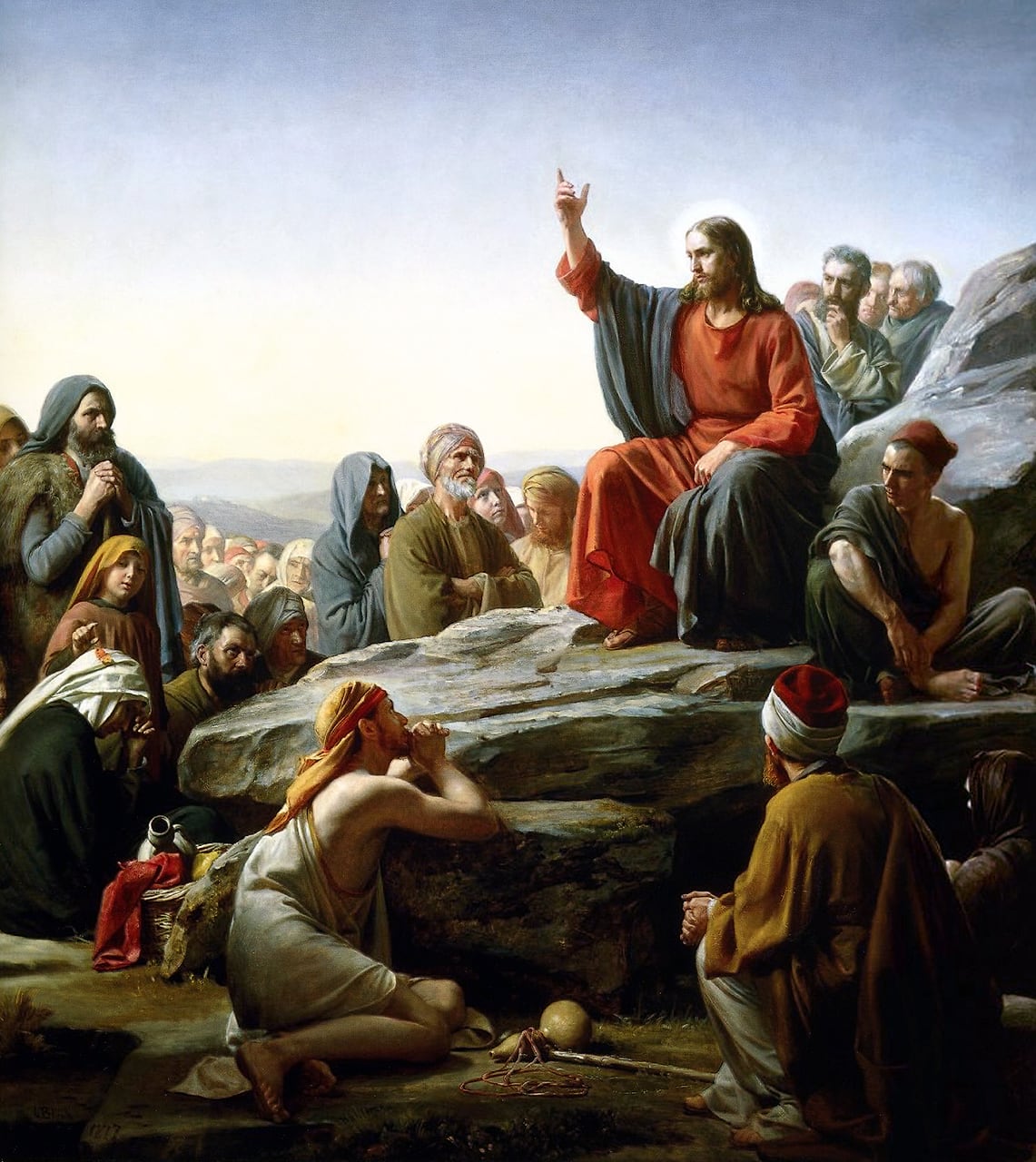 sermon-on-the-mount.jpg | The Sermon on the Mount Carl Bloch 1877 Source ↗ | Public domain | Origin section figure | The Gospels as guides: Jesus teaching a crowd rather than answering a questionnaire. The Sermon on the Mount is the text Dr. Levine keeps returning to, and the one the Q&A ends up debating. |
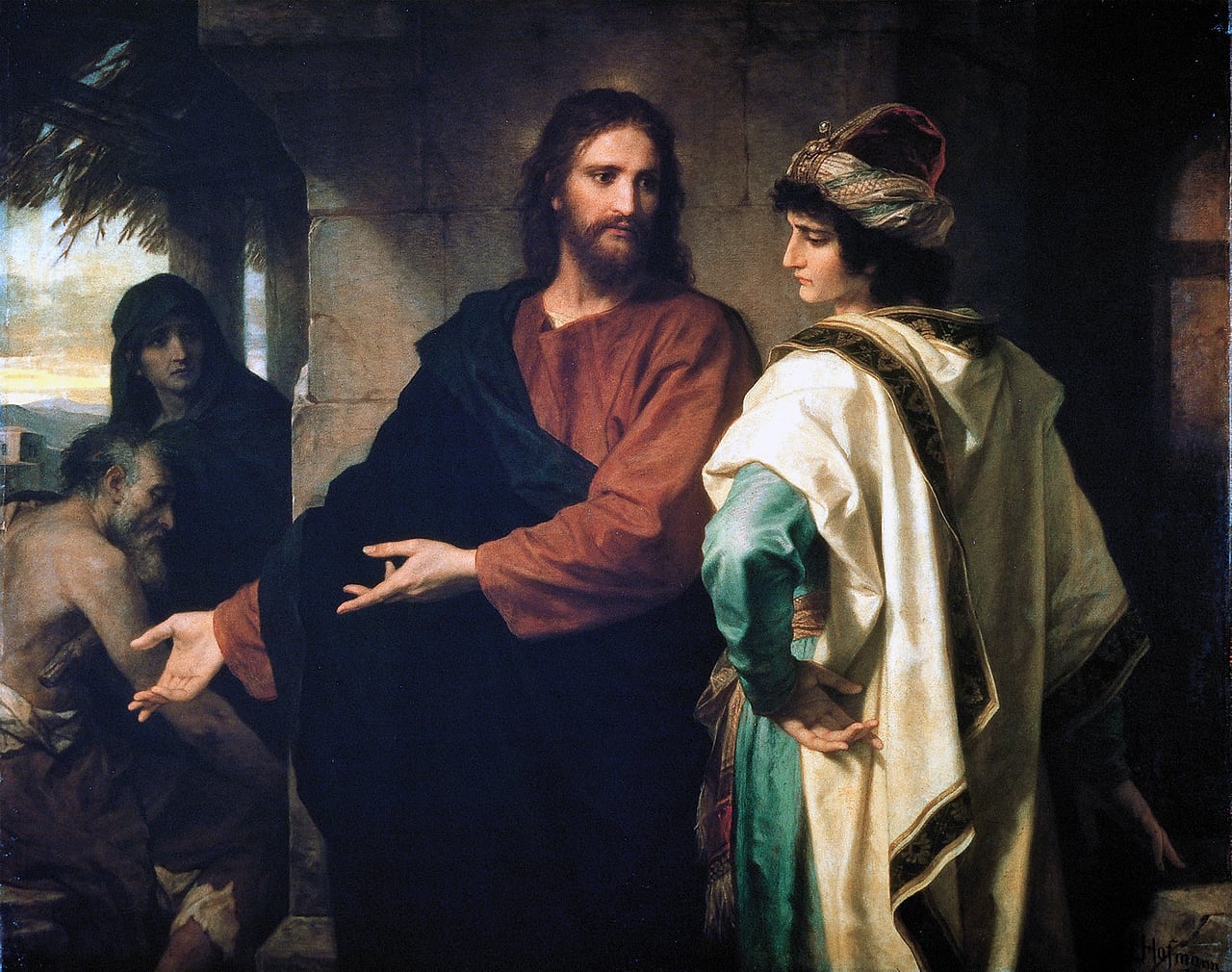 rich-young-ruler.jpg | Christ and the Rich Young Ruler Heinrich Hofmann 1889 Source ↗ | Public domain | Topic I medallion (Economics) | Mark 10, the passage the economics segment is built on: the one man Jesus told to sell everything, and who went away grieving. Hofmann paints the moment of the ask. |
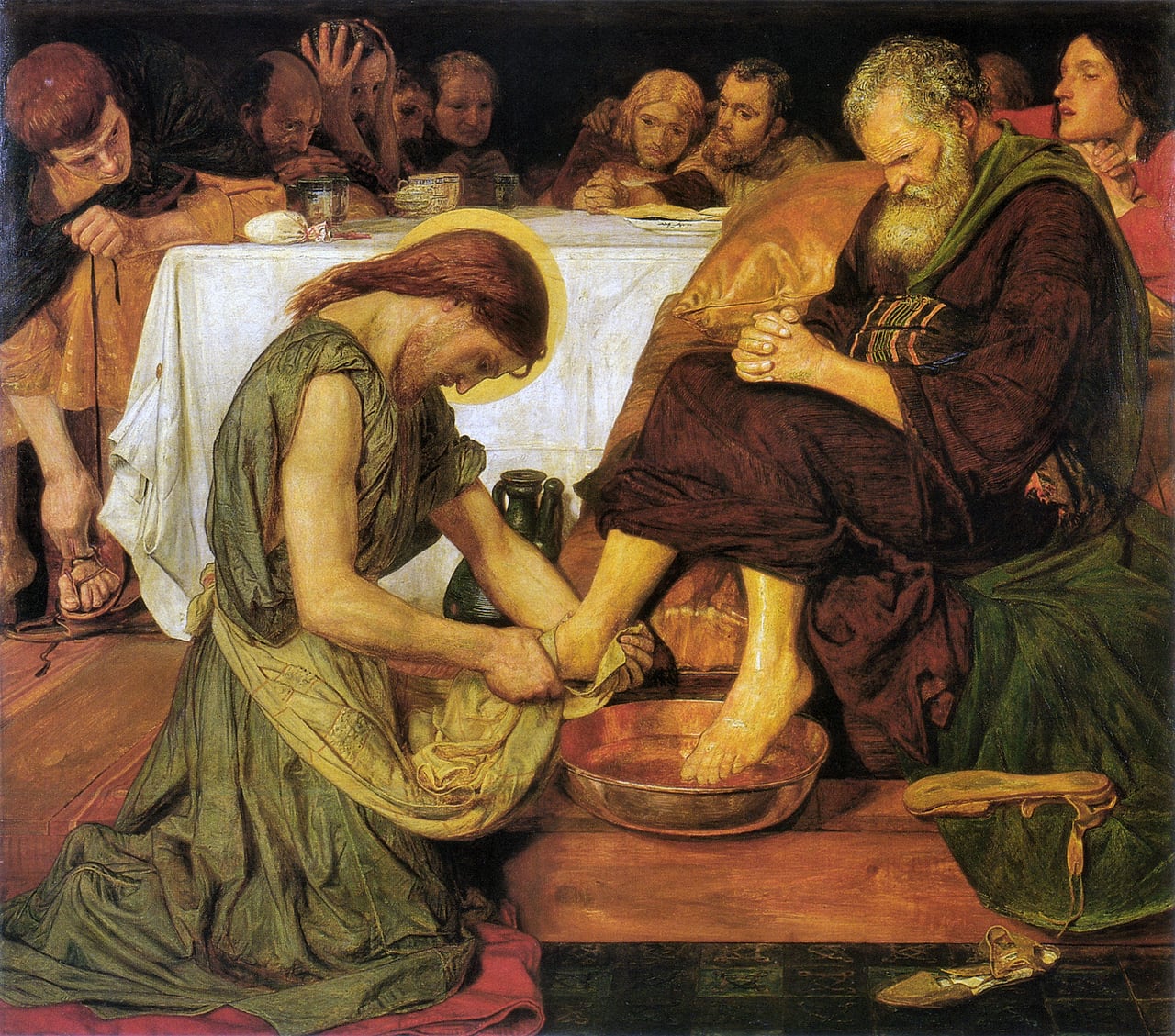 washing-feet.jpg | Jesus Washing Peter’s Feet Ford Madox Brown 1852-1856 Source ↗ | Public domain | Topic II medallion (The Legacy of Slavery) · Bonuses backdrop | In a wealthy household the person who washed your feet was enslaved. Jesus taking that job in John 13 is the scene Dr. Levine uses to open the language of slavery, and Brown’s Peter looks as uncomfortable about it as the text suggests. |
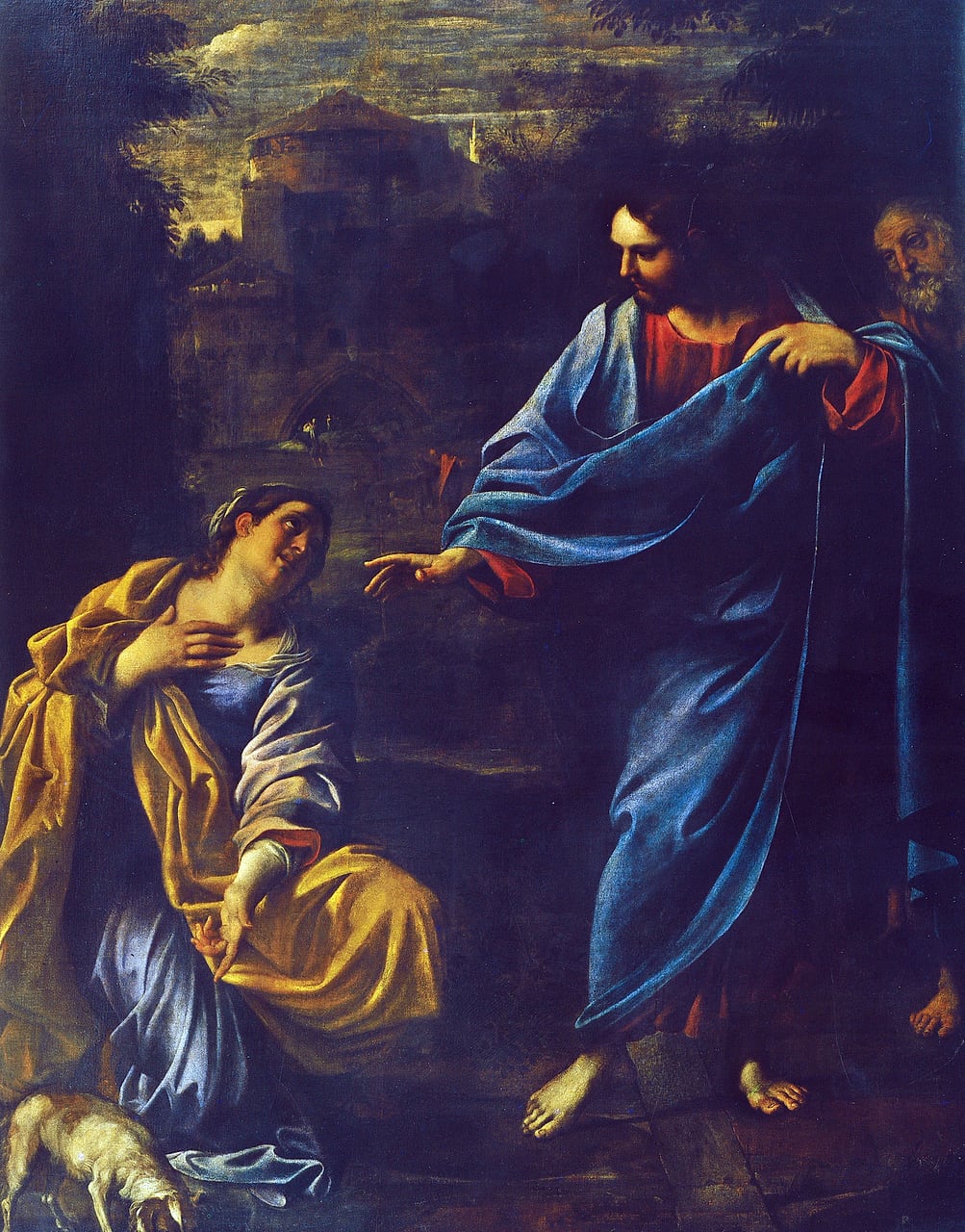 canaanite-woman.jpg | Christ and the Canaanite Woman Annibale Carracci c. 1595 Source ↗ | Public domain | Topic III medallion (Us vs. Them) · “Prepare to Rethink” backdrop | Matthew 15, the outsider who is insulted and holds her ground. The class reads her as the model of the Sermon on the Mount in action, and the Q&A opens with her. |
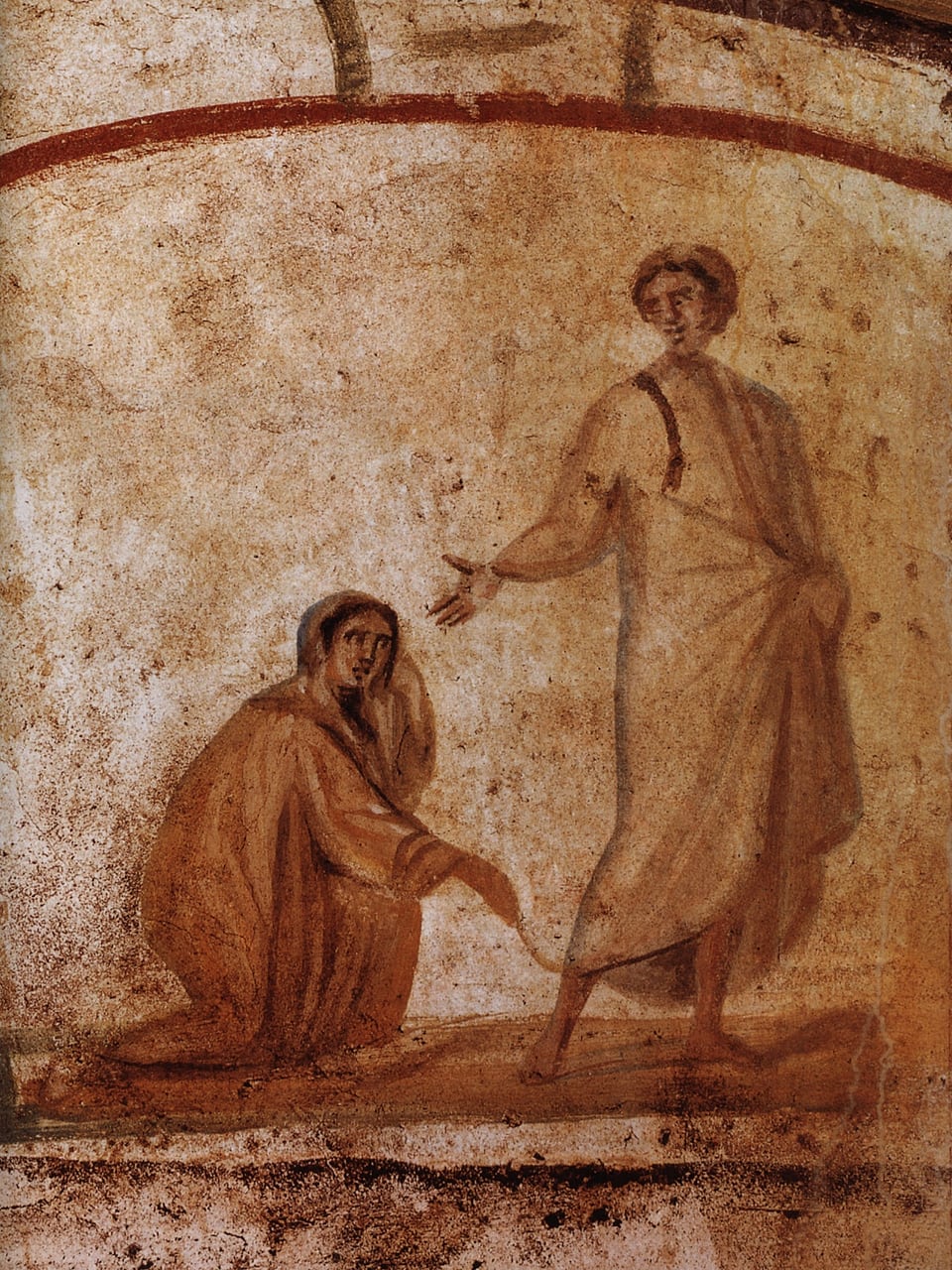 bleeding-woman.jpg | The Healing of the Bleeding Woman (Catacomb of Marcellinus and Peter, Rome) Unknown 4th century Source ↗ | Public domain | Topic IV medallion (Healthcare) · At-a-Glance backdrop | The exact fresco Dr. Levine puts on screen for the healthcare segment: the woman who spent everything on physicians, painted by Christians within three centuries of the story. |
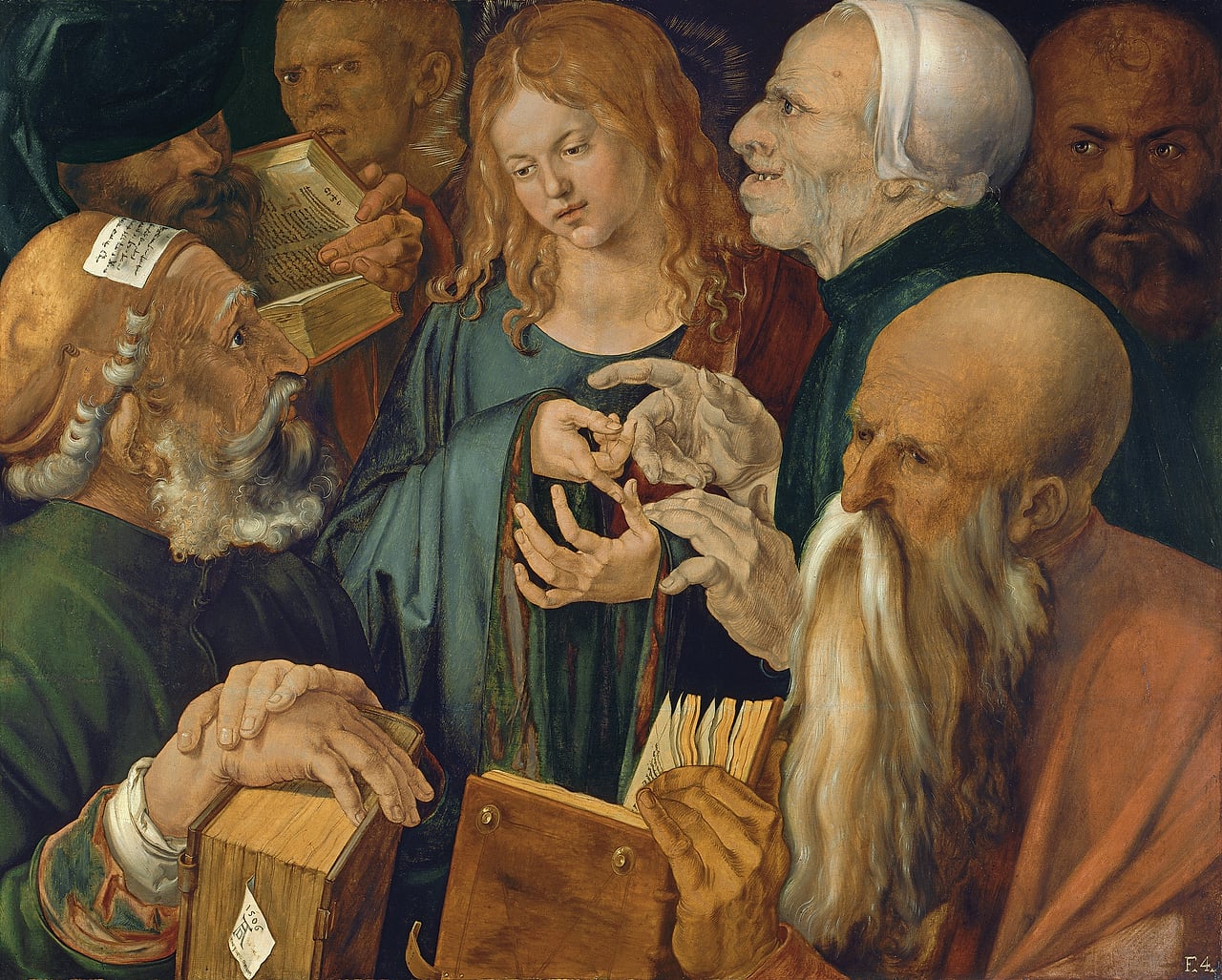 among-the-doctors.jpg | Jesus among the Doctors Albrecht Dürer 1506 Source ↗ | Public domain | Topic V medallion (Family Values) | Luke 2, the twelve-year-old who went missing in Jerusalem and then, Luke says, went home and was obedient to his parents. Dr. Levine’s evidence that “hate your father and mother” cannot be taken literally. |
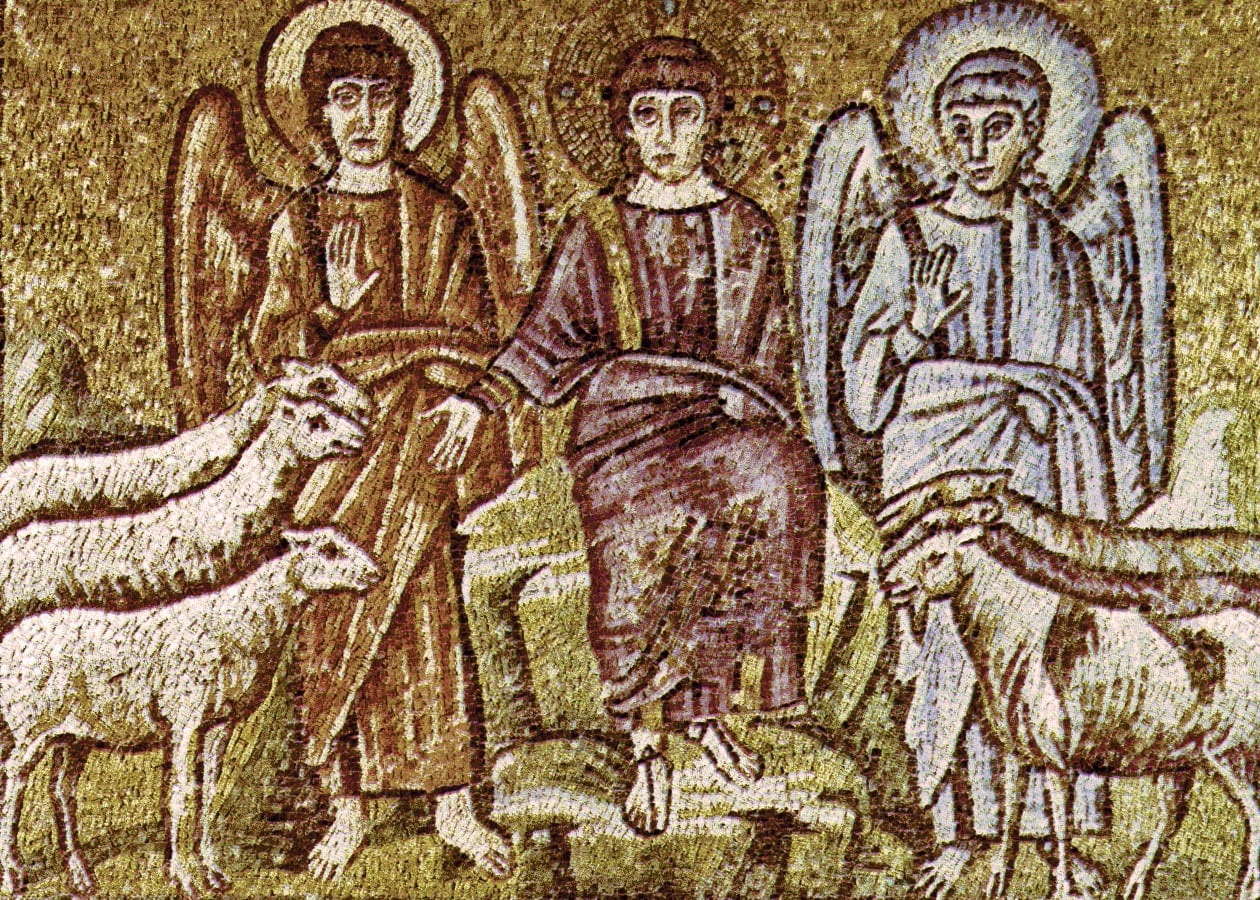 sheep-goats.jpg | Christ Separating the Sheep from the Goats (mosaic, Basilica of Sant’Apollinare Nuovo, Ravenna) Unknown Early 6th century Source ↗ | Public domain | Instructor backdrop | Matthew 25, the parable the class keeps coming back to: “I was hungry and you fed me, I was a stranger and you welcomed me.” The oldest surviving picture of it. |
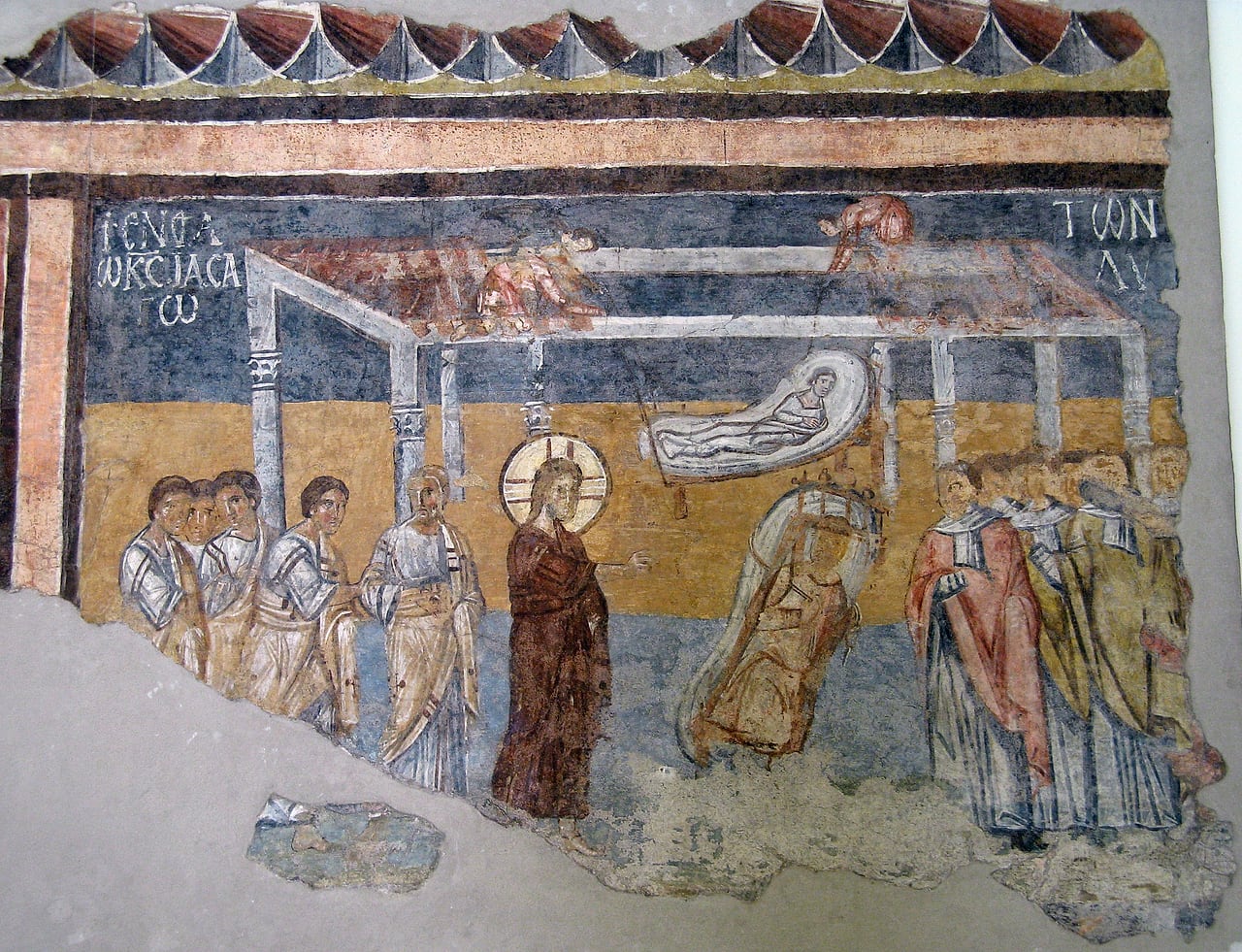 paralytic-saba.jpg | Christ Healing the Paralytic at Capernaum (fresco, Basilica of San Saba, Rome) Unknown · photograph by Mark Landon Medieval fresco, photographed 2009 Source ↗ | Public domain | FAQ backdrop · Schedule backdrop (hidden) | Mark 2, the man let down through the roof by his caregivers. Jesus “saw their faith”: the point about caregivers that Dr. Levine says nobody ever thanks them for. |
Public-domain works are reproduced freely. CC BY / CC BY-SA images are credited to their photographers as required; follow each Source link for the full license text.