
Image Credits
Must Women Keep Silent?
Every image on the course page, with its source, license, and the reason it was chosen. The artwork is public-domain early-Christian and Greco-Roman art sourced from Wikimedia Commons; a few photographs carry Creative Commons licenses, noted below.
| Image | Work & Attribution | License | Where it appears | Why it’s included |
|---|---|---|---|---|
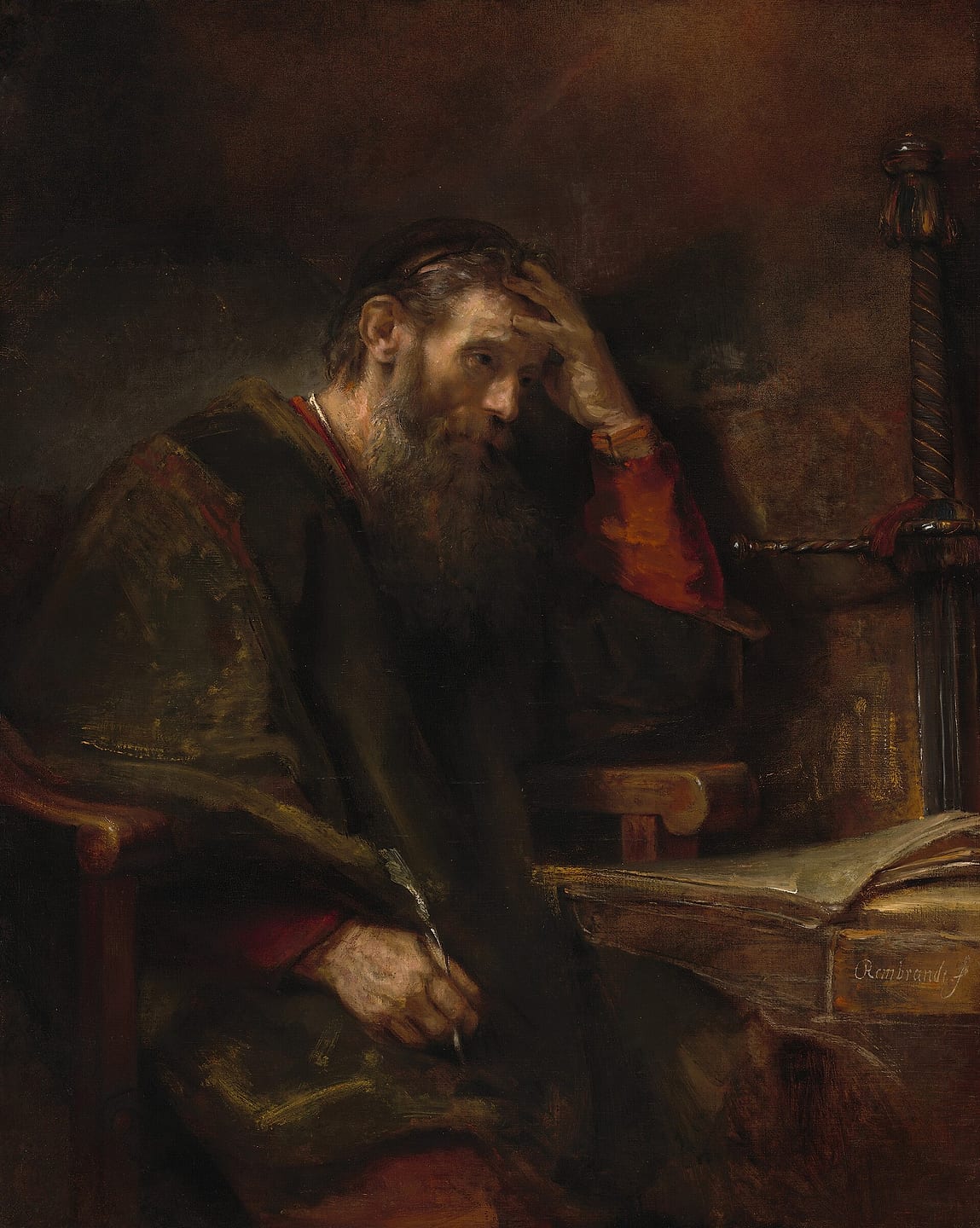 paul-apostle.jpg | Saint Paul Rembrandt van Rijn (and workshop) c. 1657 Source ↗ | Public domain | Hero ornament | Rembrandt’s brooding portrait of the apostle with pen and book: the letter-writer at the center of the whole course. |
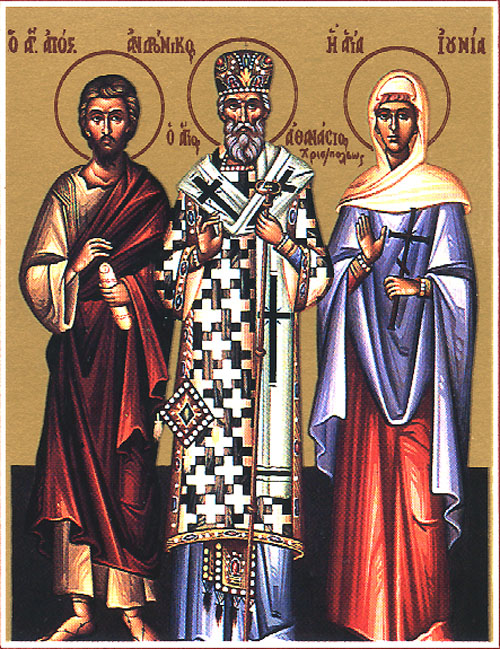 junia.jpg | Icon of the Apostles Andronicus and Junia Unknown (Eastern Orthodox icon) Byzantine tradition Source ↗ | Public domain | Hero ornament · Lecture II medallion (“Neither Male nor Female”) | Junia, whom Paul calls “foremost among the apostles” (Romans 16:7), venerated here as an apostle in her own right. The face of the lecture on the women who led. |
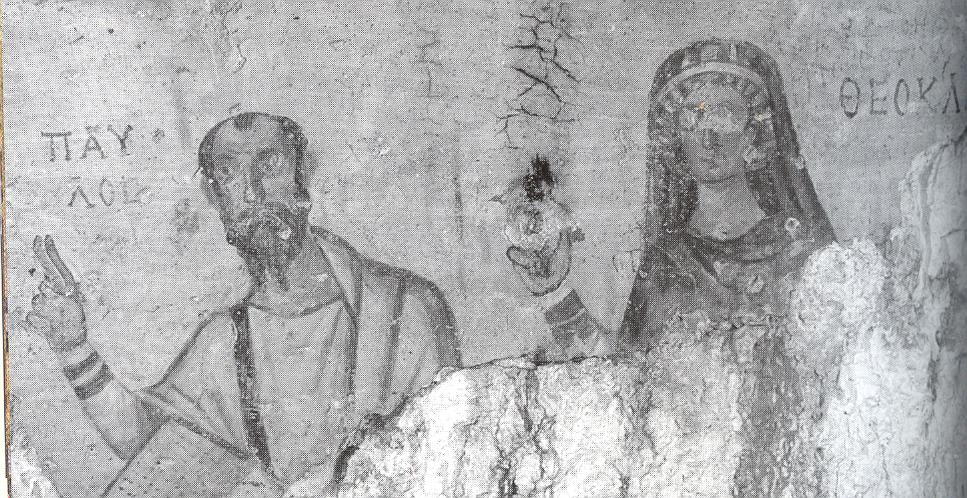 paul-thecla.jpg | Paul and Thecla (cave painting, Grotto of St Paul, Ephesus) Unknown 6th century Source ↗ | Public domain | Hero background · Lecture IV medallion (“In Thecla’s Wake”) | The earliest known image pairing Paul with Thecla, the preaching, self-baptizing heroine of the Acts of Paul and Thecla that closes the course. |
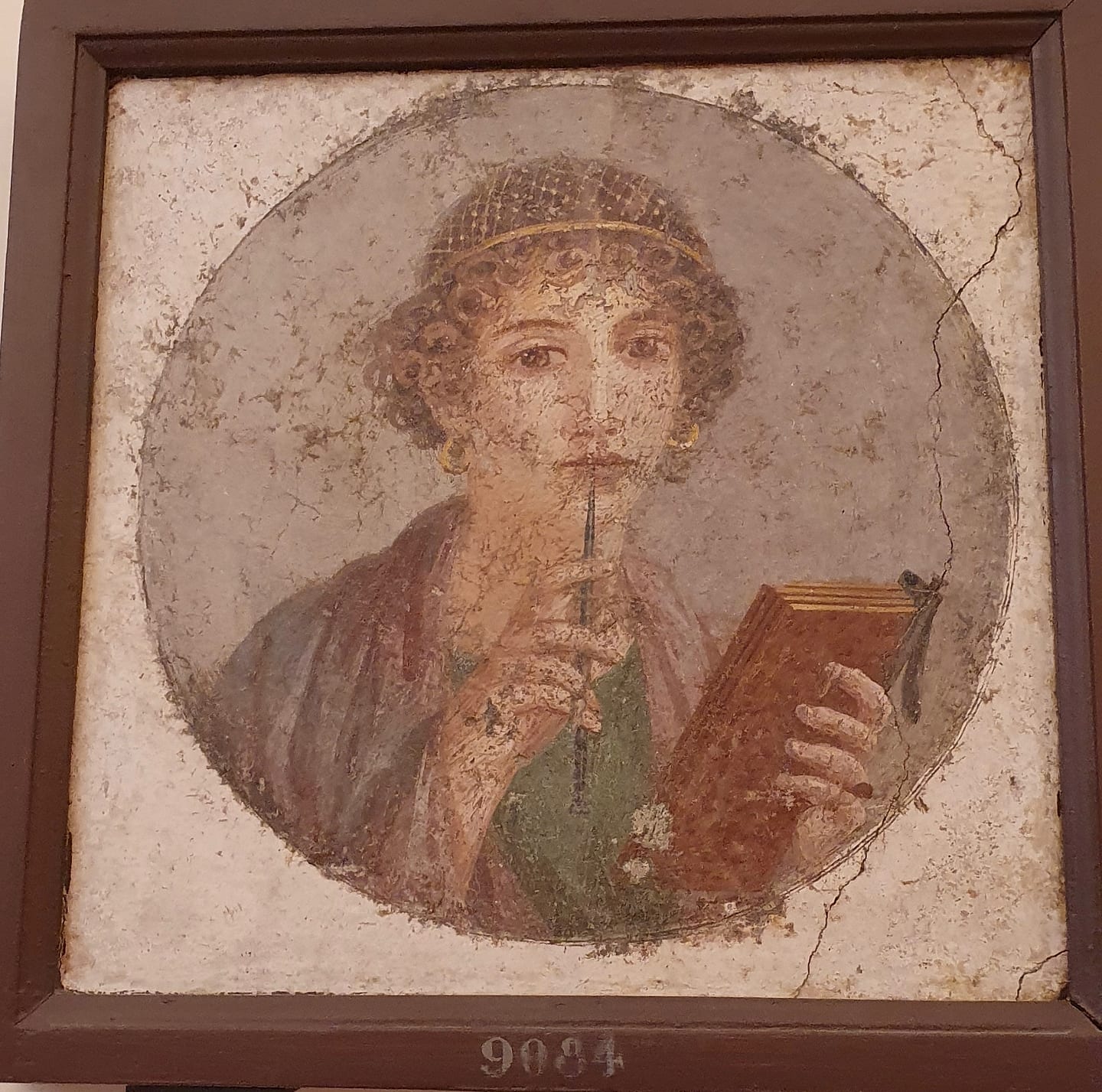 pompeii-sappho.jpg | Fresco of a woman with stylus and tablet (the “Sappho” of Pompeii) Photo: Yair Haklai Fresco 1st century AD (photographed 2023) Source ↗ | CC BY-SA 4.0 | Hero ornament | A literate Roman woman holding a stylus to her lips: the world of female learning, dress, and desire that Paul’s letters speak into. |
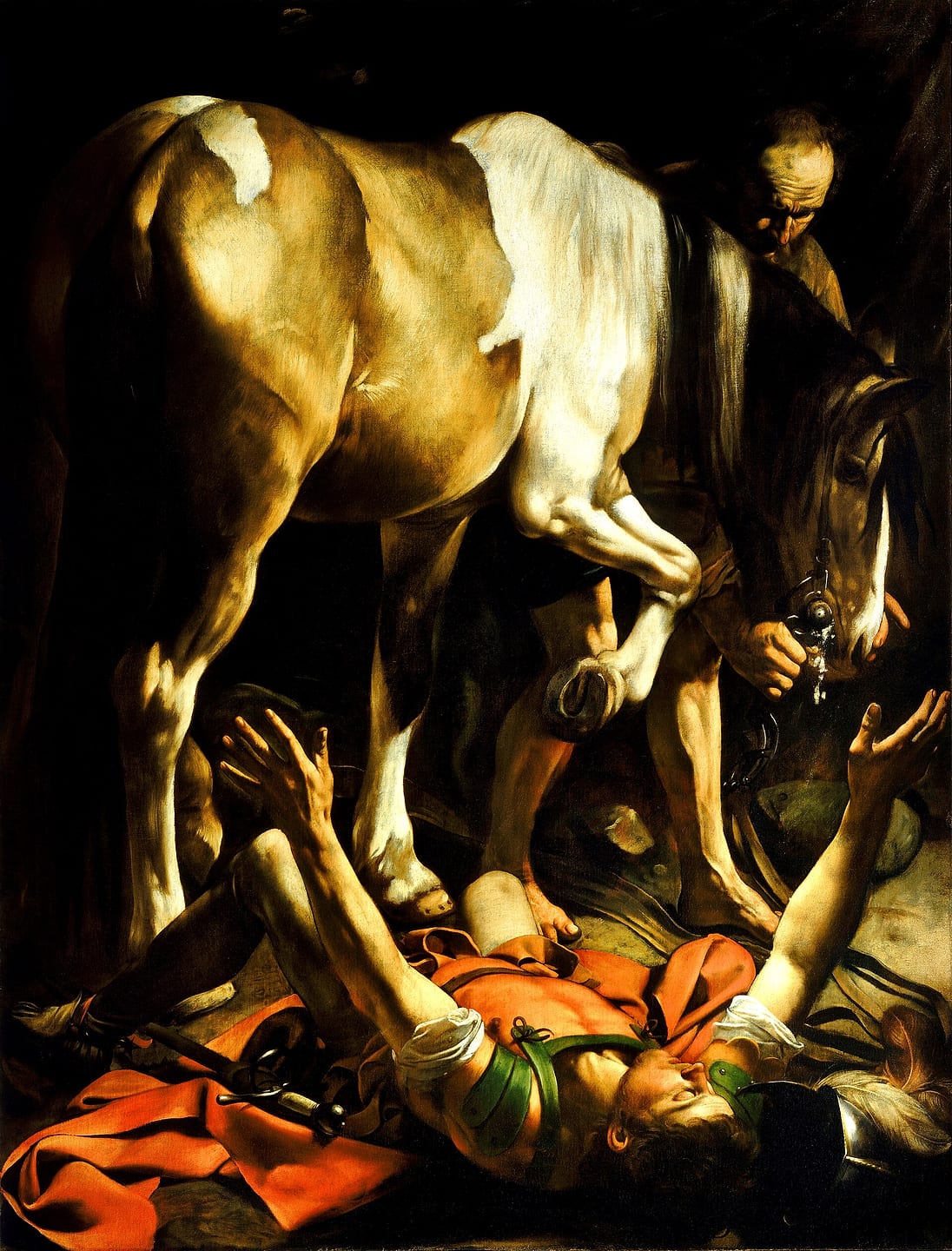 conversion-of-paul.jpg | The Conversion on the Way to Damascus Caravaggio c. 1600–1601 Source ↗ | Public domain | Origin section figure · Lecture I medallion | Caravaggio’s Paul struck to the ground on the Damascus road: the conversion that turned a persecutor into the apostle whose letters the course unpacks. |
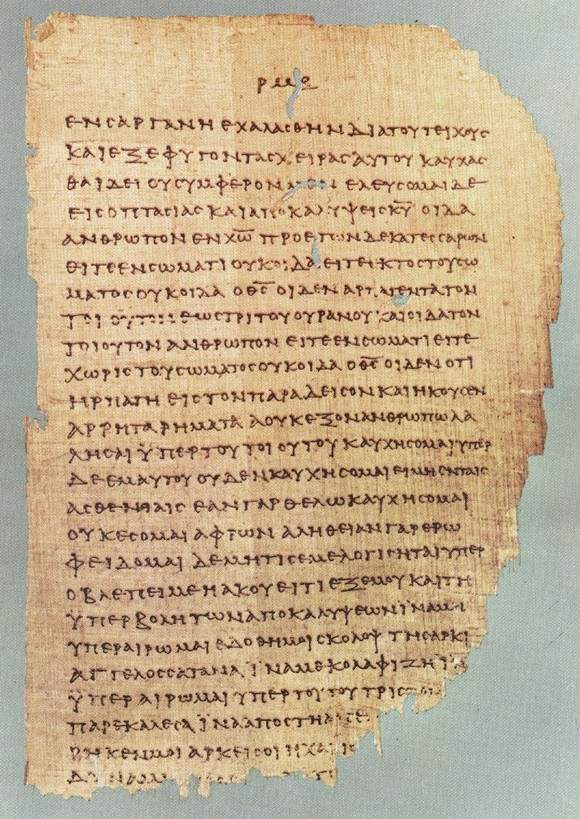 p46.jpg | Papyrus 46 (𝔓46), a leaf of the Pauline epistles Unknown scribe c. 200 AD Source ↗ | Public domain | At-a-Glance backdrop | The oldest substantial manuscript of Paul’s letters: the physical text behind every debate over what Paul actually wrote. |
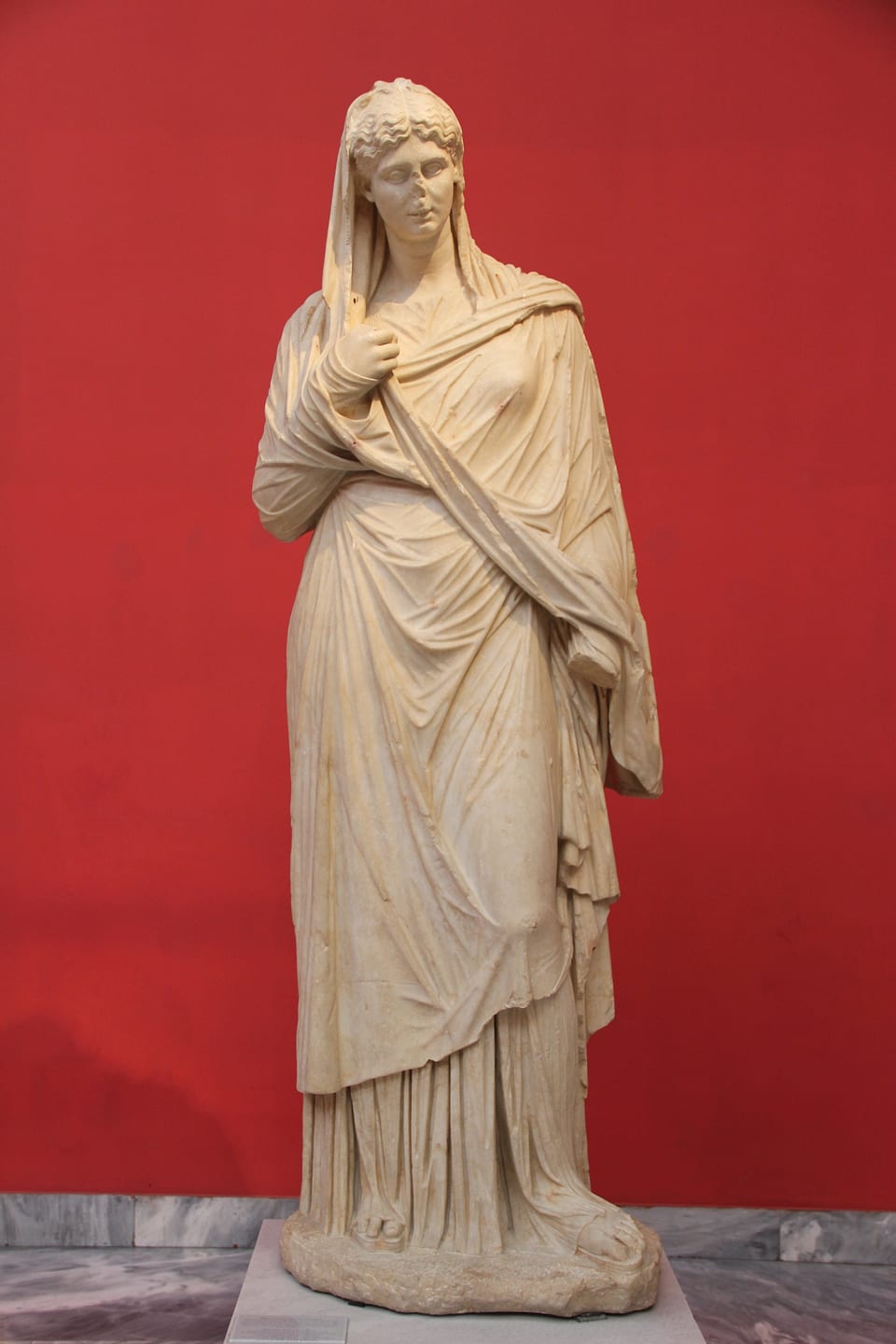 veiled-woman.jpg | Marble statue of a veiled woman (Large Herculaneum Woman type) Photo: Gary Todd Roman copy of a c. 320 BC Greek original (photographed 2016) Source ↗ | CC0 | Lecture III medallion (“Better to Marry Than to Burn”) | A respectable matron with her mantle drawn up over her head as a veil: the dress norm behind Paul’s instructions on veiling in 1 Corinthians. |
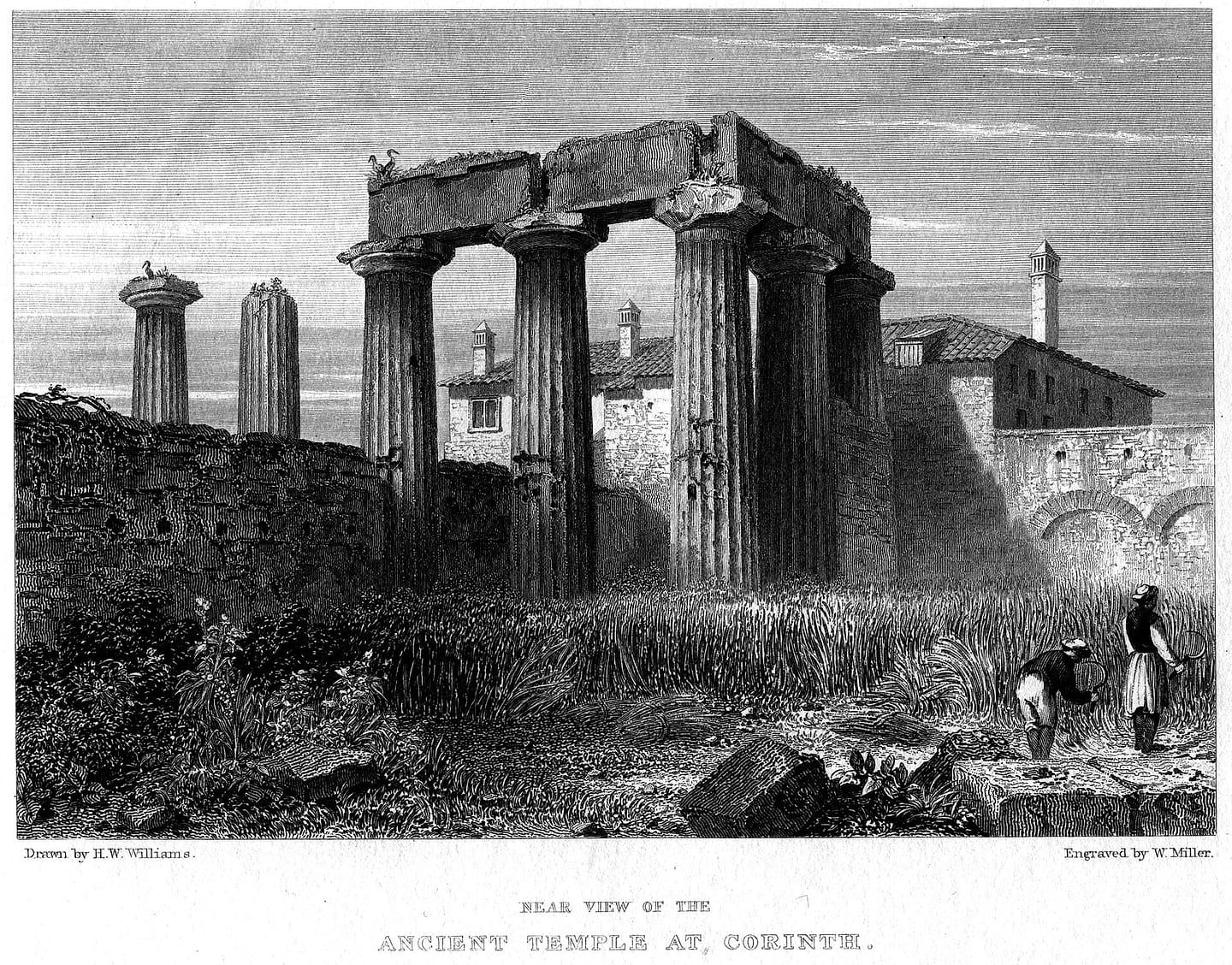 corinth.jpg | Ancient Temple at Corinth (engraving after H. W. Williams) William Miller 1829 Source ↗ | Public domain | Stats backdrop · Schedule backdrop | The columns of the Temple of Apollo at Corinth, the contentious city whose letter (1 Corinthians) drives the course’s central lecture. |
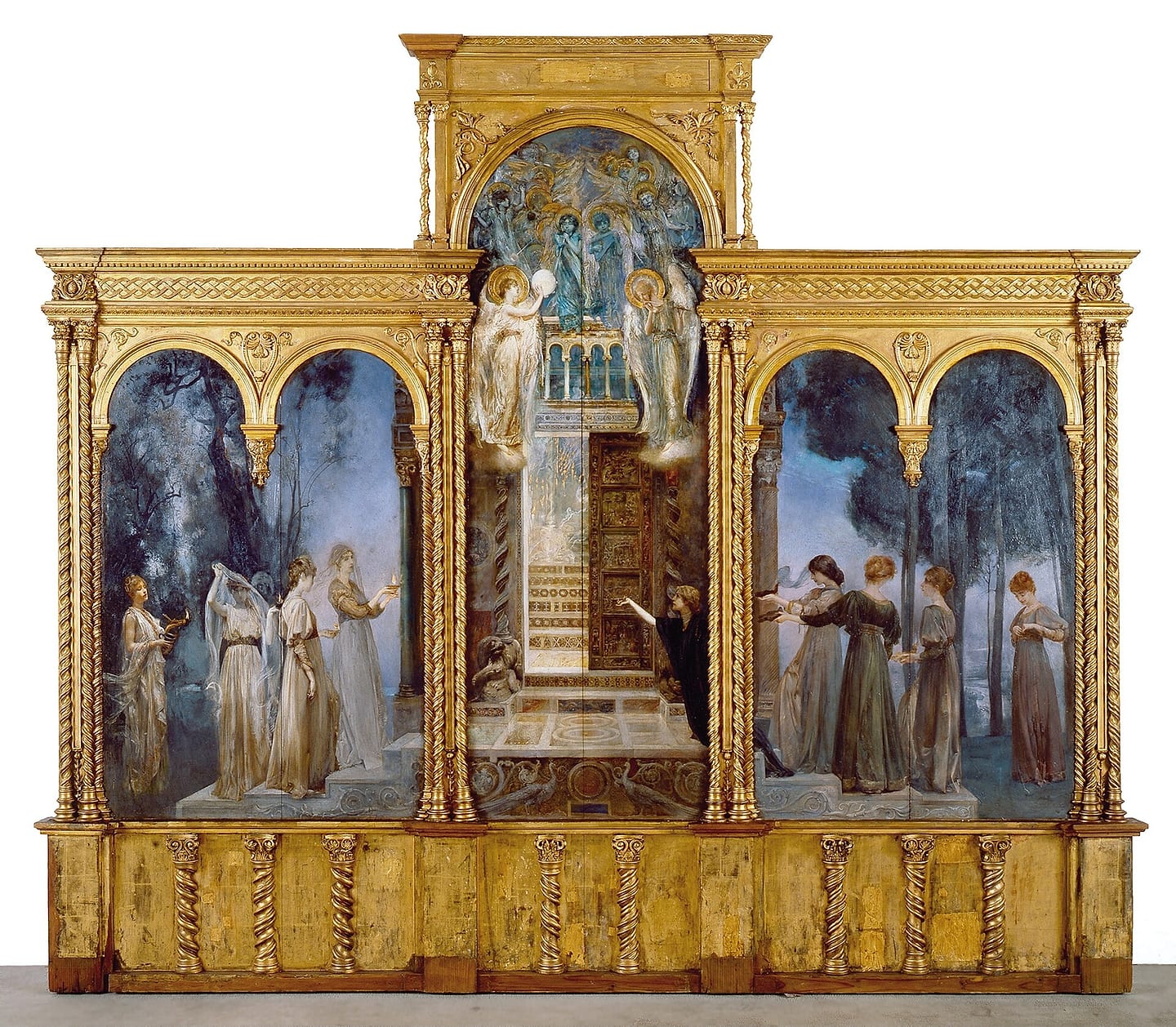 last-judgment-women.jpg | The Wise and Foolish Virgins Giulio Aristide Sartorio 1890–1891 Source ↗ | Public domain | “Prepare to Rethink” backdrop | A procession of women from the parable of the virgins: the gendered assumptions about women in the tradition that the course sets out to complicate. |
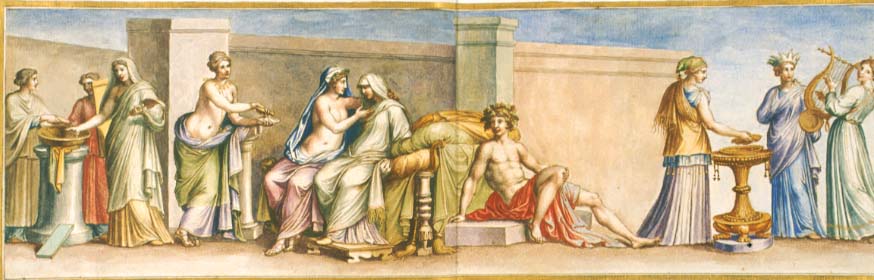 aldobrandini-wedding.jpg | The Aldobrandini Wedding (Roman fresco) Unknown 1st century BC Source ↗ | Public domain | Bonuses backdrop | An ancient Roman wedding scene: marriage, the relationship Paul weighs against celibacy across his letters. |
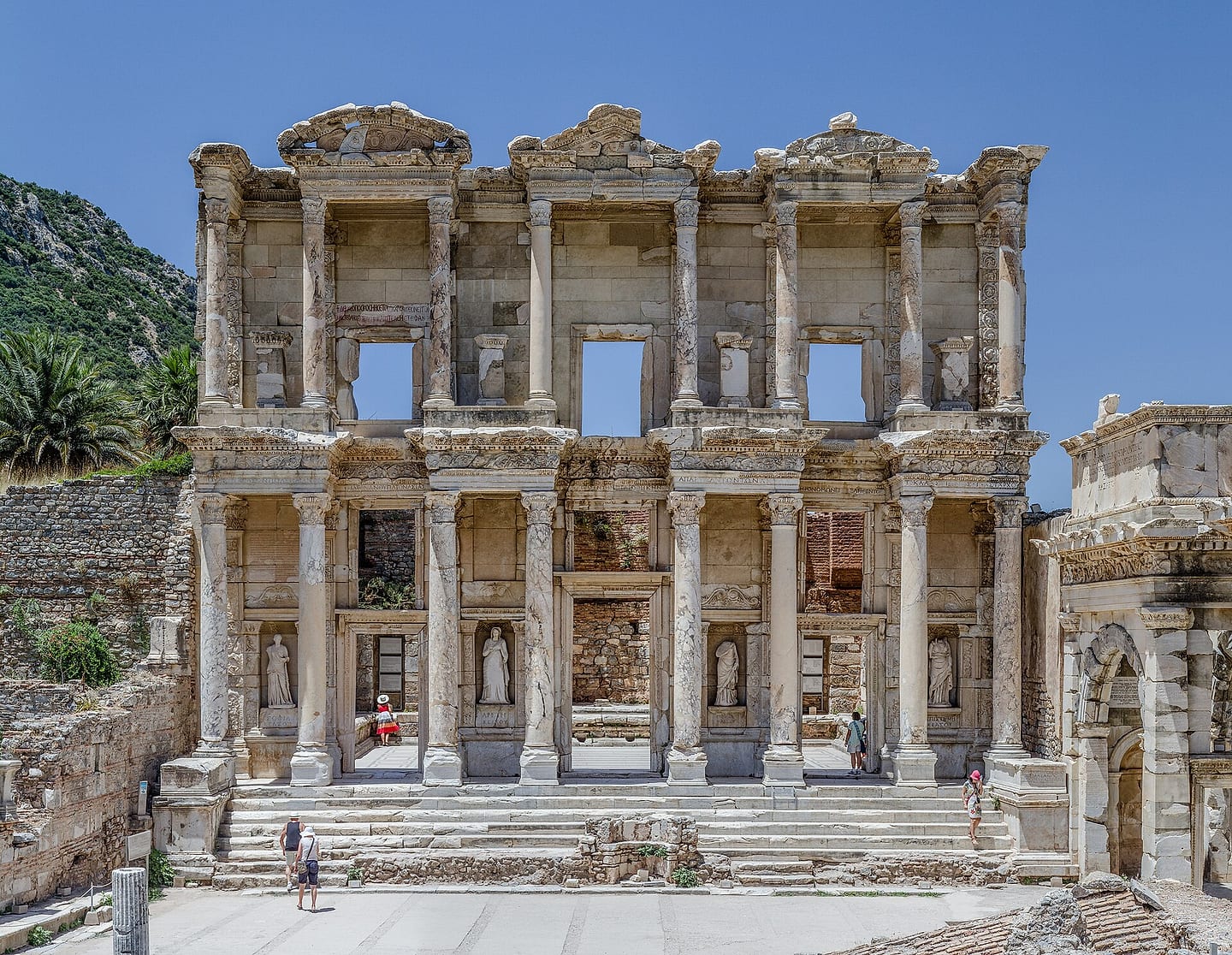 ruins.jpg | Façade of the Library of Celsus, Ephesus Photo: Benh Lieu Song Building c. 117 AD (photographed 2010) Source ↗ | CC BY-SA 3.0 | Instructor backdrop · FAQ backdrop | Ephesus, a hub of Paul’s mission and the traditional home of Thecla’s story: the Greco-Roman cityscape standing behind the whole tradition. |
Public-domain works are reproduced freely. CC BY / CC BY-SA images are credited to their photographers as required; follow each Source link for the full license text.