
Image Credits
The Synoptic Gospels
Every image on the course page, with its source, license, and the reason it was chosen. The artwork is public-domain and freely-licensed material from Wikimedia Commons: paintings of the evangelists and the scenes they tell differently, and the manuscripts that preserve the gospels. Creative Commons photographs are noted below.
| Image | Work & Attribution | License | Where it appears | Why it’s included |
|---|---|---|---|---|
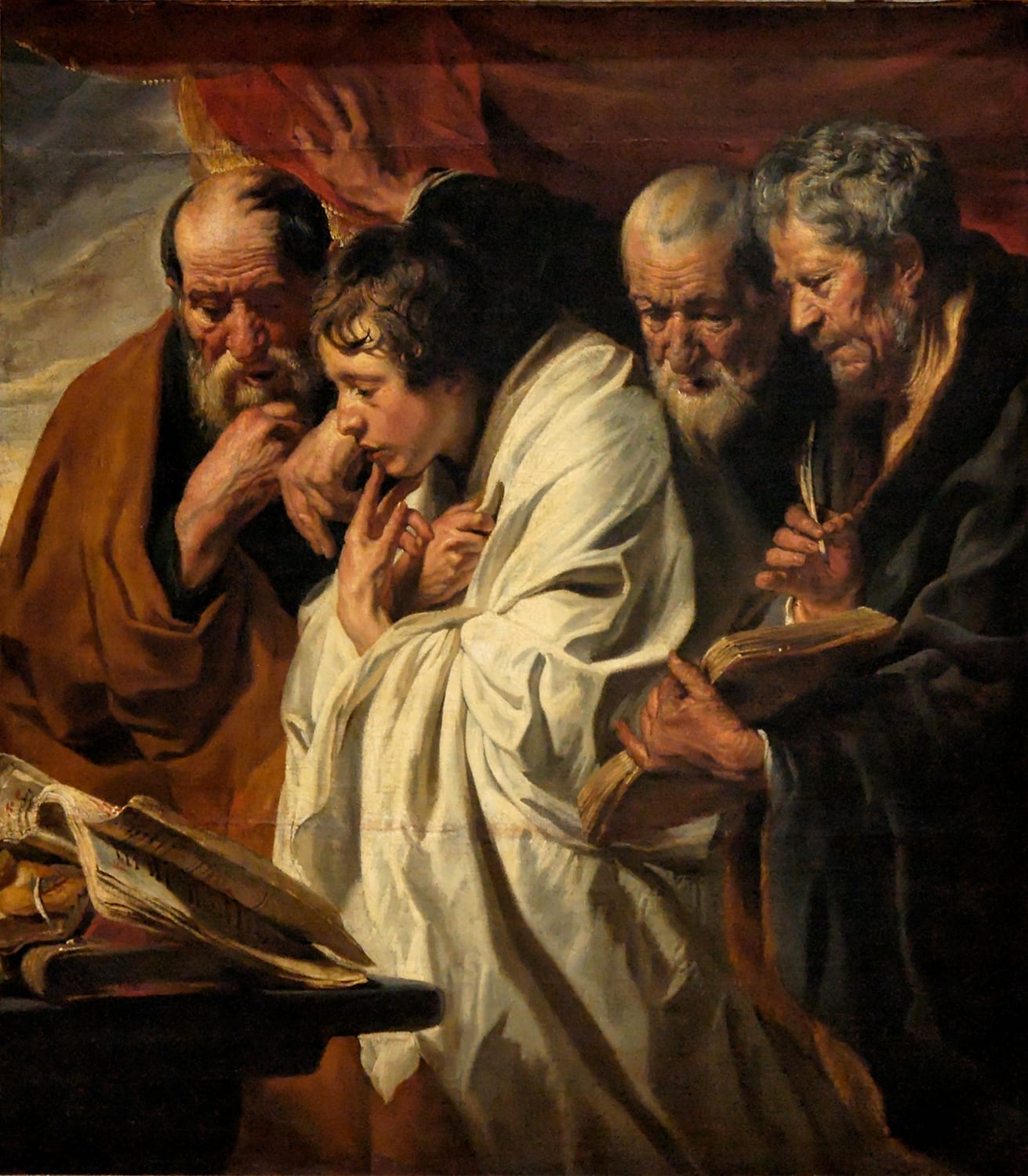 four-evangelists.jpg | The Four Evangelists Jacob Jordaens c. 1625 Source ↗ | Public domain | Hero background | Jordaens gathers the gospel-writers in one frame: Matthew, Mark, and Luke among them. |
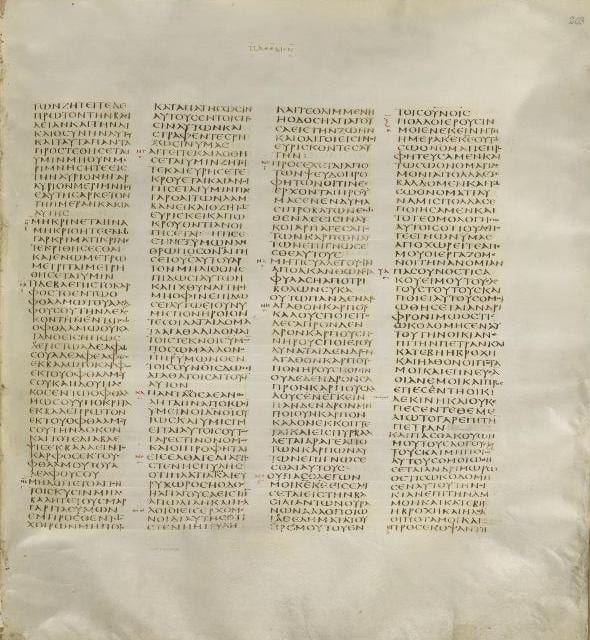 codex-sinaiticus.jpg | Codex Sinaiticus (Matthew 6:32-7:27) Unknown (4th-century scribe) 4th century CE Source ↗ | Public domain | Hero ornament | A page of Matthew in Codex Sinaiticus, one of the oldest complete New Testaments. |
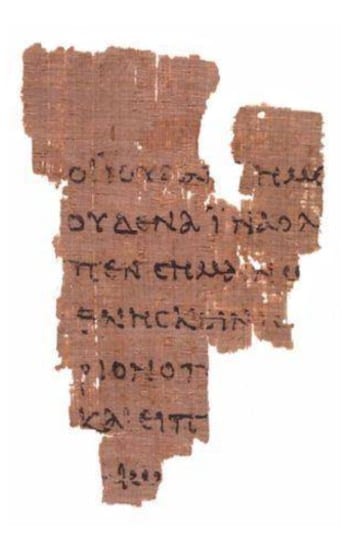 gospel-papyrus.jpg | Papyrus 52, Gospel of John 18:31-33 Unknown (2nd-century scribe) Papyrus 2nd century CE Source ↗ | Public domain | Hero ornament | P52, the earliest surviving scrap of any gospel. |
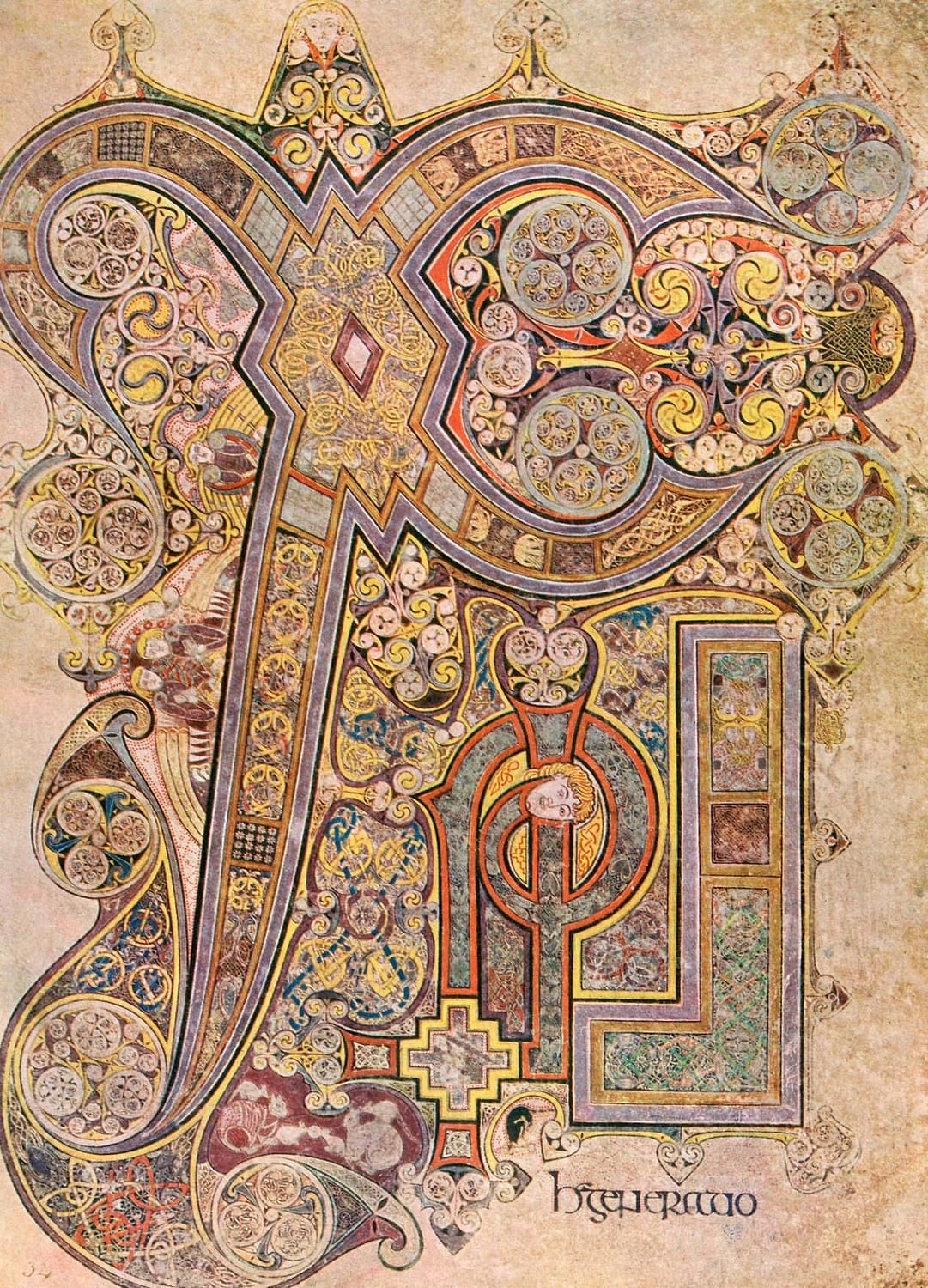 chi-rho.jpg | The Book of Kells, Chi-Rho monogram (folio 34r) Insular monks (Book of Kells) c. 800 CE Source ↗ | Public domain | Hero ornament | The Chi-Rho monogram from the Book of Kells, the sign of Christ over the Gospels. |
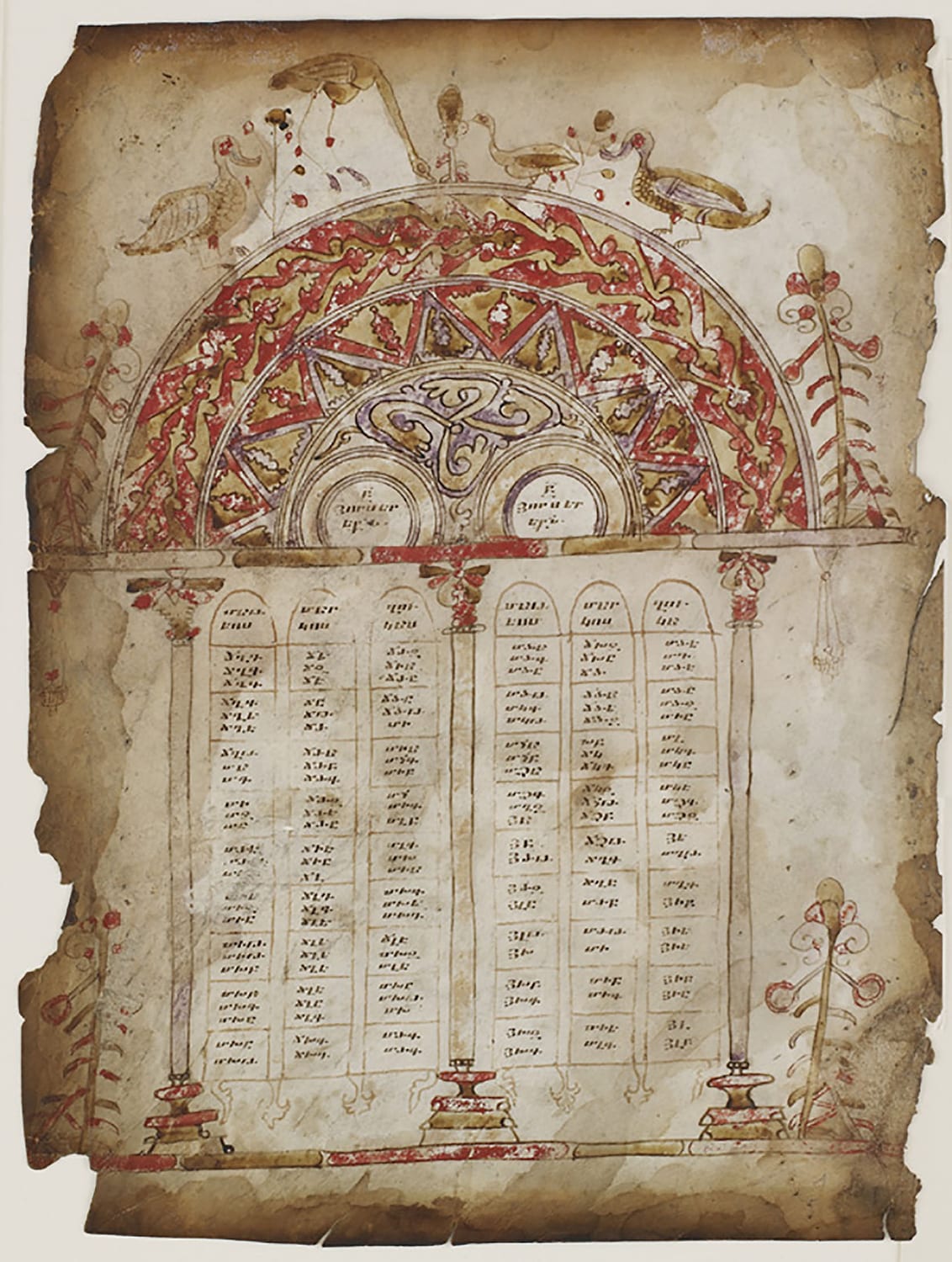 canon-tables.jpg | Eusebian canon tables from a Gospel book Unknown (Freer Gallery of Art) 11th century Source ↗ | Public domain | Origin section figure | Eusebian canon tables: the ancient cross-reference that first set the gospels side by side. |
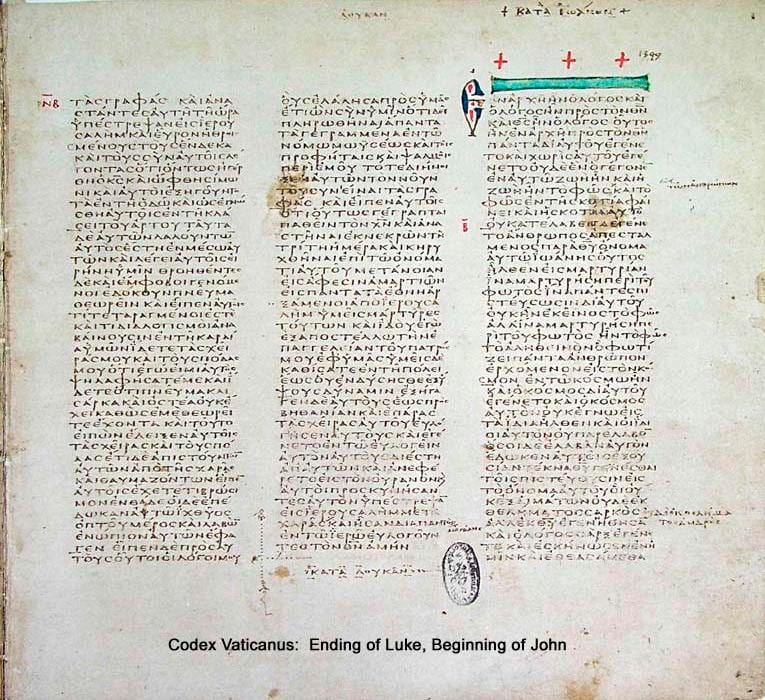 greek-nt-page.jpg | Codex Vaticanus (the end of Luke) Unknown (4th-century scribe) 4th century CE Source ↗ | Public domain | At-a-Glance backdrop | Codex Vaticanus: the Greek text of the gospels as the great manuscripts preserve it. |
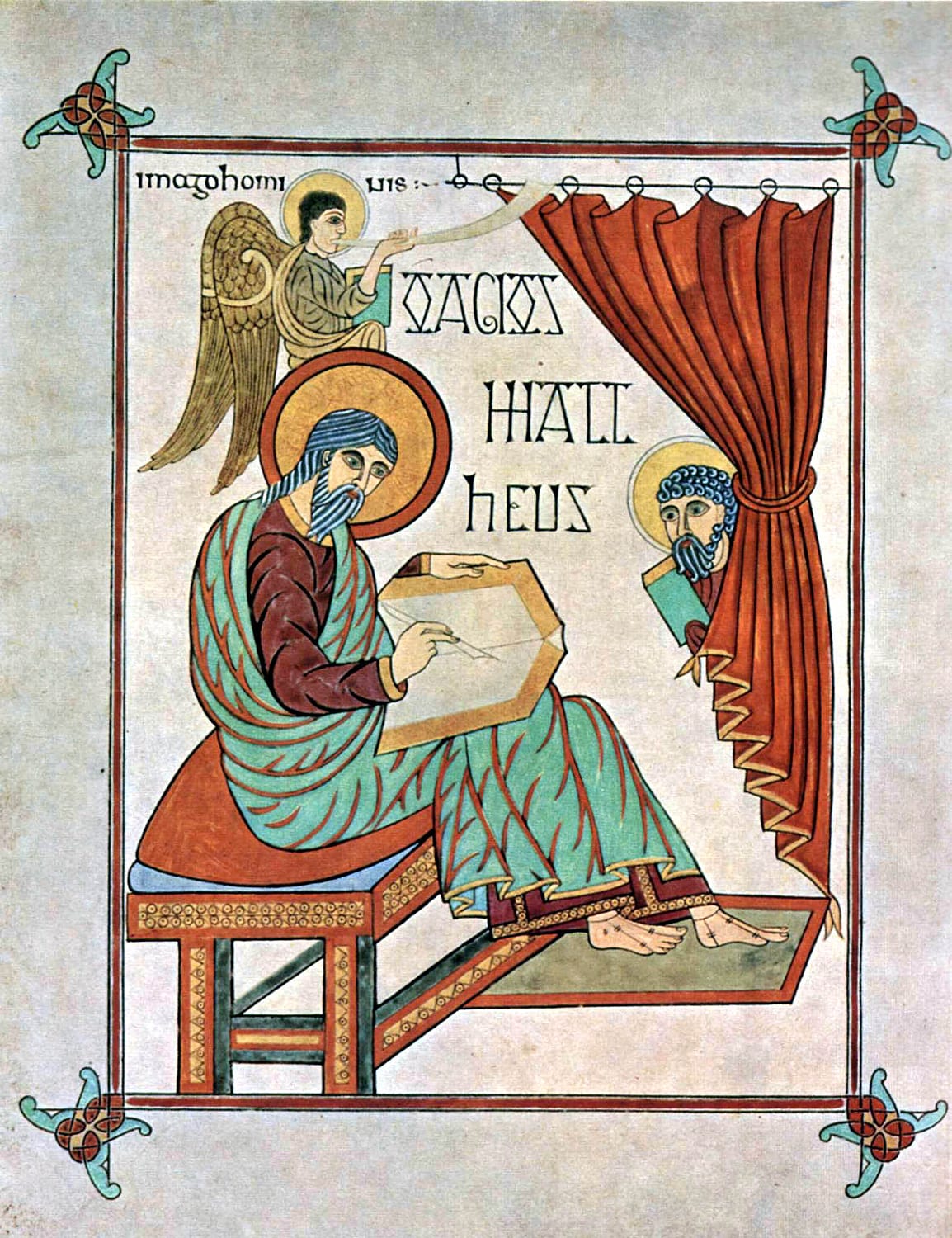 illuminated-gospel.jpg | The Lindisfarne Gospels, St Matthew Eadfrith of Lindisfarne Late 7th century Source ↗ | Public domain | Theme I medallion (What Is a Gospel?) | The Lindisfarne Gospels: the gospel book as sacred art. |
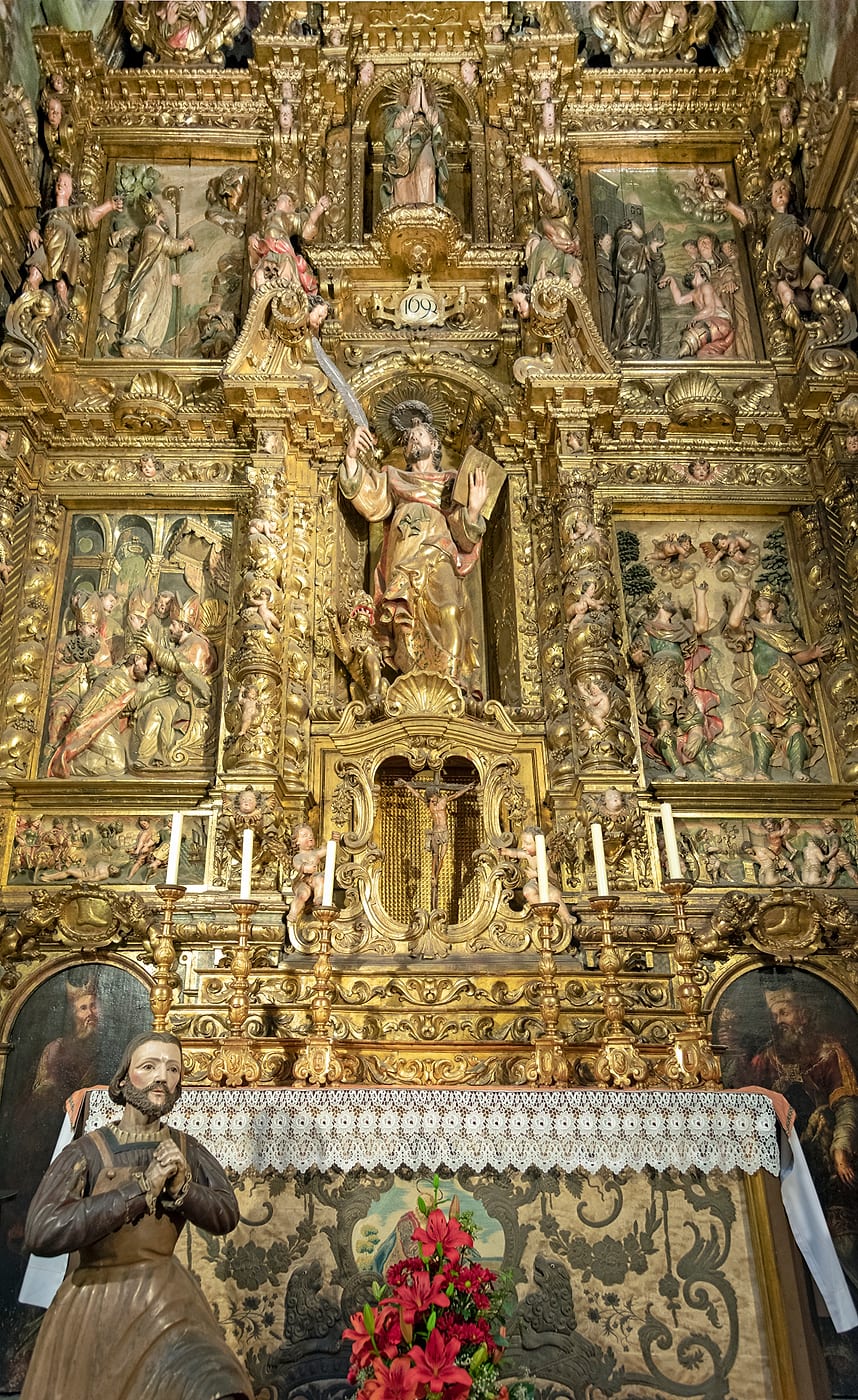 st-mark.jpg | Saint Mark (Barcelona Cathedral) Bernat Vilar (Photo: Didier Descouens) 1683-1692 Source ↗ | CC BY-SA 4.0 | Theme II medallion (The Synoptic Problem) | Saint Mark, whose gospel most scholars hold to be the first and the source of the others. |
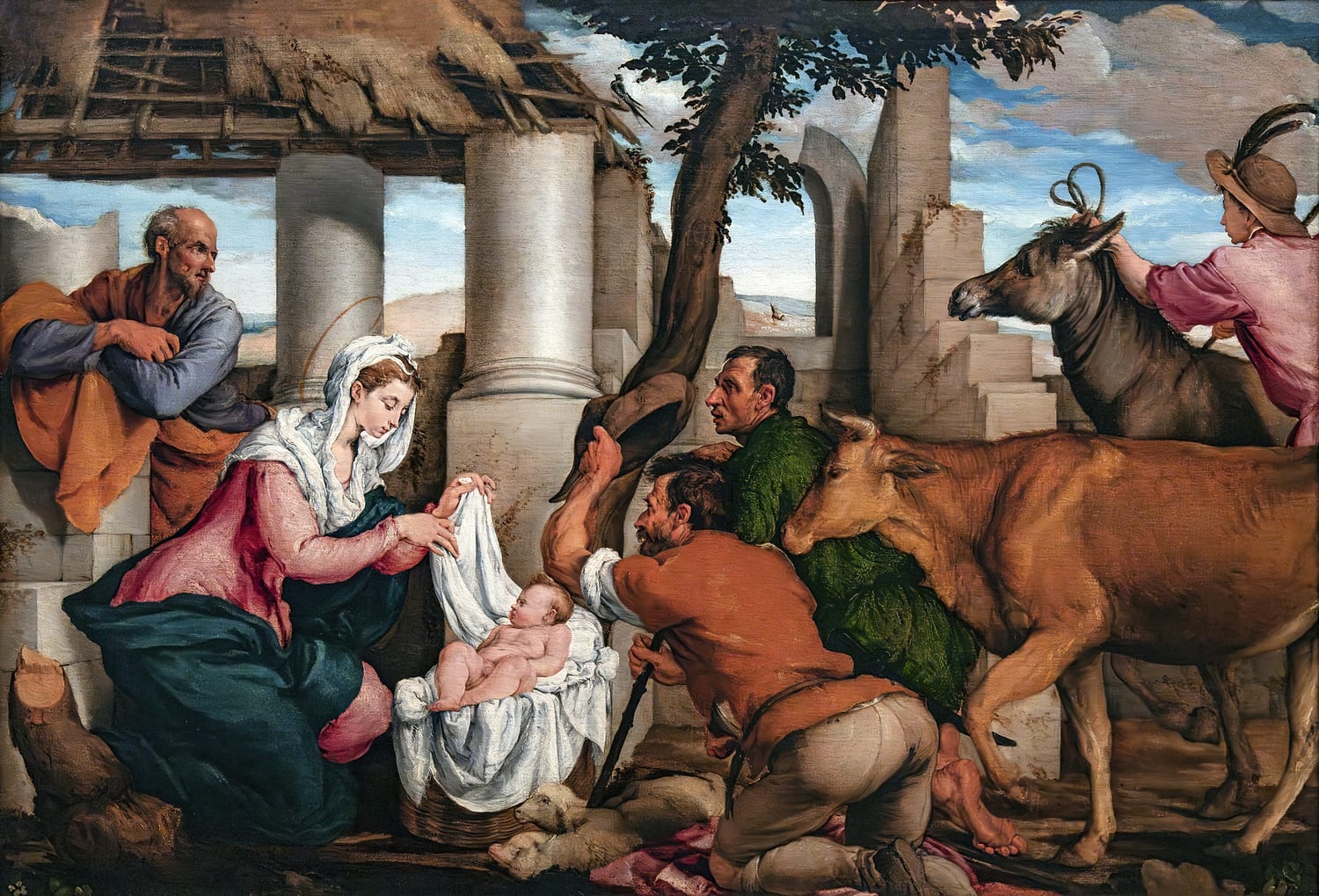 nativity.jpg | Adoration of the Shepherds Jacopo Bassano 16th century Source ↗ | Public domain | Theme III medallion (Four Scenes, Three Tellings) | Bassano’s shepherds: Luke’s nativity, which Matthew tells in an entirely different way. |
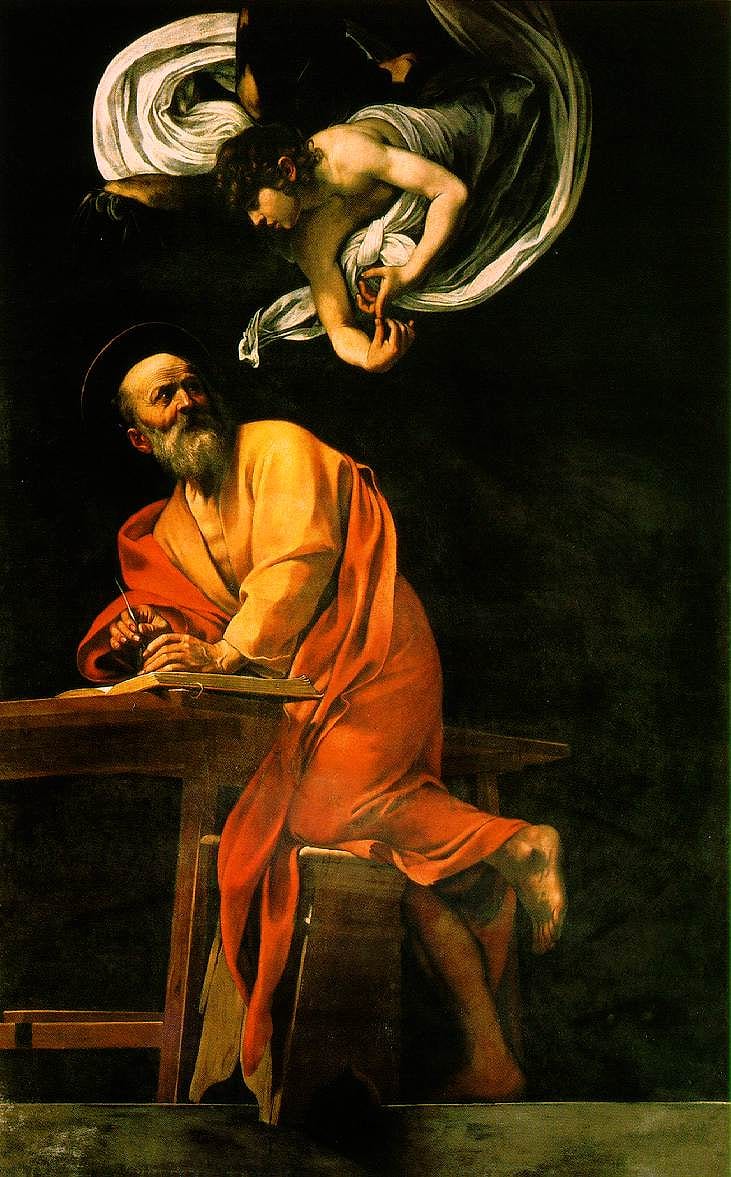 matthew-inspiration.jpg | The Inspiration of Saint Matthew Caravaggio 1602 Source ↗ | Public domain | Theme IV medallion (Authorship and Date) | Caravaggio’s Matthew taking dictation: the question of who actually wrote the gospel that bears his name. |
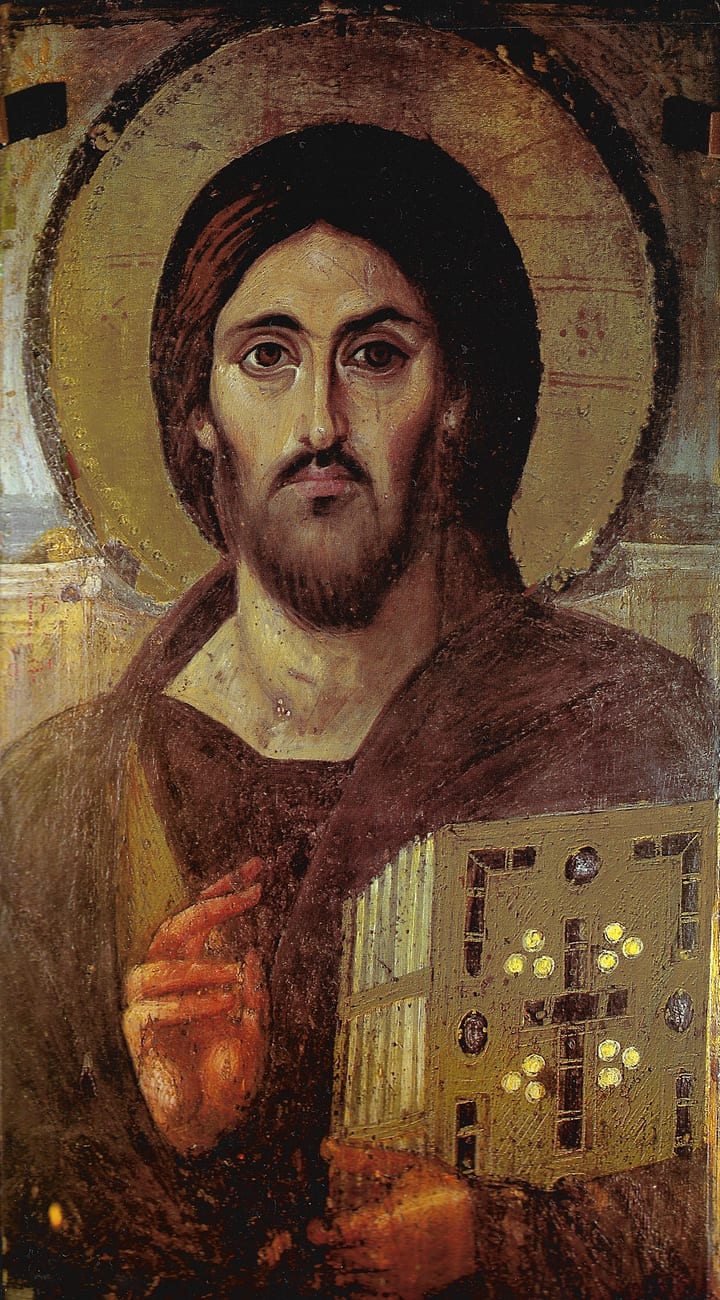 christ-pantocrator.jpg | Christ Pantocrator (Saint Catherine’s Monastery, Sinai) Unknown (Byzantine icon) 6th century CE Source ↗ | Public domain | Theme V medallion (Three Portraits of Jesus) | The Sinai Pantocrator: one face of Christ, against the three the Synoptics paint. |
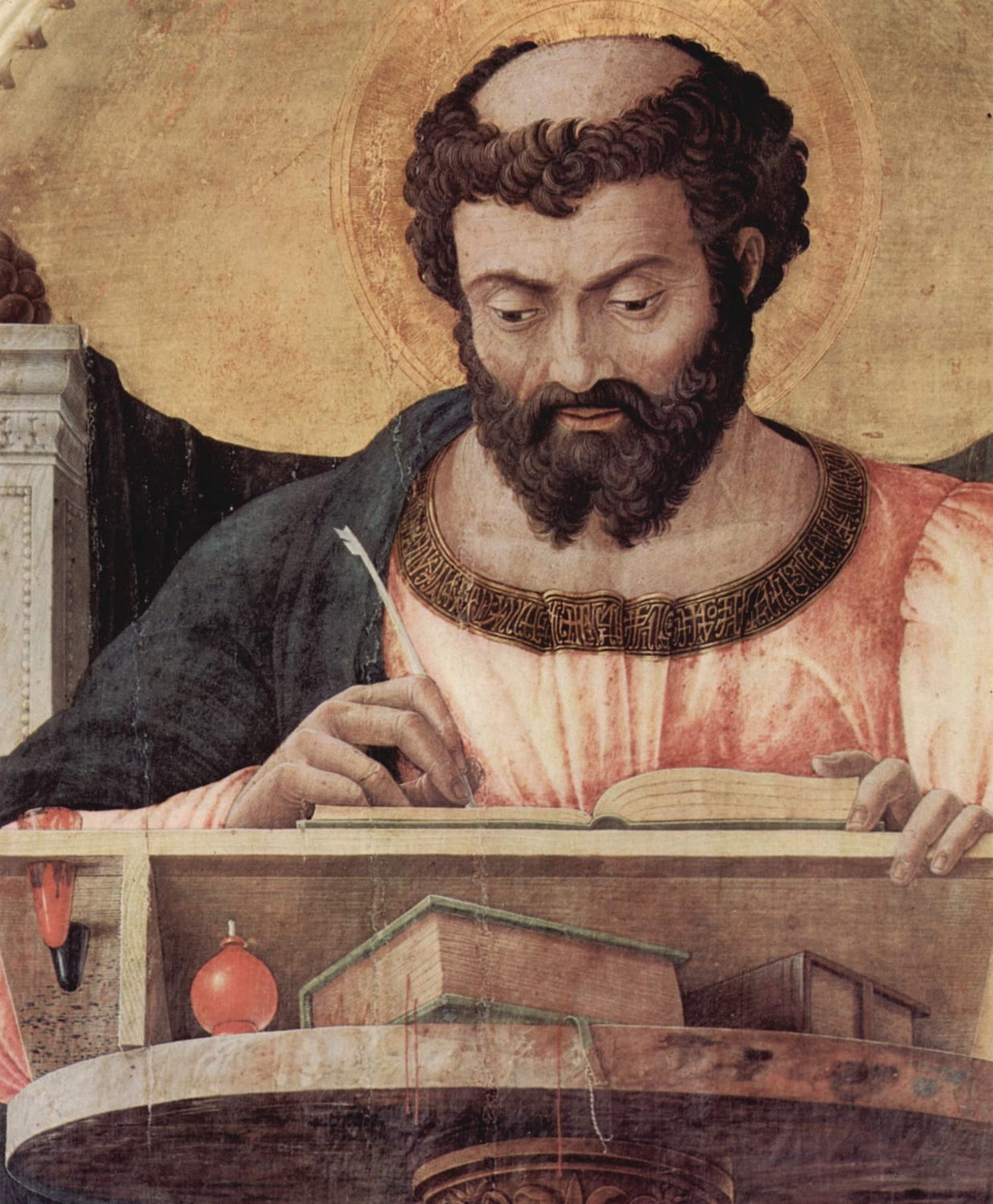 luke-evangelist.jpg | Saint Luke (San Luca Altarpiece) Andrea Mantegna 1453-1454 Source ↗ | Public domain | Theme VI medallion (Why the Gospels Were Written) | Mantegna’s St Luke at work, the evangelist who tells us most about why he wrote. |
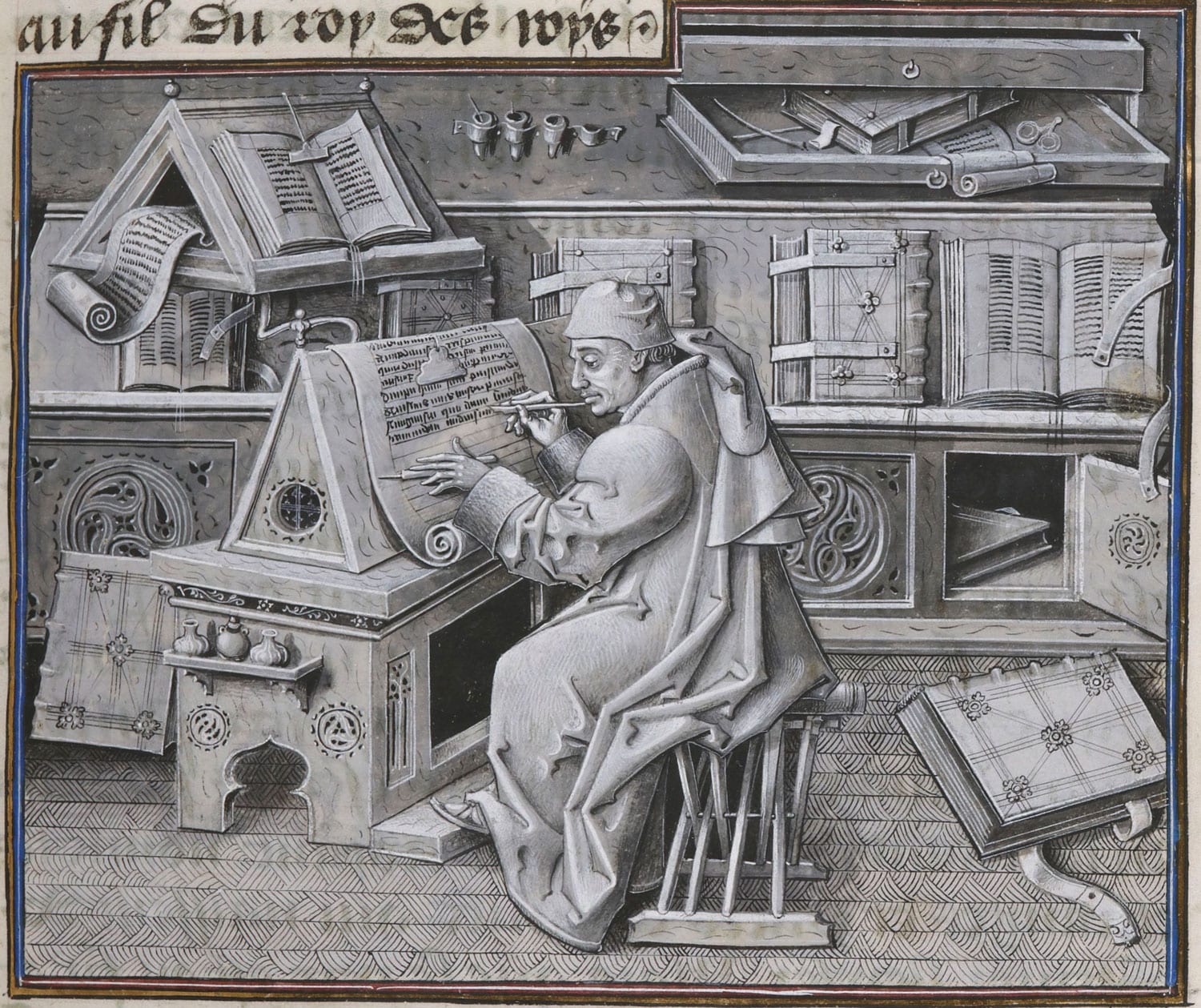 scriptorium.jpg | The scribe Jean Miélot at his writing desk Jean Le Tavernier c. 1450-1460 Source ↗ | Public domain | Instructor backdrop | A scribe at his desk: the copyists who carried the gospels, and altered them, over centuries. |
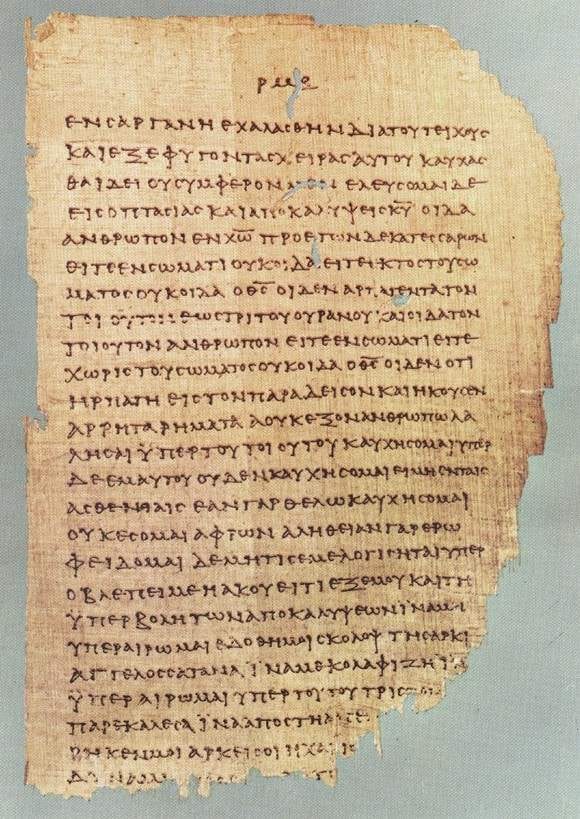 p46.jpg | Papyrus 46, a leaf of the Pauline epistles Unknown (ancient scribe) c. 200 CE Source ↗ | Public domain | Stats backdrop | An early New Testament papyrus: the fragile physical basis of the whole tradition. |
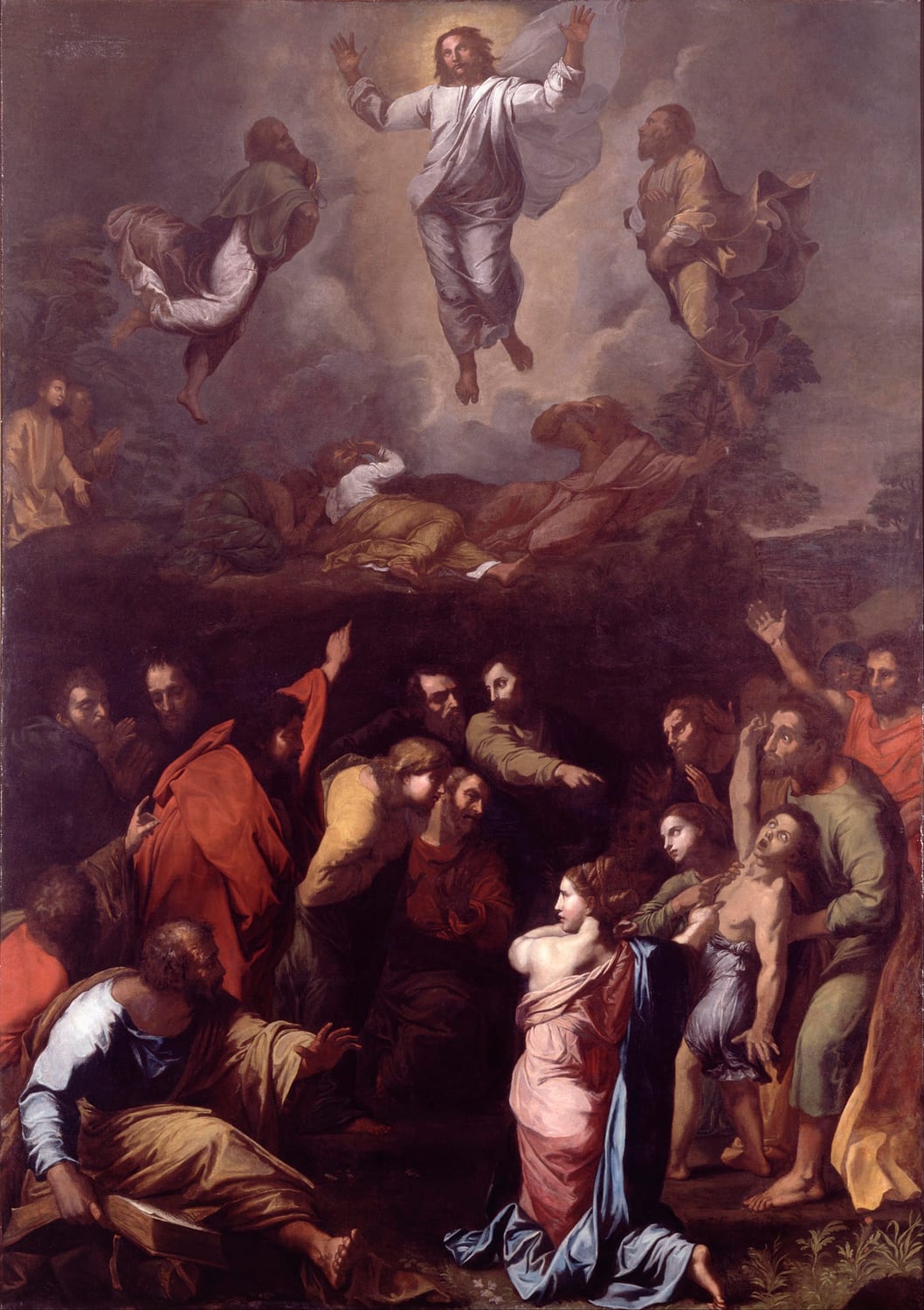 transfiguration.jpg | The Transfiguration Raphael 1516-1520 Source ↗ | Public domain | Highlights backdrop | A scene the Synoptics share, told by each in his own register. |
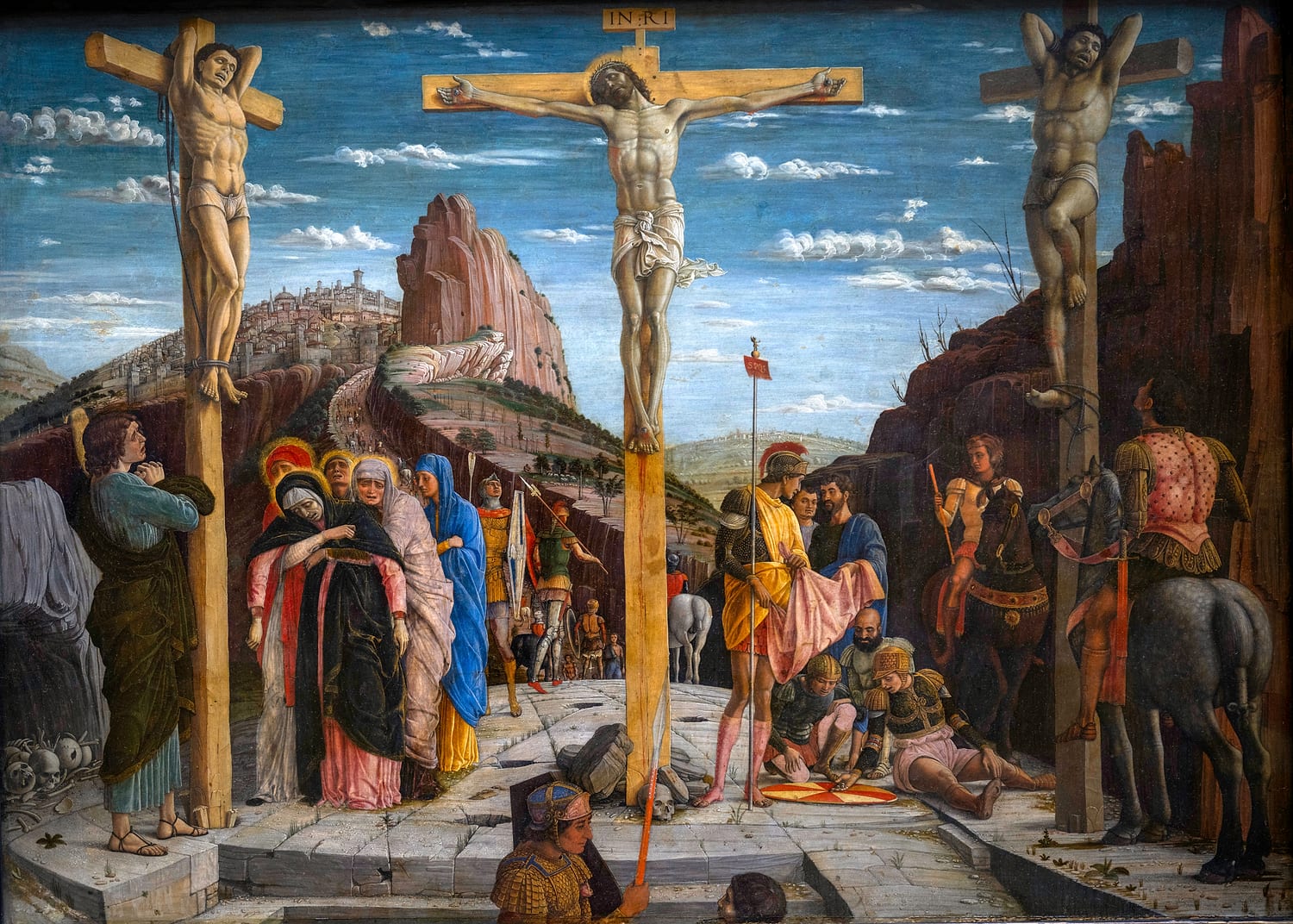 crucifixion.jpg | Crucifixion (Louvre) Andrea Mantegna c. 1457-1459 Source ↗ | Public domain | Highlights image card | Mantegna’s crucifixion: the death of Jesus, given different last words in each gospel. |
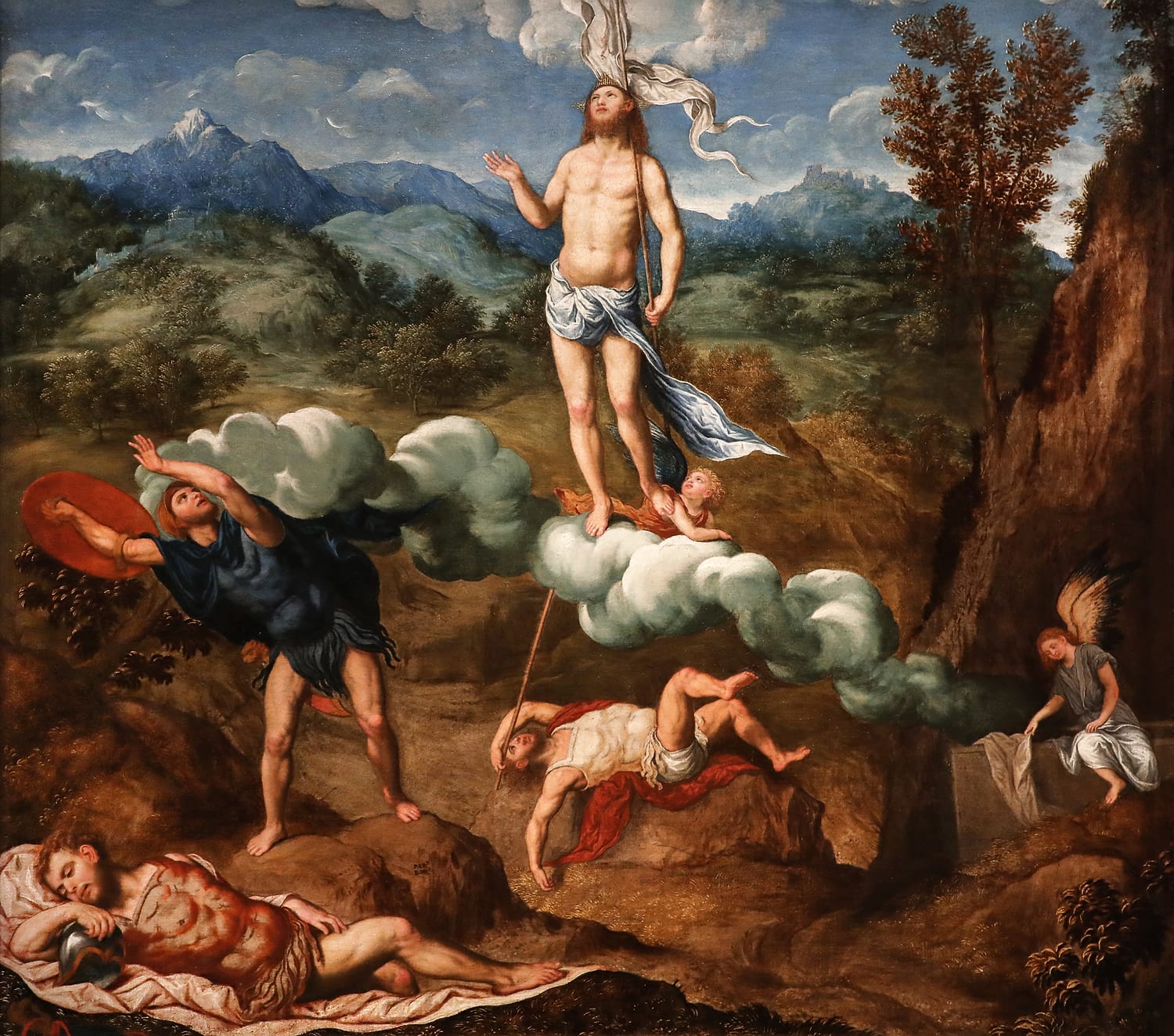 empty-tomb.jpg | The Resurrection Paris Bordone mid 16th century Source ↗ | CC BY-SA 4.0 | Highlights image card | The risen Christ: the resurrection that Mark, Matthew, and Luke end in three different ways. |
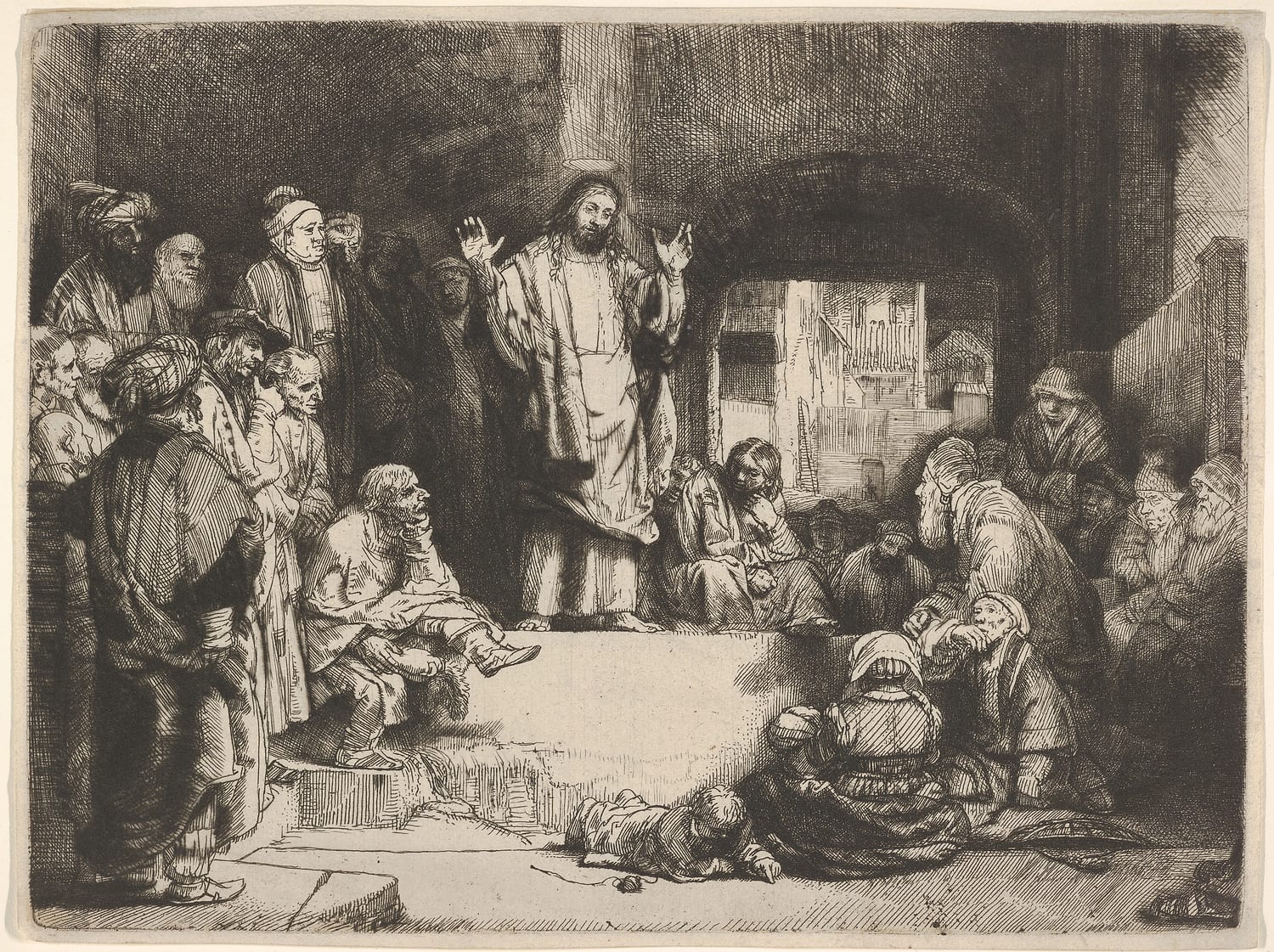 christ-preaching.jpg | Christ Preaching (La Petite Tombe) Rembrandt van Rijn c. 1652 Source ↗ | CC0 | “Prepare to Rethink” backdrop | Rembrandt’s teaching Jesus: the figure all three Synoptics are trying to portray. |
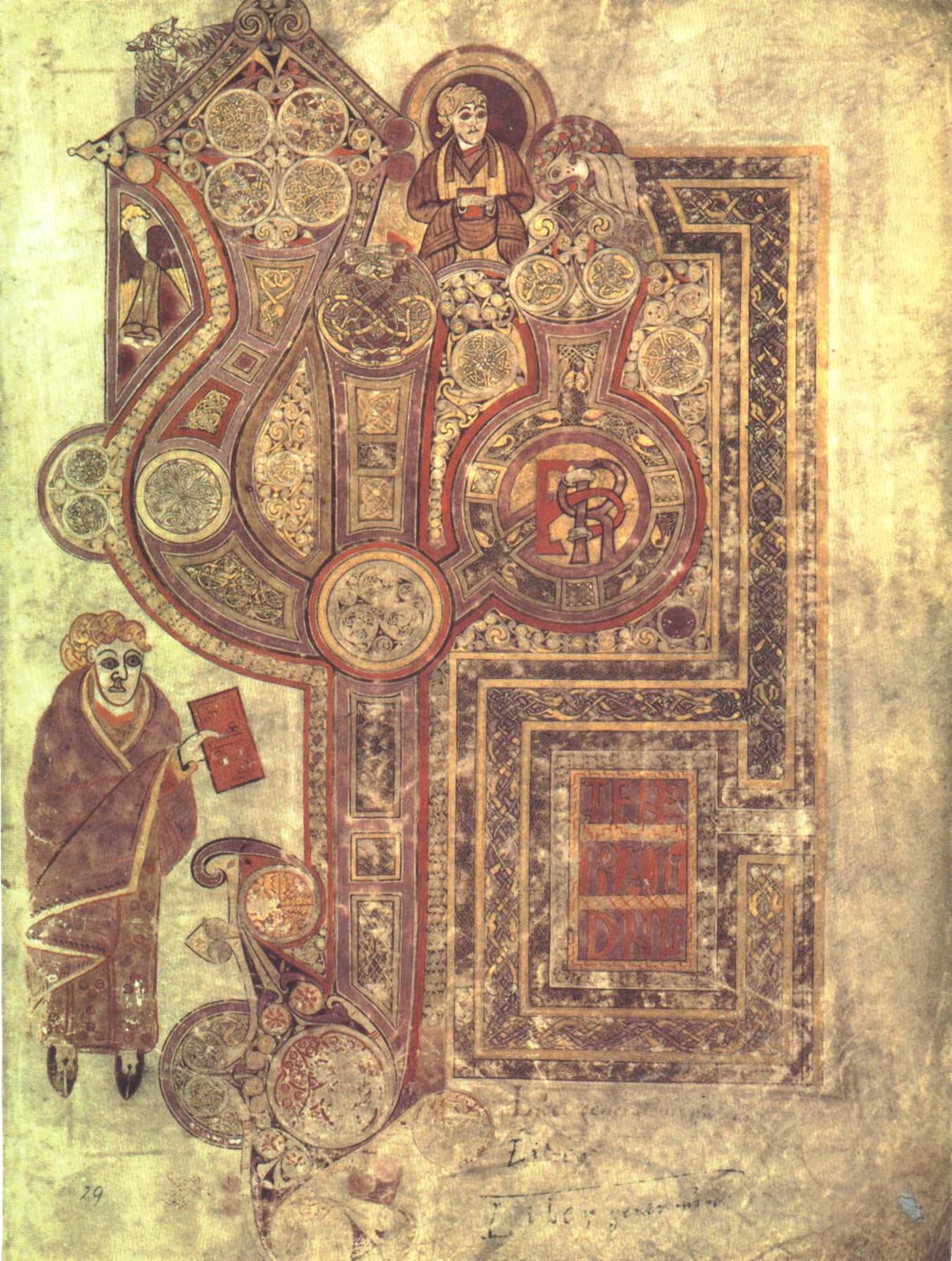 gospel-lectionary.jpg | The Book of Kells, Incipit to Matthew (folio 29r) Insular monks (Book of Kells) c. 800 CE Source ↗ | Public domain | Schedule backdrop | The Book of Kells opening of Matthew: the gospel copied and adorned by hand. |
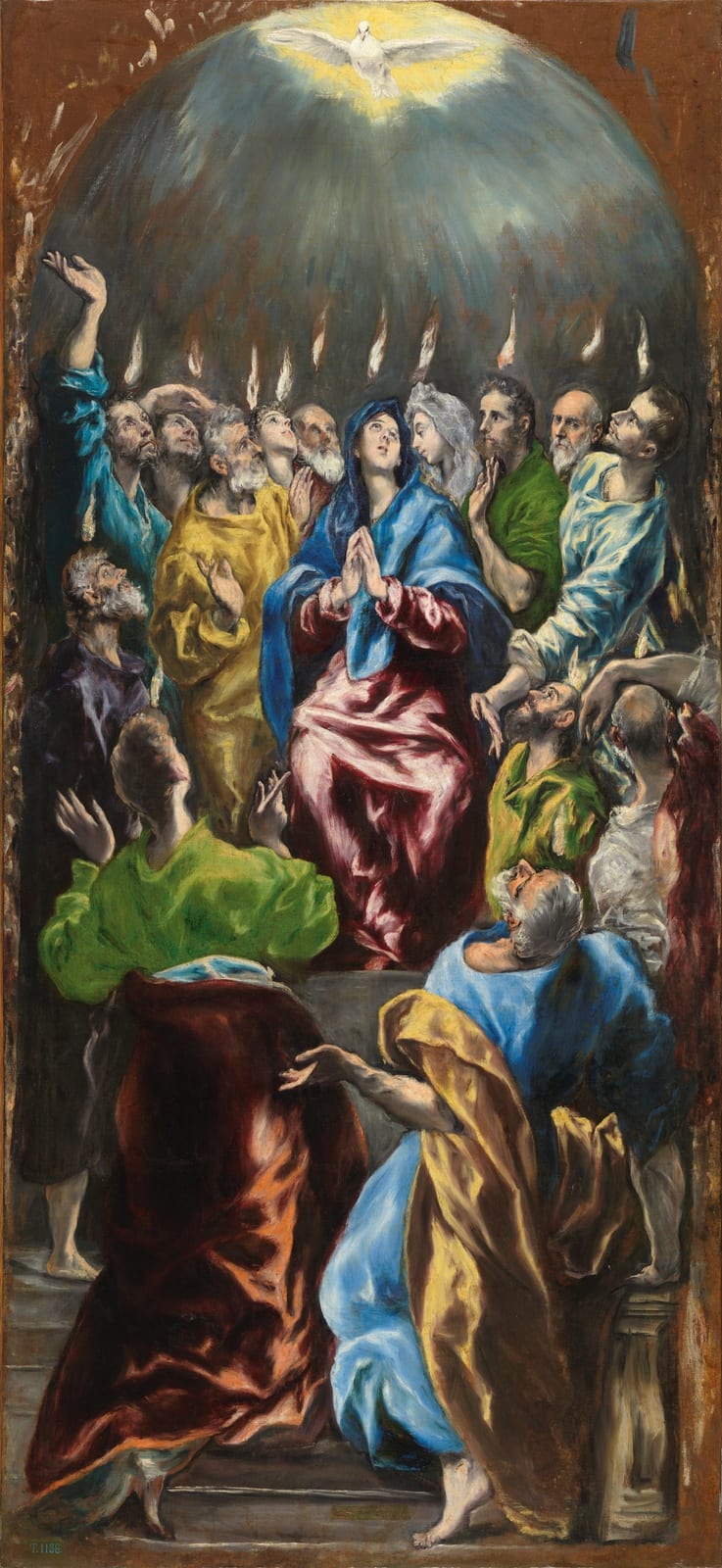 pentecost.jpg | Pentecost El Greco c. 1600 Source ↗ | Public domain | Bonuses backdrop | El Greco’s Pentecost: the movement out of which the gospels would eventually be written. |
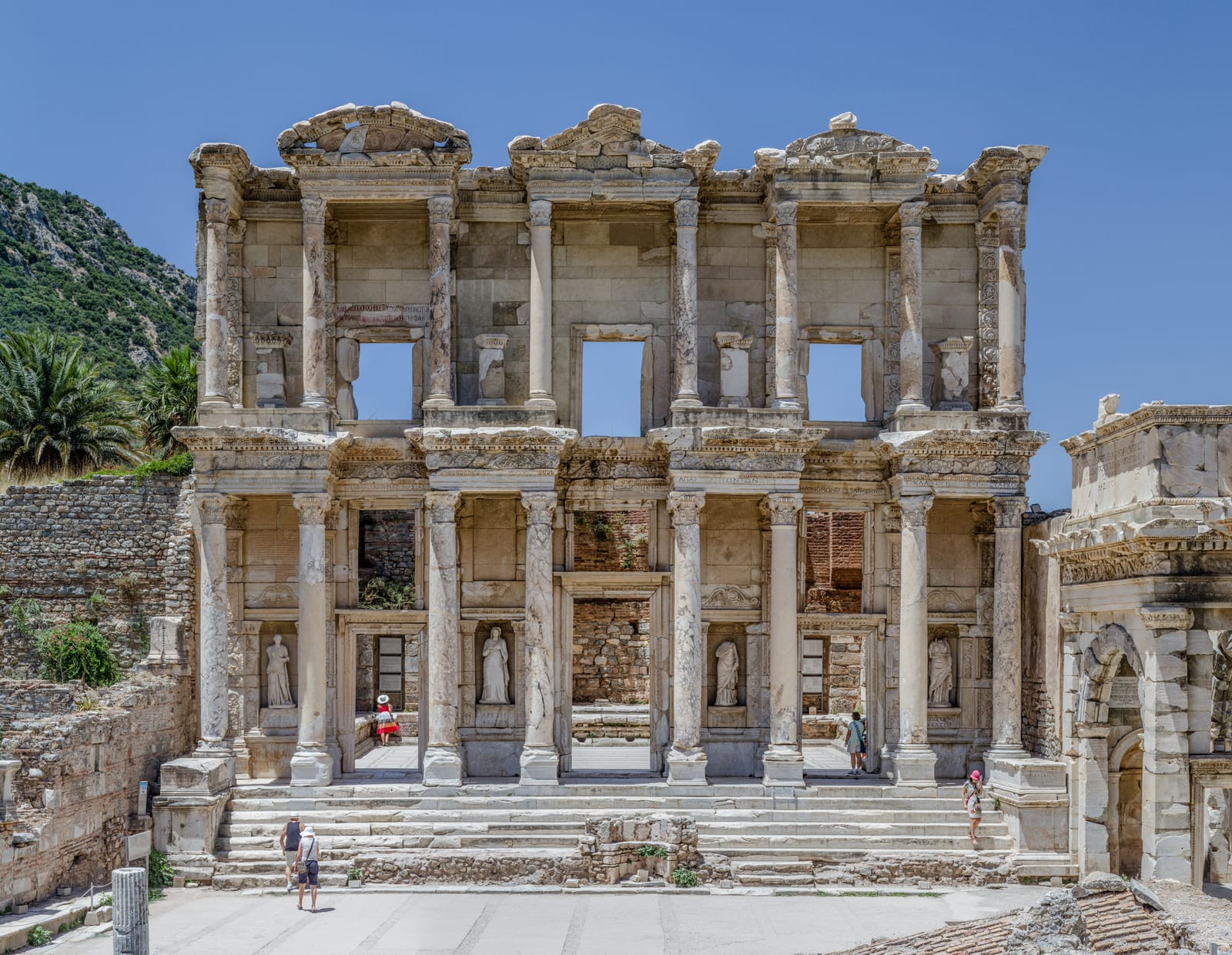 ephesus.jpg | The Library of Celsus, Ephesus Photo: Benh Lieu Song Building c. 117 CE (photographed 2010) Source ↗ | CC BY-SA 3.0 | FAQ backdrop | A great city of the early church: the kind of world in which the gospels circulated. |
Public-domain works are reproduced freely. CC BY / CC BY-SA images are credited to their photographers as required; follow each Source link for the full license text.