
Image Credits
The Hebrew Bible
Every image on the course page, with its source, license, and the reason it was chosen. The artwork is public-domain and freely-licensed material from Wikimedia Commons: illuminated Hebrew Bibles and the great codices, paintings of the Torah’s scenes and the prophets, and photographs of the land and its scrolls. Creative Commons photographs are noted below.
| Image | Work & Attribution | License | Where it appears | Why it’s included |
|---|---|---|---|---|
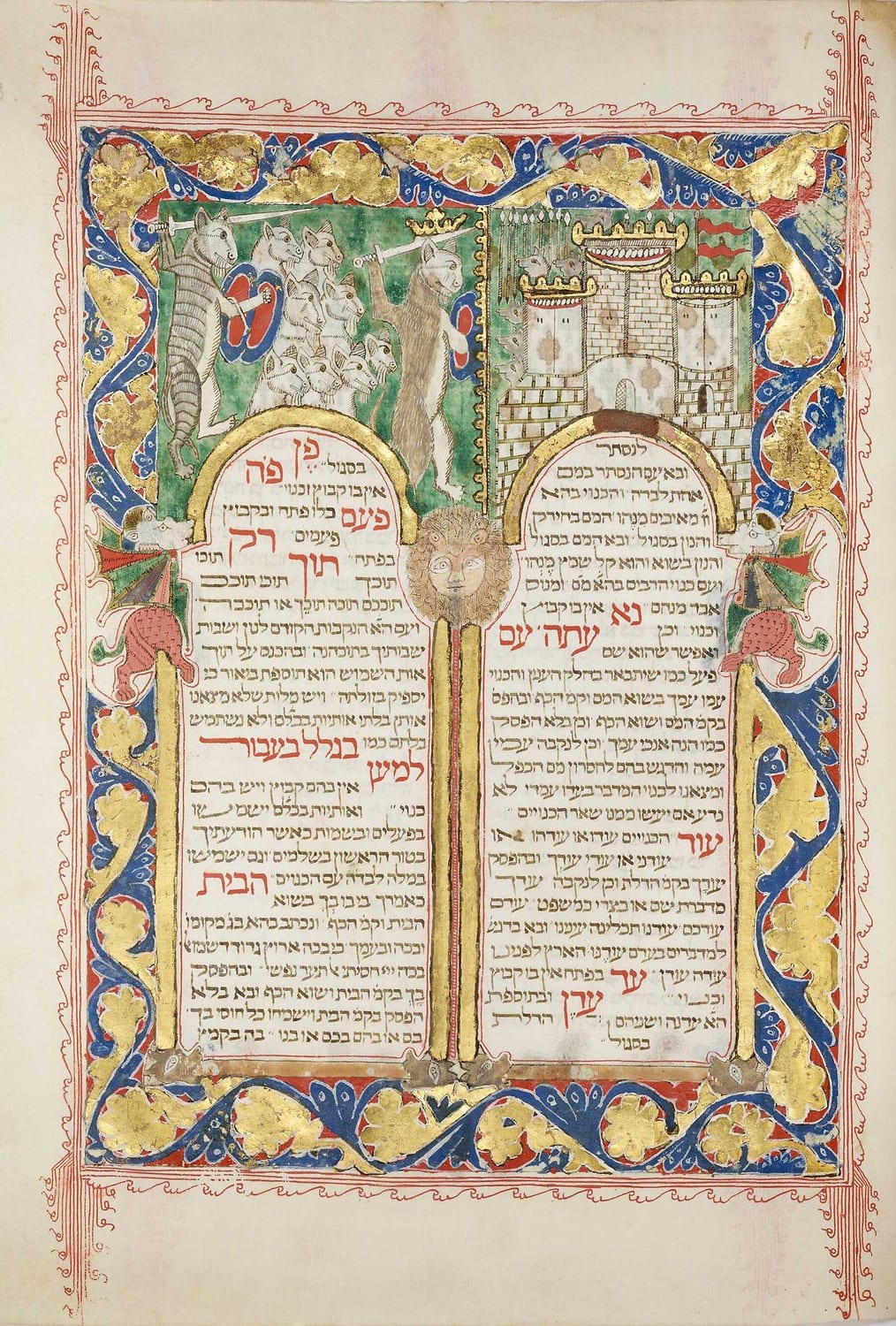 illuminated-bible.jpg | The Kennicott Bible (illuminated Hebrew Bible) Unknown (Hebrew illuminators, La Coruña) 1476 Source ↗ | Public domain | Hero background | A page from the Kennicott Bible: the Hebrew Scriptures as a dazzling illuminated book. |
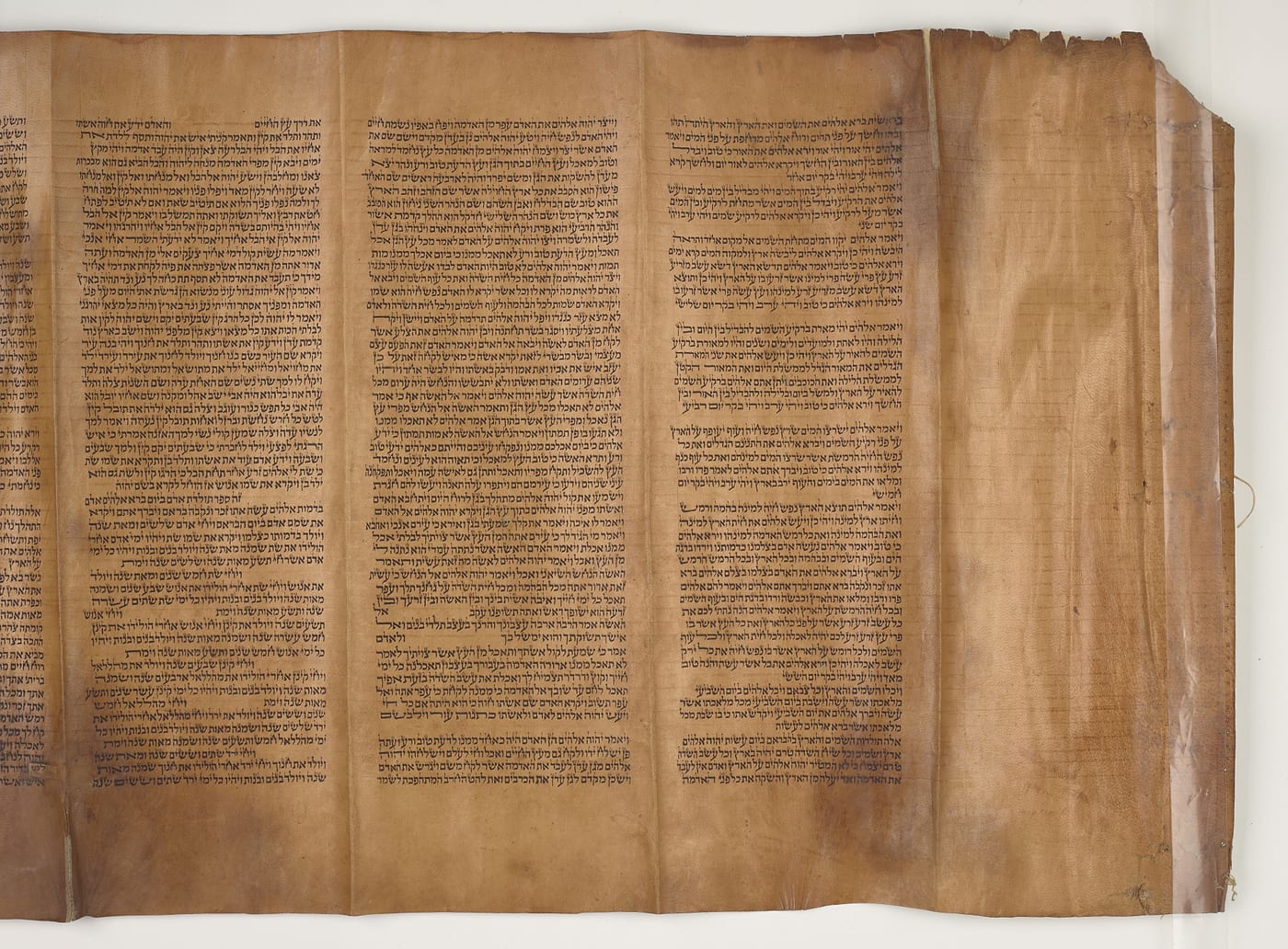 torah-scroll.jpg | A Sefer Torah (Chester Beatty Library) Unknown 18th century Source ↗ | Public domain | Hero ornament | A Torah scroll, the form in which the five books are still copied and read. |
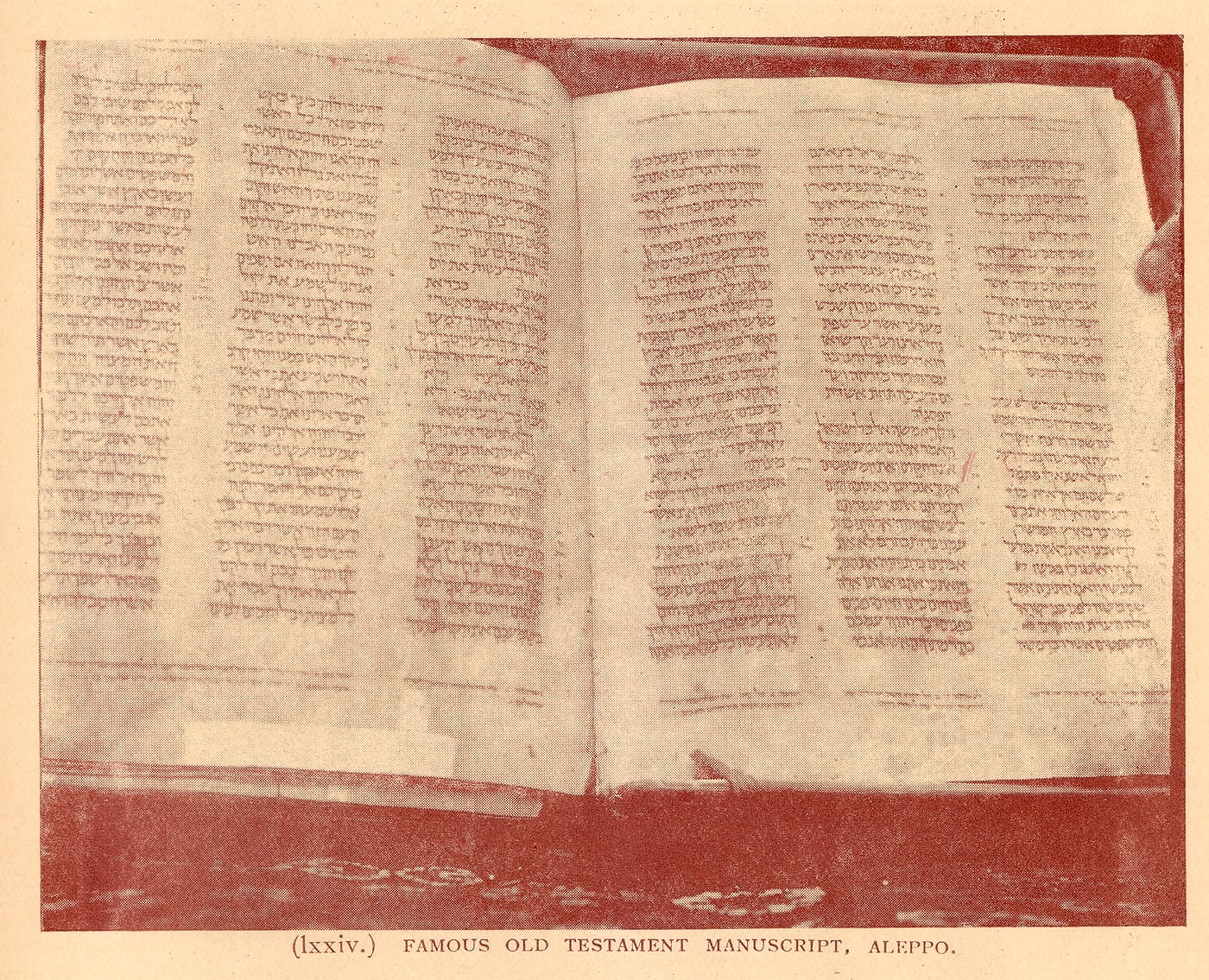 aleppo-codex.jpg | The Aleppo Codex (the Ten Commandments in Deuteronomy) Aleppo Codex scribes (Photo: J. Segall) Codex c. 920 CE (photographed 1909) Source ↗ | Public domain | Hero ornament | The Aleppo Codex, long the most authoritative manuscript of the Hebrew Bible. |
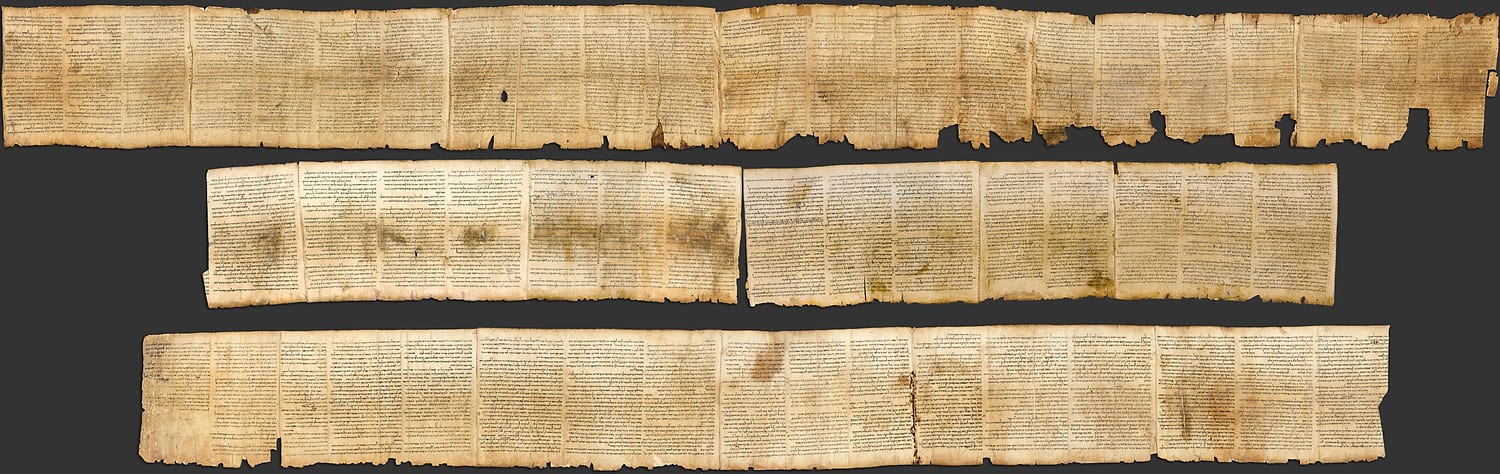 dead-sea-scroll.jpg | The Great Isaiah Scroll (1QIsaa) Photo: Ardon Bar-Hama Scroll 2nd century BCE Source ↗ | Public domain | Hero ornament | The Great Isaiah Scroll from Qumran, a thousand years older than the medieval codices. |
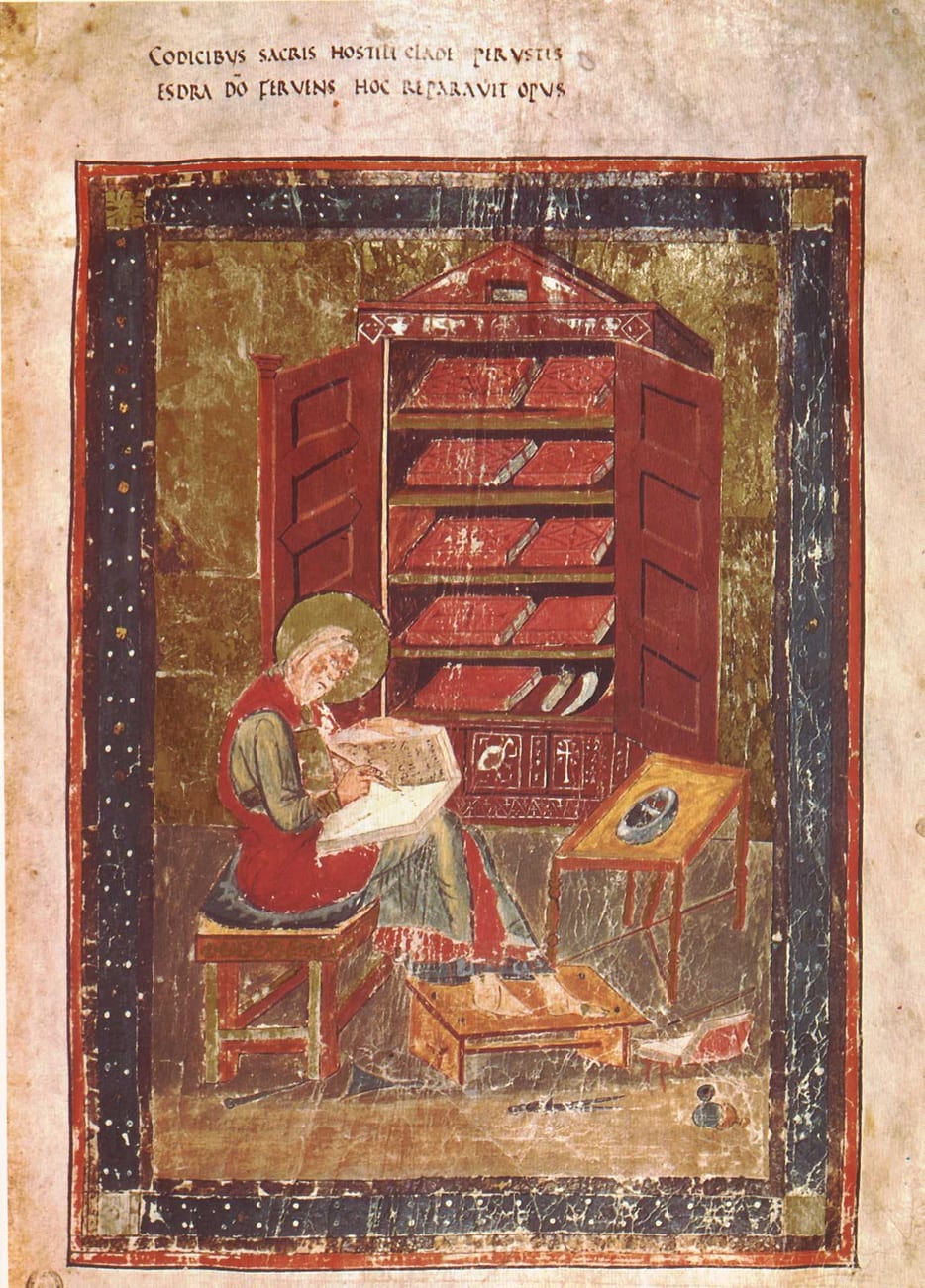 ezra-scribe.jpg | Ezra the Scribe (Codex Amiatinus, folio 5r) Unknown (Northumbria) c. 700 CE Source ↗ | Public domain | Origin section figure | Ezra at his cabinet of books: the tradition that gathered and edited the Scriptures. |
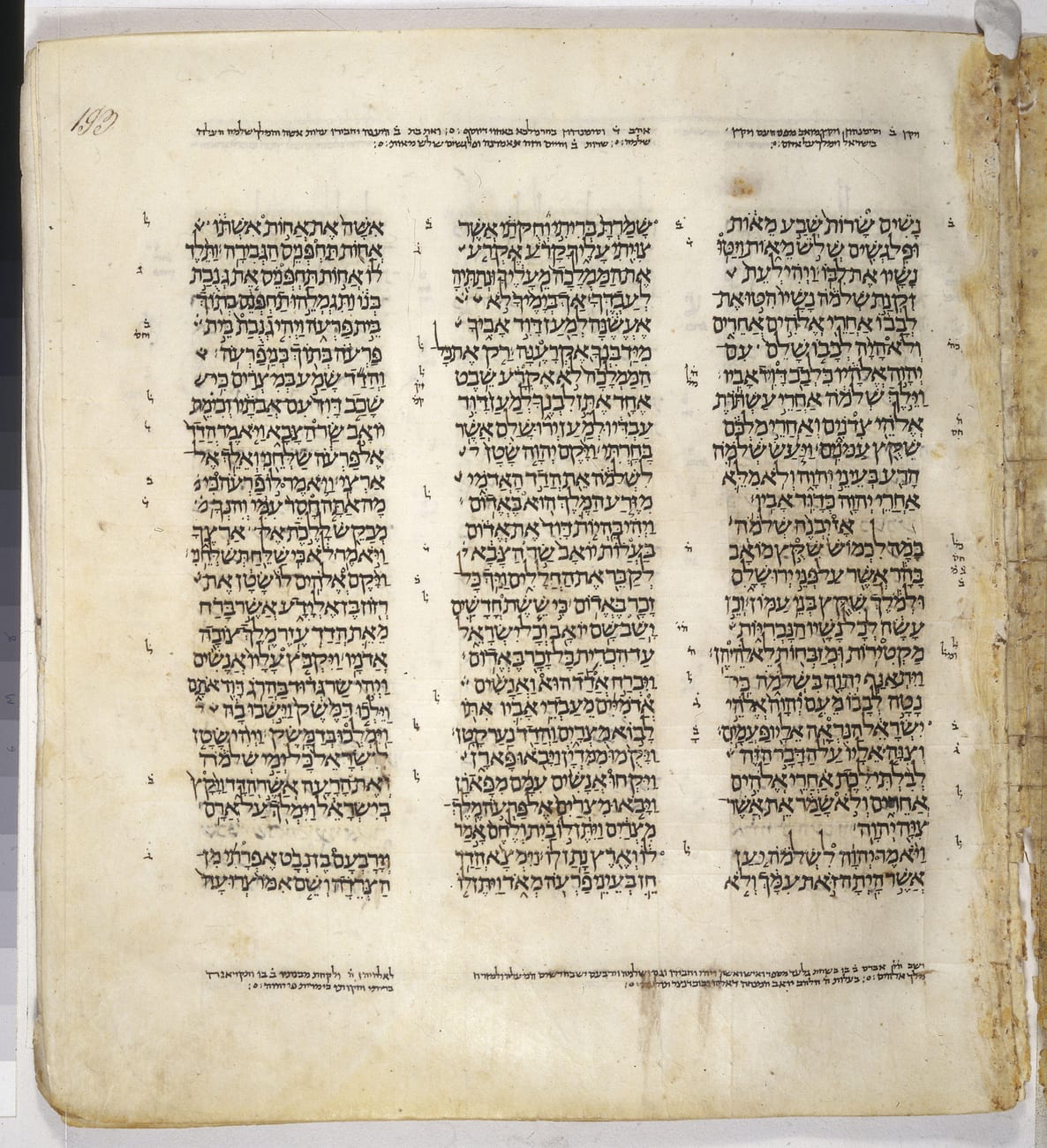 masoretic-page.jpg | The Leningrad Codex (folio 193a) Unknown (scribe Samuel ben Jacob) c. 1010 CE Source ↗ | Public domain | At-a-Glance backdrop | A page of the Leningrad Codex, the oldest complete Hebrew Bible, with its Masoretic notes. |
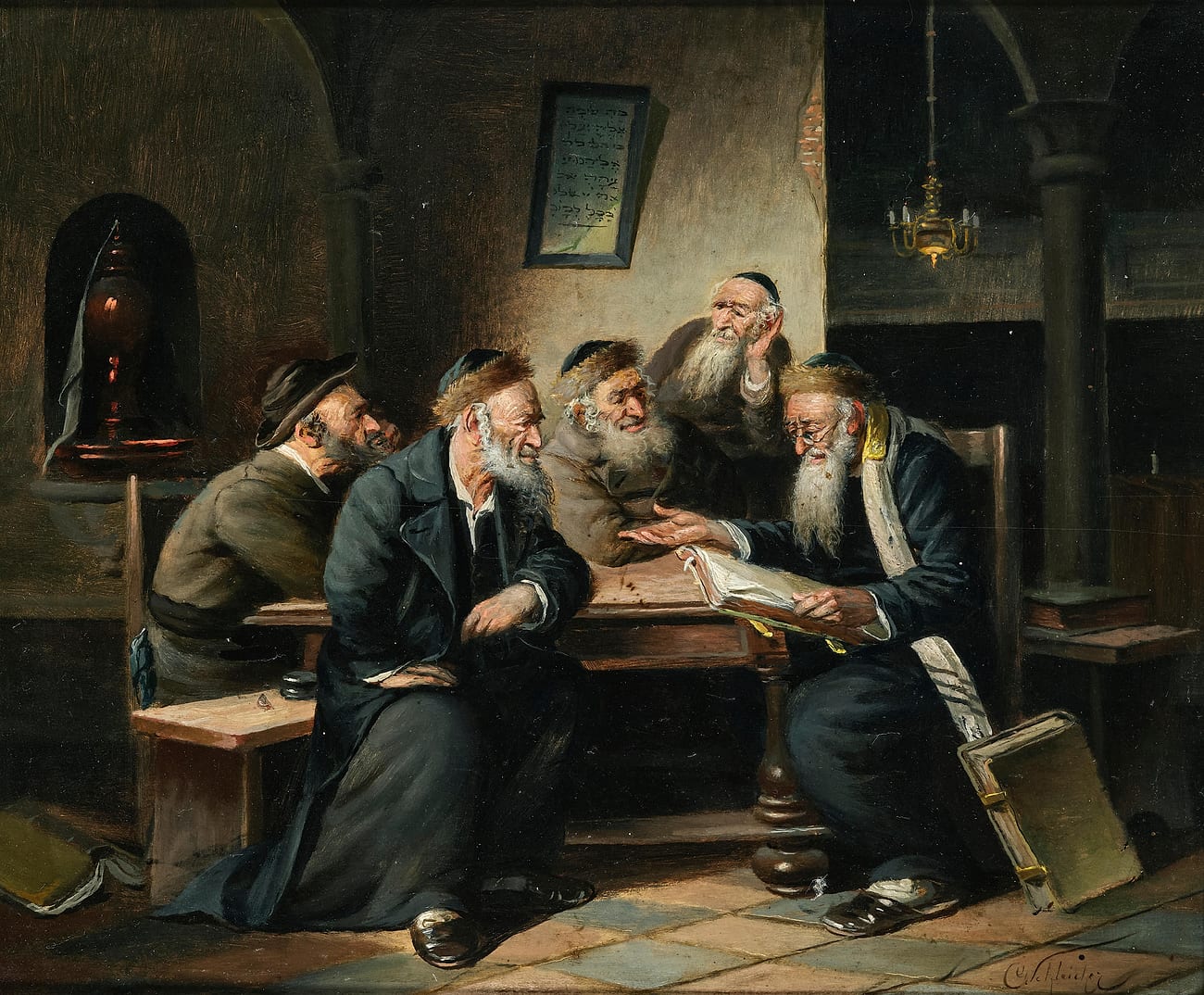 torah-study.jpg | Beim Rabi (At the Rabbi’s) Carl Schleicher by 1903 Source ↗ | Public domain | Theme I medallion (Method) | Scholars bent over the text: the long tradition of arguing about what the Bible means. |
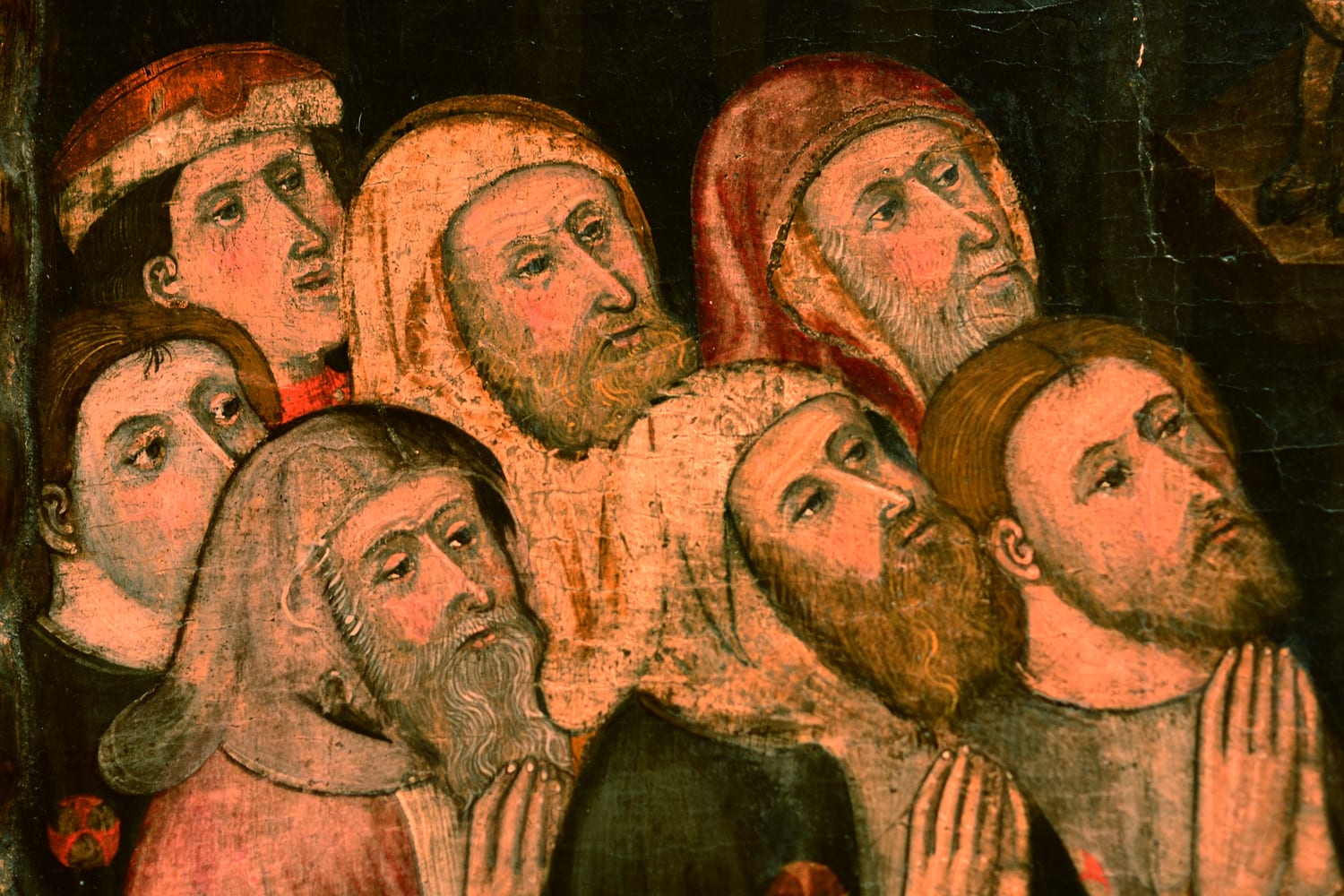 moses-law.jpg | Moses Receiving the Tablets of the Law Pere Vall c. 1410 Source ↗ | Public domain | Theme II medallion (The Pentateuch) | Moses receiving the law: the heart of the Torah, and of the course’s longest section. |
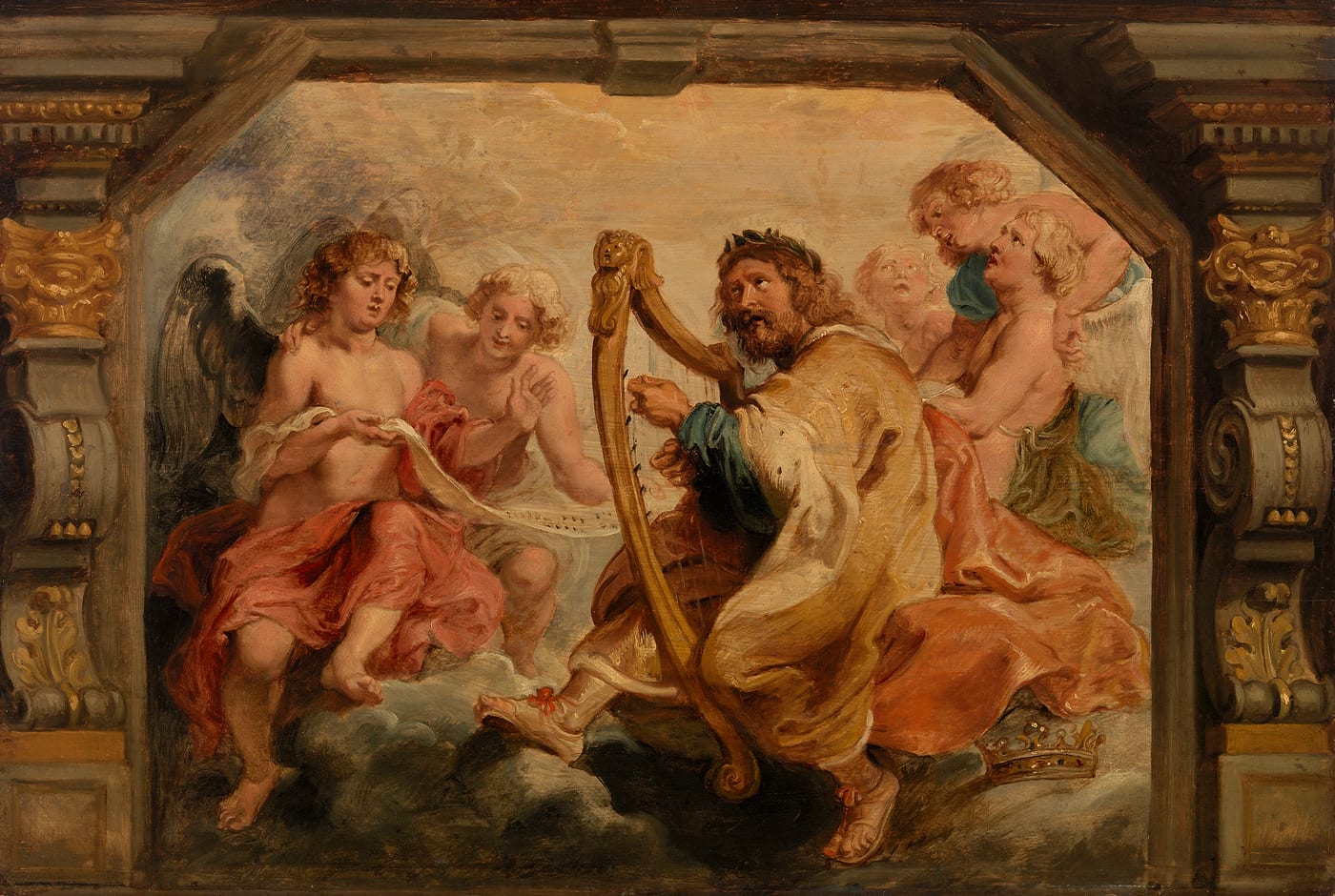 king-david.jpg | King David Playing the Harp Peter Paul Rubens c. 1616 Source ↗ | Public domain | Theme III medallion (Historical Narratives) | Rubens’s harp-playing David: the king at the center of Israel’s national story. |
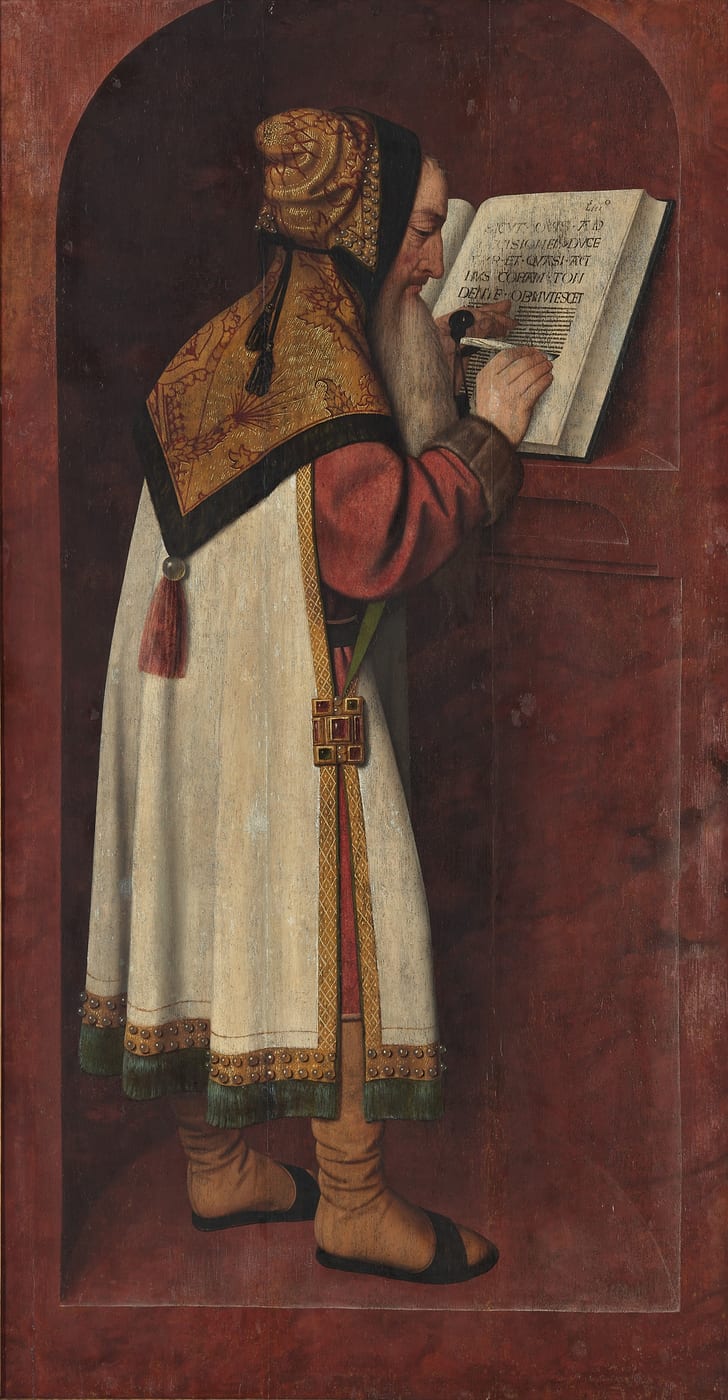 prophet.jpg | The Prophet Isaiah Jan Mostaert c. 1500 Source ↗ | Public domain | Theme IV medallion (The Prophets) | A Renaissance Isaiah: the prophets who spoke for God against kings and crowds. |
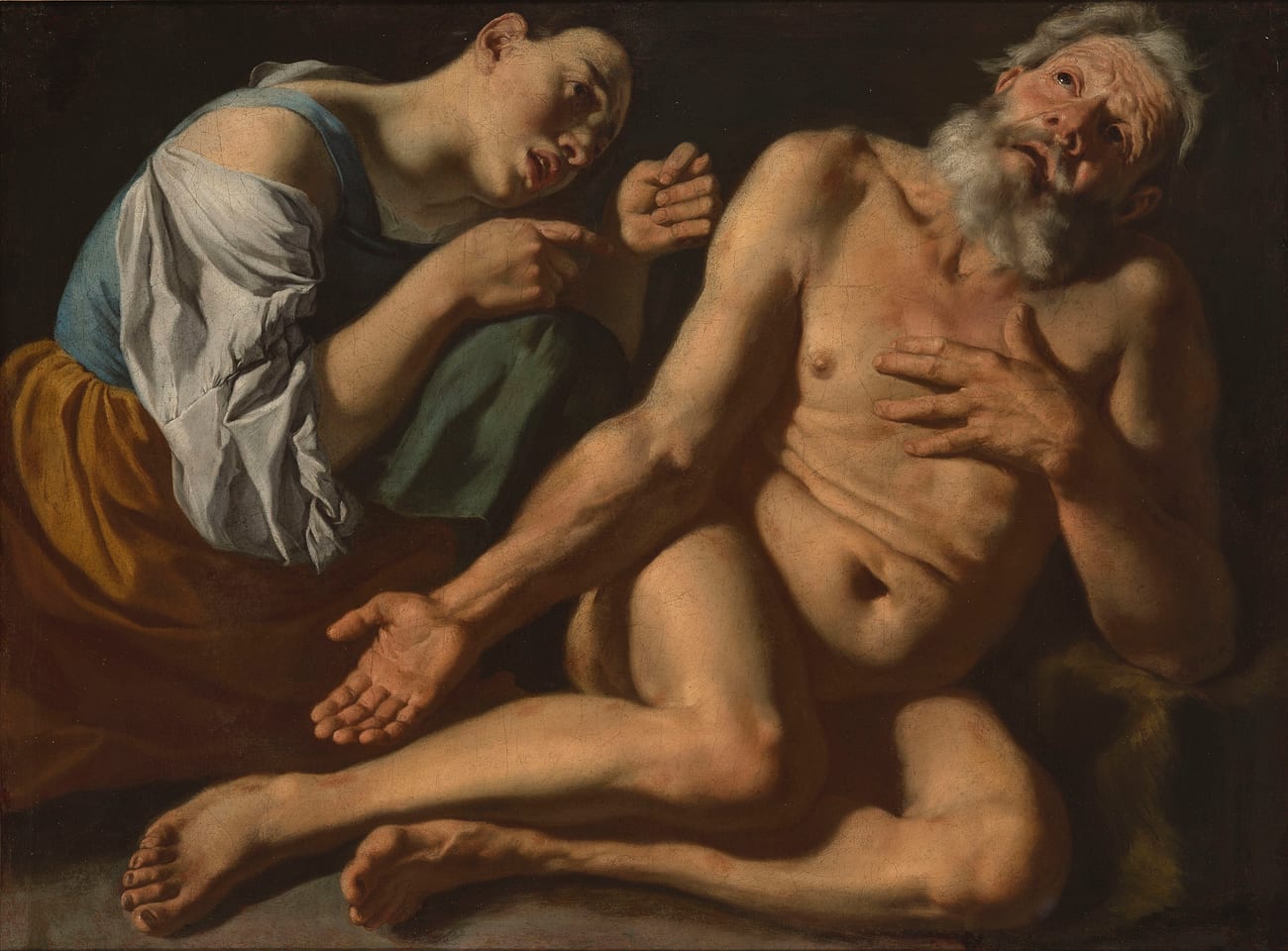 job.jpg | Job Mocked by His Wife Gaspare Traversi c. 1700 to 1750 Source ↗ | Public domain | Theme V medallion (Wisdom & Poetry) | Job on the ash heap: the wisdom literature’s hardest question about suffering. |
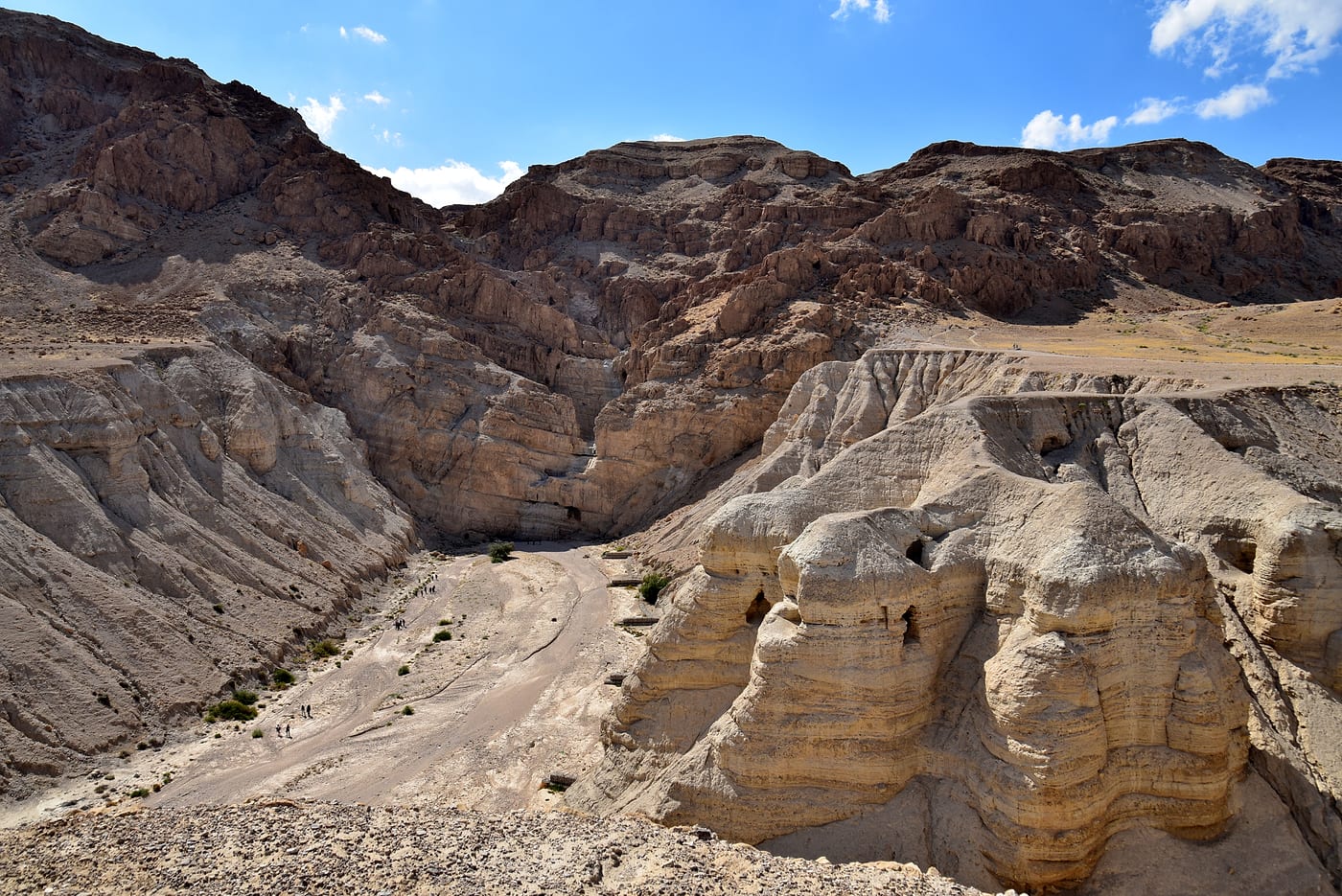 qumran.jpg | The caves of Qumran Photo: Bahnfrend Photographed 2019 Source ↗ | CC BY-SA 4.0 | Theme VI medallion (Later Texts & the Canon) | The caves where the Dead Sea Scrolls were found: the evidence that there was no fixed canon. |
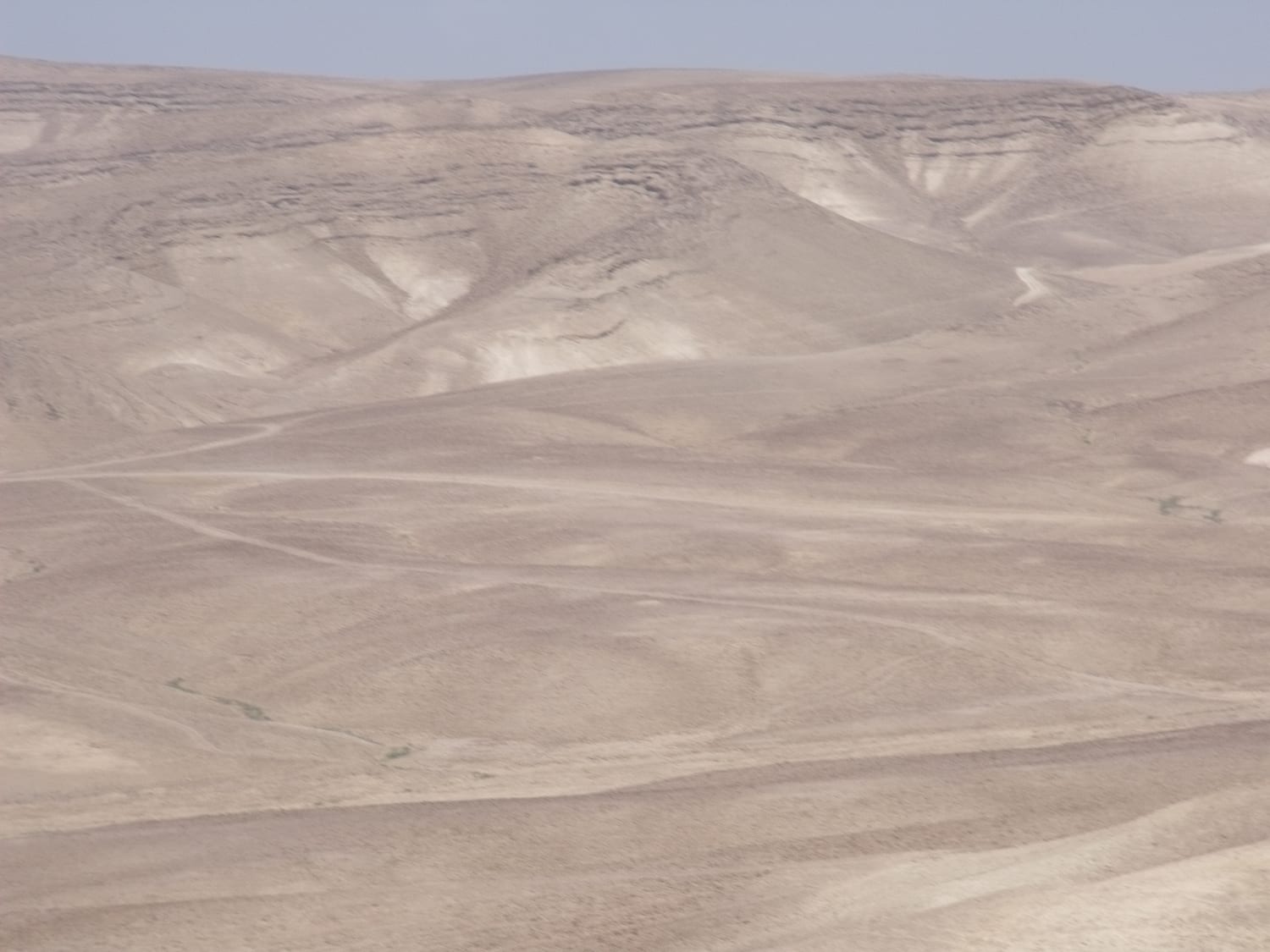 judean-hills.jpg | Judean Desert landscape Photo: The Turtle Ninja Photographed 2013 Source ↗ | CC BY-SA 3.0 | Instructor backdrop | The Judean wilderness, the land in which these texts were written and set. |
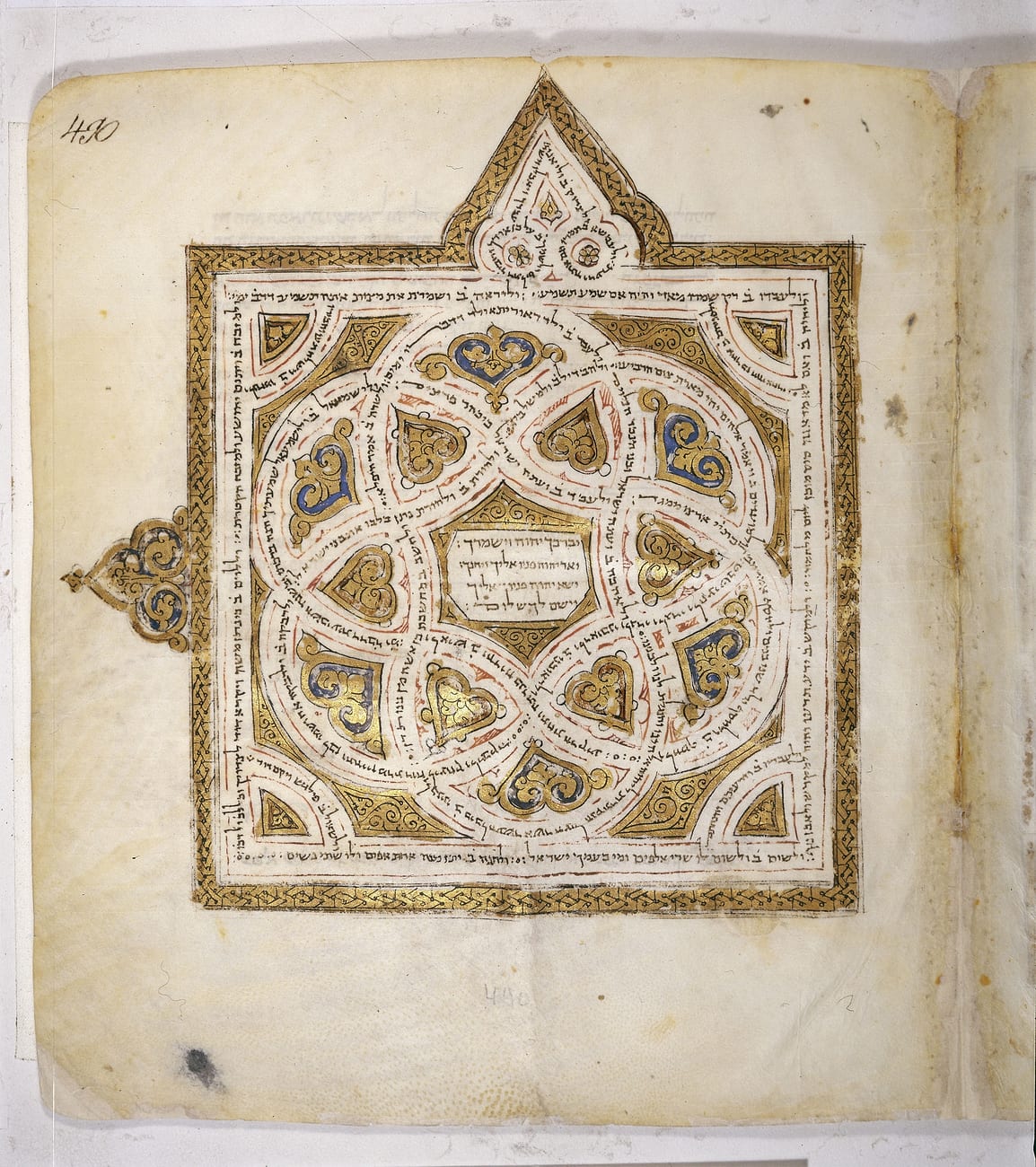 leningrad-codex.jpg | The Leningrad Codex (folio 490a) Unknown (scribe Samuel ben Jacob) c. 1010 CE Source ↗ | Public domain | Stats backdrop | Another leaf of the Leningrad Codex, the manuscript behind most modern Hebrew Bibles. |
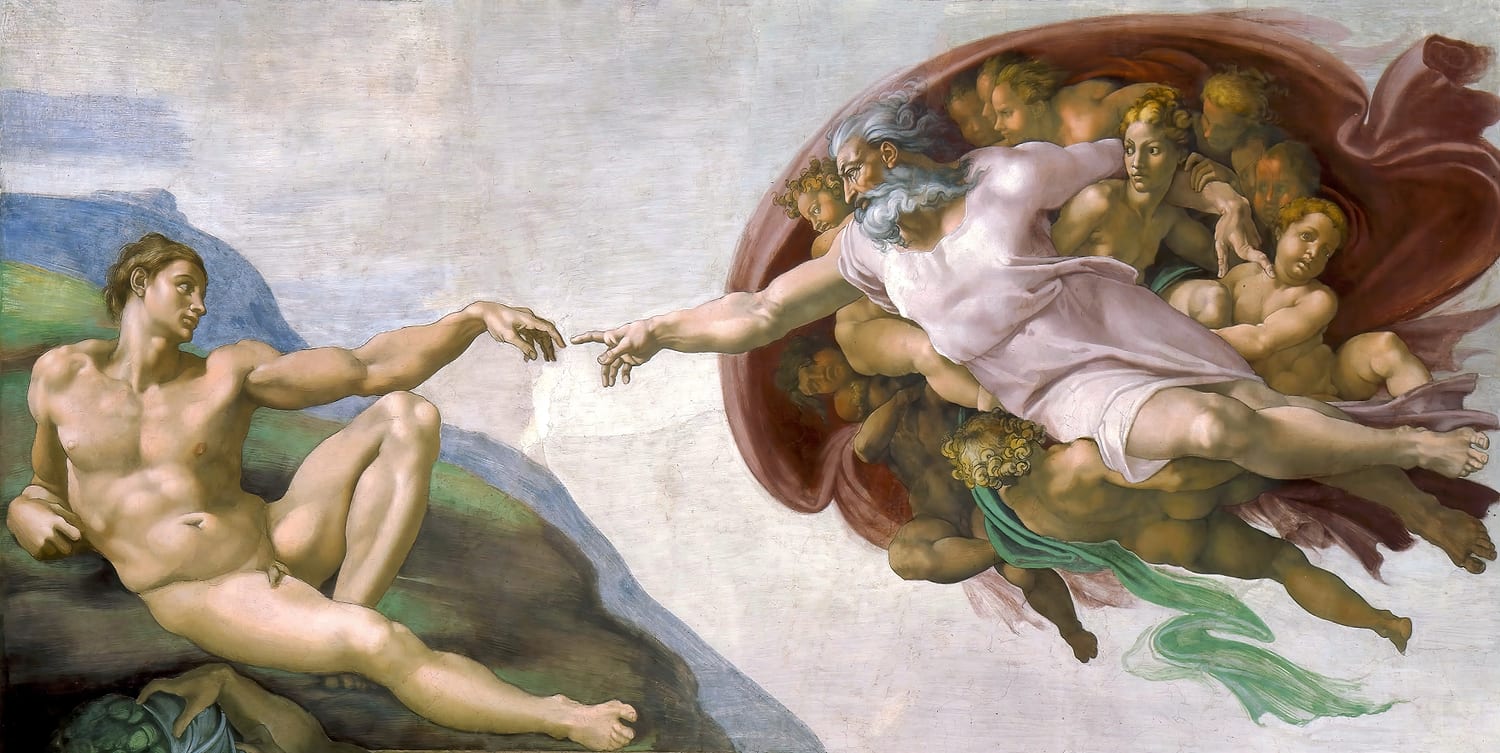 creation-adam.jpg | The Creation of Adam (Sistine Chapel) Michelangelo c. 1512 Source ↗ | Public domain | Highlights backdrop | Michelangelo’s Genesis: the most famous image ever made of the Bible’s first chapter. |
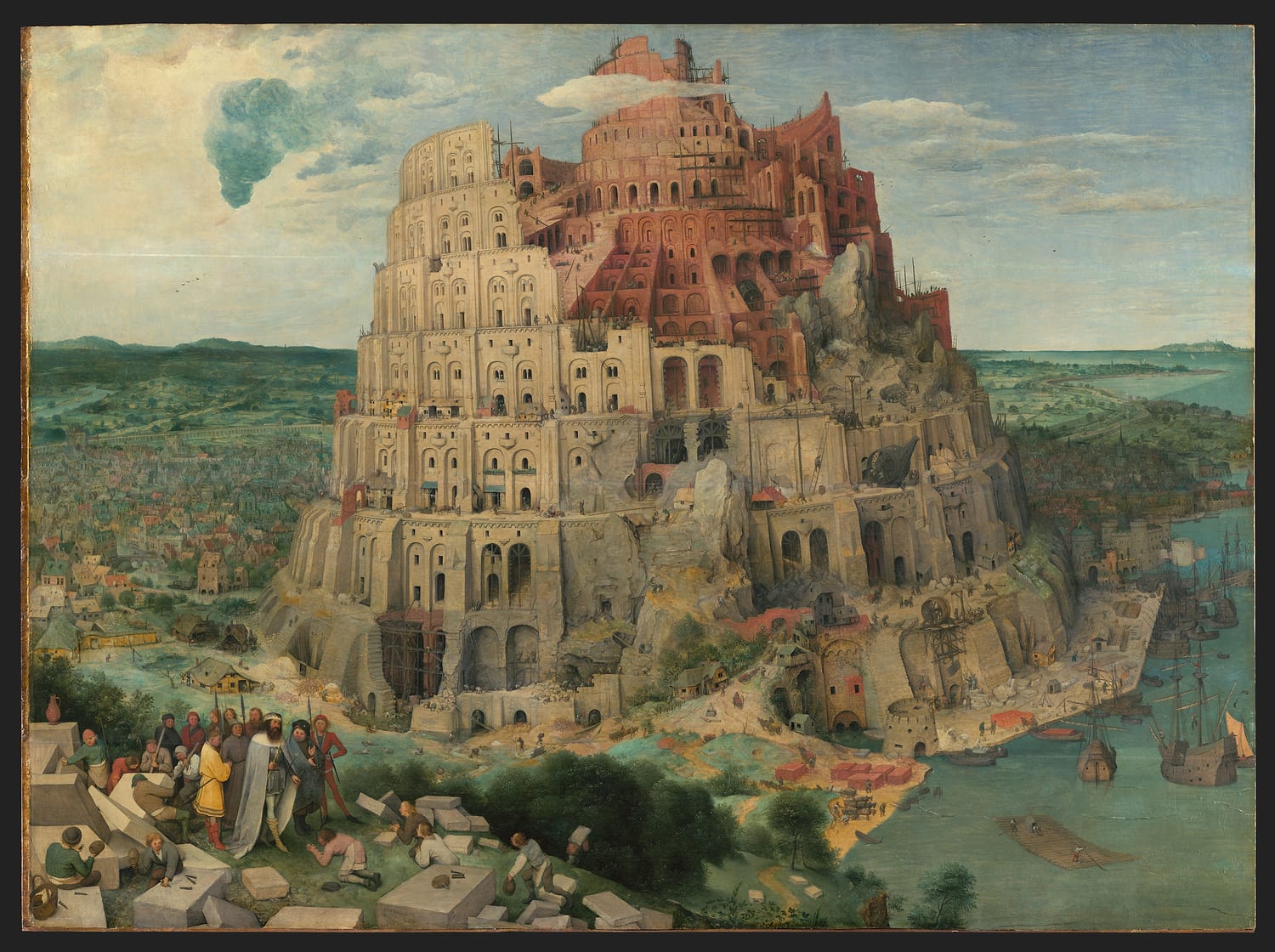 tower-of-babel.jpg | The Tower of Babel Pieter Bruegel the Elder 1563 Source ↗ | Public domain | Highlights image card | Bruegel’s Babel: one of the primeval histories where the Torah’s sources show their seams. |
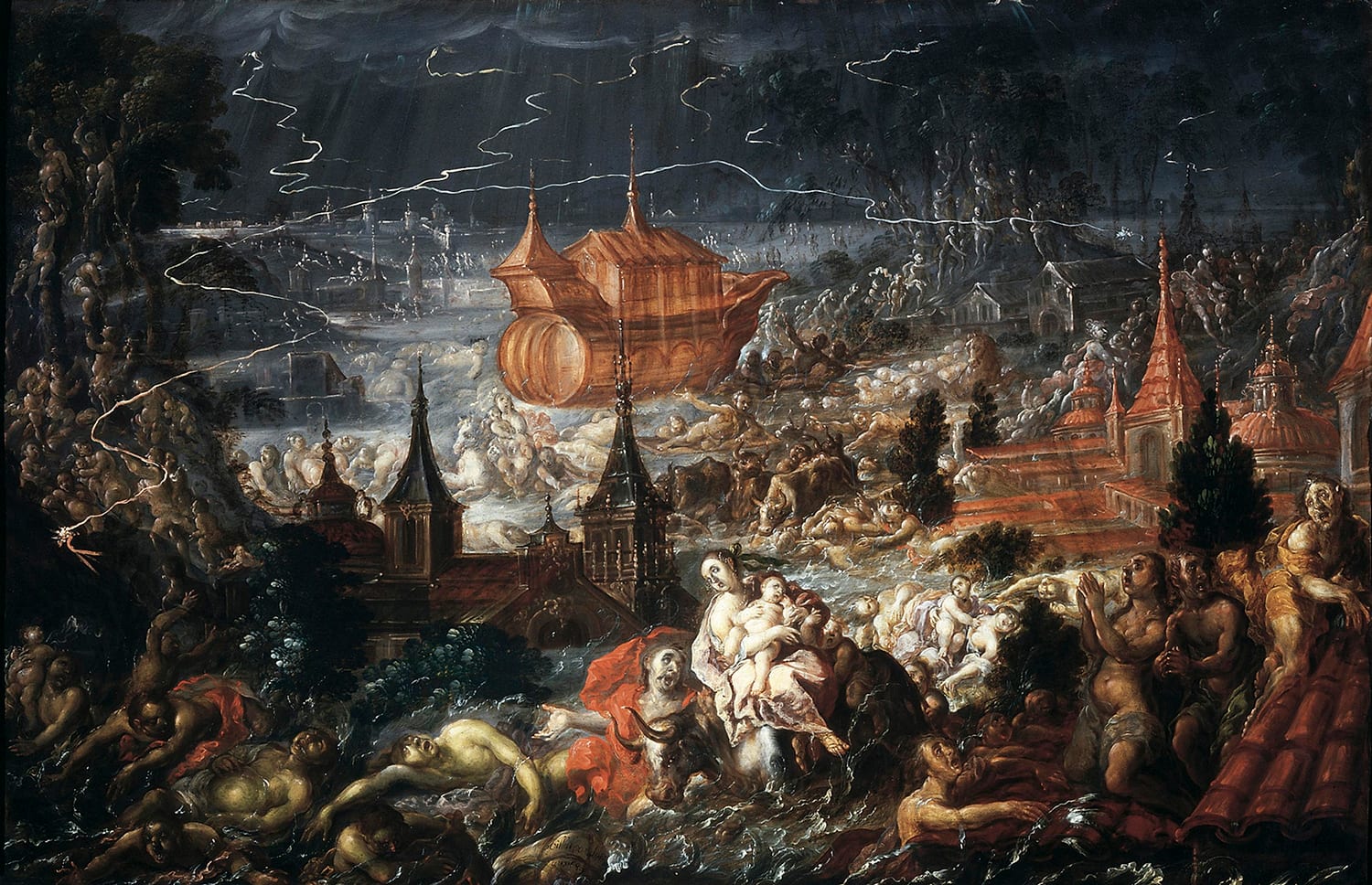 flood.jpg | The Deluge (El Diluvio) Cristóbal de Villalpando 1689 Source ↗ | Public domain | Highlights image card | The Flood: the story Genesis tells twice, woven together from two different sources. |
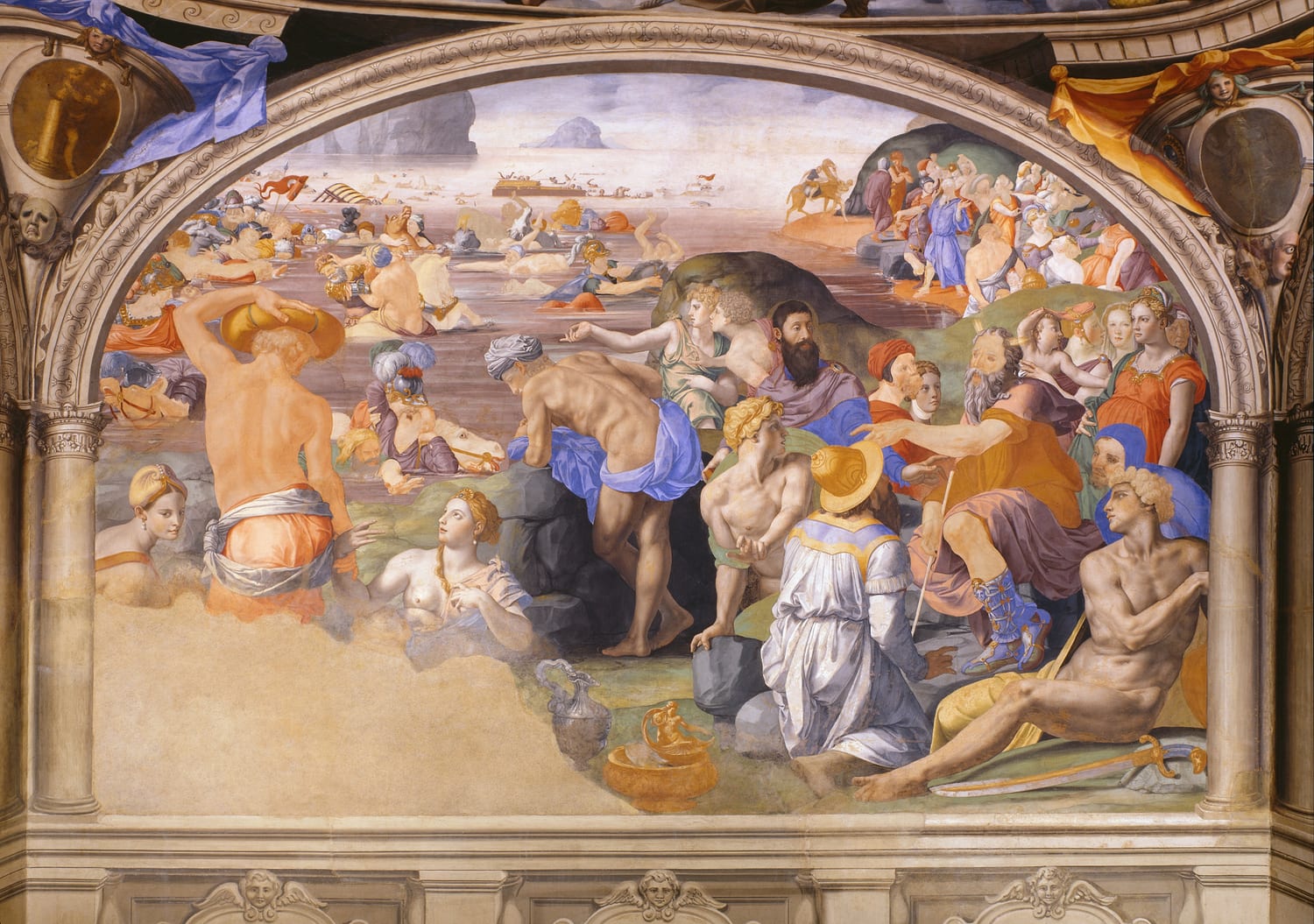 red-sea.jpg | The Crossing of the Red Sea Bronzino c. 1542 Source ↗ | Public domain | “Prepare to Rethink” backdrop | Bronzino’s Red Sea: the Exodus event whose history the course reopens. |
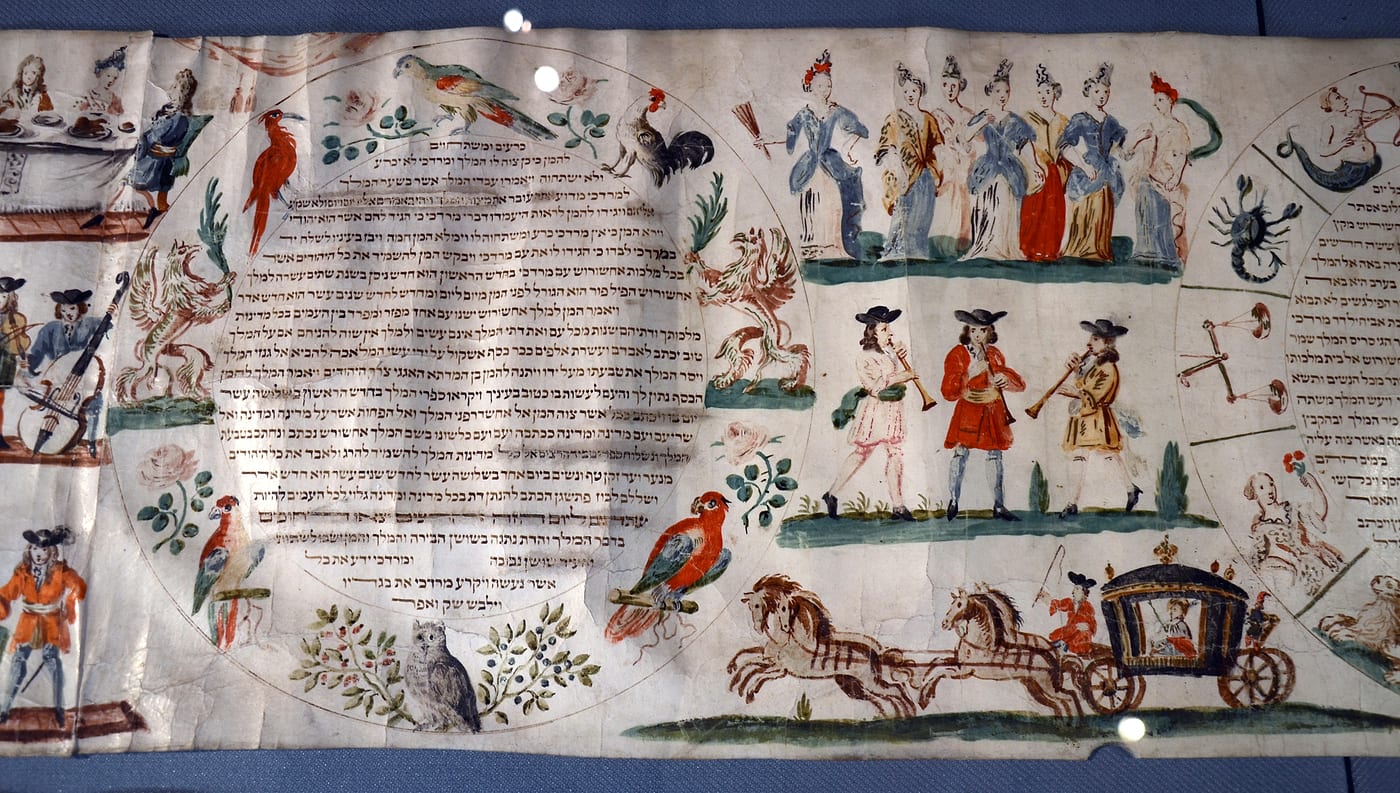 esther-scroll.jpg | A megillah (scroll of Esther) Photo: Vassil Photographed 2012 Source ↗ | CC0 | Schedule backdrop | A scroll of Esther: one of the Bible’s works of comedy and satire. |
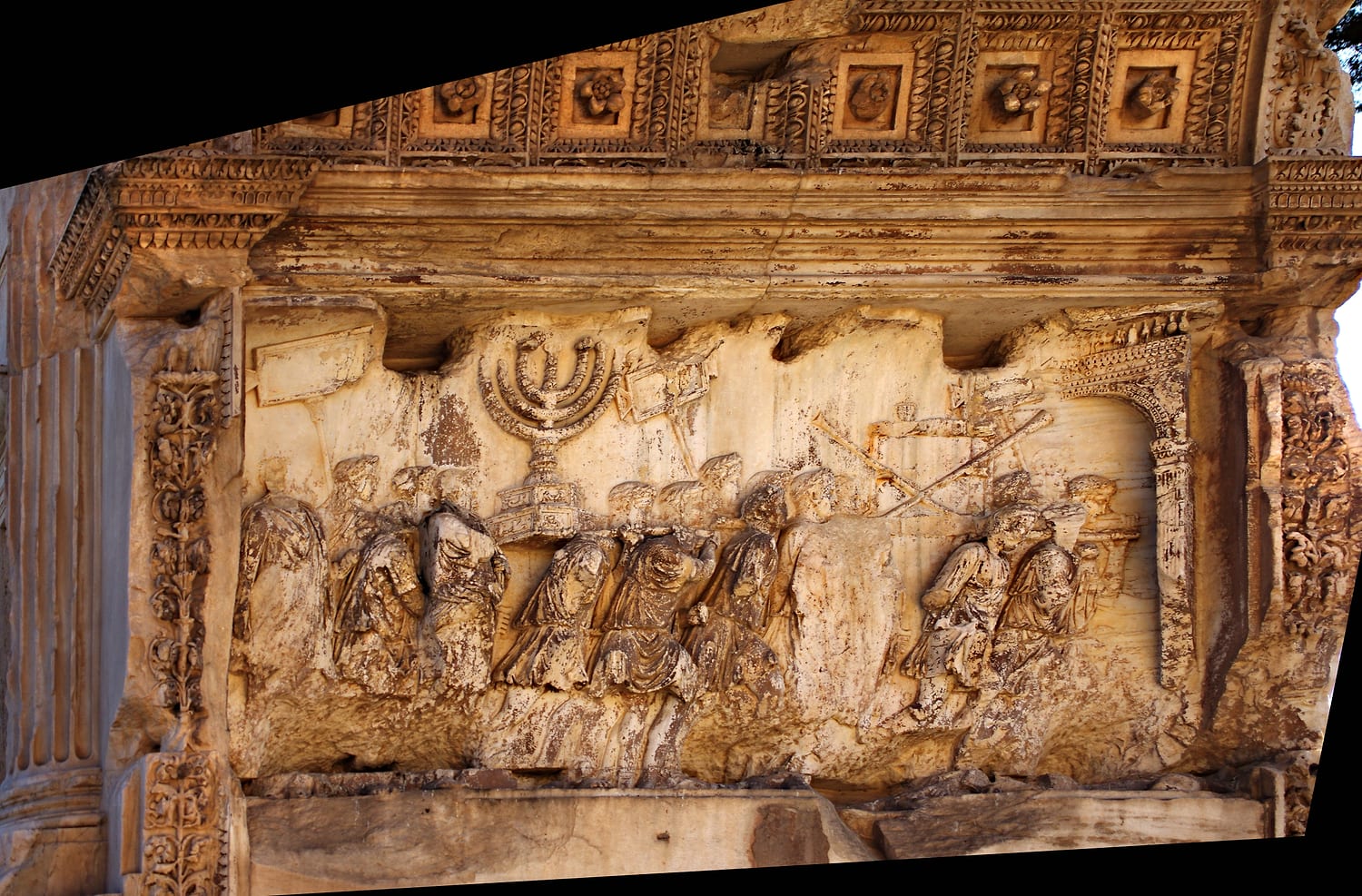 menorah.jpg | The menorah relief, Arch of Titus, Rome Photo: Paolo Villa Relief c. 81 CE (photographed 2022) Source ↗ | CC BY-SA 4.0 | Bonuses backdrop | The temple menorah carried in triumph on the Arch of Titus, after the Bible’s world had ended. |
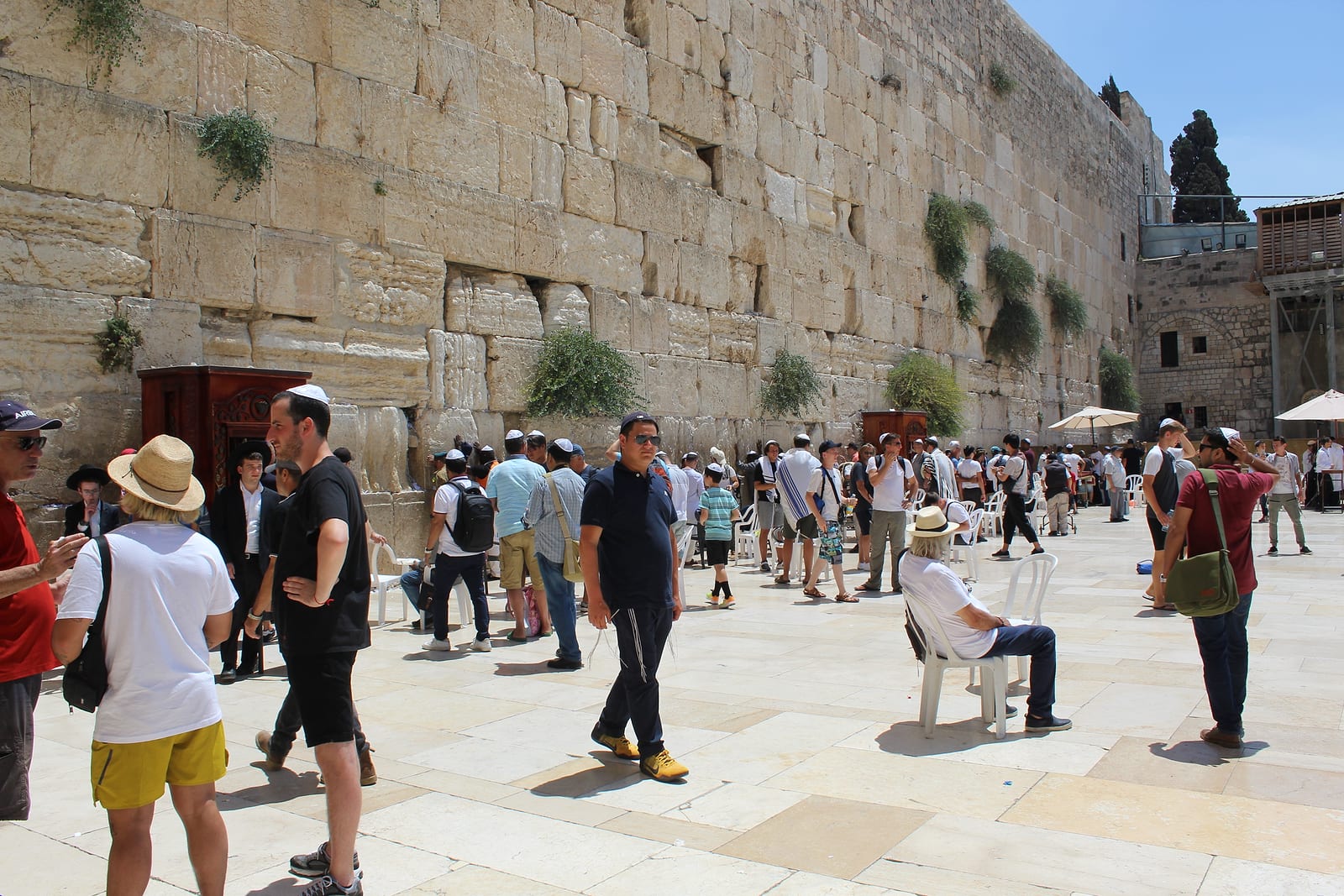 western-wall.jpg | The Western Wall, Jerusalem Photo: Mohammad Shad Siddiqui Photographed 2018 Source ↗ | CC BY-SA 4.0 | FAQ backdrop | The Western Wall, the living center of Jewish devotion to the Scriptures. |
Public-domain works are reproduced freely. CC BY / CC BY-SA images are credited to their photographers as required; follow each Source link for the full license text.