
Theme I
A World Full of Gods
The religious culture of the Hellenistic Mediterranean: Greeks, Romans, and the Jewish communities living among them. The crowded marketplace of gods, cults, and philosophies into which the first Christians were born.
How a Jewish movement became the religion of an empire.
Where Christianity Came From
Jesus proclaimed that God was about to redeem the world. Paul believed that all Israel would be saved. The first followers were Jews who expected the end within their own lifetimes. None of them imagined founding a new religion, let alone the official faith of the empire that had executed their teacher.
There was never just one Christianity. In its first centuries the movement splintered into dozens of rival communities (Marcionites, Valentinians, Montanists, martyrs and ascetics), each convinced it held the true gospel. The “orthodoxy” we inherited was not the starting point. It was the version that won.
This course traces how those changes happened: how a small Jewish sect navigated a Mediterranean world full of gods, why so many early Christian groups disagreed so violently, and how, by the fifth century, one Christianity came to teach that most of humanity was condemned, the Jews were damned, and only one God was allowed.
Format
On-demand video
Lectures
20 sessions
Access
Lifetime, watch anytime
Instructor
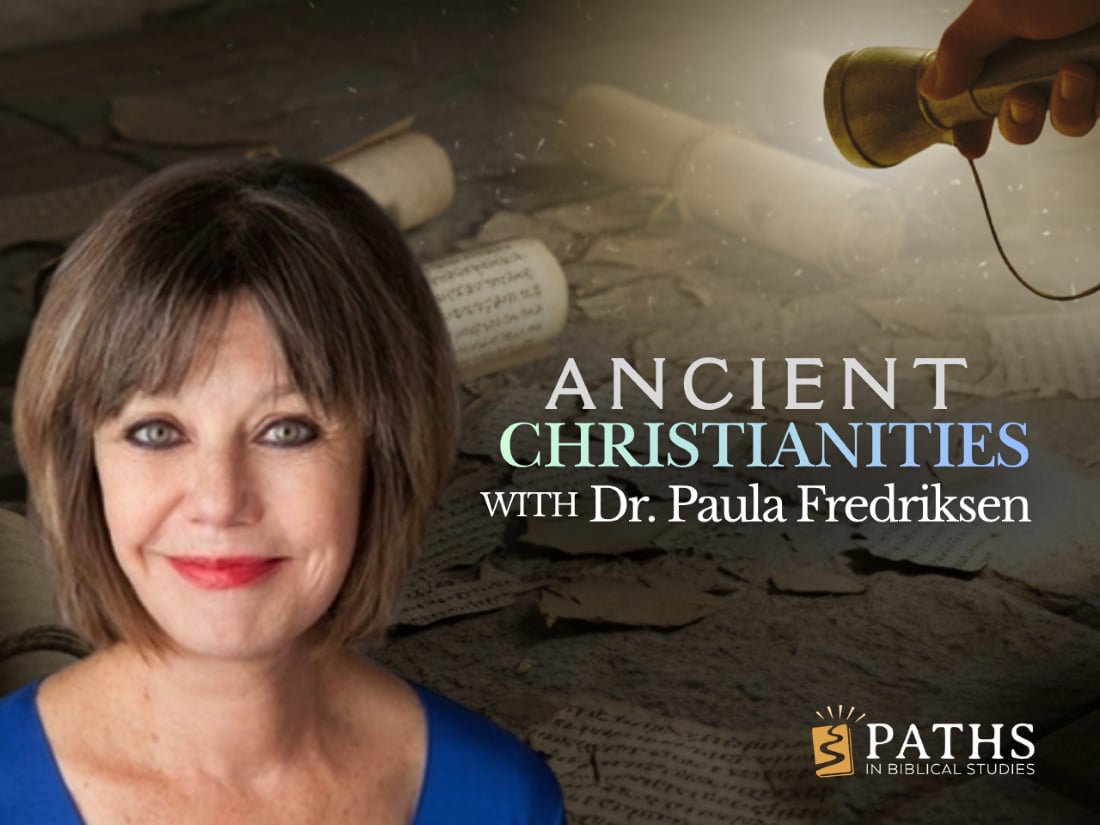
Paula Fredriksen
Specialty
Early Christianity & Late Antiquity
Course Themes
From a Galilean preacher to the fall of Rome, these are the worlds the church passed through on its way from sect to empire.
The religious culture of the Hellenistic Mediterranean: Greeks, Romans, and the Jewish communities living among them. The crowded marketplace of gods, cults, and philosophies into which the first Christians were born.
The historical Jesus, the movement that formed around him, and Paul, the apostle to the pagans, who carried the message beyond Israel and reshaped what it meant to belong.
Marcion and the invention of the New Testament, Valentinus and the Gnostics, Justin and Irenaeus drawing the lines of heresy. The fierce contest over which Christianity was the true one.
Charisma, prophecy, and martyrdom give way to power. Constantine’s conversion, the Council of Nicaea, and Origen’s fusion of scripture with Greek philosophy remake the faith into an imperial religion.
Augustine’s City of God, divine justice, original sin, and the meaning of history, written as the Western empire collapsed. How a Christianity built for an empire survived the empire’s end.
 Paula Fredriksen · 2026
 Aurelio Professor of Scripture, emerita · Boston University
Paula Fredriksen, a fellow of the American Academy of Arts and Sciences, is Aurelio Professor of Scripture emerita at Boston University. In 2009, she became a member of the Department of Comparative Religions at the Hebrew University of Jerusalem, which awarded her an honorary doctorate in 2018. An historian of ancient Christianity, she also writes on pagan-Jewish-Christian relations in the Roman Empire. Among her recent publications are Paul: The Pagans’ Apostle (Yale 2017) and When Christians Were Jews (Yale 2018). Her most recent study, Ancient Christianities: The First Five Hundred Years, has just appeared from Princeton University Press (2024).
What This Course Offers
Paula Fredriksen brings the gods, heretics, martyrs, and emperors of the first five centuries into a single sweeping story, for anyone who has ever wondered how Christianity actually became Christianity.
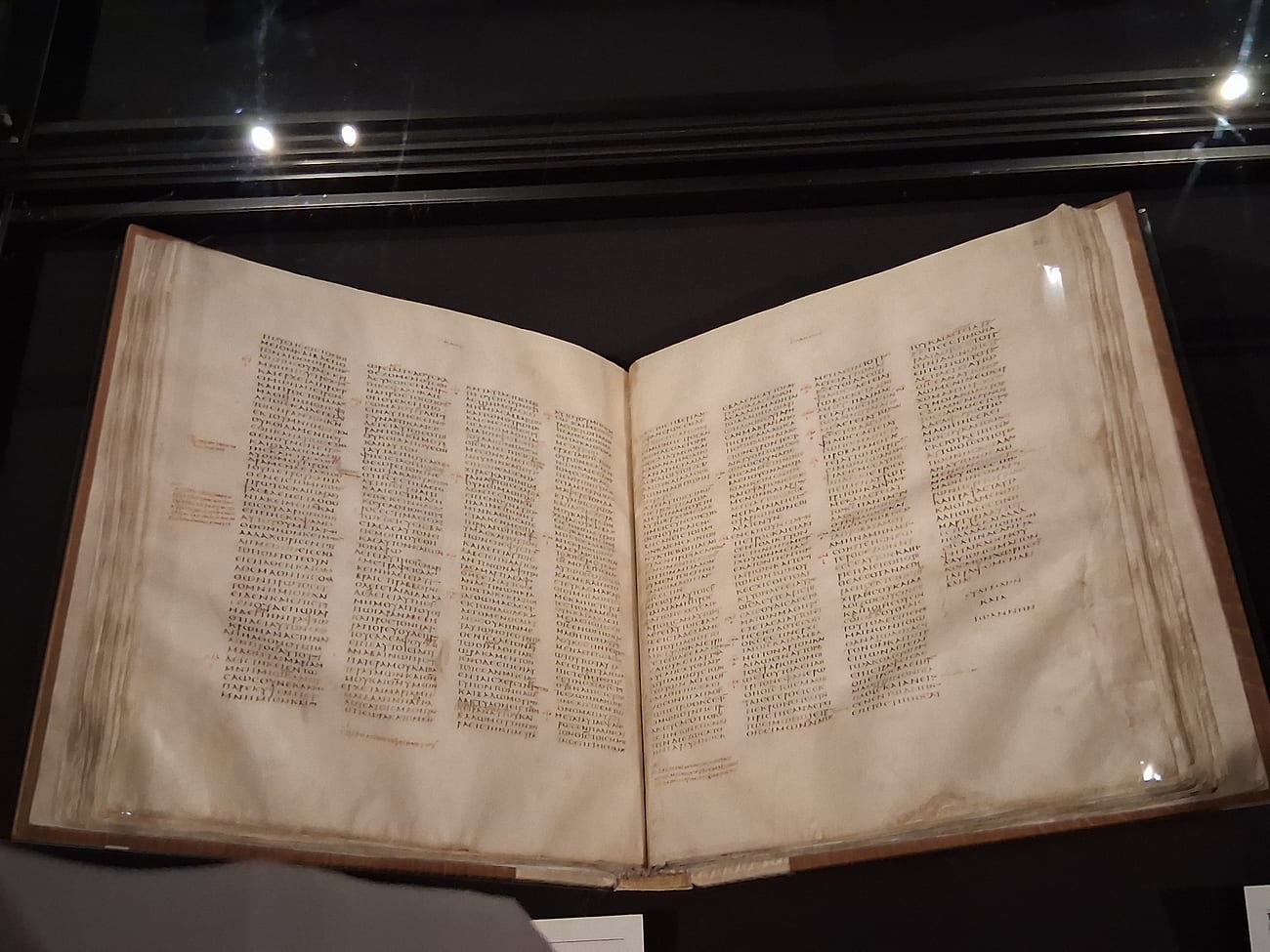
Paul and the gospels, Marcion and the Gnostics, Justin, Origen, and Augustine: the actual texts the early Christians wrote, argued over, and condemned.
Paula Fredriksen has spent a career inside late antiquity. You get a specialist’s command of the period, not a survey skimmed from secondary sources.
From the arena of the martyrs to the throne of Constantine.
All twenty lectures available on demand. Lifetime access means you can absorb, revisit, and rewatch the whole arc as often as you like.
Rome and Carthage, Alexandria and Nicaea: the cities and empires where Christianity was forged.
No prior background in theology or ancient history required. Whether you’re a believer, a skeptic, or simply curious, the story is told from the ground up.
Common Assumption
Early Christianity was a single, unified faith.
In fact
For its first centuries there were many Christianities (Marcionite, Valentinian, Montanist, and more), each certain it held the truth. Orthodoxy was the outcome of a long contest, not the starting point.
Common Assumption
Christianity swiftly swept paganism aside.
In fact
The Roman world stayed full of gods for centuries. Conversion was slow, uneven, and bitterly contested, and the old cults outlived far more emperors than we tend to remember.
Common Assumption
The New Testament was settled from the beginning.
In fact
It was Marcion, later branded a heretic, who first proposed a fixed canon. Which books counted as scripture was argued over for generations before the list we know was agreed.
Common Assumption
Constantine made Christianity the religion of Rome.
In fact
Constantine legalized and favored the church, but Christianity became the empire’s official religion only decades later, under Theodosius in 380. His role is one of the most overstated stories in history.
All twenty lectures are available to watch the moment you enroll. Click any lecture to read its description.
Gods and Greeks. The religious world Alexander left behind: the cults, gods, and philosophies of the Hellenistic Mediterranean, and the pluralism that defined the early Roman Empire.
Hellenistic Judaism. The Jewish communities living within the Greek world: how they read scripture, kept their identity, and engaged the culture around them.
From Jesus to Christ. The historical Jesus of Nazareth and the faith that grew up around him: how a Galilean preacher became the risen Christ of his followers.
Paul, the Pagans’ Apostle. Paul’s mission to non-Jews and the message that carried the movement beyond Israel, and reshaped what it meant to belong to it.
Marcion. The high God, the lesser creator, and the radical canon that forced the church to decide, for the first time, which books were scripture.
The Gnostics. Valentinus, Ptolemy, and the sophisticated Gnostic systems: knowledge, the fallen cosmos, and the god of this age.
Justin Martyr. How Christians built an identity over and against Judaism, claiming Israel’s scriptures while disowning Israel itself.
Irenaeus and Heresy. Apostolic succession, the rule of faith, and the invention of orthodoxy as a weapon against rival Christianities.
Prophecy. The spirit-filled, apocalyptic edge of early Christianity: the New Prophecy of Montanus and the slow taming of charisma by institution.
Martyrdom. Death in the arena as witness and triumph: how martyr stories like Perpetua’s forged Christian identity under persecution.
Ascetic Enthusiasms. Fasting, celibacy, and the desert: why renouncing the body became one of the highest forms of Christian devotion.
Christ’s Bride and Body. Theologies of flesh, marriage, and the church as the body of Christ: embodiment and its meanings in early Christianity.
Constantine. The vision, the Milvian Bridge, and the conversion that changed everything, and the theological consequences of a Christian emperor.
Imperial Christianity. The Arian controversy and the Council of Nicaea: how the empire’s church defined the nature of God by vote and decree.
Origen I. The greatest mind of early Christianity: Origen’s fusion of scripture with Greek philosophy into a vast vision of God and the cosmos.
Origen II. Free will, the soul’s journey, and the limits of revelation: Origen’s boldest speculations, and why the church both used and condemned them.
The City of God I. Augustine on divine justice, human freedom, and original sin: the theology of history that would define the Latin West.
The City of God II. Augustine on the Jews, the institutional church, and the two cities, earthly and divine, that share a single, fraught history.
Flesh, History, and Redemption. Augustine’s eschatology: the resurrection of the body, the end of history, and the shape of Christian hope.
The End of Ancient Christianity. The collapse of the Western empire and the survival of the church: how a faith built for Rome outlived Rome itself.
A full bonus lecture on how anti-Jewish theology developed within early Christianity, through scriptural interpretation and the rise of ecclesiastical authority.
Four quizzes with answer guides plus PDF lesson guides for every session, to test your understanding and anchor the material as you go.
MP3 downloads and full transcripts of every lecture: listen on the go, search the text, or follow along if English is not your first language.
$1 from every registration is donated to charity: water, bringing clean water to people in need.
Enjoy the course at a fraction of the cost
$1,499 Value 20 university-level lectures by a leading historian (Princeton University Press). Comparable university seminars run $2,000 to $4,000.
$295
Start today for $24.58*
Included in Your Purchase: Lifetime Access to This University-Level Course With:
*Paid monthly for 12 months
Enroll Now Single Course
Access this Course PLUS Every Course in Our Vault
(250+ Hours of Biblical Learning!)
then special rate $49.95/month
Paula Fredriksen presents twenty fifty-minute lectures, plus a bonus lesson, tracing Christianity from a Jewish movement to the religion of the Roman Empire. All are available on demand, so you can watch at your own pace.
Once you have purchased the course, you will receive instructions by email to log in to our online course platform, ThriveCart Learn. Once logged in, you will find all twenty lectures available to watch on demand. If you are a member of Biblical Studies Academy (BSA), your access will also be available inside the community.
Yes. All twenty lectures are yours with lifetime access. You can watch them on any device, on your own schedule, and return to them as often as you like.
No prior knowledge required. Paula introduces the texts, the people, and the controversies as the course unfolds. Whether you’re coming in fresh or already have a background in religious history, you’ll find the course genuinely rewarding.
Yes. All lectures include closed captions, and full transcripts are included with the course, so you can follow along in text or search for specific passages.
We accept PayPal and all major credit cards.
Absolutely. If you don’t love the course, send us an email at support@bartehrman.com within 30 days of purchase and we will refund every penny.
Comparable university courses on early Christianity routinely run into the thousands of dollars. We don’t offer college credit, but you get the same depth and rigor at a fraction of the cost, graduate-level scholarship made accessible.