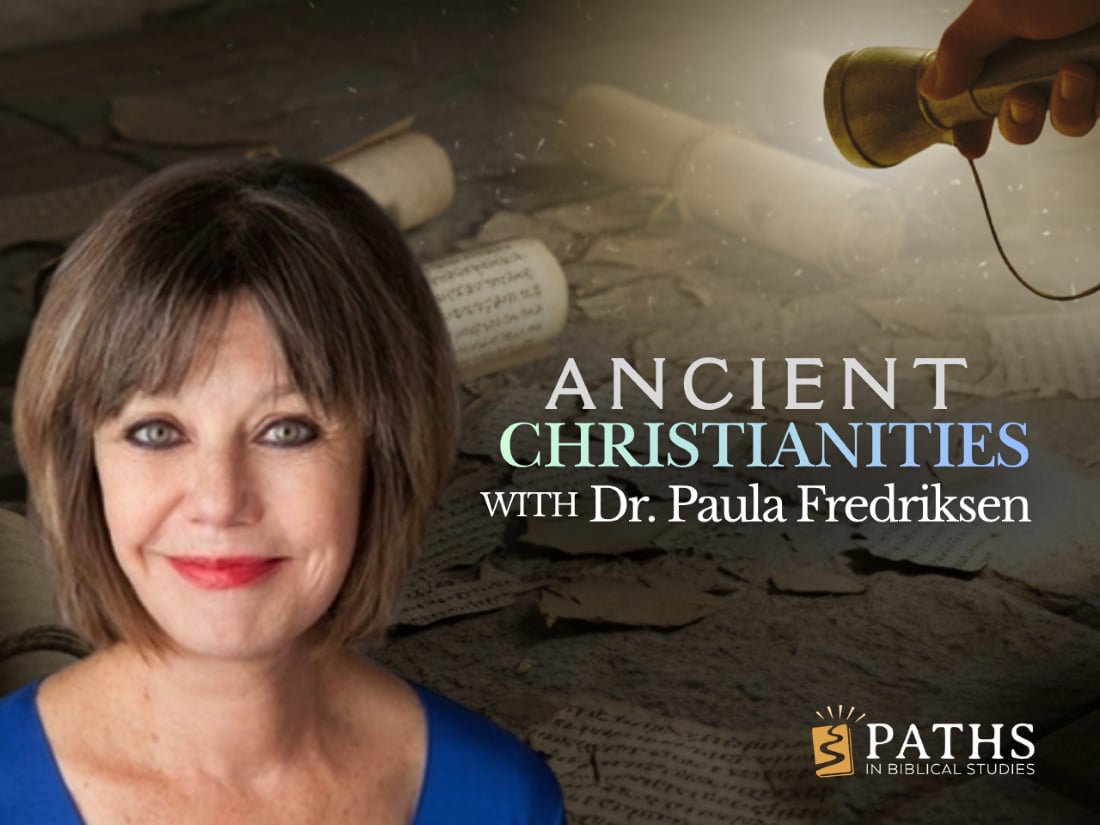
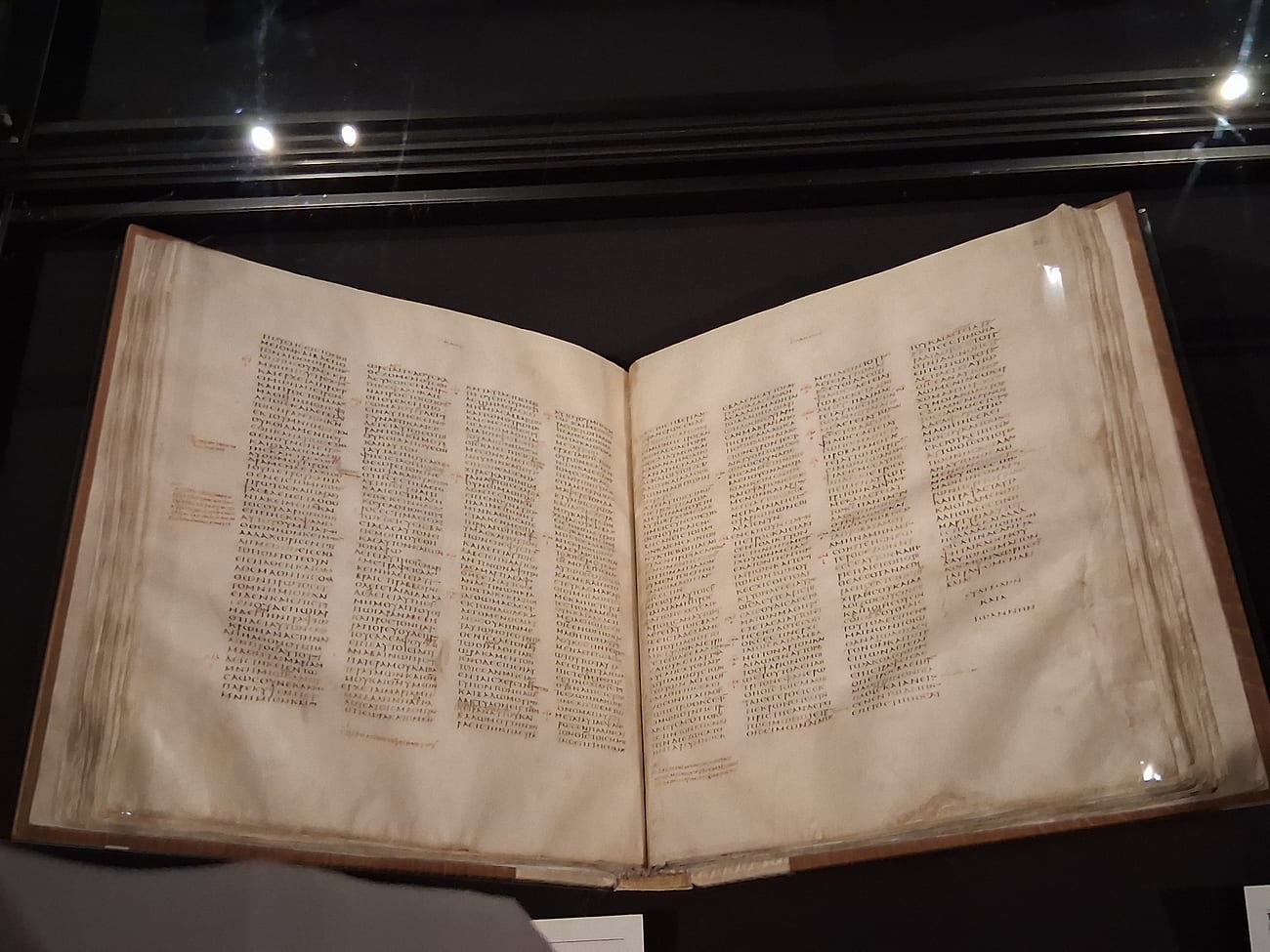
All twenty lectures are available to watch the moment you enroll. Click any lecture to read its description.
01 Mediterranean Culture: Gods and Greeks Lesson 1 · A World Full of Gods
Gods and Greeks. The religious world Alexander left behind: the cults, gods, and philosophies of the Hellenistic Mediterranean, and the pluralism that defined the early Roman Empire.
02 Mediterranean Culture: Hellenistic Judaism Lesson 2 · A World Full of Gods
Hellenistic Judaism. The Jewish communities living within the Greek world: how they read scripture, kept their identity, and engaged the culture around them.
03 Beginnings: From Jesus to Christ Lesson 3 · From Jesus to Christ
From Jesus to Christ. The historical Jesus of Nazareth and the faith that grew up around him: how a Galilean preacher became the risen Christ of his followers.
04 Beginnings: Paul, the Pagans’ Apostle Lesson 4 · From Jesus to Christ
Paul, the Pagans’ Apostle. Paul’s mission to non-Jews and the message that carried the movement beyond Israel, and reshaped what it meant to belong to it.
05 Marcion and the Invention of the New Testament Lesson 5 · Rival Christianities
Marcion. The high God, the lesser creator, and the radical canon that forced the church to decide, for the first time, which books were scripture.
06 Valentinus, Ptolemy, and the God of this Age Lesson 6 · Rival Christianities
The Gnostics. Valentinus, Ptolemy, and the sophisticated Gnostic systems: knowledge, the fallen cosmos, and the god of this age.
07 Jews and Heretics: Justin Martyr and Israel Lesson 7 · Rival Christianities
Justin Martyr. How Christians built an identity over and against Judaism, claiming Israel’s scriptures while disowning Israel itself.
08 Jews and Heretics: Irenaeus and Heresy Lesson 8 · Rival Christianities
Irenaeus and Heresy. Apostolic succession, the rule of faith, and the invention of orthodoxy as a weapon against rival Christianities.
09 Charisma and Christianity: Prophecy Lesson 9 · Charisma & the Body
Prophecy. The spirit-filled, apocalyptic edge of early Christianity: the New Prophecy of Montanus and the slow taming of charisma by institution.
10 Charisma and Christianity: Martyrdom Lesson 10 · Charisma & the Body
Martyrdom. Death in the arena as witness and triumph: how martyr stories like Perpetua’s forged Christian identity under persecution.
11 The Christian Body: Ascetic Enthusiasms Lesson 11 · Charisma & the Body
Ascetic Enthusiasms. Fasting, celibacy, and the desert: why renouncing the body became one of the highest forms of Christian devotion.
12 The Christian Body: Christ’s Bride and Body Lesson 12 · Charisma & the Body
Christ’s Bride and Body. Theologies of flesh, marriage, and the church as the body of Christ: embodiment and its meanings in early Christianity.
13 Christ and Empire: Constantine Lesson 13 · The Empire Converts
Constantine. The vision, the Milvian Bridge, and the conversion that changed everything, and the theological consequences of a Christian emperor.
14 Christ and Empire: Imperial Christianity Lesson 14 · The Empire Converts
Imperial Christianity. The Arian controversy and the Council of Nicaea: how the empire’s church defined the nature of God by vote and decree.
15 Christian Paideia: Origen, God and the Universe Lesson 15 · The Empire Converts
Origen I. The greatest mind of early Christianity: Origen’s fusion of scripture with Greek philosophy into a vast vision of God and the cosmos.
16 Christian Paideia: Origen, Free Will and Revelation Lesson 16 · The Empire Converts
Origen II. Free will, the soul’s journey, and the limits of revelation: Origen’s boldest speculations, and why the church both used and condemned them.
17 Augustine, The City of God: Divine Justice and Human Freedom Lesson 17 · Augustine & the Fall of Rome
The City of God I. Augustine on divine justice, human freedom, and original sin: the theology of history that would define the Latin West.
18 Augustine, The City of God: Israel and Empire Lesson 18 · Augustine & the Fall of Rome
The City of God II. Augustine on the Jews, the institutional church, and the two cities, earthly and divine, that share a single, fraught history.
19 Endings: Augustine, Flesh, History, and Redemption Lesson 19 · Augustine & the Fall of Rome
Flesh, History, and Redemption. Augustine’s eschatology: the resurrection of the body, the end of history, and the shape of Christian hope.
20 The End of Ancient Christianity Lesson 20 · Augustine & the Fall of Rome
The End of Ancient Christianity. The collapse of the Western empire and the survival of the church: how a faith built for Rome outlived Rome itself.