
Theme I
The Spirits of the Bible
What is a demon, and what is a ghost? Where do these ideas come from, and what does it mean to study the supernatural of the Bible in an academic setting?
October Special pricing ends on October 31. Last chance to save $197.50.
Satan, spirits, and the supernatural world the Bible actually believed in.
The Mysteries of Evil
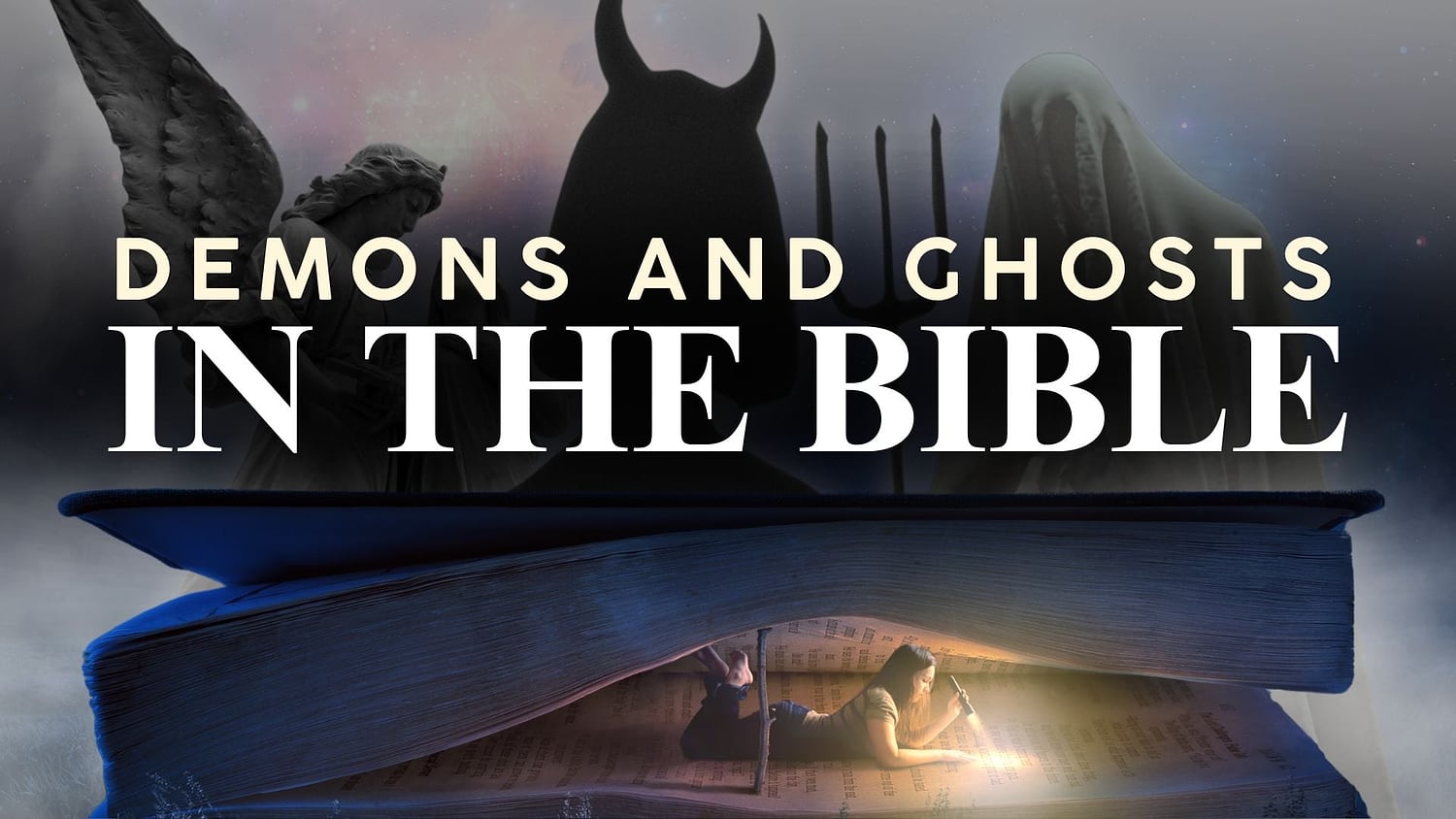
Demons, ghosts, exorcisms. What did ancient Jews and Christians really believe about the supernatural? The Bible is full of spirits, from Satan and demonic possession to ghostly encounters and divine prophecy, and almost none of it works the way later tradition assumes.
Where did the ideas of demons and ghosts come from? How did they evolve in Jewish and Christian thought? This course traces the supernatural beings that shaped early religious imagination, from the fallen angels behind the origin of evil to the chief demon we now call the devil.
From the exorcisms in the gospels to the ghost of the prophet Samuel, Travis Proctor follows how ancient people understood their encounters with spirits, and how those beliefs transformed over time. The result is stranger, older, and far more human than the story we inherited.
Format
On-demand video
Lectures
26 · plus Q&A each
Access
Lifetime, watch anytime
Instructor
Travis Proctor
Specialty
Demons & Early Christianity
Six Themes
Twenty-six lectures gathered into six themes: the origins of the demonic, the rise of Satan, the demons of ancient Judaism, the spirits of the gospels, and the long history of biblical ghosts.
What is a demon, and what is a ghost? Where do these ideas come from, and what does it mean to study the supernatural of the Bible in an academic setting?
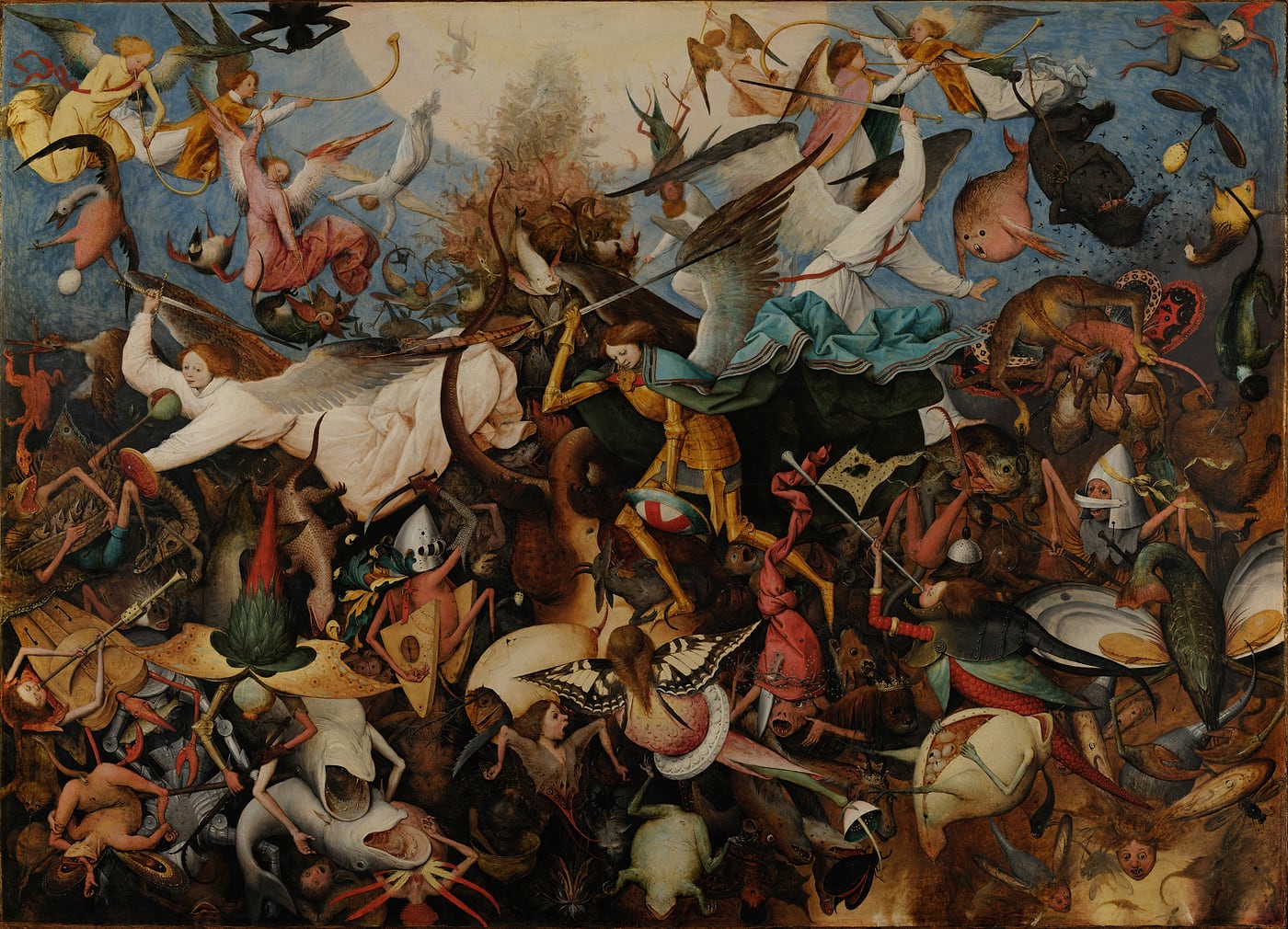
Before there were demons, there were fallen angels: heavenly beings who descended to earth, revealed forbidden knowledge, and, for ancient writers, explained the origin of evil itself.
How the satan went from a prosecutor in God’s heavenly court to the chief demon, the devil: Satan in early Christianity, his abode in hell, and his end-times agent the antichrist.
Azazel, Lilith, and the malevolent spirits of the ancient Near East, and the remarkably rich demonology, and exorcism, preserved in the Dead Sea Scrolls.
Possession and exorcism in the New Testament, demons and disease, demons and magic, spirits of divination, and the “powers and authorities” of Paul: the demonic world Jesus moved through.
Ancient ghost stories, the household spirits of the Hebrew Bible, the ghost of Samuel raised at Endor, the Holy Ghost, and the risen Jesus his own followers mistook for a spirit.
 Travis Proctor · 2026
 Scholar of Early Christianity · Ph.D., UNC-Chapel Hill
A first-generation college graduate and scholar of the Bible and early Christianity, Travis Proctor received his Ph.D. in Religious Studies from UNC-Chapel Hill, specializing in ancient Mediterranean religions. His teaching and research draw from interdisciplinary fields like religious studies, environmental history, animal studies, space and material culture, and ritual studies. His first book, Demonic Bodies and the Dark Ecologies of Early Christian Culture (Oxford University Press), explored how early Christian theorizations of demonic bodies influenced ancient understandings of cosmic “ecosystems,” and how such historical perspectives may inform contemporary environmental ethics.
His work has appeared in academic journals such as the Journal of the American Academy of Religion, Journal of Early Christian Studies, Harvard Theological Review, and the Journal of Ecclesiastical History, as well as public venues including Bible Odyssey, Religion for Breakfast, Religion Dispatches, The Bart Ehrman Blog, and the “Tell Me Something I Don’t Know” podcast. He lives in Ohio and enjoys hiking outdoors, a good round of disc golf, and watching Kansas City Chiefs football (even before Taylor Swift!).
What This Course Offers
Travis Proctor brings the depth of a university seminar to the strangest corners of the Bible, the demons, the spirits, and the dead, without the cost or the exam pressure.
Fallen angels, Satan, hell, the antichrist, possession, exorcism, magic, ghosts, and the holy spirit, traced from their ancient roots to the New Testament.
Travis Proctor wrote the Oxford University Press study of demons in early Christianity. You get the subject from a scholar who works in it.
Not just what the Bible says, but the ancient Near Eastern and Mediterranean roots beneath every spirit in it.
All twenty-six lectures and their Q&A sessions on demand, the moment you enroll. Lifetime access to revisit and rewatch.
The Witch of Endor raising Samuel, the household teraphim, and the risen Jesus mistaken for a spirit.
Built for everyone, from the inquisitive to the experienced scholar. No prior study needed to follow the evidence.
Common Assumption
Satan is the devil from the very first page of the Bible.
In fact
In the oldest texts “the satan” is a prosecutor in God’s heavenly court, not the cosmic enemy. The devil we picture was assembled across centuries of Jewish and Christian thought.
Common Assumption
The serpent in Eden was obviously Satan.
In fact
The story of Adam and Eve never names Satan, and many scholars doubt the connection was there originally. Reading the devil back into Genesis is itself a later development.
Common Assumption
Hell, ruled by Satan, comes straight from scripture.
In fact
The fiery hell with Satan presiding is a late composite. Its pieces were gathered slowly, and the Bible’s own picture of the afterlife is far less tidy than the tradition.
Common Assumption
Ghosts are a modern superstition, not a biblical idea.
In fact
The Hebrew Bible has the ghost of Samuel and household spirits of the dead; the gospels have a risen Jesus his followers take for a ghost. The dead were very much present in the biblical world.
All twenty-six lectures and their Q&A sessions are available to watch the moment you enroll. Click any lecture to read its description.
What is a demon, and a ghost? Where do these ideas come from, and where do they appear in the Bible? An introduction to the course, its key terms, and what it means to study these spirits academically.
Before there were demons, there were fallen angels: semi-divine beings who betrayed their stations and descended to earth. The earliest biblical and apocryphal accounts of how evil entered the world.
Among the deeds of the fallen angels was the revelation of secret, forbidden knowledge to humanity. How ancient Jewish and Christian texts told that story, and why it mattered.
Paul tells the Corinthians that women should veil “because of the angels.” What did he mean? The angelic traditions behind the phrase, and the social work fallen angels did in the early Jesus movement.
Paul’s later interpreters read his angels through the fallen angels of 1 Enoch. How those apocryphal ideas shaped the social formation of early Christianity.
The most famous fallen angel of all makes surprisingly few appearances in the earliest texts. Where the idea of a chief demon emerged, and the famous passages, like Eden, where Satan’s presence has been questioned.
In ancient Jewish thought Satan begins as the adversary in God’s heavenly court, then becomes the evil chief demon we know as the devil. When, and why, that transformation took place.
How Satan appears in the earliest writings of the Jesus movement: the temptation in the desert, the possession of Judas, and Paul’s “angel of light.”
A double lecture on how Satan functioned socially in early Christian writing, as authors mapping out orthodoxy branded their opponents as Satan-inspired, and what that reveals about the period.
The fiery hellscape that awaits the unrighteous. The ancient Jewish and early Christian origins of hell, Satan’s role in administering it, and the social functions it served.
The end-times figure who opposes God’s people and carries out Satan’s will. The origins of the antichrist idea, its appearance in early Christian literature, and its link to Satan.
Like their neighbors, ancient Jews believed in ambivalent and malevolent spirits. The demonic figures of the ancient Near East and their appearances, in many guises, in the Hebrew Bible.
Some of the richest ancient ideas about demons and possession come from the Dead Sea Scrolls. Their historical context, their apocalyptic outlook, and the part demons played in it.
Like other Jews of their time, Jesus’ earliest followers believed in demonic spirits that caused disease and possessed people. The demon narratives of the gospels, and their Jewish roots.
The social significance of the demonic. The historical context of Jesus’ exorcisms, and how they fit his apocalyptic mission and his opposition to Roman occupation.
Ancient Jews and Christians believed prophetic spirits could possess people. How they told a divine possessing spirit from a demonic one, and how early Christians cast rival divination as demonic.
Many ancient cultures held that demons caused disease. The roots of that belief, its influence on New Testament demonology, and the competing ancient explanations, such as the Hippocratic.
A double lecture on demons as magical assistants in the ancient Mediterranean: how they appear in magical spells, and how magical formulas were used to thwart demonic attack.
The “powers and authorities” of the Pauline letters and their apparently evil forces in the cosmos. The roots of the terminology, its apocalyptic associations, and its place in early demonology.
What is a ghost, and where does the idea come from? The ancient roots of our modern concept, the surprising consistency of belief, and the classic ancient ghost stories.
The teraphim, household gods thought to be images of deceased ancestors. How these revered family ghosts likely figured in ancient worship, and how biblical authors later condemned them.
One of the Hebrew Bible’s most haunting scenes: King Saul has a woman at Endor conjure the dead prophet Samuel. Its roots in ancient necromancy, and its long interpretive afterlife.
The holy spirit said to inhabit Jesus and inaugurate his mission, later the foundation of the doctrine of the Trinity, set within the wider ancient world of divine spirits and ghosts.
At the center of Christian tradition is the risen Jesus, whom his own followers sometimes mistake for a spirit or fail to recognize. Ancient traditions of revived spirits, and their role in the resurrection stories.
A 15-minute recorded Q&A paired with each of the twenty-six lectures, where students put their questions to Dr. Proctor.
Short, self-paced quizzes spread across the course, roughly one every six lectures, to review the key concepts as you go.
Downloadable lesson guides with recommended readings and reflection questions for going deeper on your own or with a study group.
MP3 downloads of every lecture. Listen on your commute, during a walk, or whenever you’re away from a screen.
$1 from every registration is donated to charity: water, bringing clean water to people in need.
Enjoy the course at a fraction of the cost
October Special Price: 50% Off Through 10/31
Regular Price $395 October Special $197.50 Ends October 31
$395
Use code MM50 at checkout
Start today for $16.46*
Start today for $32.92*
Included in Your Purchase: Lifetime access to this 26-lesson, university-level course, with:
*Paid monthly for 12 months
Enroll Now Single Course
Access this Course PLUS Every Course in Our Vault
(250+ Hours of Biblical Learning!)
then special rate $49.95/month
Dr. Travis Proctor presents twenty-six 50-minute lectures, each paired with a 15-minute Q&A session, plus four quizzes, PDF lesson guides, and audio downloads. All are available on demand, so you can watch at your own pace.
No. This is a recorded, on-demand course. You get the full lectures and Q&A sessions to watch whenever you like, as many times as you like.
Once you have purchased the course, you will receive an email with instructions to log in to our online platform, ThriveCart Learn, where you will find all twenty-six lectures, the Q&A sessions, and every handout, on any device, with lifetime access. Biblical Studies Academy (BSA) members will also find it inside the community.
No prior background is required. The course is designed for motivated learners at any level, from the curious to the seasoned scholar. Everything is introduced as it comes up.
Yes. The course is yours with lifetime access. Watch the lectures, review the guides, and return to the material as often as you like, on any device.
There are short, self-paced quizzes roughly every six lectures to help you review, plus recommended readings and reflection questions. There are no assignments to submit or grade.
Yes. All course videos include optional closed captions, which make the lectures easier to follow and help meet accessibility needs.
We accept PayPal and all major credit cards.
Absolutely. If you don’t love the course, email us at support@bartehrman.com within 30 days of purchase and we will refund every penny.