A New Live Course

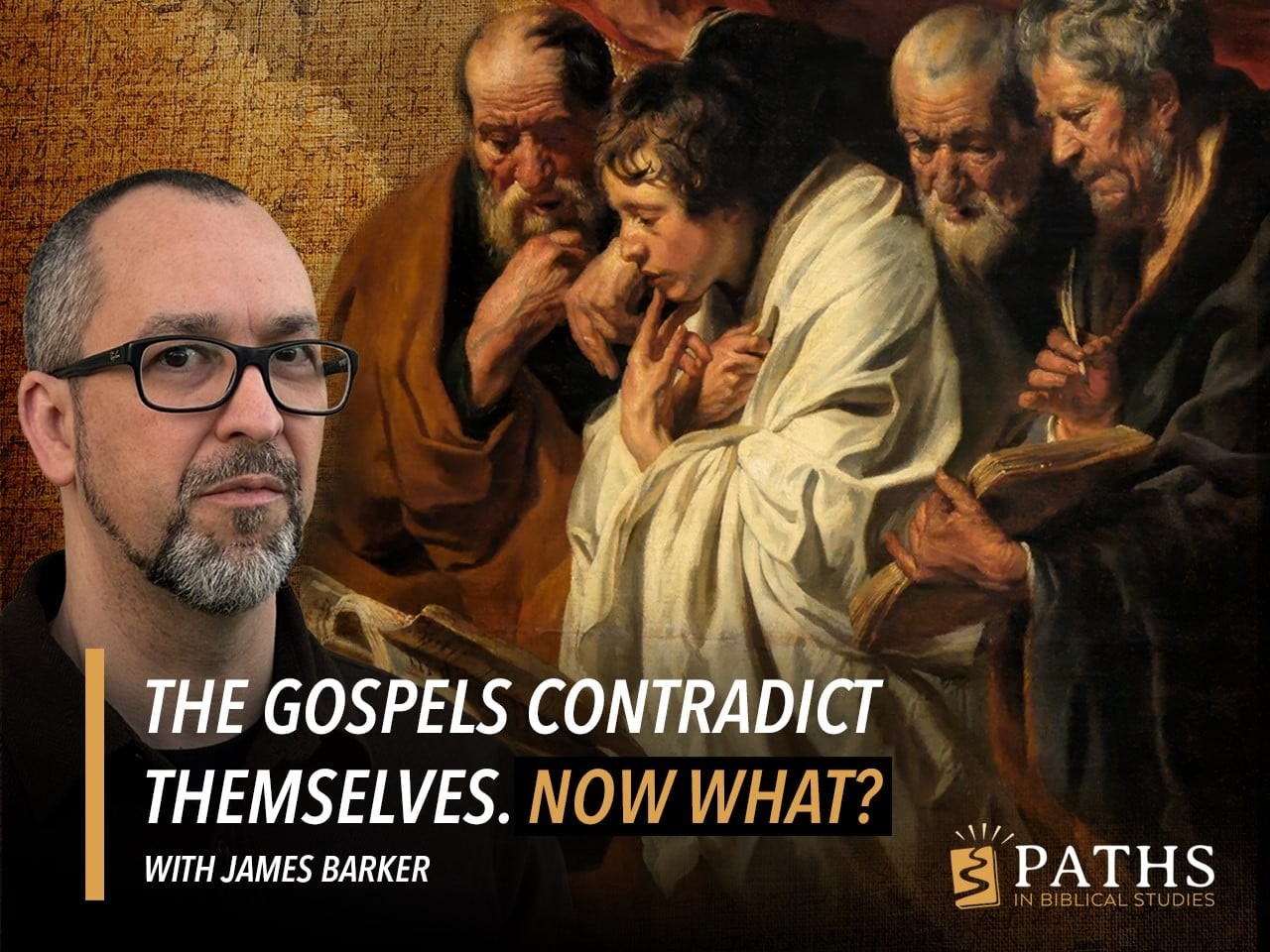
The Gospels Contradict Themselves. Now What?

Christians have known the Gospels disagree since the second century. The real question is what to do about it.

The Gospels Contradict Themselves. Now What? course art
Live · Oct 19 - 22 8 Lectures Taught by James Barker

Eighteen Centuries of Argument

Everyone agrees they contradict.
Now what?

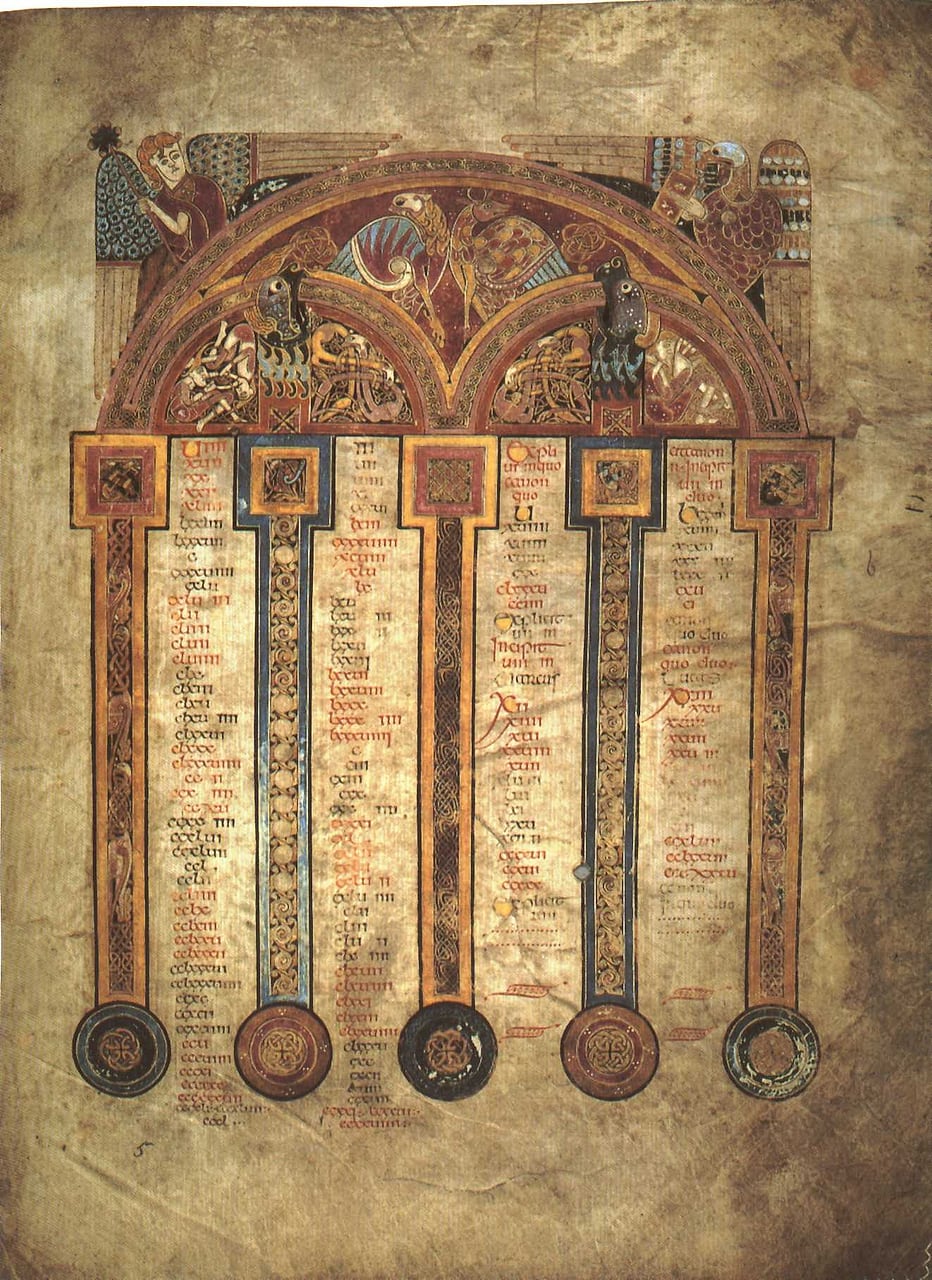
A canon table from the Book of Kells, c. 800, cross-referencing parallel passages in the four Gospels
Canon table, Book of Kells Trinity College Dublin · c. 800

Read the four Gospels side by side and you will find places where they cannot all be right. When did Jesus cleanse the Temple, at the start of his ministry or the end? Who went to the tomb, and what did they see? Was the Last Supper a Passover meal, or was Jesus already dead by then?

The surprise is not that the Gospels disagree. It is how long people have known. Christians were reading the four together and noticing where they did not line up before the New Testament was even a finished collection.

Since then, two extreme answers have dominated the argument. One insists that there are no real contradictions at all, and will bend any verse to prove it. The other says that any contradiction sinks the whole enterprise. Almost every careful reader lands somewhere in between.

This course is about that middle: eighteen centuries of serious readers, Christian and not, who looked the contradictions in the eye and had to decide what to do next. Some folded four Gospels into one. Some let the contradictions stand and looked for a deeper truth beneath them. Some concluded the books could not be trusted. Some fought back.

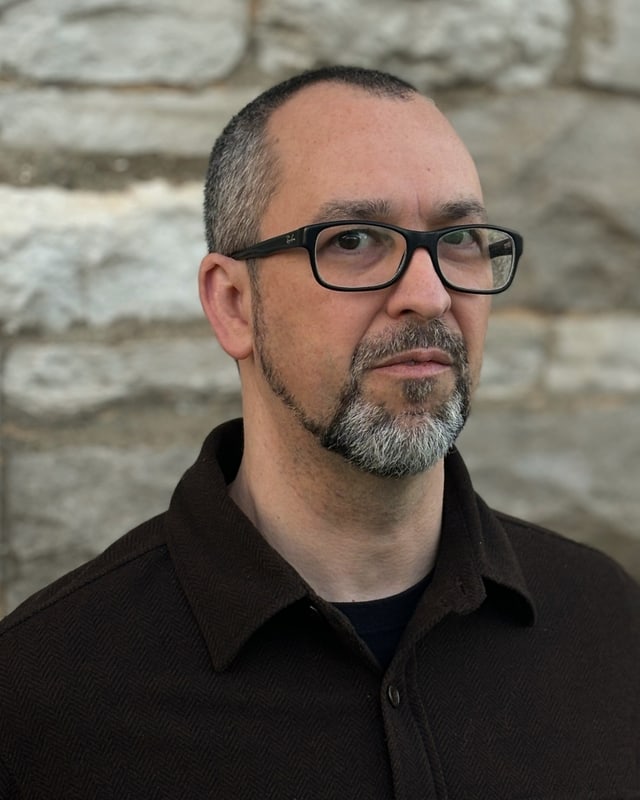
Your guide is James Barker, Professor of New Testament at Western Kentucky University and one of the leading scholars of how the Gospel writers copied and rewrote one another. He is teaching live across four days, with time built in for your questions.

By the end, you will know how to tell a contradiction from a difference, what the sharpest minds of eighteen centuries did with them, and how to decide for yourself how much any of it matters for what Christians believe.
Course at a Glance

Four days, live with James Barker.

Format

Live online, then recorded

Lectures

8 · 50 minutes each

Live Q&A

4 sessions with James

Dates

Oct 19 through Oct 22, 2026

Access

Lifetime, watch anytime

Instructor

James Barker · Western Kentucky University

Eight lectures.
Eight ways to handle a contradiction.

The Lectures

Two lectures a day, Monday through Thursday, each about fifty minutes, with a live Q&A after every pair. Each lecture covers one famous Christian interpreter, or one movement, and then asks: when they hit a contradiction, how did they handle it?

Lecture 01

Tatian: How to Harmonize the Gospels

In the second century, Tatian the Assyrian wove the four Gospels into a single continuous story, the Diatessaron. He knew their similarities, differences, and discrepancies as well as anyone who has ever lived, and his original went missing in antiquity. What survives lets us read the Gospels through his eyes, reverse-engineer his decisions about what was contradictory and what was complementary, and catch him contradicting all four of his sources at once.

c. 170 CE
Lecture 02

Origen: Historical Truth vs. Spiritual Truth

A century later, Origen of Alexandria wrote commentaries that noted the Gospels’ differences with painstaking honesty. Sometimes he harmonized. Sometimes he concluded the accounts were flatly irreconcilable, and let the contradiction stand. His way out was a distinction that would echo for centuries: two kinds of truth, and an interpreter’s job that sounds almost scandalous today.

c. 250 CE
Lecture 03

Porphyry: The Gospels Cannot Be Trusted

Porphyry of Tyre was a world-famous philosopher and one of the great interpreters of Plato. His treatise Against the Christians picked apart the Gospels’ competing accounts of the same events so effectively that Christians censored it; fragments survive only inside a rebuttal. Strip away the polemic and you find a reader who had compared the Gospels more closely than most of their defenders.

c. 300 CE
Lecture 04

Augustine: The Non-Contradictory Gospels

A century after Porphyry, his book was still a bestseller and Christians were still a minority. Augustine answered with a treatise on the harmony of the Gospels that worked, unflinchingly, through every small and large difference that set them at odds. It did not merely win the day. In the West, it held sway for a thousand years.

c. 400 CE
Lecture 05

Tatian 2.0: Medieval Gospel Harmonies

History repeats itself. A revision of Tatian’s lost harmony (the Codex Fuldensis), along with Augustine’s treatise, set off a wave of new books across the Middle Ages that retold the whole life of Jesus as one continuous story, each one built to show the Gospels were accurate and consistent. Yet every harmony tells a story none of the four Gospels tells, and no two harmonies agree with each other.

Sixth to fifteenth century
Lecture 06

Deism and the Enlightenment: The Reformation’s Unintended Consequences

The Reformation told Christians to read the Bible for themselves. Once they did, the horse was out of the barn. Deist and Enlightenment readers of the seventeenth and eighteenth centuries looked at the Gospels’ contradictions and reached conclusions neither Rome nor the Reformers could have imagined, in an argument that rhymes, almost line for line, with Porphyry.

Seventeenth to eighteenth century
Lecture 07

The Emergence of Academic Biblical Studies

In the universities of the eighteenth and nineteenth centuries, the Gospels could finally be read as human books. The evangelists need not be eyewitnesses. The text need not be inspired or infallible. And for the first time the Gospel writers were understood as what they were: readers of each other, deliberately changing the story. The contradictions stopped being a problem and became clues to what each writer was trying to individually say.

Eighteenth to nineteenth century
Lecture 08

The Backlash of Fundamentalism

Throughout the twentieth century, Fundamentalists declared the Bible inspired, inerrant, and infallible, fighting a two-front war against the universities and against Rome. Their Achilles heel is one they admitted themselves. Some discrepancies, they conceded, have not been resolved yet. Give it enough time and an answer will turn up. It is a position that can never be proven wrong, and today’s Christian apologetics still stands on it.

Twentieth century to today
JB
James Barker James Barker · 2026
Your Instructor

James Barker.

Professor of New Testament · Western Kentucky University

James Barker is Professor of New Testament at Western Kentucky University. He received his B.A. in History and Religious Studies from the University of Tennessee, Knoxville and his Ph.D. in New Testament and Early Christianity from Vanderbilt University. In addition to numerous articles and essays, his three books are John’s Use of Matthew (Fortress Press, 2015), Tatian’s Diatessaron (Oxford University Press, 2021), and Writing and Rewriting the Gospels: John and the Synoptics (Eerdmans, 2025).

Professor of New Testament, Western Kentucky UniversityPh.D., Vanderbilt UniversityTatian’s Diatessaron (Oxford, 2021)Writing and Rewriting the Gospels (Eerdmans, 2025)

0

Lectures · 50 min each

4

Live Q&A sessions · 20 min

Lifetime Access

What makes this course different.

What This Course Offers

Not a list of contradictions, and not a list of excuses for them. The history of what serious readers actually did, told by a scholar who has spent his career on it.

Prepare to Rethink

Common assumptions
this course will challenge.

Common Assumption

The Gospels don’t really contradict each other. Every apparent problem has an answer.

In fact

A vast apologetic industry works very hard to make that true, and the cost is high: to deny every contradiction, interpreters end up twisting the Gospels into saying whatever the reader needs them to say. At that point, no one is listening to the Gospel writers at all.

Common Assumption

Noticing contradictions is a modern, skeptical habit.

In fact

Christians were cataloguing the differences before the New Testament was a finished collection. Tatian, Origen, and Augustine all saw the problem clearly. The debate is as old as the church, and the modern positions mostly repeat ancient ones.

Common Assumption

If the Gospels contradict each other, the whole thing falls apart.

In fact

That is the other extreme, and it has been argued since Porphyry. Most serious readers, ancient and modern, have found that the contradictions do not have to undermine the core of what Christians believe. Deciding how much they matter is the work of this course.

Included with Enrollment

Included with
your course.

Four Live Q&A Sessions

Twenty minutes of live Q&A at the close of each day. Bring your questions, put them to James directly, and keep the full recordings afterward.

Full Recordings & Lifetime Access

Every lecture and every Q&A session is recorded and yours to keep. Watch live, catch up later, or return to them years from now.

Lecture Slides

Download James’s full slide decks for all eight lectures, ideal for review, note-taking, or following the passages side by side.

Full Transcripts

Searchable transcripts of every lecture, perfect for quoting, deeper study, or following along if English is not your first language.

Audio Downloads

MP3 downloads of every lecture. Listen on your commute, on a walk, or whenever you’re away from a screen.

Bonus: The Unknown Gospels, Lecture 1

Bart Ehrman’s opening lecture from his course The Unknown Gospels, “A Bird’s Eye View”: a thirty-minute tour of Matthew, Mark, Luke, and John and how the four fit together. The ideal primer before James takes you into where they don’t.

$1 from every registration is donated to charity: water, bringing clean water to people in need.

2 ways to purchase this course

Stand-Alone Purchase

Enjoy the course at a fraction of the cost

Early-Bird Price: 25% Off Through 10/10

Regular Price $79.95 Early-Bird $59.95 Ends October 10


Included in Your Purchase: Lifetime Access to This University-Level Course With:

  • Eight 50-minute live lectures by James Barker
  • Four 20-minute live Q&A sessions
  • Full recordings with lifetime access
  • Lecture slides, transcripts & audio downloads
  • Bonus: Bart Ehrman’s “A Bird’s Eye View” (The Unknown Gospels, Lecture 1)
  • Biblical Studies Academy members save 30%

Access this Course PLUS Every Course in Our Vault

(250+ Hours of Biblical Learning!)

  • 50+ existing courses plus all new releases (we're aiming for 20+ new courses in 2026)
  • All "Face to Face on the Bible" events and debates
  • Bart Ehrman's monthly "Spotlight" lectures
  • Join 1,700+ members for discussion, member mixers, trivia, book club, & more!
Start FREE Trial

then special rate $49.95/month

Frequently Asked

Everything you
need to know.

When is the course, and what are the times?

The course runs live over four days, Monday, October 19, through Thursday, October 22, 2026, from 12:00 to 2:00 pm Eastern each day. Each day has two fifty-minute lectures back to back, followed by a twenty-minute live Q&A with James.

How many lectures are included?

Eight lectures of about 50 minutes each, two per day across the four days, plus four 20-minute live Q&A sessions with James.

What if I can’t attend live?

You will not miss anything. Every lecture and every Q&A session is recorded, and the recordings are yours with lifetime access. Many students enroll knowing in advance that they will watch entirely on their own schedule.

How will I access the course?

After you enroll, you will receive the Zoom links for the live sessions by email, along with login instructions for our online course platform, ThriveCart Learn, where the recordings, slides, transcripts, and audio downloads are all posted. If you are a member of Biblical Studies Academy (BSA), your access will also be available inside the community.

Do I have lifetime access?

Yes. The lectures, the Q&A recordings, and every bonus are yours with lifetime access. Watch them on any device, on your own schedule, as often as you like.

Do I need any prior knowledge of the Bible, or any Greek?

No prior knowledge is required, and no Greek. Every text is read in translation, and James introduces the Gospels, the readers, and the debates from the ground up. Whether you are coming in fresh or already well-read, you will find it genuinely rewarding.

Is this course for believers, skeptics, or both?

Both, and that is the point. The course gives the apologist who denies every contradiction and the skeptic who thinks one contradiction sinks everything an equally fair hearing, then shows what eighteen centuries of readers in between actually did. You decide for yourself how much the contradictions matter.

Will subtitles or captions be available?

Yes. All recordings include closed captioning, and full transcripts are included with the course, so you can follow along in text or search for a specific passage.

Can I ask James a question?

Yes. A live Q&A closes each of the four days, and questions from attendees are what fill them. If you cannot make it live, the full Q&A recordings are included.

Is there a discount for BSA members?

Yes. Members of Biblical Studies Academy (BSA) receive 30% off the course price.

What payment types are accepted?

We accept PayPal and all major credit cards.

Do you offer a money-back guarantee?

Absolutely. If you don’t love the course, send us an email at support@bartehrman.com within 30 days of purchase and we will refund every penny.

Is this budget-friendly?

Comparable seminars and academic workshops with scholars of this caliber routinely run hundreds of dollars per attendee. This course delivers eight full lectures, four live Q&A sessions, and a complete set of study materials online, at a price meant to keep serious biblical scholarship genuinely accessible.