Theme I
Method: What Is the Bible?
What the Hebrew Bible even is, a text with a material and textual history, and the historical-critical method for reading it: what it can do, and what it cannot.
The Old Testament, read as the library it actually is.
Where the Old Testament Came From
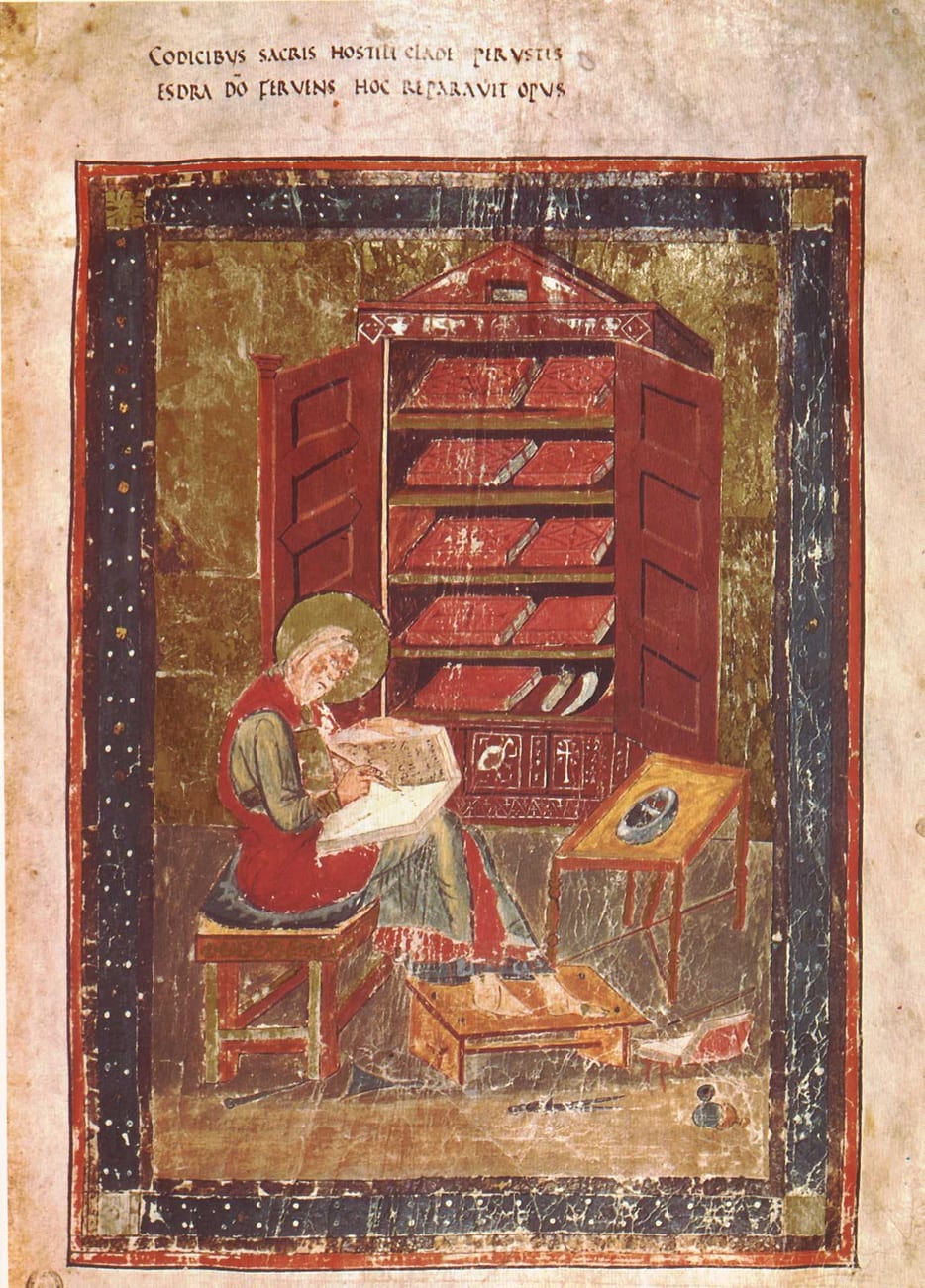
Open the Old Testament and it feels like one book, bound between two covers, speaking with one voice. It is nothing of the kind. There is no such thing as “the” Hebrew Bible.
What we call the Old Testament is a library: dozens of texts in Hebrew and a little Aramaic, written and rewritten by many hands across roughly a thousand years. Its books argue with one another. Genesis tells creation twice. The Torah is stitched from sources that do not agree. The Psalms were not written by David, and Isaiah was not one prophet.
Read it the way historians do, and the seams become the most interesting thing about it. This course moves through the whole library, law and history, prophecy and poetry, from Genesis to Daniel, to see how an ancient people’s competing voices were copied, edited, and finally bound into Scripture, one scroll at a time.
Format
On-demand video
Lectures
28 · plus Q&A each
Access
Lifetime, watch anytime
Instructor
Joel Baden
Specialty
Hebrew Bible & the Pentateuch
Six Themes
From the method, through the Torah, the histories, the prophets, and the poetry, to the long question of how it all became a canon.
What the Hebrew Bible even is, a text with a material and textual history, and the historical-critical method for reading it: what it can do, and what it cannot.
Genesis to Deuteronomy, read for its seams: two creation stories, two floods, the sources behind the Torah, the Exodus question, and the triple revelation at Sinai.
From Joshua to the fall of Jerusalem, a history that cares more for theology than for events, set against what the archaeology actually shows.
What a prophet actually was, the eighth-century voices of social justice, the three Isaiahs, and Ezekiel prophesying from exile in Babylon.
The Psalms, the satire of Jonah and Esther, the philosophical food-fight of Proverbs and Ecclesiastes, the problem of Job, and the women of Ruth and Lamentations.
Chronicles rereading the past, Daniel as the latest book, the Dead Sea Scrolls, and the long truth that there was never a single fixed canon.
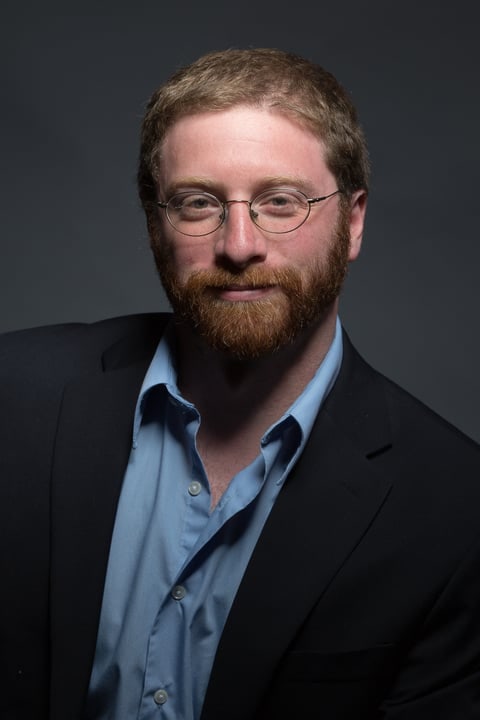 Joel Baden · 2026
 Professor of Hebrew Bible · Yale University
Joel Baden is Professor of Hebrew Bible at Yale University, and the Director of the Center for Continuing Education at the Yale Divinity School. He works widely in the field of biblical studies, with special attention to the literary history of the Pentateuch.
What This Course Offers
Joel Baden reads the Old Testament the way it is read in a Yale seminar, book by book and seam by seam, for anyone who wants the scholarship behind the stories.
All twenty-eight lessons move through the Hebrew Bible itself, Genesis to Daniel, read for what each text is actually doing.
Joel Baden’s research is the literary history of the Torah. You get a leading specialist on how these texts were made, not a survey.
Two creations, two floods, multiple Isaiahs: contradictions read as evidence, not embarrassment.
All twenty-eight lectures and their Q&A sessions on demand, the moment you enroll. Lifetime access to revisit and rewatch.
A full semester-length survey for curious people, no Hebrew and no prior background required.
How a library of competing texts was copied, revised, and only slowly bound into Scripture.
Common Assumption
The Exodus happened the way the Bible tells it.
In fact
The archaeological trail for a mass departure from Egypt is famously thin. What the Exodus story was really for, and why that matters more than whether it happened, reframes the whole book.
Common Assumption
Each biblical book had a single author.
In fact
Read closely, the Torah keeps telling the same story twice, in voices that do not agree. Genesis alone holds two creations and two floods, woven together by later hands.
Common Assumption
There is one fixed, original “Bible.”
In fact
There is no single “the” Bible. The text was copied, translated, and revised for centuries, and the Dead Sea Scrolls preserve editions that differ from the one we inherited.
Common Assumption
David wrote the Psalms and Isaiah was one prophet.
In fact
The Bible never actually says David wrote the Psalms, and Isaiah reads like the work of at least three prophets across two centuries. The famous attributions are later additions.
All twenty-eight lectures and their Q&A sessions are available to watch the moment you enroll. Click any lecture to read its description.
The textual and material history of the Bible: transmission, translation, and tradition, and why “the” Bible does not exist as a single thing.
How scholars read biblical texts inside their ancient contexts, and what this method can and cannot accomplish.
Genesis 1 alongside Mesopotamian cosmology, and how to use comparative material responsibly.
The multiple voices in Genesis 1 to 11: two creation stories, two flood narratives, and competing theologies.
The sources behind the Torah, how scholars found them, and what they mean for reading it today.
The patriarchal narratives, and how they work between local memory and international affairs.
The historical accuracy of the Exodus narrative, and its theological significance for ancient Israel.
Mount Sinai as a case study for recognizing the theological differences among the textual sources.
Levitical ritual reframed as, perhaps, the most sustained and beautiful theological idea in the whole Bible.
Deuteronomy as an extended speech of Moses, and its centrality to the interpretation of the Hebrew Bible.
The narrative arc from conquest to the Babylonian invasion, and why this history prioritizes theology over events.
The biblical conquest narrative against the archaeological evidence, and a reconstruction of how Israel actually settled.
Alternative readings of how David is portrayed, and the political spin at work in ancient Israel.
Why Israel and Judah fell, and the relationship between the historical events and their theological interpretation.
Prophecy as an ancient Israelite institution, and the contexts of the individual prophetic figures.
The eighth-century prophets and their concern for social justice, and how texts outlive their original moment.
The case for multiple Isaiahs, and the famous “messianic” passages read as non-Christian prophecy.
Jeremiah as a literary phenomenon, and the question of whether the words are verbatim prophecy or later theology.
The first prophetic book written from the Babylonian exile, and how displacement reshapes a prophet’s theology.
The Davidic-authorship attribution challenged, and how biblical poetry actually works.
Two texts read as comedy and satire, and the surprising place of humor in the Bible.
What wisdom literature is, and the philosophical contradictions between these two books.
Job’s complex, dialogue-heavy structure and its deliberate theological ambiguity.
Two texts with female protagonists: Ruth as ancient fiction, and Jerusalem personified in Lamentations.
How ancient historical writing authorizes older material, and how a character’s portrayal shifts over time.
Multiple languages, visions and stories, apocalyptic imagery, and a complicated compositional history.
The evidence of the Dead Sea Scrolls, how the Bible became “the Bible,” and what got left out.
The uses and limits of the historical-critical method, and where biblical interpretation might go next.
A 15-minute recorded Q&A paired with each of the twenty-eight lectures, where students put their questions to the instructor.
Short, self-paced quizzes spread across the course, to review the key texts, voices, and arguments as you go.
Downloadable lesson guides with recommended readings and reflection questions for going deeper on your own or with a study group.
MP3 downloads of every lecture. Listen on your commute, during a walk, or whenever you’re away from a screen.
A personalized PDF certificate of completion to mark your study once you finish all twenty-eight lectures.
$1 from every registration is donated to charity: water, bringing clean water to people in need.
Enjoy the course at a fraction of the cost
$1,499 Value Twenty-eight university-level lectures from a Yale Hebrew Bible scholar. Comparable semester-length university courses run $2,000 to $4,000.
$395
Start today for $32.92*
Included in Your Purchase: Lifetime Access to This University-Level Course With:
*Paid monthly for 12 months
Enroll Now Single Course
Access this Course PLUS Every Course in Our Vault
(250+ Hours of Biblical Learning!)
then special rate $49.95/month
Dr. Joel Baden presents twenty-eight 50-minute lectures, each paired with a 15-minute Q&A session, plus four quizzes, PDF lesson guides, and audio downloads. All are available on demand, so you can watch at your own pace.
It began as a live cohort that ran from September to December. It is now available in full as an on-demand recording, including every Q&A, so you can watch whenever works for you.
Once you have purchased the course, you will receive an email with instructions to log in to our online platform, ThriveCart Learn. From there you have instant access to all twenty-eight lectures, the Q&A sessions, and every handout, on any device, with lifetime access. If you are a member of Biblical Studies Academy (BSA), your access will also be available inside the community.
No prior background is required, and no Hebrew. The course is designed for motivated learners at any level. Whether you are completely new or already have some background, you will find the lectures engaging and accessible.
Yes. The course is yours with lifetime access. Watch the lectures, review the guides, and return to the material as often as you like, on any device.
There are four short, self-paced quizzes to help you review, plus recommended readings and reflection questions. There are no assignments to submit or grade.
Yes. All course videos include optional closed captions, which make the lectures easier to follow and help meet accessibility needs.
We accept PayPal and all major credit cards.
Absolutely. If you don’t love the course, send us an email at support@bartehrman.com within 30 days of purchase and we will refund every penny.
The regular price for semester-length university-level courses is typically $2,000 to $4,000. We don’t offer college credit, but this course delivers the same depth and rigor at a fraction of the cost, with lifetime access to all twenty-eight lectures.